Egglestone Abbey
Discover the peaceful medieval ruins of Egglestone Abbey near Barnard Castle, where more than 800 years of history overlook the River Tees. Once home to the White Canons, these atmospheric ruins later became a family home before being preserved for future generations.
Egglestone Abbey is one of the most peaceful historic places to visit in Teesdale.
Standing above a quiet bend in the River Tees, the ruins have watched over the valley for more than 800 years. What began as a small monastery for the Premonstratensian White Canons later became a country house after the Dissolution of the Monasteries. Today, the abbey is cared for by English Heritage and remains free to explore on foot.
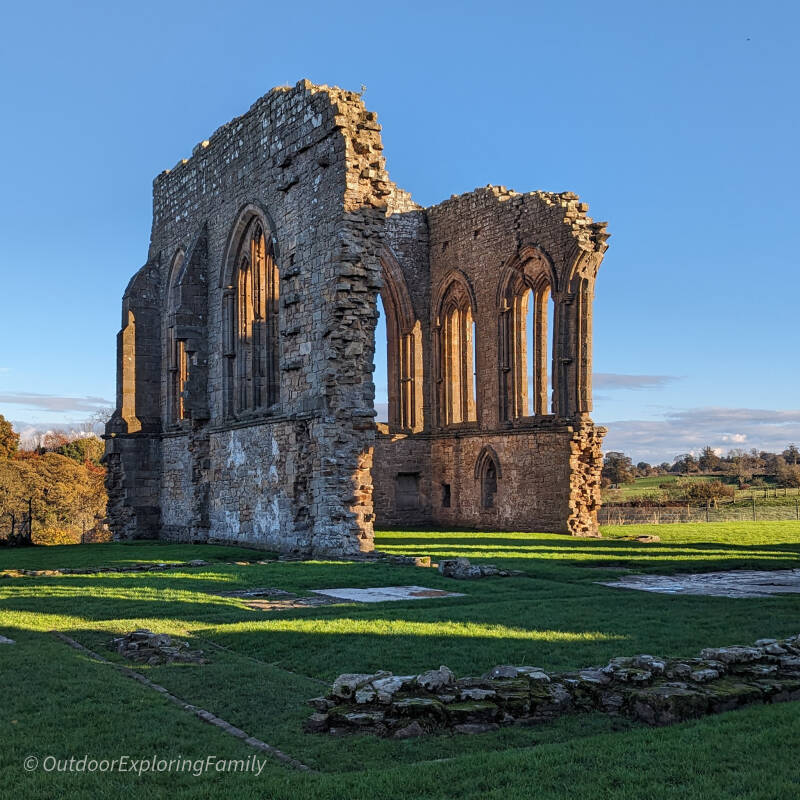
As you wander through the ruins you'll discover far more than old stone walls. There are soaring church windows, the remains of the cloister, medieval tombs, hidden carved stone faces and fireplaces added centuries later when the abbey became a home. Every visit seems to reveal something new.
For us, Egglestone Abbey is more than just another historic site. It's one of those places where history, nature and quietness come together, encouraging you to slow down and enjoy one of Teesdale's most remarkable landscapes.
Quick Facts
Location: Barnard Castle, County Durham
Postcode: DL12 9TN
Managed by: English Heritage
Entry: Free to explore on foot
Parking: Small car park beside the abbey
Best for: History, photography, quiet exploring and riverside walks
Dog friendly: Yes, dogs on leads are welcome
Family friendly: Yes
Terrain: Grass, uneven paths and historic stone surfaces
Nearby walks: Thorsgill Wood and Meeting of the Waters
Time needed: Around 30 minutes to 1 hour, longer if combining with a walk

Explore Egglestone Abbey with Our Free Family Challenge
Turn your visit into a family history adventure with the free Egglestone Abbey Explorer Challenge.
Follow seven clues around the ruins, discover how the White Canons lived, uncover details in the medieval stonework and recover the secret passcode. Complete the challenge to unlock your printable Egglestone Abbey Explorer Certificate.
There is no booking or sign-up required. Simply download the one-page Explorer Pack, bring it with you and explore the abbey at your own pace.

Parking and Access
Getting to Egglestone Abbey couldn't be much easier. A good-sized, level car park is located on Abbey Lane, Barnard Castle, County Durham, DL12 9TN, just a few steps from the ruins. We visit often and have never struggled to find a parking space.
A gate leads directly from the car park into the abbey grounds, so you're exploring within moments of arriving.
The abbey is free to visit, with no ticket office or visitor centre. Simply walk in and explore at your own pace. The site is open 24 hours a day, although it is best enjoyed during daylight when you can fully appreciate both the ruins and the views across the River Tees.
The grounds are mostly flat grass with some uneven historic stone underfoot, so sturdy footwear is recommended, especially after wet weather.
There are no toilets, café or shop on site, which helps preserve the peaceful atmosphere that makes Egglestone Abbey so special. If you have a little more time, it's well worth combining your visit with one of the nearby walks to Thorsgill Wood or the Meeting of the Waters.
Just a short walk away is Abbey Bridge, built in the eighteenth century for the Morritt family, making it easy to combine two of Teesdale's most important historic landmarks in one visit.
What You Will See at Egglestone Abbey
Egglestone Abbey isn't somewhere to rush through with a checklist. It's a place that rewards slowing down.
As you wander through the ruins, the layout of the abbey gradually begins to make sense. At first you'll notice the soaring church windows, roofless stone walls and views across the River Tees. Then the smaller details begin to reveal themselves.
You can walk through the remains of the abbey church, where the White Canons gathered for prayer more than 800 years ago. The great east window is one of the abbey's most striking features, its tall stone openings framing the sky much as they have for centuries.
At the centre of the ruins is the old cloister. This peaceful grassy space was once the heart of daily life, linking the church with the rooms where the canons ate, worked and met together. Even today it's easy to imagine them passing through here several times each day.
One of the most atmospheric parts of the abbey is the vaulted undercroft. Unlike the open ruins outside, this stone chamber still feels enclosed, giving a glimpse of what parts of the abbey would once have looked like.
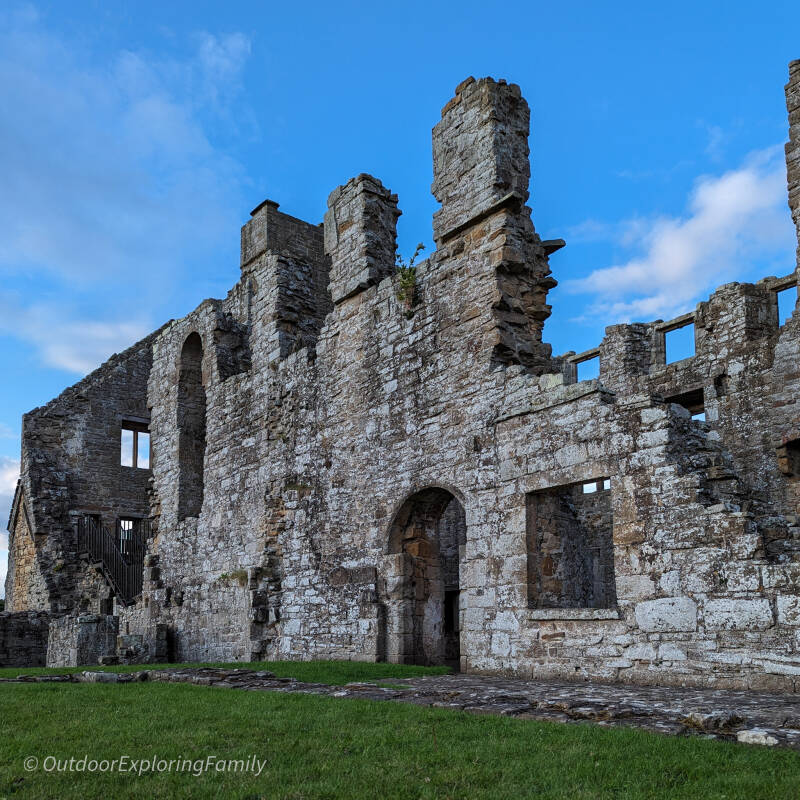
As you explore, you'll also notice signs of the abbey's later life as a country house. Fireplaces, larger windows and altered walls sit alongside medieval arches, reminding you that these buildings have lived more than one life.
Don't miss the tomb of Sir Ralph Bowes in the church crossing or the remains of the medieval drainage system, small details that hint at the everyday lives of the people who once called this place home.
For families there's plenty of open space to explore, while photographers will find beautiful views from almost every angle. Visit in the softer light of early morning or late afternoon and the warm sandstone takes on an entirely different character.
What makes Egglestone Abbey so memorable isn't one single feature. It's the way the history, the landscape and the peaceful atmosphere come together. Every visit seems to reveal something you didn't notice before.

The Hidden Stone Faces of Egglestone Abbey
Most visitors come to admire the soaring church windows and peaceful ruins, but there's another detail that's easy to overlook.
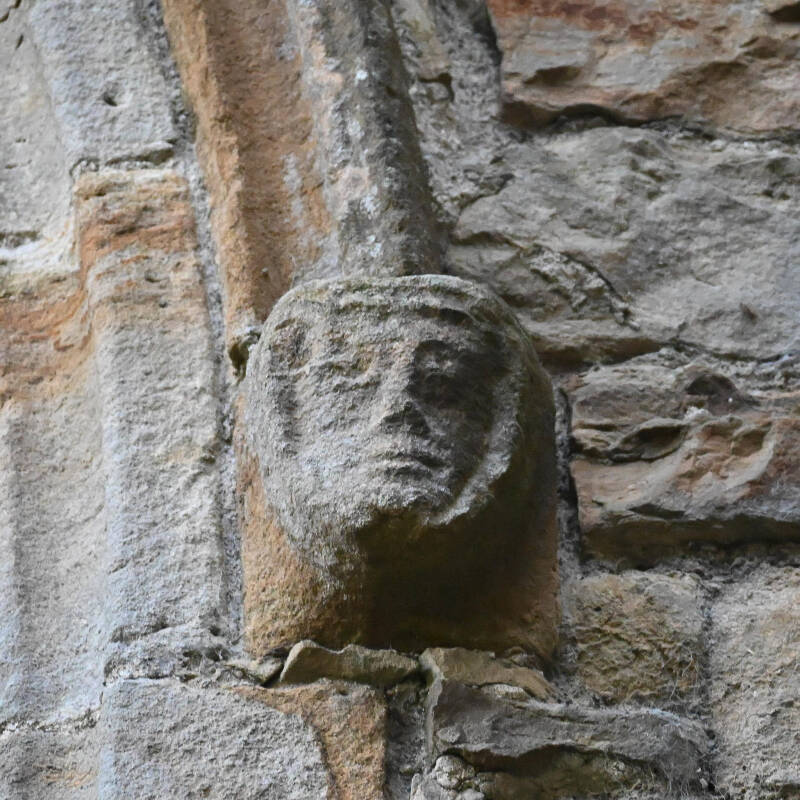
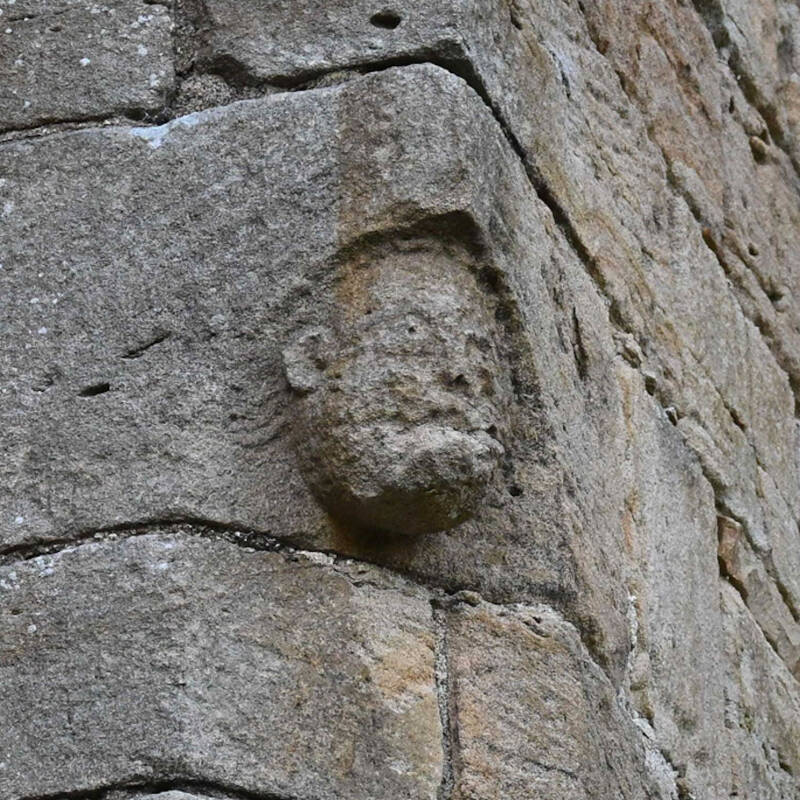
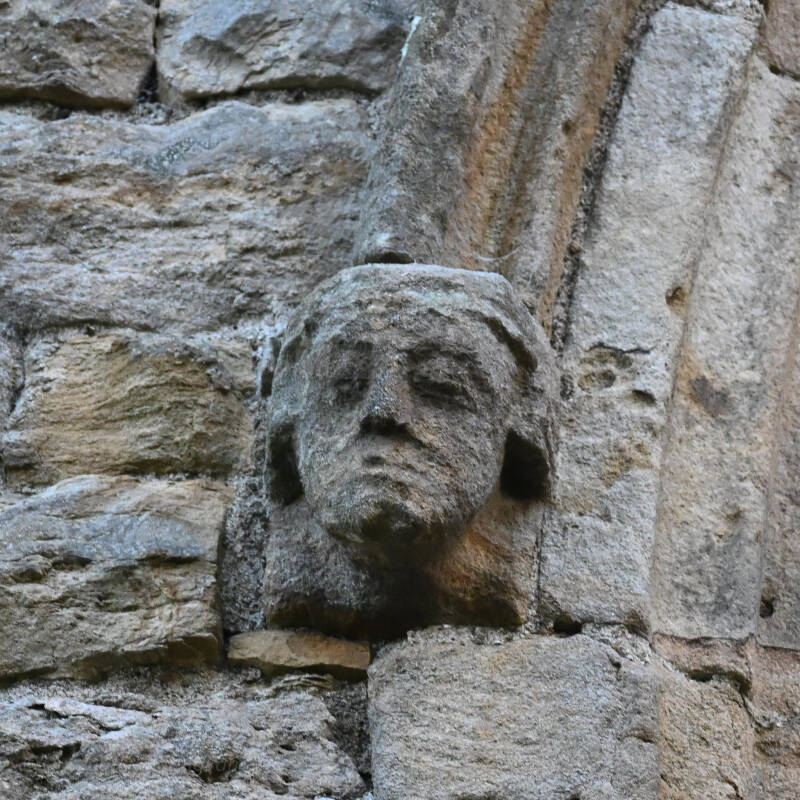
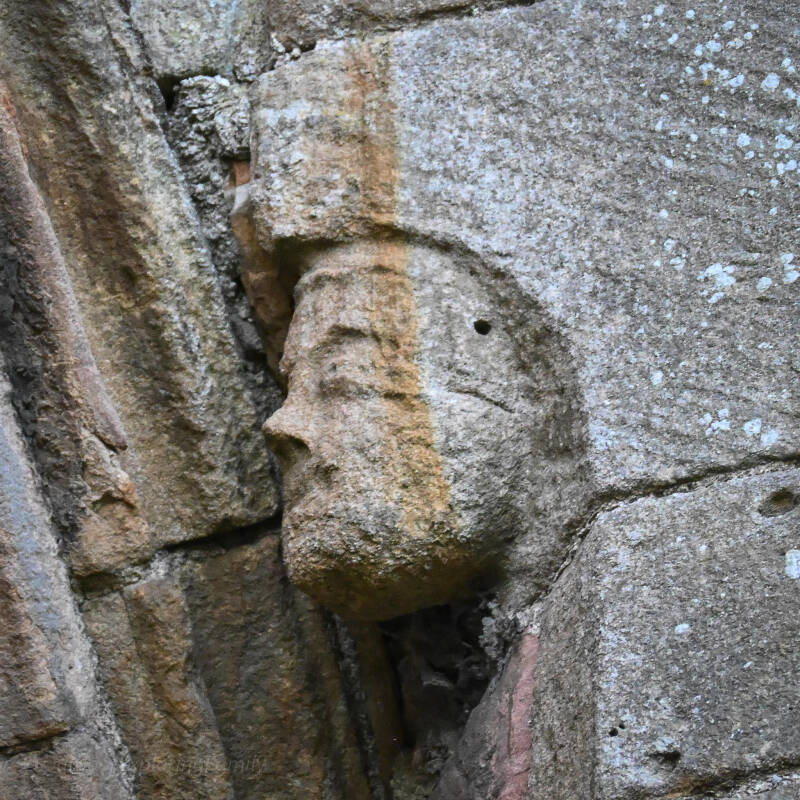
Look carefully at the stonework and you'll begin to notice faces carved high into the walls.
Some peer down from above doorways, while others are tucked away on corners that most people walk straight past. At first you might only spot one, but once your eyes adjust you'll start finding another... and then another.
No one knows exactly who these faces were meant to represent. They may have been carved by medieval stonemasons, created as decorative features during the rebuilding of the church in the 13th century, or perhaps held a symbolic meaning that has been lost over time. Whatever their purpose, they have survived more than 700 years of weather, war, neglect and changing ownership.
We've photographed several during our visits, but we can't help wondering whether there are still more waiting to be discovered.
So next time you visit Egglestone Abbey, don't just look ahead.
Look up.
You might be surprised who's looking back.
How many stone faces can you find?
The History of Egglestone Abbey
The story of Egglestone Abbey began between 1195 and 1198, when the de Moulton family founded a monastery for the Premonstratensian White Canons. Dedicated to St Mary and St John the Baptist, the abbey overlooked a peaceful bend in the River Tees, close enough to b to serve the surrounding communities while offering the quieter way of life the canons sought.
From the beginning, life here was never easy. Egglestone was one of the poorest monasteries in England, with so little income that, early in the 13th century, leaders of the Premonstratensian Order even considered reducing it from an abbey to a priory. The community survived, but money remained scarce throughout its history.
Despite these challenges, the canons gradually expanded and improved their home. The first church was fairly modest, but between about 1250 and 1300 much of it was rebuilt in the Gothic style. Broad transepts, taller windows and the striking east window transformed the abbey into the impressive building whose ruins still dominate the site today.
The abbey also endured hardship beyond poverty. During the early 1300s, Scottish raids into northern England brought widespread destruction across Yorkshire and County Durham. Egglestone Abbey suffered during these troubled years and was granted relief from some taxes to help the community recover.
For more than 340 years, the White Canons lived, prayed and worked here, following a daily rhythm of worship, study and service to the surrounding communities. That way of life finally came to an end in 1540, during Henry VIII's Dissolution of the Monasteries. The canons left Egglestone Abbey, bringing more than three centuries of monastic life to a close.
Although the monastery had fallen silent, its story was far from over. In the years that followed, the abbey became a family home, passed through several owners and, thanks to careful preservation, survived as one of the finest preserved medieval monastic ruins in Teesdale.
The People of Egglestone Abbey
It's easy to walk through Egglestone Abbey today and see only the stone walls, but for more than 340 years this was a busy place filled with people.
At the heart of the community were the Premonstratensian White Canons. Unlike monks who lived in complete isolation, the canons led both a religious and practical life. They gathered for prayer throughout the day, worked the surrounding land, welcomed travellers and cared for nearby communities.
The abbey was led by an abbot, but many others helped keep it running. Alongside the canons were lay servants, craftsmen and local workers. Fields had to be farmed, grain carried to the mill beside the River Tees, meals prepared, buildings repaired and livestock cared for. Egglestone Abbey was not just a place of worship, but a busy working community.
Although history has forgotten most of the people who lived here, medieval records preserve the names of several canons, including William of Startforth, Bernard of Langton, John of Theakston, Alexander of Easby, Peter of Easby, John of Easby, Richard of Middleham, William of Wycliffe, William of Crakehall, Thomas Walker and John Wakesed. Many were known by the villages they came from rather than family surnames, showing that Egglestone Abbey drew men from across Teesdale and North Yorkshire.
Today, little remains of their everyday lives beyond the buildings they left behind, but these surviving names remind us that Egglestone Abbey was once filled with conversation, prayer, footsteps and the ordinary routines of people who called it home.
From Abbey to House
When Egglestone Abbey was dissolved in 1540, life here changed forever. The White Canons left their home after more than 340 years, but unlike many monasteries across England, Egglestone Abbey was not simply abandoned.
For more than 300 years after the last White Canon walked away, people were still living within the old abbey walls.
In 1548, the former abbey was granted to Robert Strelley, who transformed much of the monastery into a comfortable country house. Rather than demolishing the buildings, he adapted them for family life. The east and north ranges became living accommodation, while a kitchen was created in the west range. The church itself was left largely untouched, creating the striking contrast between domestic buildings and medieval ruins that can still be recognised today.
Over the following centuries the house continued to evolve. New windows, fireplaces and chimneys were added as fashions changed, leaving behind a fascinating mix of medieval and Tudor architecture. As you explore the abbey today, you are not just seeing the remains of a monastery, but also traces of the family home that stood here for hundreds of years.
By the eighteenth century, Egglestone Abbey had become part of the Rokeby Estate owned by Sir Thomas Robinson. Better known today for creating the celebrated landscaped gardens at Rokeby, Robinson owned the abbey until financial difficulties forced him to sell the estate in 1770.
The buyer was John Sawrey Morritt, beginning more than 150 years of Morritt family ownership. By then the abbey was no longer the grand house it had once been. During the nineteenth century, parts of the former home were divided into cottages for estate workers, while other sections gradually fell into ruin. The medieval church remained roofless, becoming the romantic landmark visitors still recognise today.
By the early nineteenth century, parts of the former abbey were even being used as drying rooms for paper made at Abbey Mill below. The great upper floors provided the airflow needed for the paper-making process, giving the medieval buildings an entirely new industrial purpose.
Although the house eventually disappeared, its story is still written into the stonework. Look closely and you'll notice fireplaces, altered windows and later brickwork sitting alongside medieval arches and vaulted ceilings. Egglestone Abbey is unusual because it tells two stories at once: first as a monastery, and later as a family home.
The Abbey Mill
For the White Canons, the River Tees was far more than a beautiful view. It powered the abbey's mill, one of the most important buildings on the estate.
The mill ground grain into flour, helping feed the community and the people who worked the abbey's land. Long after the monastery closed, the site continued to be used and was eventually converted into a paper mill. Although the original medieval mill has disappeared, later remains can still be found beside the river below the abbey.
It's an easy part of Egglestone Abbey's story to overlook, but without the mill the monastery could not have functioned as it did for more than three centuries.
If you'd like to discover more about the abbey's mill, read our Teesdale Tale, Egglestone Abbey and the Lost Mill, where we explore its history, the later paper mill and what survives today.
The Morritt Family and the Future of Egglestone Abbey
By the early twentieth century, Egglestone Abbey was showing serious signs of age.
The ruins had already been repaired once before. Around 1891, R. A. Morritt arranged substantial conservation work following advice from an antiquary, but time, weather and crumbling mortar continued to weaken the medieval stonework.
By 1925, there were growing concerns that parts of the abbey, including some of its beautiful medieval windows, could be lost forever.
Rather than allowing that to happen, Major H. E. Morritt of Rokeby Park placed Egglestone Abbey into state guardianship, ensuring the ruins could be properly conserved and protected for future generations.
The decision was welcomed locally. The Teesdale Mercury reported "general satisfaction" at the news, recognising that one of Teesdale's most important historic places had been given a secure future.
The Morritt family's contribution did not end there. They later returned important medieval stonework to the abbey, including the tomb of Sir Ralph Bowes of Streatlam, which now stands in the church crossing.
Nearly a century after Major Morritt's decision, visitors can still wander freely through the ruins, admire the medieval stonework and enjoy one of Teesdale's most atmospheric medieval sites. Without the care taken in 1925, much of what we see today might not have survived.
A Place That Rewards Slowing Down
Some historic places are remembered because they're famous. Others because they're enormous.
Egglestone Abbey is different.
It isn't the biggest abbey in England or the richest, but it has something many larger sites have lost: a genuine sense of peace.
Whether you come for the history, the riverside walks, the hidden stone faces or simply somewhere quiet to spend an hour, Egglestone Abbey has a way of encouraging you to slow down.
We've visited many times over the years and always seem to notice something new. Sometimes it's a carving high in the stonework, sometimes the evening light shining through the great east window, and sometimes it's simply the sound of the River Tees below the ruins.
We hope you'll leave having discovered something new too.
Peaceful Walks from Egglestone Abbey

Thorsgill Wood Walk from Egglestone Abbey
A peaceful circular walk beginning beside the ruins of Egglestone Abbey, following quiet woodland paths, flowing water and open countryside near Barnard Castle. This gentle route passes through Thorsgill Wood alongside Thorsgill Beck, mixing riverside calm, historic features and slower exploring in one of the quieter corners of Teesdale.

Egglestone Abbey to Meeting of the Waters Walk
A beautiful riverside walk linking the historic ruins of Egglestone Abbey with the peaceful Meeting of the Waters, where the River Greta joins the River Tees. Along the way the route follows woodland paths, riverside tracks and open countryside, creating one of the calmest and most rewarding short walks near Barnard Castle.
.
Stories and Legends Around the Abbey

Egglestone Abbey and the Lost Mill
A quiet Teesdale story shaped by the River Tees, the ruins of Egglestone Abbey and the traces of a lost riverside mill that once powered daily life below the abbey walls. Explore how the White Canons lived, worked and built a simple life here centuries ago, surrounded by woodland, water and the changing seasons of Teesdale.
.

The Mad Monk of Egglestone Abbey
One of Teesdale’s most atmospheric local legends, blending the peaceful ruins of Egglestone Abbey with whispers of a hooded figure said to walk the old riverside road after dark. Part folklore, part personal memory and part mystery, this tale adds another layer to one of the most hauntingly beautiful corners of Teesdale.
.

Frank Shield, the Hermit of Barnard Castle
Discover the remarkable story of Frank Shield, the Victorian hermit who lived among the ruins of Barnard Castle before later spending time at Egglestone Abbey. His unusual life connects Teesdale history, forgotten heritage and the quiet human stories hidden within the old stone ruins above the River Tees.
A Quiet Place That Stays With You
Some places are impressive for a few minutes and quickly forgotten. Egglestone Abbey feels different.
Maybe it is the open sky above the ruins, the sound of the River Tees below the hillside, or simply the slower pace of the place itself, but there is something here that encourages people to pause for a while longer than they planned.
Long after the canons disappeared and the roofs collapsed, the abbey still shapes the landscape around it. Not through noise or grandeur, but through atmosphere, memory and quietness.
For us, that is what makes Egglestone Abbey one of the most special places near Barnard Castle.
Every time we visit, we notice something we missed before. A carved face in the stonework. Light falling through the great east window. The sound of the River Tees drifting up from below. We hope your visit leaves you with something to remember too.