Fairy Cupboards, Romaldkirk
Hidden along the River Tees between Romaldkirk and Cotherstone, the Fairy Cupboards are a small but fascinating natural feature shaped into the limestone by centuries of erosion.
At first glance, they are easy to miss. But these unusual hollows in the rock have been known, named, and visited for over 125 years, forming part of a historic riverside route that people are still walking today.
What looks like a simple detail in the landscape is actually a place with a quiet but well documented past.

What Are the Fairy Cupboards
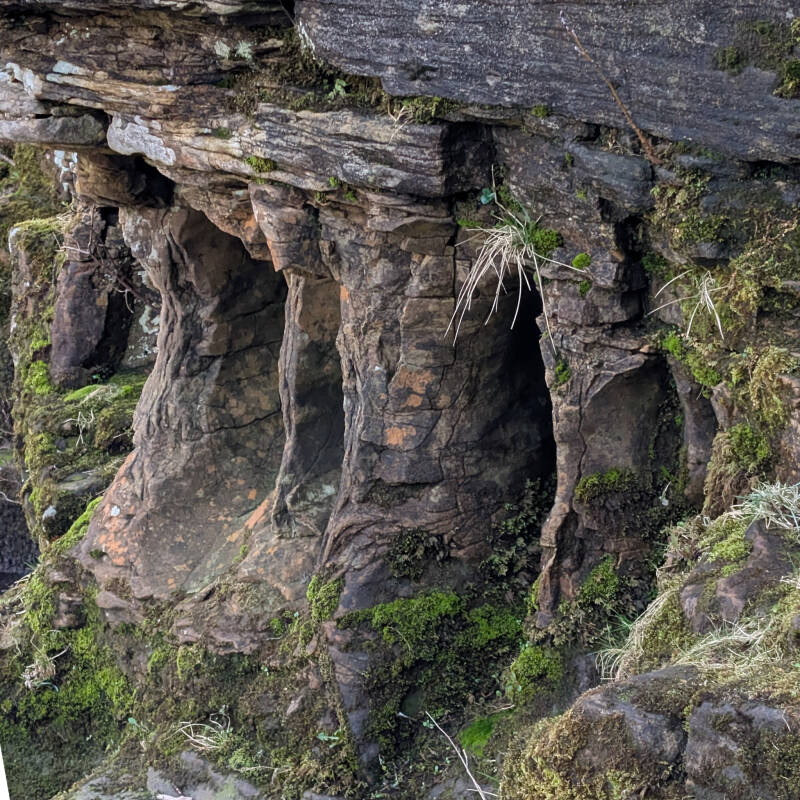
The Fairy Cupboards are a series of small recesses in the limestone along the banks of the River Tees.
Formed naturally through erosion, the rock has been worn away over time to create hollowed pockets in the stone. Some are shallow, others deeper, but all stand out against the surrounding rock face.
They sit right beside the river, often just off the main line of the path, which means you do not view them from afar. You discover them up close.
Their unusual shape is what gives them their name. They look like small openings or compartments carved into the rock, and it is easy to see how they captured the imagination of those who first named them.
A Place People Were Visiting in 1899
The Fairy Cupboards are not a modern discovery.
A report from the Teesdale Mercury dated July 12, 1899 describes a large outing by the Darlington Sunday School Union. Around 146 teachers and friends travelled to Cotherstone by excursion train and spent the day exploring the area.
According to the report, they visited:
"the Hagg, the junction of the Balder and the Tees, and the Fairy Cupboards"
before gathering for tea at the Temperance Hall.
This shows that the Fairy Cupboards were already a recognised place to visit more than a century ago. They formed part of a well known route through the landscape, alongside some of the most notable natural features in Teesdale.
The Footpath Dispute and the Right to Walk Here
The history of the Fairy Cupboards is not just about visitors. It is also tied to the history of access.
Local council records describe a dispute over footpaths in this part of Teesdale, particularly around Low Garth and the routes leading towards Cotherstone. As part of the resolution, it was formally recognised that a public footpath existed, including a branch leading towards the Fairy Cupboards.
The route was not simply mentioned. It was defined, walked on the ground, and mapped. It crossed fields, passed through boundaries, and continued towards Sennings Lane. Stiles were to be installed, and the line of the path was recorded on an Ordnance Survey map so that its status could not be challenged in the future.
This matters.
It shows that the Fairy Cupboards were not just a quiet feature in the landscape. They were part of a route important enough to be argued over, agreed upon, and preserved for public use.
When you walk here today, you are following a path with a long and documented history.


A Landscape That Has Barely Changed
One of the most striking things about the Fairy Cupboards is how little the experience has changed.
In 1899, visitors arrived by train, walked out from Cotherstone or Romaldkirk , followed the river, and explored the same features people still visit today.
Now, over a century later, the same journey still exists.
You walk through fields, drop down towards the Tees, and follow the river through a quieter stretch of woodland and rock. There are no large signs, no built viewpoints, and no crowds. Just the landscape, the river, and the details hidden within it.
Why the Name Still Fits
There is no confirmed written folklore linking the Fairy Cupboards to a specific local legend.
But the name has endured.
It likely comes from the appearance of the rock itself. Small openings, tucked into the stone, just large enough to suggest something more than natural erosion. Whether imagined as hiding places, tiny shelters, or simply something unusual, the name reflects how people connected with the place.
Sometimes, a name survives not because of a story that was written down, but because of how a place felt.


Where to Find Them
The Fairy Cupboards are located on the River Tees between Romaldkirk and Cotherstone.
They sit along the riverside path between Low Garth and Sennings Lane, approximately:
1.5 miles from the centre of Cotherstone
1.1 miles from Romaldkirk
They are best visited as part of a longer walk rather than as a standalone destination and are typically reached by following the river from either direction.
You can find them on our Romaldkirk circular route
What to Expect
This is not a maintained attraction and that is part of its appeal.
The path can be uneven, muddy and close to the river. Reaching the cupboards themselves may involve stepping over rocks or navigating rough ground, especially in wet conditions.
After heavy rain or when the River Tees is running high, enjoy the Fairy Cupboards from the main path rather than climbing down onto the rocks beside the water.
There are no signs pointing directly to them, so you need to be looking.
Why They Matter
The Fairy Cupboards are easy to overlook, but they represent something important.
They show how small features in the landscape can become part of local identity. Named, remembered, and included in walks for generations.
They appear in historic newspaper reports. They feature in footpath disputes. They sit quietly within a landscape that people have been exploring for well over a century.
Not every place needs to be big to matter.
Sometimes, it is the small, almost hidden details that tell the strongest stories.