Red Grooves House, An Abandoned Farmhouse Above Newbiggin
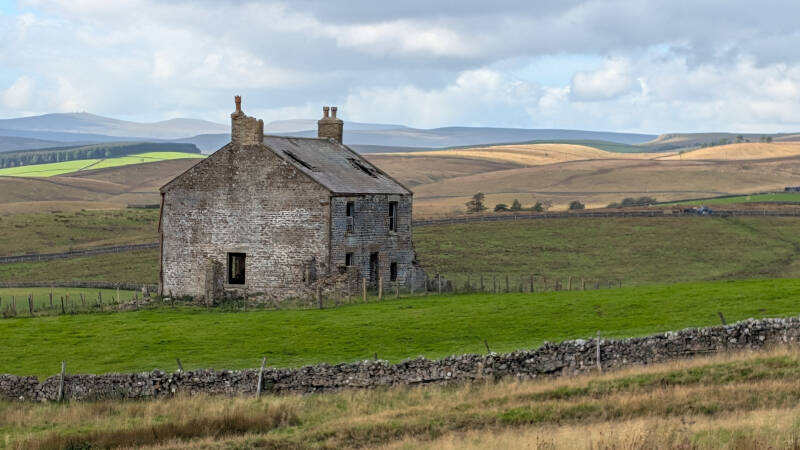
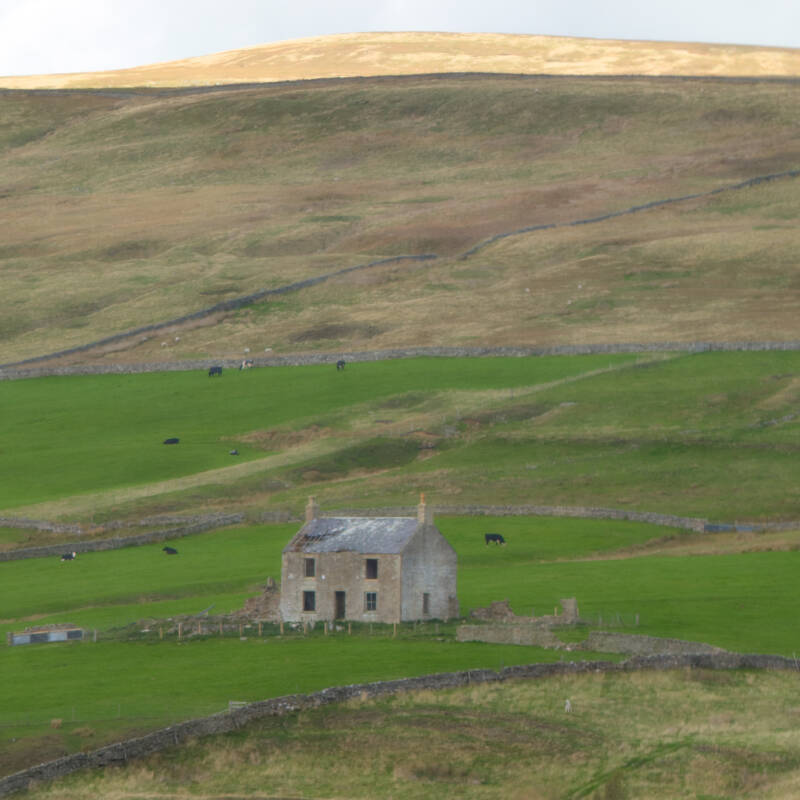
Just north of Newbiggin in Teesdale, not far from the bottom of Coldberry Gutter, there's an old house standing on its own in the middle of a field. No road leads directly to it, although a public footpath passes close by.
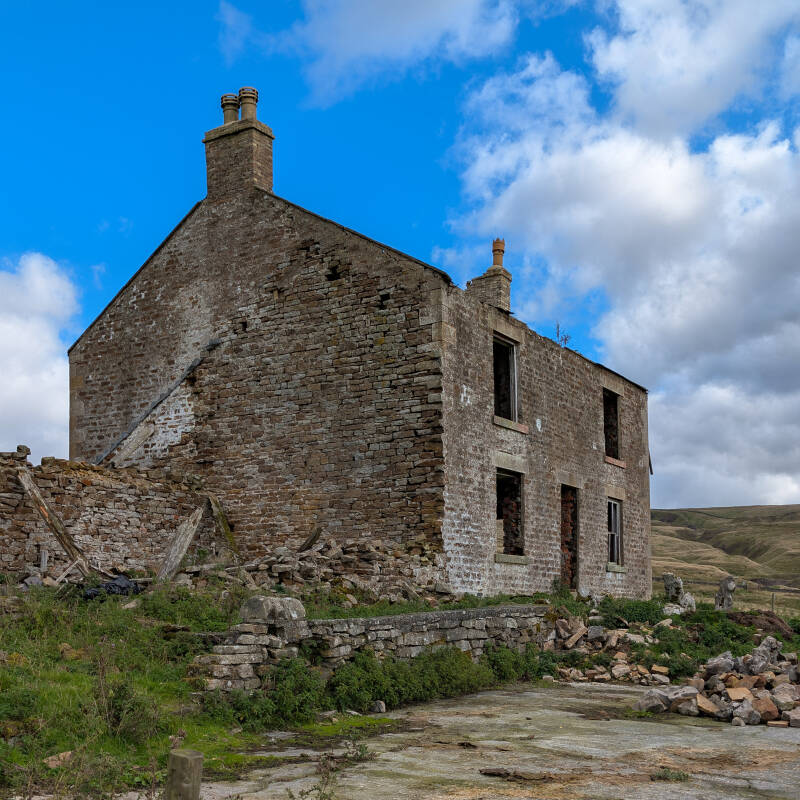
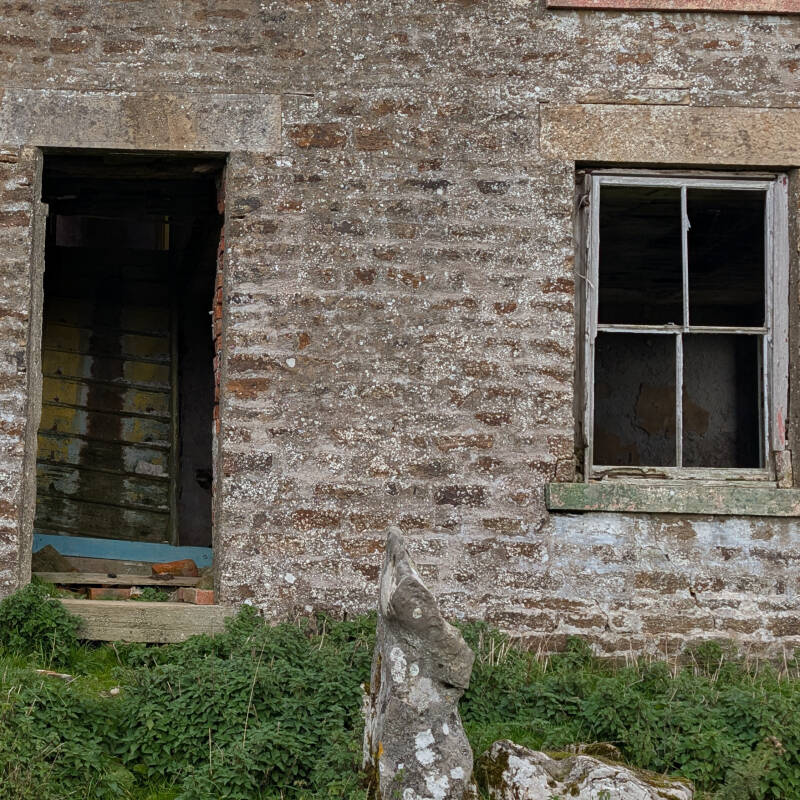
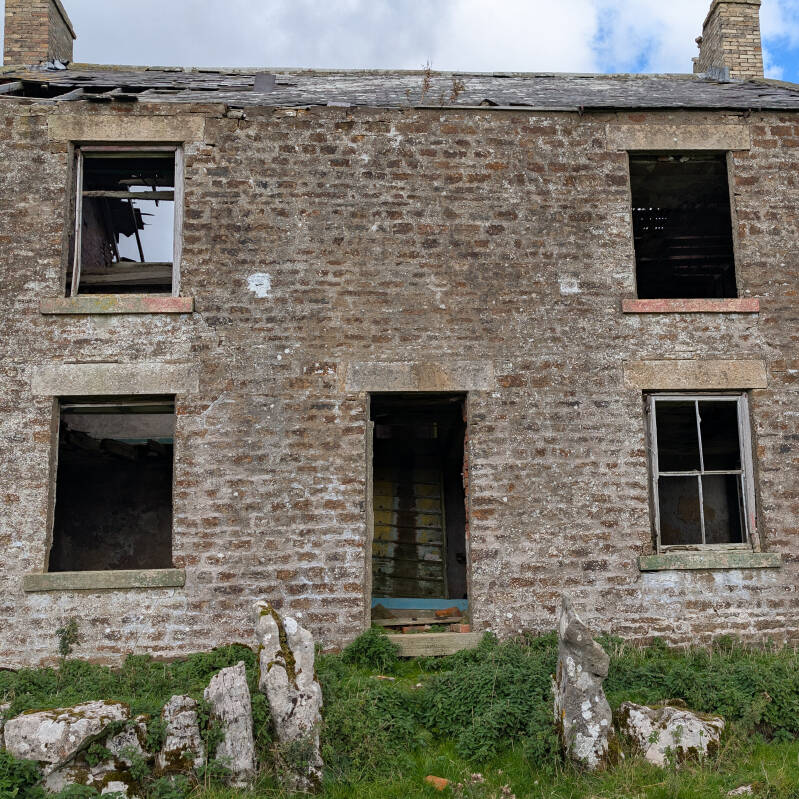
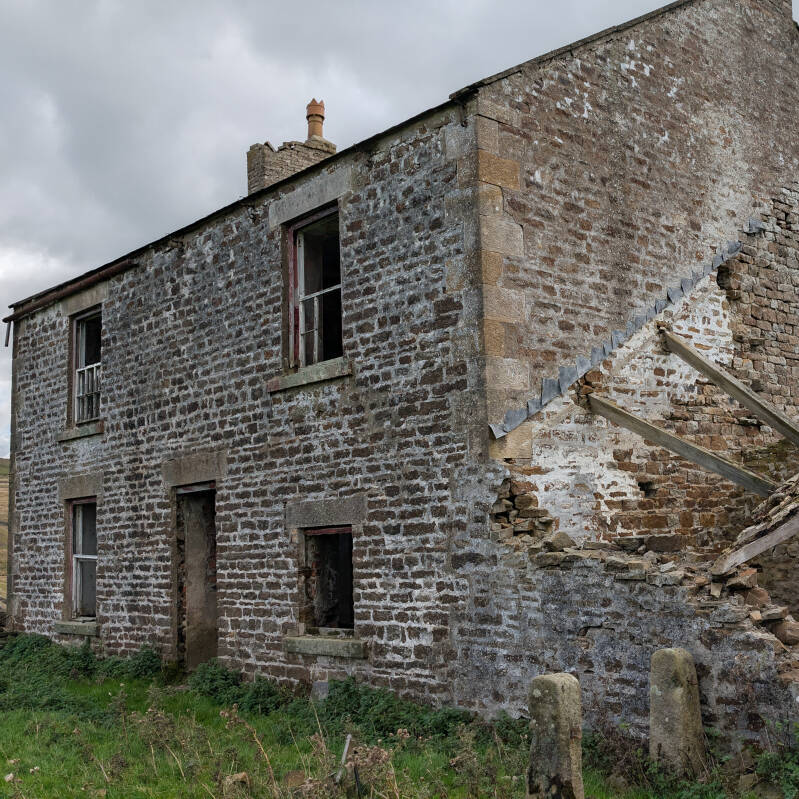
This is Red Grooves House, once a working hill farm and home to several families. It's been empty for many years, and although much of the stonework is still standing, the roof and floors have partly collapsed. There's no door left, only a few of the old sash windows remain, and inside, part of the staircase is somehow still hanging on.
We photographed the house on 3 October 2026, wanting to keep a record of it while there's still so much to see.
Quick Facts
Location: North of Newbiggin, Upper Teesdale
Grid reference: NY 9192 2926
Historic names: Red Grooves House, Red Groves Farm, Redgroves
Former use: Working hill farm and family home
Nearby landmark: Coldberry Gutter and Red Grooves Lead Mine
Condition: Abandoned, with collapsed roof and floors
Photographed:3 October 2026

A Little History of Red Groves Farm
Red Groves appears on old Ordnance Survey maps as Red Grooves House, although it was often called Red Groves Farm or simply Redgroves. We've managed to piece together quite a bit about the families who lived here, going back to the 1870s.
One of the earliest people we've found living here was John Anderson, a farmer's son who appeared before the magistrates at Barnard Castle in January 1878. He had been caught pursuing grouse on the Duke of Cleveland's moor and was fined ten shillings plus costs.
Another Anderson associated with Red Groves was Thomas, who was leaving the district in December 1880. Before going, he arranged an auction of his farming stock, which included cows, young cattle, sheep, a seven-year-old Cleveland mare, hay and various carts and equipment. There was also grazing available on 45 acres of land until April 1881.
Farming life continued here through the following years. In September 1885, J. Watson of Redgroves took third prize for Plymouth Rock chickens at a local agricultural show.
The Alderson family were another part of the farm's history. In July 1893, R. J. Alderson of Redgroves was among the people whose names appeared on an address welcoming Lord Barnard to his Teesdale estates. Around 600 people gathered at High Force for the occasion, with food, music and celebrations.
On 30 June 1906, John Alderson of Red Groves married Miss Watson of Brokensgill at Middleton Wesleyan Chapel. A couple of years later, Mrs J. Alderson was entering her butter at an agricultural show. She came third in the class for two pounds of salted butter, behind Mrs Close of Bowes and Mrs Bell of Forest.
John continued farming at Red Groves until 1913. When he gave up the farm that October, the sale included 23 Scottish ewes, ten gimmer lambs, cattle and an eight-year-old brown mare. There were also carts, sledges, harnesses and other equipment, along with grazing land available for the following months.
The Nixon Family at Red Groves
By the 1920s, William Nixon was farming at Red Groves. In October 1923, a brown colt foal from his mare, Merry Jess, appeared in a local livestock sale.
The family were preparing to leave in May 1925, when the farm's animals, equipment and household belongings were advertised for auction.
There were eleven cattle, 27 Swaledale sheep, fourteen young hens and cocks, and a sheepdog. The farm equipment included a horse rake, hay spade, harnesses and dairy utensils.
The household items are particularly interesting. Along with tables, a painted dresser and a sewing machine was an American organ in a walnut case. It's quite an unusual thing to picture inside this remote old farmhouse.
William and Annie Nixon later moved from Red Groves to Marsett in Wensleydale, where their daughter Jean was born. Jean later became well known across Upper Teesdale as Jean Addison. In a 1998 interview, she mentioned that her parents had lived at Red Groves before moving to Wensleydale.
Red Grooves House in October 2026
When we visited Red Grooves House in October 2026, much of the stonework was still standing, along with both chimney stacks. A few of the old sash windows remain, but there's no door anymore, sections of the roof have fallen in, and the floors inside have partly collapsed.
One thing that caught our attention was the old wooden staircase, still hanging on inside. It's strange to think how many times somebody must have walked up and down those stairs when this was their home.
Knowing a little about the families who lived here makes looking at the house quite different. The American organ and sewing machine from the 1925 farm sale particularly caught my imagination. It's hard to picture them here now, but this house must hold so many memories of ordinary family life that we'll never know about.
We wanted to photograph Red Grooves House while there's still something left to see. Perhaps in fifty or a hundred years, somebody will come across these photographs and see what Red Grooves House looked like in October 2026.
Photographs of Red Grooves House
The photographs below were taken during our visit on 3 October 2026 and show the house from several sides, including its remaining windows, damaged roof and ruined outbuildings.

Where Is Red Grooves House?
Red Grooves House stands north of Newbiggin in Upper Teesdale, close to the lower end of Coldberry Gutter and the former Red Grooves lead workings.
A public right of way passes close to the property, and we've marked its location on our Discover Teesdale map.
Please stay on the public footpath and do not enter the fenced area. The house is in a dangerous condition, with collapsed floors, damaged roofing and unstable masonry.
Historical sources: Teesdale Mercury, 1878, 1880, 1885, 1893, 1906, 1908, 1913, 1923, 1925 and 1998, together with historic Ordnance Survey mapping.
Photographs: Outdoor Exploring Family, 3 October 2026.