Red Well Spring, Barnard Castle
A hidden mineral spring with a much bigger story
Just north of Barnard Castle, tucked above Black Beck and the old field paths around Harmire, Red Well Spring is one of those quiet little places that would be easy to walk past without ever knowing what it meant.
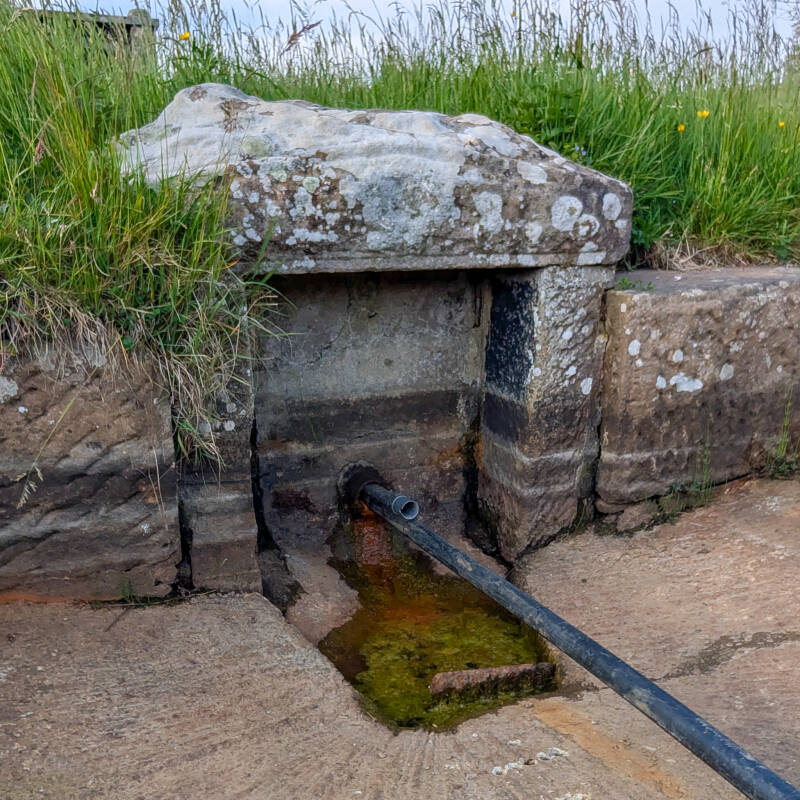
At first glance, it is a small stone spring beside a wall, with water running from a pipe and a rusty orange stain where the iron rich water has marked the stone. But the more you look into Red Well, the more it opens up.
This was not just a spring in a field. Red Well was once known locally for its chalybeate water, valued for its steady flow, specially reserved for public use, protected by the Jury of the Honor of Barnard Castle, marked on historic maps, repaired and improved with local subscriptions, and later made easier to reach by the Cleveland Walk.
It is a small place, but it carries a proper Barnard Castle story.
Quick Facts
Location: North of Barnard Castle above Black Beck near Harmire
Type of spring: Historic iron-rich mineral spring
Known for: Red-orange iron staining and historic public access rights
Nearest parking: The Hub car park, Shaw Bank, DL12 8TD
Walk length from parking: Around 10–15 minutes each way
Terrain: Grass paths, field edges and uneven ground
Pushchair friendly: No
Dog friendly: Yes, on leads
Best time to visit: Spring, summer and autumn
Historic links: Cleveland Walk, Scar Walk, Flatts Wood and Harmire

Where Red Well Spring is
Red Well Spring sits on the northern edge of Barnard Castle, above Black Beck, in the fields between Harmire Bridge and the old railway line.
Historic maps show it clearly as Red Well, positioned just above Black Beck. This helps separate it from the old Spa shown around Flatts Wood. The two should not be confused.
Red Well belongs to the Black Beck side of Barnard Castle. Flatts Wood belongs to the Percy Beck and River Tees side. The story links together through old walking routes, but the spring itself is not in Flatts Wood.
That is one of the details that makes this page important, because modern references could easily blur the two together.

How to walk to Red Well Spring from The Hub
The easiest place to start is The Hub car park, Shaw Bank, Barnard Castle, DL12 8TD.
From the car park, walk towards the hub entrance, then turn left and follow the path. Keep the BMX track on your right and continue under the old railway bridge.
After the bridge, follow the path with the Glaxo boundary fence on your left. Cross the small bridge over Black Beck, then continue straight on towards the stone wall.
When you reach the wall, turn left on this side of it and follow the wall along to Red Well Spring.
It is only a short walk, but it quickly feels like you have stepped away from the edge of town. The old walls, the beck, the open grass and the spring all give this corner a much older feel.
There is a shorter approach from the Harmire / golf club side, but parking there is very limited, so The Hub is the better starting point for most visitors.
Why Red Well Spring mattered
Red Well Spring was once far better known than it is today.
By the 1870s, the completed Cleveland Walk gave easy access to Red Well from Barnard Castle. Earlier discussion had suggested continuing the walk along Percy Gill towards Harmire Bridge, creating a wider network of beautiful walks linking the Spa, Red Well and the town through the scenery around Flatts Wood.
The spring was described as being about a mile north of Barnard Castle, close to the Harmire Road. Its water was chalybeate, meaning iron rich, with a slightly metallic taste and a red deposit left behind by the water. That red deposit is where the name Red Well comes from.
The spring was also known for its steady supply. The water was described as available in all seasons, and the spring was valued because it never failed. In a time before modern water systems were taken for granted, that mattered.
Red Well was not spoken about as private farmland or an ordinary trough. It was treated as a useful public spring, a walking destination, and a place local people cared about enough to protect, repair and improve.
That is what makes this little place so interesting.
It was small, but it mattered to the town.
Why it is called Red Well
The name is wonderfully simple.
Red Well gets its name from the colour left behind by the water.
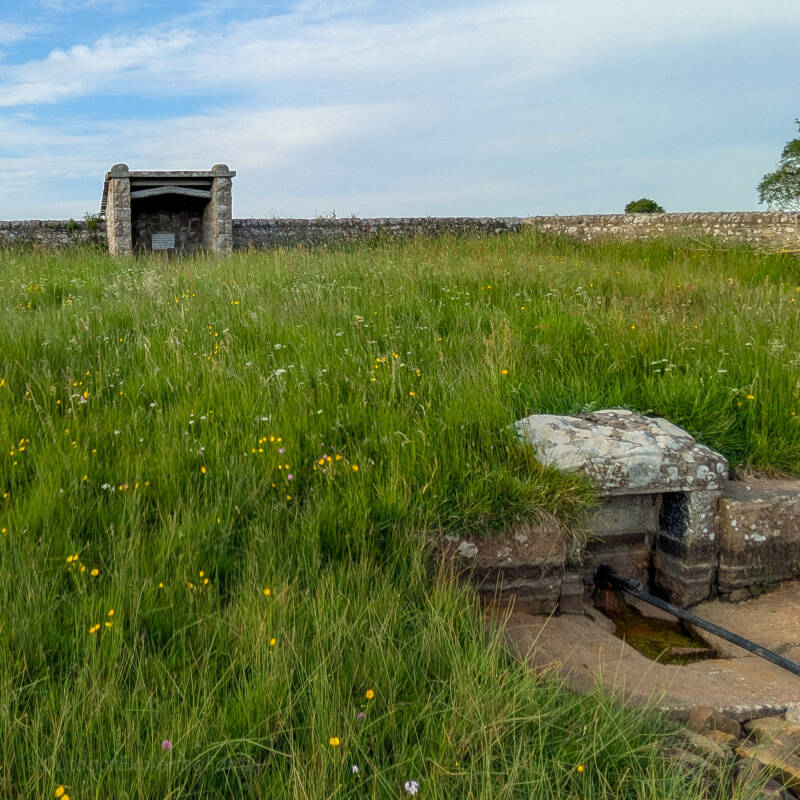
The spring is iron rich, and as the water comes into the open air, it leaves rusty red and orange staining around the outlet. You can still see that staining today around the pipe and stone channel.
Old descriptions called the water chalybeate, which is the old term for iron bearing mineral water. That iron content explains the metallic taste people once noticed and the red staining that still makes the name feel completely right.
Red Well is red because the water carries iron.
The public right to Red Well
One of the strongest parts of the Red Well story is that it was protected for public use.
Red Well was specially reserved for the public, with a small area of ground kept around the spring. Public footpaths were also set out to reach it, including a route from the watering place near Harmire Bridge and another route across nearby allotment land.
That changes how the spring should be viewed.
Red Well was not just a private spring sitting in a field. It was a place people had a recognised right to visit.
By the nineteenth century, there had been concern about encroachment around the well. The Manor Court Jury became involved, the boundaries of the spring were defined, and a stone with an inscription was set up to show the legal right of the public to Red Well and its surroundings.
The modern plaque at the site records the Red Well boundary as twenty two yards square, belonging to the Township of Barnard Castle, and connected with the Jury of the Manor Court in 1852. Some older newspaper wording also refers to boundary action in 1832, so there may have been more than one stage in the story.
Either way, the meaning is clear.
Red Well was valued enough to be marked out, defended and remembered.
The walled enclosure around Red Well
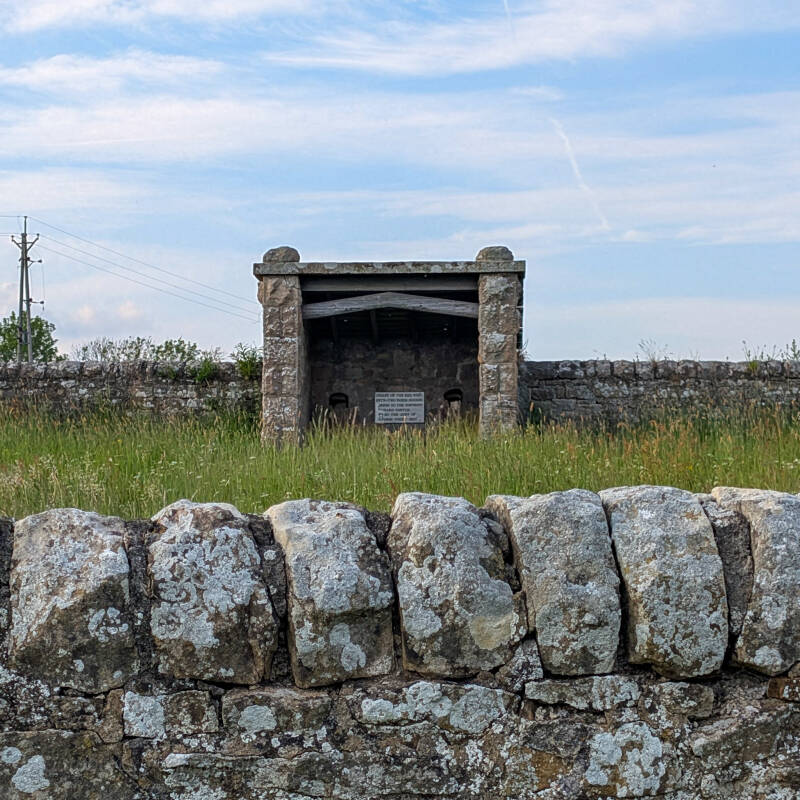
One of the things that makes Red Well feel different when you arrive is that the spring is not just sitting loose in the field. It has a proper stone wall around it, a small shelter, an entrance through an old kissing gate, and a plaque that still records the boundary of the Red Well.
That changes the whole feel of the place.
This was not treated like an ordinary farm spring. The wall around it shows that the spring and the ground around it were deliberately marked out and protected. It gives Red Well its own little space, almost like a tiny public enclosure hidden above Black Beck.
The old kissing gate adds to that feeling too. It makes the site feel like somewhere people were meant to enter, not just somewhere they stumbled across. You can imagine visitors walking out from Barnard Castle, passing through the gate, stepping inside the enclosure and resting beside the spring.
Inside the shelter, the plaque records the boundary of the Red Well as twenty two yards square. That detail might sound small, but it is one of the strongest parts of the whole story.
It tells us the spring had recognised public importance. The ground around it was not simply swallowed into the surrounding farmland. It was measured, protected and remembered as belonging to the Township of Barnard Castle.
That is why the wall, shelter and gate matter so much today. They help turn the old records into something you can actually see on the ground.
There may once have been an earlier boundary stone or marker connected with the public right to the well. Whether that original stone still survives is uncertain, but the enclosure itself still carries the same message. Red Well was valued enough for people to mark it out, protect it and keep access to it open.
Standing inside the enclosure today, with the spring still flowing and the old stonework around you, it feels like a small surviving piece of Barnard Castle’s public heritage.
The water, trough and drinking cup
One of the most human parts of the Red Well story is how much people cared about the water itself.
At one point, the spring had fallen into a poor state. Water was overflowing across the path, the walks were overgrown, parts of the shelter had been damaged, and the drinking cup had disappeared.
That drinking cup matters more than it first sounds.
People were still walking out to Red Well to drink the water.
Repairs were eventually carried out. The drain was reopened, the enclosure repaired, the walks cleared again, and a new drinking cup with a chain was fixed at the well.
There was even talk of planting ornamental trees around the enclosure.
That tells us Red Well was still being actively cared for as a place people used, not just somewhere forgotten in the fields. It remained a public spring, a walking destination and a small local attraction well into the nineteenth century.
Red Well and Barnard Castle’s old walking routes
Red Well also belongs to the story of Barnard Castle as a walking town.
The completed Cleveland Walk gave easier access to Red Well and connected the spring with Barnard Castle’s old recreation routes. This was not just a rough field crossing. Red Well sat within a wider walking landscape that included Flatts Wood, Percy Beck, the Scar, King’s Walk, Rock Walk, Harmire Bridge and the old routes north from town.
There was even a suggestion in 1868 to continue the Cleveland Walk along the east side of Percy Gill, through the dry arch near the railway bridge, then around towards Harmire Bridge. The idea was to create a complete network of beautiful walks connecting the Spa, Red Well and the town through the scenery of Flatts Wood.
That is such an important detail.
It shows how people once imagined this whole edge of Barnard Castle as a connected outdoor landscape, not as separate fragments.
The wider Flatts Wood area had its own Spa, separate from Red Well, while routes such as Rock Walk, Castle Well, Scar Walk and King’s Walk formed part of the same wider walking landscape.
People were not just visiting a well.
They were walking out from Barnard Castle into the countryside around it.
The Spa in Flatts Wood
The Spa in Flatts Wood should not be confused with Red Well.
They appear to be separate springs or water features, but the old walking routes connected them together in the wider Barnard Castle landscape.
The Spa was clearly cared about too. It was cleaned out, the spring was traced through the rock, the pipe was restored, steps were repaired, and the surrounding wall was rebuilt. At one point the paths around the Spa Walks were described as needing attention so they could regain the popularity they once had.
That helps us understand Red Well better.
It was not alone.
Barnard Castle once had a small network of wells, springs, paths, seats, becks and woodland walks that people used for fresh air, health and quiet recreation.
Red Well was part of that bigger story.
George Brown, Dr George Edwards and Victorian health
Red Well sits right in the middle of a very Victorian way of thinking about health.
The strongest named person connected directly with the water itself is George Brown. He collected testimonials about the usefulness of Red Well water, and old medical opinions were used at the time to support the value people placed on iron rich mineral springs.
Some of those old claims sound very strong today, so they should be treated as Victorian belief rather than modern medical advice. But they are still important because they show how seriously people once took the water at Red Well.
In the nineteenth century, chalybeate springs were often seen as tonic waters. People connected iron rich water with strength, recovery and improved health. Red Well fitted neatly into that world because it was close enough to Barnard Castle for a short walk, but far enough away to feel like open countryside.
The walking side of the story links with Dr George Edwards, the local doctor and philanthropist associated with Barnard Castle’s old health walks through Flatts Wood. He is remembered for helping create routes such as the Cleveland Walk and King’s Walk, giving people from the town a place to walk, breathe cleaner air and escape into quieter surroundings.
This was a period when fresh air, walking, woodland paths, quiet views and mineral water were all tied together in people’s minds. Barnard Castle was even being spoken about as a summer resort for visitors seeking health and pleasure.
That is the heart of the story.
The old Harmire landscape on the maps
Old maps help place Red Well properly.
They show the spring above Black Beck, close to Harmire Bridge, Quarry Grange, the old railway line, field boundaries and the routes leading out from Barnard Castle.
The old maps also show other features nearby, including the former fever hospital.
The important point is that Red Well was not hidden deep in Flatts Wood and was not just an unnamed spring in a random field. It sat in the old Harmire landscape above Black Beck, connected by paths to the town and to the wider walking routes around Percy Beck, Flatts Wood and the Scar.
Once you see it on the old maps, the whole place starts to make sense. Red Well was part of a wider edge-of-town landscape where paths, springs, becks, walls, railway lines and old health walks all came together.
What to look for at Red Well today
At the site today, look for the stone spring structure built into the bank, the pipe where the water flows, and the red orange staining around the outlet.
Look also at the walls, the grassed enclosure, the old kissing gate, the nearby stone shelter and the way the spring sits just above Black Beck. The setting still matches the old maps surprisingly well.
The old kissing gate, walled enclosure, shelter and plaque are especially important because they are the visible remains of Red Well’s public access story.
The spring is simple, but that is part of its charm.
There are no big signs, no visitor centre and no polished tourist feel. Just stone, water, iron staining, old walls and a quiet view back into a forgotten piece of Barnard Castle’s past.
Explore more around Barnard Castle
Red Well is just one small part of Barnard Castle’s wider walking and history landscape. You can explore more local stories in our Teesdale History and Heritage guide, discover nearby routes in our Walks in and Around Barnard Castle section, or explore woods, paths and landmarks on our Barnard Castle Map.
If you enjoyed discovering Red Well, you may also like reading about Gainford Spa and the old sulphur spring beside the River Tees.