Winston Bridge and the Spitfire Flight Over Teesdale
Above the River Tees between Winston and Caldwell stands one of the most remarkable historic bridges in Teesdale. At first glance it looks peaceful and timeless, surrounded by woodland and steep riverbanks, but Winston Bridge has witnessed far more history than many people realise.
Built in the early 1760s as part of an important turnpike road, the bridge once carried coal traffic between County Durham and North Yorkshire, survived the devastating Great Flood of 1771, and later became famous across the country when a Spitfire was flown beneath its enormous stone arch during the filming of an ITV wartime drama.
Today, most people simply drive across it without knowing the story beneath their wheels.
Quick Facts
Location: Winston, near Barnard Castle
River: River Tees
Built: 1762 to 1763
Bridge type: Single-span stone arch bridge
Designer: Sir Thomas Robinson of Rokeby
Span: Around 111 to 112 feet
Historic use: Turnpike road and coal transport route
Famous for: Surviving the Great Flood of 1771 and the 1988 Spitfire stunt flight
Current road: B6274
Listed status: Grade II* listed

A Bridge Built for the Turnpike Age
Winston Bridge was constructed between 1762 and 1763 during the great age of turnpike roads.
At the time, roads across Britain were often managed by turnpike trusts. Travellers paid tolls at gates along the route, and the money raised helped maintain roads and bridges. Winston Bridge formed part of the Winston Bridge Turnpike Road, an important route linking County Durham with North Yorkshire.
Historical notices published through the 1800s show meetings of the Winston Bridge Turnpike Trust being held at the Four Alls Inn in nearby Ovington. The records also mention toll gates at places such as Winston Gate and Alwent Gate, helping confirm the bridge’s role as part of a working toll road network.
The route was especially important for transporting coal southwards towards Richmond before the arrival of the railways changed travel and trade across the region.

Sir Thomas Robinson and the Great Stone Arch
The bridge was designed by Sir Thomas Robinson of nearby Rokeby Park.
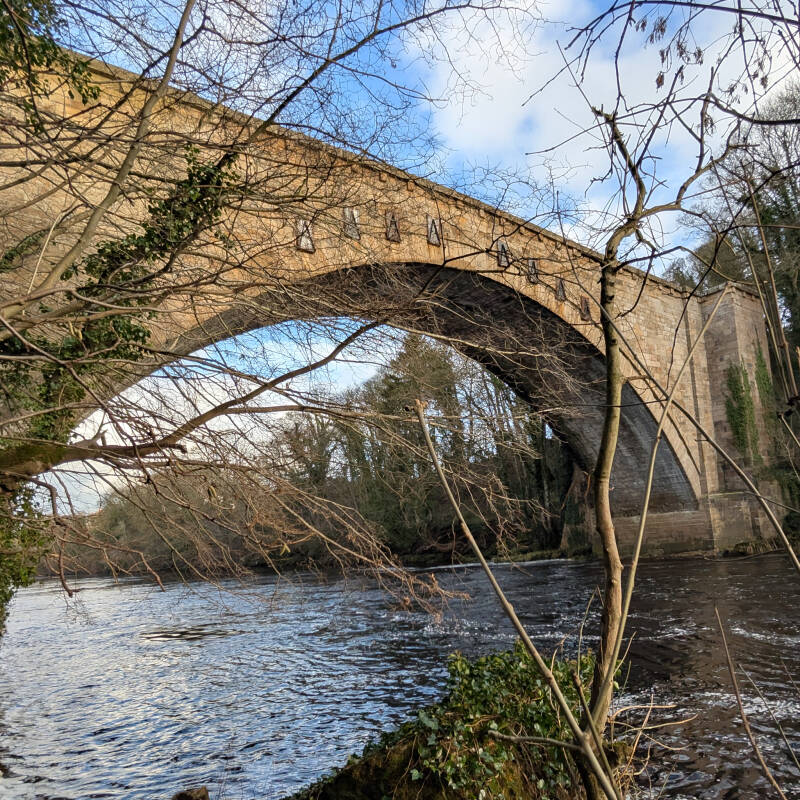
Its enormous single stone arch stretched around 111 feet across the River Tees, making it one of the largest masonry bridge spans in Britain at the time. Some historic accounts even claimed it was among the widest single-span stone bridges in Europe when completed.
The bridge rises dramatically above the river below, carrying the road across a deep wooded section of the Tees. Even today it still feels impressive when viewed from beneath, especially from the riverbanks downstream where the full height of the arch becomes visible.
Historical descriptions from travellers passing through Teesdale in the 1800s often mentioned the beauty of the scenery around Winston and Ovington, with wooded riverbanks, steep cliffs and peaceful views over the Tees.
One 19th century guidebook described crossing “a handsome stone bridge” before climbing into Winston village, praising the quiet scenery and churchyard views above the river.
The Great Flood of 1771
One of the most important moments in the bridge’s history came during the Great Flood of 1771.
This catastrophic flood destroyed many bridges across northern England, including several crossings over the River Tees. Winston Bridge, however, survived.
Its survival helped cement its reputation as an engineering achievement of the period and remains one of the reasons the bridge is still historically important today.
The Spitfire Flight Beneath Winston Bridge
In July 1988, Winston Bridge suddenly found itself at the centre of an extraordinary moment in television history.
The bridge was selected as a filming location for the ITV drama series A Piece of Cake, based on Derek Robinson’s novel about RAF fighter pilots during the early years of the Second World War.
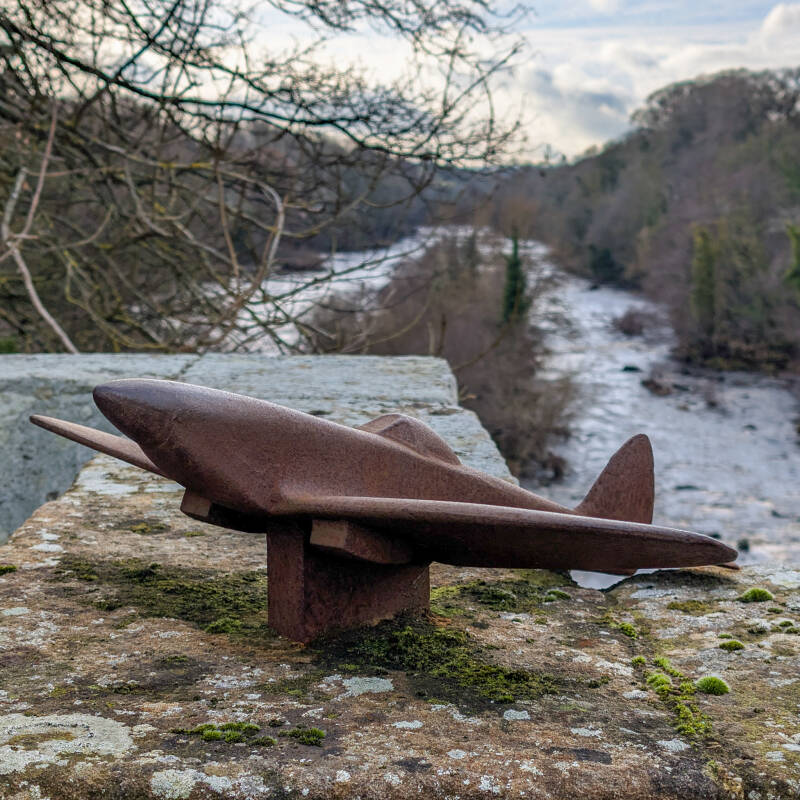
Former RAF pilot Ray Hanna flew a real Spitfire beneath the bridge as part of the production.
For a short time, this quiet corner of Teesdale was transformed into wartime France. Film crews gathered along the riverbanks and roadsides while local residents watched as the aircraft roared low above the River Tees before passing directly beneath the great stone arch.
Reports from the time describe television crews surveying bridges across Europe before eventually selecting Winston because of the sheer width of its single arch. Trees beside the river reportedly had to be cut back to give the pilot a clearer run beneath the bridge.
The stunt quickly became one of the most talked-about moments ever filmed in Teesdale.
Another nearby bridge at Whorlton was also reportedly considered during location scouting before Winston was chosen.
A moment remembered locally
For residents of Winston and the surrounding area, the day left a lasting impression. A quiet riverside setting, normally defined by flowing water and passing traffic, had briefly echoed to the sound of a Merlin engine as a Second World War fighter skimmed the river beneath a Georgian stone arch.
More than three decades later, the story is still talked about locally, and Winston Bridge is often referred to as the “Spitfire Bridge” by those who know its history.
A Place to Pause
Today, most people simply drive across Winston Bridge without ever stopping to think about the history beneath them.
Yet this quiet crossing above the River Tees has carried centuries of stories. Travellers once paid tolls here before continuing along the old turnpike road. The bridge survived the Great Flood of 1771. Then more than two hundred years later, a Spitfire roared beneath the same stone arch in one of Teesdale’s most unforgettable moments.
Stand here for a while and the bridge feels different. The river still moves below exactly as it always has, flowing beneath the same huge arch that generations before us once crossed on foot, by horse and cart, and later by car.
Places like this are easy to pass through.
But much harder to forget once you know their story.
Explore More in Teesdale
Winston Bridge is part of our wider Bridges of Teesdale collection, where we explore the historic bridges, viaducts, aqueducts and river crossings that helped shape the valley.
If you enjoy discovering the quieter stories hidden across Teesdale, there are many more places nearby where history and landscape quietly meet together. Explore the old sulphur spring at Gainford Spa beside the River Tees, or uncover the forgotten story of Red Well Spring in Barnard Castle.
You can also continue exploring Teesdale’s historic crossings and riverside landscapes with places such as Wynch Bridge, Whorlton Bridge, Abbey Bridge and County Bridge.
For more local history, discover the story of Streatlam Castle or its former owner John Bowes.