Startforth Morritt Memorial School
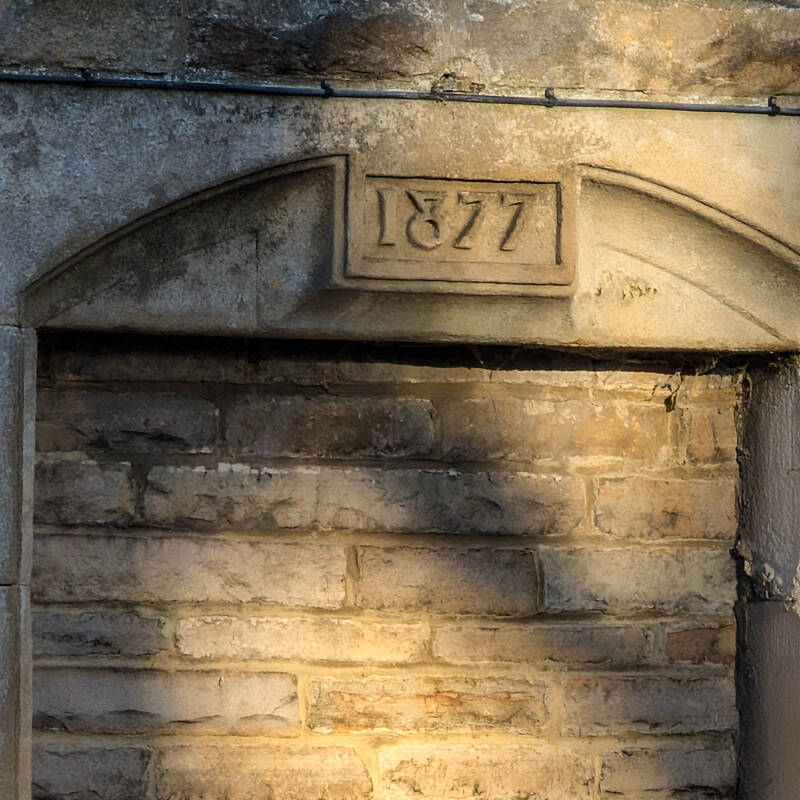
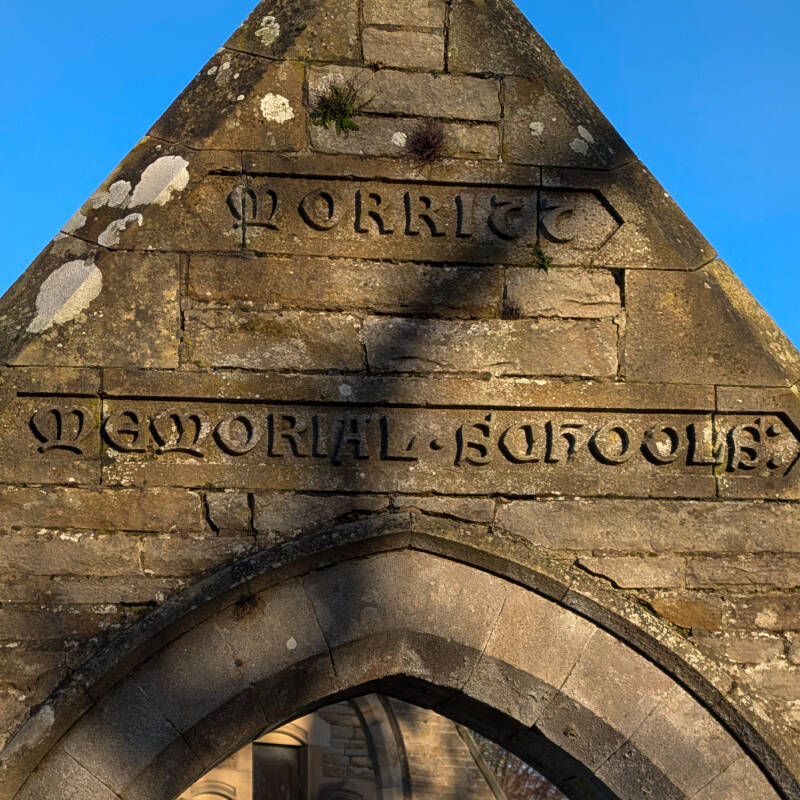
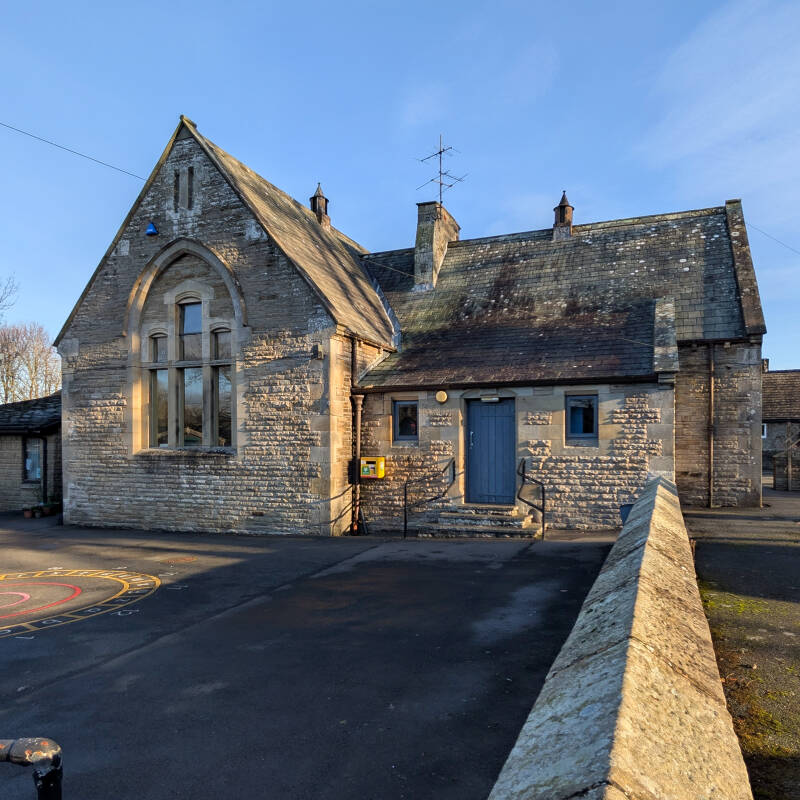
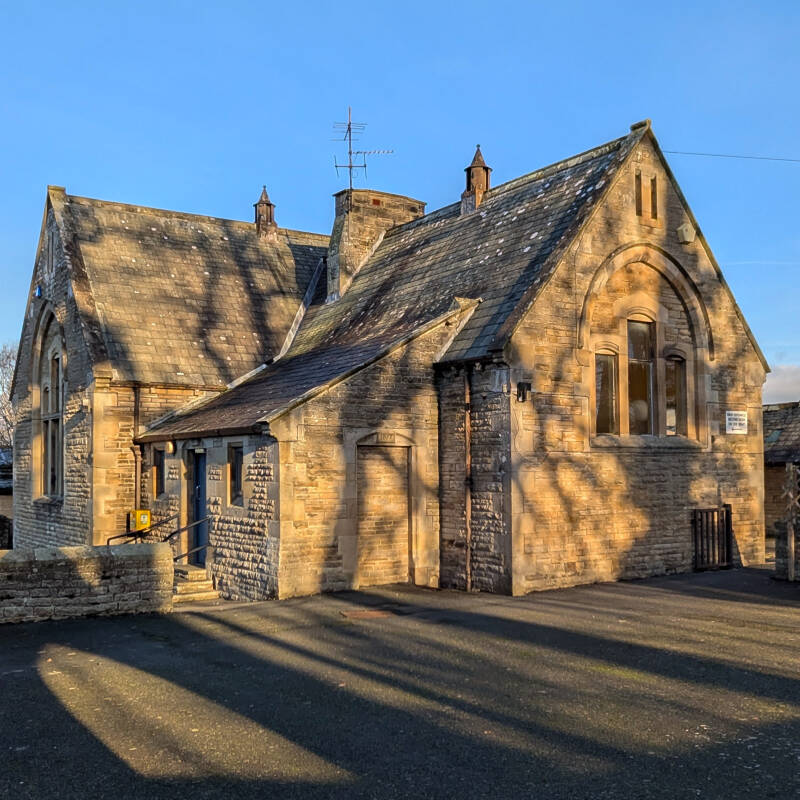
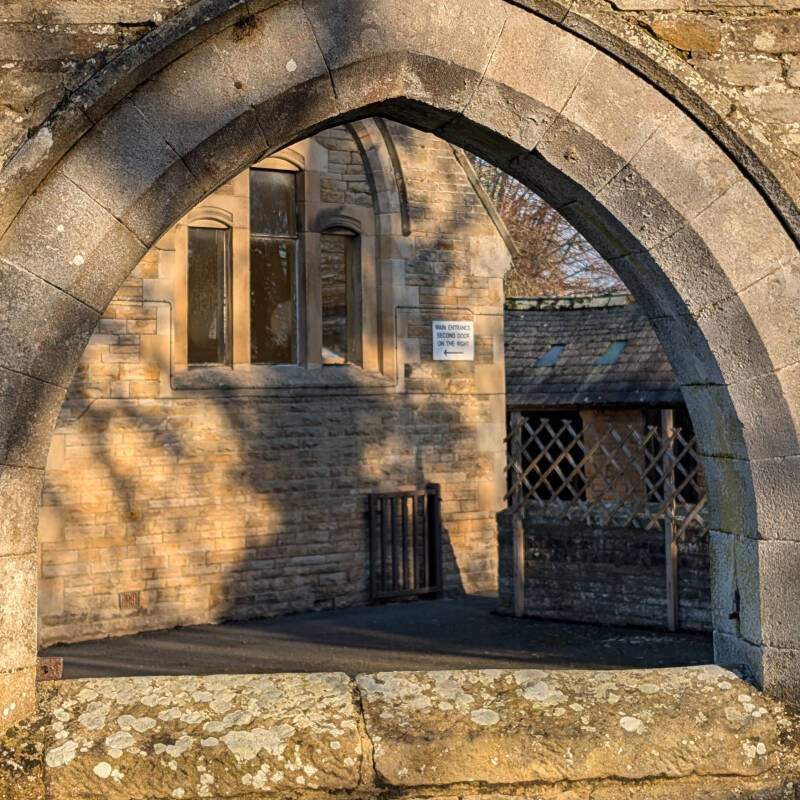
Startforth Morritt Memorial School still stands in High Startforth, with its original Victorian building alongside its later classroom extension. It opened in November 1877, although it wasn't the first school in the village. The new building was paid for through a charitable gift left by Ellen Frances Morritt of Rokeby Park, and old cottages once stood on the site were demolished to make room for it.
Over the years there were arguments over who should run the school, teachers who spent most of their working lives there and generations of local families whose children passed through its classrooms. Even after the school closed in December 2016, local people weren't ready to give up the building and worked to keep it in use for the village.
Quick Facts
Name in 1877: Morritt Memorial Schools, Startforth
Later name: Startforth Morritt Memorial Church of England Primary School
Location: High Startforth, Barnard Castle, DL12 9AQ
Original building constructed: 1877
Official opening: Monday 26 November 1877
Benefactor: Ellen Frances Morritt (c.1819–1874), of Rokeby Park
Architect: Mr Haswell
Builders: Robert Borrowdale of Darlington and T. Borrowdale of Barnard Castle
Schoolmaster at opening: Thomas Mudd
Children at the opening celebration: 90
Major redevelopment: Planned in 1978–1979
School closed: 31 December 2016
Later use: Startforth Community Centre and nursery

The school before Morritt Memorial
Before the new school opened in 1877, children in Startforth attended an older village school known as the National School. These schools were connected with the Church of England and provided education for local children, teaching subjects such as reading, writing and arithmetic. By the 1870s, the building was in a pretty sorry state, and there wasn't enough room for all the children who attended it.
At the end of 1872, the schoolmaster, Mr Rideal, was preparing to leave for another appointment. His friends gathered at the Turk's Head Inn in Barnard Castle and presented him with a gold pencil case and a purse of gold. The Reverend J. Brockbank, Vicar of Startforth, made the presentation. Rideal was replaced by John Wild, who came from Dukinfield and had qualifications in drawing, geometry and physical geography.
When the Startforth School Board began operating in 1874, it took over the old Church of England schoolroom. At a meeting on 30 June, members discussed arrangements for the room to remain available for Sunday school, along with an offer of land from Timothy Hutchinson to enlarge the premises. There were concerns about children missing lessons, with some being sent out to work instead. The Board was responsible for education in Startforth and neighbouring Boldron, but the old building was becoming increasingly unsuitable.
The children were doing well under John Wild. When the results of the March 1875 examination were published, they had achieved 94 out of a possible 102 passes in reading, writing and arithmetic, despite a difficult winter and an outbreak of measles. The inspector was impressed with their progress, but certainly not with their school. He described the building as dilapidated and extremely inconvenient and opposed spending money trying to repair it. By July 1877, the roof was leaking so badly that rainwater was collecting on the classroom floor. The village needed a new school, and the Morritt Memorial building was already under construction.
Startforth had also been home to private boarding schools. Further along High Startforth, a large house known as Startforth House was used as a boarding school for boys from around the middle of the eighteenth century until the middle of the nineteenth. Almost opposite stands The Manor House, an older building which was also used as a boarding school during the early 1800s. Both houses are still standing today and are Grade II listed. Startforth House is now divided into two homes, called Startforth House East and Startforth House West. These were private establishments, quite separate from the village school.

Building the Morritt Memorial School in 1877
While the children were still attending lessons in their old school, work on its replacement had already begun. The money came from a charitable gift left by Ellen Frances Morritt of Rokeby Park, who had died on 13 September 1874, just five months after her husband, William John Sawrey Morritt. Ellen had left money for charitable purposes, including schools, churches and almshouses, which provided homes for people in need. And her trustees decided to use part of it to provide a new school for Startforth. Those responsible included the Dean of York, William Watson of Startforth Hall and James Scott of Rokeby Grove.
The site in High Startforth wasn't an empty piece of land. There were old cottages standing where the school was to be built, and in January 1877 Robert Borrowdale, a building contractor from Darlington, began pulling them down. They were described as being in a dilapidated condition, and the trustees were also buying other properties around the site. Among their purchases were five cottages belonging to Richard Dawson of Greta Bridge, bought for £410, along with other cottages and a former dwellinghouse that had been converted into a stable. Not all the properties acquired were demolished, and some of the cottages remained part of the school estate for many years afterwards.
The arrangements also involved the old village pinfold, a small enclosure where stray farm animals were kept until their owners collected them. It stood beside Gill Beck, near the road bridge where the lollipop lady used to stand. Land and outbuildings on the opposite side of the road were also included in the agreement.
The school also needed enough land for its classrooms and playgrounds. Timothy Hutchinson of Egglestone Hall helped by giving a further 800 square yards of land for the project. The building was designed by an architect named Mr Haswell, with Robert Borrowdale carrying out the main construction work and T. Borrowdale, a joiner from Barnard Castle, also employed on the building. When the plans were announced in February 1877, the cost was expected to exceed £2,000. By 1884, the total cost to the charity, including furnishing the school, was reported to have exceeded £2,800.
It's quite remarkable how quickly the new school went up. Work had only begun in January 1877, when the old cottages were being pulled down, and by September the building was nearly finished. There was a bit of trouble along the way when someone deliberately damaged expensive carved stones intended for the school. A £5 reward was offered in May for information about who had done it. The Dean of York came to inspect the building in September, and although the school had originally been expected to open after the summer holidays, the children had to wait until 26 November before they could move in. Even so, going from demolishing the old cottages to opening a brand new school in just eleven months was quite an achievement.
The opening of Morritt Memorial School in November 1877
The new Morritt Memorial Schools opened on Monday 26 November 1877. It wasn't a grand occasion where lessons were forgotten for the whole day. The children arrived in the morning, gathered in their new classrooms under schoolmaster Thomas Mudd and got on with their usual work. The celebrations were saved for the afternoon.
At three o'clock, ninety children sat down to tea provided by Mr and Mrs William Watson of Startforth Hall. Afterwards there were games and singing, with Thomas Mudd looking after the proceedings. Mrs Watson gave every child a book to take home, while James Scott of Rokeby Grove, one of Ellen Morritt's trustees, called in and offered a few words of advice. The children cheered the Watsons, school board members Robert Barker and Abraham Hilton, and the two Borrowdales who had built the school. The Reverend J. Brockbank, Vicar of Startforth, also attended.
The new building was quite different from the old schoolroom. It had been designed in the shape of a capital T, with the infants room forming the stem and the main schoolroom across the top. A sliding partition allowed part of the larger room to be separated for lessons or sewing, and there were two playgrounds, one for the boys and another for the girls. The classrooms had been furnished with new fittings, and the finished building received plenty of praise.
The children didn't have long to wait for another celebration. Just a few weeks after opening, arrangements were made for a Christmas tree and entertainment involving the pupils, with visitors invited along. These sorts of gatherings became a regular part of school life over the years, with concerts, church events, fundraising and village activities all making use of the building.

An argument over who should run the school
Although the new school had been paid for through Ellen Morritt's charitable gift, it wasn't actually run by her trustees. The building belonged to the charity, but the elected Startforth School Board was responsible for educating the children. In November 1878, an agreement was made allowing the Board to use the school for £30 a year.
For a few years things carried on, but there were disagreements about how the school should be run. William Watson, one of the Morritt trustees, wanted to protect the building's connection with the Church of England, while some members of the School Board were unhappy with the conditions attached to using it. By 1884, the disagreement had become serious enough that the Board was in danger of losing the building altogether.
Thomas M. Barron, a solicitor from Darlington, tried to find a way for the School Board to remain in the building while the argument was sorted out, but Watson wouldn't agree. The Morritt trustees were already making arrangements to run the school themselves as a Church of England school.
The disagreement went on for months, with arguments appearing in the newspapers and letters being sent to the Education Department in London. It was about more than who owned the building. There were also questions about religious teaching, government funding and who should have the final say over the children's education.
By February 1885, things had become rather complicated. The Morritt Memorial School was teaching children under its new management, but the Education Department wouldn't officially recognise the school, which meant it couldn't receive the usual government funding. In May, supporters of the school petitioned for it to be recognised, pointing out that 138 children were already on its books.
The problem turned out to be the old Board School. Although it had stopped operating about eleven months earlier, nobody had officially closed it. As far as the Education Department was concerned, the Board School still existed, even though the children were attending Morritt Memorial under different management.
Eventually, at a special meeting in 1885, William Watson proposed that the old Board School should be officially closed. The Reverend H. Jennings supported him, and the proposal was passed, with Abraham Hilton choosing not to vote either way. This cleared the way for Morritt Memorial to continue as a voluntary Church of England school, with arrangements for children whose parents didn't want them taking part in Church of England religious lessons.
The Startforth United School Board remained responsible for making sure children attended school until it was dissolved in 1887.
A few years later, on 14 July 1892, William Watson, who was then living at Thorngate House in Barnard Castle, formally handed over the school buildings, outbuildings and three cottages to the vicar and churchwardens of Startforth. The property was to continue being used for the village's National School. Watson died on 10 August 1892, just twenty-seven days later.
Robert James Bailey and the old schoolteachers
One of the longest serving headmasters in the school's history was Robert James Bailey, a Startforth man born on 14 December 1861. Robert James Bailey began his teaching career at Barnard Castle's Church of England School, connected with St Mary's Church. There had been a boys school beside the churchyard since 1814, with a separate girls school added in 1840. Bailey later trained at the North Wales Training College in Carnarvon before becoming headmaster at Startforth in January 1885.
Bailey remained in charge until the end of 1926, spending almost forty-two years teaching Startforth children. By the time he retired, he was teaching the sons and daughters of some of his earliest pupils. At one point the school had around 150 children, although there were approximately 110 towards the end of his time as headmaster.
He was involved in plenty outside the classroom too. Bailey served as chairman of Startforth Parish Council, organised a War Savings Association during the First World War and was a keen sportsman. He had played football and cricket in his younger years and later became heavily involved in Barnard Castle Golf Club, serving as captain for many years. He also helped with Startforth Sunday School and the parish church activities.
There was sadness in his family during the First World War. His only son, Private Robert Cecil Bailey, served with the Royal Fusiliers and died in hospital on 2 February 1916, aged just 22. Robert Cecil was the son of Robert James and Emily Jane Bailey of Sunny Glen, Startforth, and was buried at Holy Trinity Church.
Bailey was also responsible for helping train several young teachers who had once attended the school themselves. By 1926, three of his assistants, Miss Plews, Miss Watson and Miss Longworth, had all previously been pupils at Startforth. His retirement at the end of that year was marked by a presentation organised with contributions from former pupils and friends.
One of those former pupils who later became a teacher was Elizabeth Watson. She had first entered Startforth School in January 1894, aged nine while living with her parents at Boldron. She went on to work as a probationer and pupil teacher before being formally appointed to the teaching staff on 1 March 1905. For the next thirty-nine years she taught at Startforth, mainly in the infants department.
When Elizabeth retired in August 1944, she had been connected with the school for more than fifty years. The managers, former pupils and friends raised money for a presentation, and the occasion was marked by the Reverend F. C. Giddens, who chaired the school managers. After spending most of her life around Startforth and Barnard Castle, Elizabeth moved to Essex to live with her sister.
Her replacement was Miss Bessie Wightman, who took up her appointment on 1 September 1944. She had previously taught at Whorlton and was already well known locally through her work as organist at the Holy Trinity Church. Bessie remained a teacher at Startforth until retiring in 1967, while continuing her long association with the church.
When Robert Bailey retired at the end of 1926, Harold Bennett took over as headmaster. He stayed at Startforth for ten years before leaving in May 1937 to become headmaster at Brompton School, near Northallerton. The children and staff were sorry to see him go and surprised him with an oak lamp. Miss Plews had organised the presentation, and one of the pupils, Edward Scott, handed him the gift. The school managers also gave him an electric clock.
His replacement was Mr J. Liverseed, who came from Brompton School, where he'd been teaching for fifteen years. He took over at Startforth in 1937 and was still headmaster during the Second World War.
School life during the war years
Life at Startforth School changed quite a bit during the years before and during the Second World War. In October 1938, Rokeby Church of England School closed after the number of children on its register had fallen to little more than twelve. Its remaining pupils were transferred to Startforth, bringing another small group of children into the Morritt Memorial classrooms.
Earlier that summer, six Startforth boys had enjoyed a day out at the Empire Exhibition in Glasgow with headmaster Mr Liverseed. They caught an early train from Darlington and spent the day looking around the exhibition, returning home in the early hours of Saturday morning. It was a long day, and there was far more to see than they had time for.
When the Second World War broke out in September 1939, children were sent away from towns and cities at risk of bombing to live in safer places in the countryside. Some came to Startforth, where local families took them in and they attended the village school. The school records include children arriving from Gateshead and Sunderland during 1939 and 1940.
By November 1944, some of the children who had been evacuated to Teesdale were returning home to Middlesbrough. A group gathered at Startforth School before setting off, but not everyone wanted to leave. Some had spent several years living with local families and had become very attached to them. A few stayed behind, including older children who had found work in the area, while others were already making plans to return for holidays.
During the war, the children and staff had raised money for the Red Cross, but in July 1945 they were fundraising for something closer to home. The school still needed electric lighting, despite having opened nearly 68 years earlier. A bring-and-buy sale was held to help pay for it, raising around £25.
School concerts and fundraising became a familiar part of life in the years after the war too. There were always things the school needed, and parents, teachers and children regularly helped to pay for them.
New classrooms and a growing school
By the early 1960s, the school was educating around 130 children. In December 1962, when Mr A. Ruston was headteacher, the pupils put on a concert to help buy a film projector. The school needed £30, and an earlier jumble sale had raised about £20 towards the cost. Rather than leave the rest to the adults, the children helped organise an evening of songs, Christmas carols and short plays.
Two pupils, Vivien Kilpatrick and Lynne Graham, wrote their own version of Cinderella, while others performed St George and the Dragon, Snowdrop and the Seven Dwarfs and The Wolf and Little Bee. Mrs E. Mitchell, Miss W. T. Huck and Miss Bessie Wightman helped prepare the performances, with Bessie accompanying the children at the piano. More than sixty visitors came along to watch.
Arthur Walker became headteacher in 1964, beginning a seventeen-year period during which the school underwent some of its biggest changes. By the late 1970s, there were plans to bring the Victorian building up to date and provide more room for teaching.
In 1977, the school celebrated its centenary. An exhibition and open evening were arranged for Wednesday 23 November, giving former pupils and people connected with the school a chance to return. A special service followed at Holy Trinity Church on Sunday 27 November. It was a chance for the village to look back over a hundred years of schooling, with former children returning as parents and grandparents.
Plans for improvements had already been prepared. In April 1978, Durham County Council's architects produced proposals for better indoor sanitation and the future development of the school to provide six classrooms. Ground investigations followed in October, and by May 1979 there were much bigger plans underway.
The proposed redevelopment was quite substantial. A new wing was to contain four open-plan classrooms, a group room, an electric kiln, practical work areas and quieter spaces. Everything would be linked by a corridor, with new toilets in the extension. The older classrooms were to be opened out and adapted for younger children, while the school hall would be enlarged and fitted with physical education equipment.
There were also plans for a new kitchen, staff room, headteacher's office and central heating throughout. The old canteen was to be demolished and the temporary demountable classrooms removed. Outside, the grounds were to be landscaped, with changes to the entrance and playground areas.
For the children who attended in later years, the school was a mixture of old and new. The original Victorian building remained home to the infants and younger classes, while the connected newer section accommodated older children. The hall and dining room sat between the different parts of everyday school life, used for meals, assemblies, activities and plenty of other things.
The enlarged hall was also intended for use by the village. Arthur Walker helped organise meetings in April and June 1981 to establish a community association and make greater use of the building outside school hours. Those early meetings eventually led to all sorts of village activities being held at Startforth School, something that would become especially important many years later.
Walker was succeeded by Bryan Kent in 1981, and Ken Hosie became headteacher in 1986, remaining until 1998. By then, a great many Startforth families had connections with the school going back several generations.
The school cottages that still stand
Beside the School are two houses still known as School Cottages. They belonged to the school charity for well over a hundred years, and in the late nineteenth century some of the cottages were used as homes for teachers. When William Watson handed over the school property to the vicar and churchwardens on 14 July 1892, it included three cottages as well as the school buildings and outbuildings.
The cottages continued to be rented out long after those early teaching days. On 14 August 1999, local surveyors Addisons, based at 13 Galgate in Barnard Castle, carried out a valuation of No. 1 and 3 School Cottages. The following year, estimates were obtained for repairs to one of the properties, including work to deal with rising damp, replastering a ceiling and completely rewiring the house.
The charity eventually decided to sell the two cottages, and permission was granted by the Charity Commissioners on 7 March 2001. Both were sold to the people already renting them in 2002. No. 3 was sold first, on 11 October, for £38,000, followed by No. 1 on 6 December for £27,600. Together, the two houses sold for £65,600.
Both cottages are still standing beside the old school today. They have been privately owned since 2002, rather than rented out by the school charity.
Later generations at Startforth
Startforth remained a busy village school through the 1990s. In 1999, figures published during a county-wide review of school places showed 154 pupils attending, with room listed for 178 children. Across Teesdale there were already concerns about the future of smaller schools, although Startforth itself still had a substantial number of pupils.
Mrs Linda Sams was headteacher by 2001, when the school was planning improvements to its outdoor grounds. The project included a wildlife area, seating and a special place for storytelling. Staff and children had visited other schools to gather ideas before deciding what they wanted at Startforth. Yorkshire Bank supported the plans with a £250 Conservation Award, presented by Sally Graham, manager of the Barnard Castle branch.
Fundraising continued in other ways too. In 2001, parents and the Barnard Castle Woolworths shop helped raise £880.31 towards new school books. Vivienne Bussey, whose daughter Marie attended the school, worked with teacher Julie Meban on the appeal. Woolworths manager Val Watson presented part of the money through the company's Kids First charity, which had also helped the school with sports equipment the previous year.
Another well-known member of staff retired in 2002. Rachel Ainsley, of Corn Close, Startforth, had been the school caretaker for thirty years, having started around 1972. She had also attended the school herself, as had both her sons.
Rachel retired on her sixtieth birthday, and the children and staff gave her garden furniture, flowers and other presents. There was a party too, with gifts from some of the organisations using the school after hours, including the community association, parish council, keep fit group, bridge club and Women's Institute. After thirty years looking after the building, Rachel was looking forward to spending more time with her husband Mervyn and enjoying her garden.
School life had changed considerably since the days of Thomas Mudd and Robert Bailey, but the building continued to be used by much of the village. There were school concerts, community meetings, sports days, Christmas events and plenty of fundraising activities. Children came and went, teachers retired and new ones arrived, but many of the same local families remained connected with Startforth School.
The closure of Startforth Morritt Memorial School in 2016
The school entered its final years with falling pupil numbers. By 2016, only around twenty five children remained, a considerable drop from the 154 recorded in 1999. Durham County Council was also concerned about the school's Ofsted judgement of Requires Improvement and whether it could remain sustainable with so few pupils.
Plans to close the school were strongly opposed by parents, governors and local residents. Almost 1,800 people signed a petition against the closure, and there was particular concern about the amount of new housing being planned for Startforth. With hundreds of new homes proposed around the village, campaigners believed closing the school was short-sighted.
Governors Sandra Moorhouse and John Blissett were among those fighting to keep it open. Acting headteacher Victoria Bain, who had worked at Startforth for more than twenty years, had seen the school through plenty of changes and was also involved in the efforts to save it.
Despite the campaign, Durham County Council's cabinet voted to close the school on 14 September 2016, with the official closure date set for 31 December. The remaining children finished at the end of September, moving to other schools rather than waiting until the end of the year.
There was still time for one last gathering. On Wednesday 30 November 2016, the classrooms were opened to former pupils, staff, parents and local residents. Photographs, school records, maps, plans and newspaper articles were put on display, and people came back to look through the old material and remember their time there.
Former headteachers Arthur Walker, Bryan Kent and Ken Hosie attended, along with families whose connections with the school stretched back several generations. William and David McKitton reflected on four generations of their family attending Startforth, while other former pupils remembered Christmas parties, school concerts and Father Christmas arriving by helicopter.
Roy Swainston also attended. His late wife Elizabeth had taught at the school for many years, and he had continued to provide annual awards in her memory for pupils who excelled in English and mathematics or had made particularly good progress.
Rita Liverseed, whose family had longstanding connections with the school, brought along a memorial to Robert Bailey, the former pupil who had died during the First World War. A hundred years after his death, the Bailey family was still part of the school's story.
The children had already enjoyed a farewell party at The Hub on Shaw Bank on 18 November. They received keepsakes, including memory sticks containing school photographs, so they would have something to look back on in the years ahead.
On 31 December 2016, Startforth Morritt Memorial Church of England Primary School officially closed. The building that had opened to ninety children on a November morning in 1877 had served the village for 139 years.
What happened to the school after it closed?
When Startforth School closed in December 2016, it wasn't the end of the building's use. Local volunteers worked to keep it open as a community centre, and over the following years the old classrooms and hall were put to all sorts of different uses. There were community lunches, choir rehearsals, exercise classes, meetings and activities for local groups. Some of the rooms were rented out as offices for a while, and in March 2018, Kirklands Day Nursery moved into part of the building.
It's been a school for so many generations of Startforth families that almost everyone who grew up in the village will know somebody who went there. Some will remember the old infants classrooms, others the newer part of the school, the dinners, Christmas concerts, sports days and playing outside with their friends. There will be plenty of people who can still remember their teachers, even after fifty or sixty years.
The school taught its first children in November 1877 and closed in December 2016, after 139 years. It's lovely that the building has continued to be used by the village, and hopefully, with enough support, it can keep its doors open for many more years to come.
Did you go to Startforth School?
We'd love to hear your memories of the school, whether it's a favourite teacher, a school trip, Christmas parties or something else you remember. Feel free to share your stories in the comments below. It's a lovely way to keep those memories alive for future generations.
Explore more local history
Startforth has been closely connected with Barnard Castle for centuries. You can find out more about how the two places developed in our How Barnard Castle Grew page, or explore more buildings, people and local stories in our Barnard Castle History collection.
For more places to explore across the dale, visit Discover Teesdale
Add comment
Comments