Thomas Breaks of Barnard Castle
Every person who passes through the centre of Barnard Castle passes the legacy of Thomas Breaks, yet for generations the man behind the Market Cross remained largely forgotten.
Born in Barnard Castle, connected with London and Lisbon, owner of Sledwich Hall, and remembered as the man who funded the Market Cross in 1747, Thomas Breaks was far more than a name on an old building.
This page brings together archive records, wills, estate references, memorial inscriptions, local history writing and newspaper accounts to tell the story of the merchant behind one of Barnard Castle’s most recognisable landmarks.
The Man Behind the Market Cross
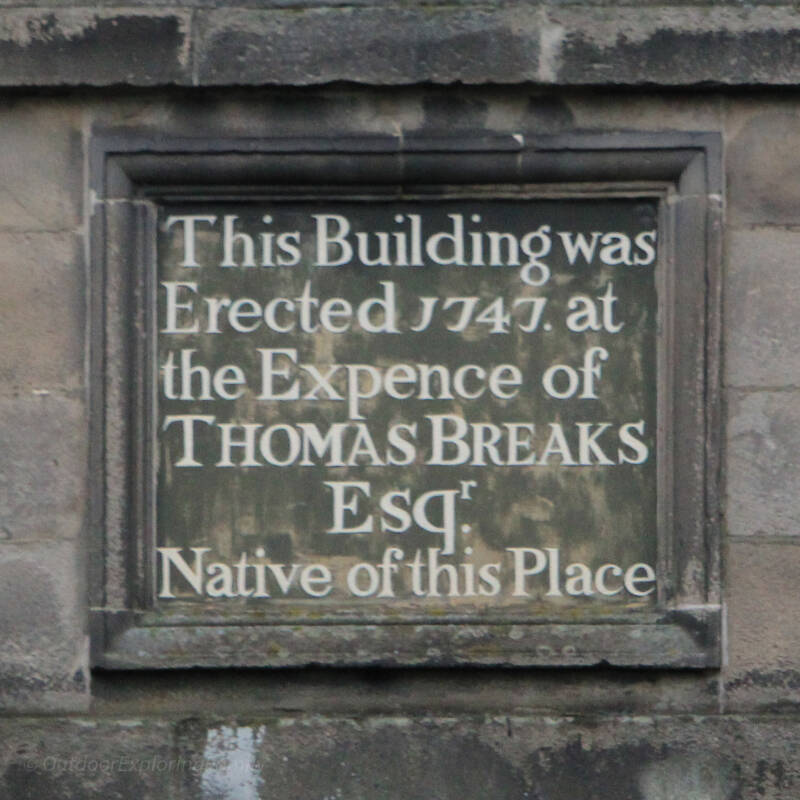
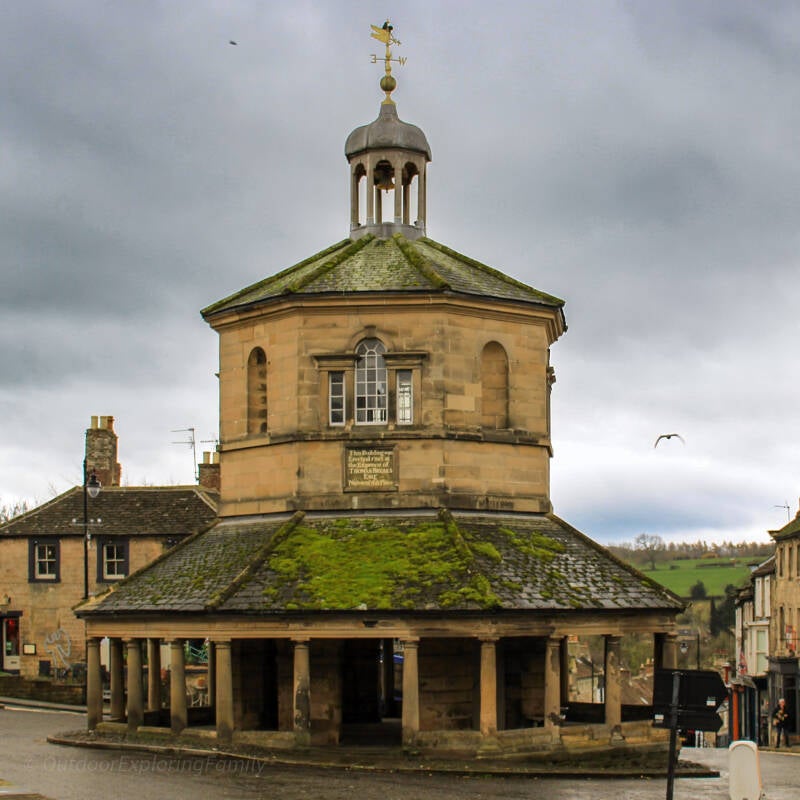
Thomas Breaks is best remembered in Barnard Castle as the benefactor who paid for the Market Cross, also known as the Butter Market or old Town Hall.
The building was erected in 1747 at the junction of the Market Place and Newgate. For generations it stood at the centre of daily life in the town, used by market traders, local officials, magistrates, firemen and later by those who remembered it as one of the great symbols of “Old Barney.”
Older descriptions of the Market Cross repeatedly state that it was built at the expense of Thomas Breaks, a native of Barnard Castle. That wording matters. It shows that the building was not simply a private construction, but a civic gift from a man who had left the town and returned something lasting to it.
The story becomes even richer when the man behind that gift is followed through the surviving records.
For the full history of the building itself, including its later uses as the Butter Market, old Town Hall, lock up, fire engine house and courtroom, read our Barnard Castle Market Cross guide.
Born in Barnard Castle
The Epsom memorial to Thomas Breaks records that he was born at Barnard Castle in County Durham.
This is supported by later local histories and newspaper accounts which describe him as a native of the town.
Although his exact birth record has not yet been firmly identified, the memorial gives his age at death as 89 in 1761, which places his birth around 1672.
That date fits well with the appearance of the Breaks family in late seventeenth century Barnard Castle records.
The Breaks Family in Barnard Castle
The Breaks family appear to have been established in Barnard Castle before Thomas became prominent.
A 1688 record names John Breakes of Barnard Castle as a merchant. He appears in property and trust transactions connected with a burgage called Broadgates and charitable provision for the poor of Barnard Castle.
Further records from 1693 again place John Breakes among the principal men of the town. These were not minor casual references. They connect the Breaks name with property, civic responsibility, local charity and the leading figures of Barnard Castle.
A later 1709 record names John Breakes of Barnard Castle as a grocer, leasing meadow land in the town. In the early eighteenth century a grocer was often a substantial trader rather than simply a shopkeeper in the modern sense.
By 1721, another record names John Breaks junior gent. alongside Thomas Breaks merchant, connected with Barnard Castle, Sledwich, Whorlton and Gainford.
The exact relationship between these men has not yet been fully proven, but the pattern is clear. Thomas Breaks seems to have come from a local family already involved in trade, land, property and civic life.
John Breaks may have been his father, or he may have been another close older relative. Thomas’s own will later confirms that he had a brother named John Breaks.
A Merchant With Wider Horizons
Thomas Breaks was not only a Barnard Castle man. He became a merchant with connections far beyond Teesdale.
His surviving will identifies him as Thomas Breaks of Goodman’s Fields in the parish of St Mary Whitechapel, Middlesex. This gives him a definite London connection, and one that fits the life of an eighteenth century merchant.
Goodman’s Fields lay in East London, close to commercial districts, shipping routes and international trade networks. It was a believable base for a man whose memorial later described him as a Lisbon merchant.
That Lisbon connection is one of the most remarkable parts of the story.
His memorial records him as a merchant linked with Lisbon, and praises him as a man who travelled widely across Europe, chiefly on foot. It describes him as someone who made his observations useful and instructive to others.
This is not the language normally used for an ordinary local tradesman. It suggests a wealthy, educated and experienced merchant who had seen much of Europe and who was remembered for more than money alone.
Owner of Sledwich Hall
Thomas Breaks was also connected with one of the most important historic houses near Barnard Castle.
Sledwich Hall, near Whorlton, had a long history before Thomas Breaks acquired it. Older accounts trace its ownership through families including the Menvils, Cloptons, Townleys, Claverings and Withams.
A 1932 historical account records that Thomas Breaks lived at Sledwich and acquired the Sledwich estate in 1720 from John Witham of Cliffe. The same account notes that he was described as “of London” at that time.
This detail is important because it connects two parts of his life. Thomas Breaks was locally rooted in Barnard Castle and Sledwich, but also operating from London.
Later histories repeat that Sledwich was bequeathed by Thomas Breaks to his nephew Charles Allen, surgeon of Greenwich Hospital. From Charles Allen the property passed through family connections to the Poole family.
The Sledwich evidence confirms that Thomas Breaks was not simply a distant donor to Barnard Castle. He owned a major local estate and remained closely connected to the district.
The Market Cross Gift
In 1747, Thomas Breaks funded the building of the Market Cross in Barnard Castle.
Later descriptions call it the Town Hall, the Market Cross and the Butter Market. Its uses changed over time, but its place in the town never did.
It was used by traders selling butter, eggs and cheese. It housed the fire engine and fire bell. Its upper room was used for Petty Sessions and the Court Leet after the old Toll Booth was removed. Beneath it was the old prison cell remembered as the “Black Hole.”
During the winter of 1819, when thefts and depredations caused alarm in the town, a night watch used the Market Cross as its headquarters.
This means the building funded by Thomas Breaks became far more than a market shelter. It became a civic centre, a place of trade, justice, safety, punishment and memory.
His Possible Town House on The Bank
One of the most intriguing pieces of local evidence concerns Thomas Breaks’ possible town house in Barnard Castle.
In 1944, Sydney E. Harrison, curator of the Bowes Museum, wrote that Breaks was in possession of Sledwich and also owned property in Barnard Castle.
Harrison added that it was believed the town house of Thomas Breaks was the house on The Bank later owned and occupied by T. Bayles, ironmonger.
This has not yet been proven through a complete chain of title, so it should be treated carefully. But it is a serious historical lead from a respected local historian, and it places Thomas Breaks in the heart of Barnard Castle, close to the Market Cross he funded.
If the identification is correct, it would mean that the man who paid for the Market Cross may once have looked out from The Bank towards the building that became his lasting gift to the town.
What His Will Reveals
The will of Thomas Breaks is one of the most important surviving documents connected with his life.
It was proved at London on 27 October 1761, the day after the death date recorded on his memorial.
The will confirms his London address at Goodman’s Fields in St Mary Whitechapel and describes him as a gentleman.
It also confirms important family relationships.
Thomas Breaks left an annuity to his brother John Breaks. This is especially important because earlier Barnard Castle records repeatedly mention men named John Breaks or John Breakes connected with trade and property.
The will also names his sister Jane Woodward and provides for children connected with her family. It names his niece Elizabeth Allen and his nephew Charles Allen.
Charles Allen was appointed sole executor and became the key heir to the estate.
The will also includes legacies to other relatives, including family members in the Allen and Breaks lines. One particularly valuable reference names Frances Breaks as the daughter of Thomas Breaks’ uncle, also called Thomas Breaks. This hints at a wider family network still waiting to be fully untangled.
The document makes clear that Thomas Breaks had accumulated enough wealth to distribute annuities, cash legacies and real estate. It shows a man managing a substantial estate, not a small local fortune.
Charles Allen, Nephew and Heir
Charles Allen is central to the later story of Thomas Breaks.
He was a surgeon at Greenwich Hospital and is named in the will as nephew and executor.
The Epsom monument later describes Charles Allen as nephew and heir to Thomas Breaks. It also states that Charles Allen gratefully erected the monument to Thomas Breaks’ memory.
Charles Allen died in 1763, only two years after Thomas Breaks. The same monument records that Allen himself was buried beneath the tomb.
This creates a powerful and well supported inheritance chain. Thomas Breaks left his estate to Charles Allen. Charles Allen honoured him with a memorial. Allen’s daughter then carried the estate connection into the Poole family through marriage.
The Epsom House Inventory
One of the most vivid surviving records connected with Thomas Breaks is the inventory taken at his Epsom house after his death.
The inventory appears to have been drawn up for probate purposes and valued the contents of the house at £121 and 15 shillings.
That figure related to household contents rather than his entire estate, and the details reveal the lifestyle of a wealthy eighteenth century gentleman.
The house contained a back garret, a drawing room, front and back parlours, a passage, kitchen and scullery. It also had named bedrooms including the Green Room, Crimson Room and Yellow Room.
Each of those coloured rooms contained a four poster bed and matching furniture. The rooms also held walnut furniture, dressing tables and desks.
The back parlour contained a mahogany dining table, a marble slab with brackets, a pier glass in a gold frame and thirty six framed prints and drawings.
The kitchen contained pewter dishes, brass candlesticks, tinder boxes, snuffers, spits and racks.
The inventory also recorded delph ware, linen, yard contents, coach house contents and stables.
This is one of the clearest glimpses we have of Thomas Breaks’ private life. It shows refinement, comfort, travel culture, household status and wealth.
It also fits the memorial description of him as a well travelled man of observation, commerce and education.
Property in Epsom
Surrey records show that Thomas Breaks owned property in Epsom.
The Residential Copyholds of Epsom records that he purchased a property in 1755 consisting of a messuage, coach house, stables, outbuildings and garden amounting to around half an acre.
Later research identified the property as lying near Stamford Green and Clayhill, in the area now associated with West Hill.
This places Thomas Breaks in Epsom during the later years of his life while still maintaining strong connections to London, Barnard Castle and Sledwich.
The Epsom Memorial
The memorial at Epsom is one of the most important surviving sources for Thomas Breaks.
It records that he was born at Barnard Castle and died on 26 October 1761 aged 89.
It describes him as a Lisbon merchant and praises his extensive travels through Europe, chiefly on foot.
It also calls him a citizen of the world, a patron of industry and merit, a refuge for the distressed and a friend of all mankind.
These words are unusually rich for a memorial inscription. They do not simply record a death. They preserve a reputation.
They suggest a man remembered for trade, travel, generosity, curiosity and public good.
What Remains Uncertain
Some details of Thomas Breaks’ life remain unresolved.
His exact birthplace within Barnard Castle has not yet been identified.
The identity of his wife, if he married, has not yet been securely proven.
His exact Barnard Castle town house is not proven beyond the strong Harrison tradition linking it with the later Bayles property on The Bank.
The precise relationship between the earlier John Breakes of Barnard Castle and Thomas Breaks still needs further evidence.
These uncertainties are important. They are part of honest historical research.
What can now be said with confidence is that Thomas Breaks was a Barnard Castle born merchant gentleman with London, Lisbon, Epsom and Sledwich connections, and that his gift of the Market Cross became one of the defining landmarks of the town.
Why Thomas Breaks Matters
Thomas Breaks matters because his life connects Barnard Castle to a much wider eighteenth century world.
Through him, the town’s Market Cross is linked with London commerce, Lisbon trade, European travel, Sledwich Hall, Epsom property, local charity and family inheritance.
He was not simply a name carved into a building.
He was part of a merchant family that appears to have risen through trade and property. He became wealthy enough to own estates and leave significant legacies. He remained attached enough to his home town to fund a building that still stands at its centre.
For Barnard Castle, Thomas Breaks is one of those rare figures whose legacy is both documentary and physical.
The records tell his story.
The Market Cross still shows it.
The building also carries one of Barnard Castle’s best known small mysteries: the story of the Market Cross bullet holes in the weather vane above the town.
Timeline of Thomas Breaks
c.1672 — Thomas Breaks believed to have been born in Barnard Castle
1688 — John Breaks recorded as a merchant in Barnard Castle
1693 — John Breaks listed among the principal men of Barnard Castle
1709 — John Breaks recorded as a grocer and landholder in Barnard Castle
1720 — Thomas Breaks associated with the acquisition of the Sledwich estate
1721 — Thomas Breaks merchant named in records connected with Barnard Castle and Sledwich
1746 — Thomas Breaks wrote his surviving will at Goodman’s Fields, Whitechapel
1747 — Thomas Breaks funded the Market Cross in Barnard Castle
1755 — Purchased property at Epsom including house, stables and gardens
1761 — Thomas Breaks died aged 89
1761 — His will was proved in London through the Prerogative Court of Canterbury
1763 — Charles Allen, nephew and heir of Thomas Breaks, commemorated him at Epsom
Research Sources Used
This page has been built from a wide range of historical sources rather than from a single local tradition.
The main primary source is the will of Thomas Breaks, Gentleman of Saint Mary Whitechapel, Middlesex, held by The National Archives under reference PROB 11/869/381.
Further evidence comes from Durham University Special Collections catalogue records relating to Barnard Castle deeds, the Breaks family, Broadgates, Sledwich and property transactions.
Surrey History Centre records provide details of the Epsom house inventory and later research into the location of Thomas Breaks’ Epsom property.
The Epsom memorial inscription provides key evidence for his Barnard Castle birth, Lisbon merchant identity, death date, age and relationship with Charles Allen.
Teesdale Mercury articles from the nineteenth and twentieth centuries provide important local history context for the Market Cross, Sledwich Hall, the possible town house on The Bank and the way Thomas Breaks was remembered in Barnard Castle.
Where evidence is incomplete, this page has used careful wording and has avoided presenting tradition as proven fact.
Explore more of the Market Cross story
To understand the building Thomas Breaks paid for in 1747, visit our Barnard Castle Market Cross guide.
For one of the building’s best known local tales, read the story of the Market Cross bullet holes.