Romaldkirk and Cotherstone Circular Walk
This Romaldkirk and Cotherstone circular walk is definitely one to slow down and notice what is around you. At around 5.45 miles, it takes you through open Teesdale fields, woodland paths and along the River Tees, with far more to see along the way than we expected.
Starting in Romaldkirk, the route passes the old village stocks before heading towards Eggleston Bridge and climbing into the countryside above Shipley Wood. Along the way you pass the prehistoric homestead, stop at the Percy Myre viewpoint, drop down towards Cotherstone Crag and return through riverside woodland past Woden Croft, the Fairy Cupboards and Low Garth Farm.
For a walk of this length it is not too difficult, although there are a few climbs, uneven woodland paths and plenty of field walking. What we loved most was how much there was to notice. Some of the best parts are the things you could easily walk past without knowing they were there, so this is a route worth taking your time over.
* marks affiliate links. If you buy or sign up, we earn commission at no extra cost to you.
It helps cover website costs and keeps our guides free.
Quick Facts
Distance: 5.45 miles
Walking time: Around 2½ to 3 hours at a steady pace. Allow longer if you want to stop and explore
Start and finish: Romaldkirk
Postcode: DL12 9EE
Route type: Circular
Difficulty: Moderate
Terrain: Village roads, woodland paths, steps, open grass fields, gravel tracks and riverside paths
Parking: Roadside parking in Romaldkirk
Dog friendly: Dogs can complete the walk, but livestock may be present so leads are essential through the fields
OS Map: Explorer OL31*
Digital route: See the route*
GPX file: Free download here

Parking and Access for the Walk
There is no dedicated car park for this walk, but there is usually plenty of roadside parking in Romaldkirk. We use DL12 9EE for navigation and then find a sensible space around the village.
Just take a little care where you leave the car. Romaldkirk is a small village and some of the roads are narrow, so make sure you are not blocking a driveway, gateway or access to somebody’s home.
Before setting off, it is worth having a quick look around the village green. The old Romaldkirk village stocks can still be seen beside the Kirk Inn and are an easy little detail to miss if you head straight onto the walk.
The route uses a mixture of public rights of way, open fields, woodland paths, riverside paths and short road sections. You will pass through working farmland in several places, so expect livestock and keep dogs under close control where needed. There are also several stiles along the route, so bear that in mind if you are walking with a dog that struggles with them.
There are a few steady climbs and descents, including steps through the woodland after Eggleston Bridge, and some of the riverside paths can be uneven or muddy after rain. Nothing is especially difficult, but we would not recommend this route for pushchairs.
The path also passes close to farms and private buildings around Woden Croft, so just follow the public footpath signs and keep to the marked route.

Romaldkirk and Cotherstone Circular Walk Route Directions
1. Leave Romaldkirk Along Water Gap
From the village green, head down Water Gap, the little road dropping away from Romaldkirk towards the River Tees. Just before the last house, look for the public footpath sign on your left and take the path into the trees.
It does not take long to leave the village behind. The woodland soon opens into fields and from here the route is easy to follow across the grass, with Hewcroft Hill over to your left. Keep following the public right of way until you reach the road, then turn right towards Eggleston Bridge.
2. Cross Eggleston Bridge
Cross Eggleston Bridge and take a moment to look at it while you are here. We have crossed this bridge plenty of times by car without really thinking about how old it is.
Historic England lists Eggleston Bridge at Grade II* and describes it as largely 17th century, probably incorporating part of an earlier 15th century bridge. The two high stone arches have been carrying people across the River Tees for hundreds of years.
Once across, turn right and follow the lane downhill.
3. Look for the Water Transfer Tunnel Access
Near the bottom of the lane, look over to your left for a pair of large metal doors set into a stone entrance.
They are connected with the huge water transfer system built across the North East. The Kielder scheme was completed in 1982 and was designed so water could be transferred between the Tyne, Wear and Tees when extra supplies were needed. It was built at a time when much greater industrial and domestic demand was being forecast for the region.
Beside the stable buildings, turn left into the woodland and follow the steps uphill.
4. Cross the Fields to the Shipley Wood Farmstead
The path climbs through the trees and eventually opens out into the fields above Shipley Wood. Continue towards East Barnley, following the public right of way, and watch the ground as you approach the fenced enclosure.
This is the site of a late prehistoric farmstead, recorded during the North Pennines East LiDAR Landscapes Project. What initially looks like nothing more than uneven pasture is actually a surviving archaeological landscape. A low bank forms the roughly square enclosure and, inside it, the earthworks preserve the positions of two or possibly three roundhouses.
Once you know what you are looking for, the shape becomes much easier to read on the ground. You can pick out the enclosing bank, changes in level across the interior and the hollows and platforms left by structures that have long since disappeared. The archaeological survey describes the farmstead as very well preserved, which is remarkable considering there is now nothing standing above ground.
The precise age of the settlement has not been established by excavation, so it would be wrong to give it an exact date, but its form places it within the late prehistoric farming landscape of this part of Teesdale.
It is one of our favourite parts of the route because without knowing the story, you could cross this field and never realise you were walking beside the remains of a settlement that has survived in the ground for centuries.
From the enclosure, continue downhill towards Shipley Wood, keeping to the lower edge of the field before following the path around the corner.
5. Stop at Percy Myre Rock Viewpoint
As you follow the field edge beside Shipley Wood, look out for the entrance to Percy Mire Viewpoint. This is one place we would definitely make time for rather than walking straight past.
The viewpoint sits high above the wooded valley of the River Tees, with the ground falling steeply away below you and a wide view opening across Teesdale. After the open fields around the Shipley Wood farmstead, it is a lovely spot to stop for a few minutes and take in just how much the landscape has changed.
There is a little bit of confusion over the name. The sign at the viewpoint says Percy Mire, while some online maps and walking references call the same place Percy Myre Rock. If you are searching for it before the walk, it is worth knowing both names refer to this viewpoint above Shipley Wood.
When you are ready to carry on, return to the main path and continue downhill. Follow the public right of way through Marwood Caravan Park, then take the gravel track down towards Cotherstone and the River Tees.
6. Drop Down to the Hagg at Cotherstone
At the bottom of the hill you reach the Hagg at Cotherstone, where the character of the walk changes again. You have just come down from wide open views and suddenly find yourself much closer to the water and trees.
This is where the River Balder meets the River Tees. Cross the footbridge and turn right into the woodland, following the path through the trees before climbing back into the fields.
From here the route follows the Tees through a quieter stretch of countryside. Keep to the public right of way as it crosses the fields with the wooded river valley below you.
7. Look Out for the Woden Croft Summerhouse
As you cross the fields, keep an eye out for the little stone Woden Croft Summerhouse. From a distance it looks a bit like a tiny chapel, but it is actually a Grade II listed early 19th century summerhouse, and it is one of the most interesting little details on the whole walk.
What really makes it special is the sundial and inscription above the doorway. The Latin opening, “Disce bene vivere et mori,” means “Learn to live and die well.” The inscription goes on to explain that Thomas Branson left this summerhouse in grateful memory of the teaching he received at Woden Croft Lodge from 1807 to 1815.
That gives this small building a lot more meaning. It is not just an attractive feature in the field. It is a direct link to the history of Woden Croft, which was once a private academy. If you only glanced at it from the path, you would probably think it was just a curious old stone shelter, but once you know what the plaque says, it becomes one of the most memorable parts of the route.
Carry on along the public footpath towards Woden Croft, where the next part of that story comes into view.
8. Walk Past Woden Croft
Continue across the field and you will soon reach Woden Croft, the building connected with the summerhouse you have just passed. The Grade II listed house dates from 1792 and was once a private academy run by Edward Simpson, with an addition made in 1810 and further changes during the 19th century.
Knowing that makes Thomas Branson's inscription on the summerhouse much more meaningful. Between 1807 and 1815, this was the place where he was educated, and years later he chose to leave a permanent reminder of those years in the landscape.
The public right of way takes you through the group of buildings at Woden Croft. These are private homes and working properties, so keep to the signed path as you pass through.
At the last group of farm buildings, keep the buildings on your left and head towards the bottom of the field. The route then turns right and drops downhill into the woodland, where the character of the walk changes again as you make your way back towards the River Tees.
9. Follow the River Tees to the Fairy Cupboards
Head downhill through the trees until you meet the riverside path, then follow the River Tees through the woodland.
Keep an eye on the riverbank because before long you reach the Fairy Cupboards, a strange row of openings in the rock beside the water. They are much better encountered as part of the walk than they are in a photograph. You come through the trees, spot the openings beside the river and immediately want to go for a closer look.
The rocks can be slippery, especially after rain, so take care if you go down beside them.
From the Fairy Cupboards, stay on the woodland path and continue through Skittle Bank.
10. Pass Low Garth Farm and Return to Romaldkirk
Eventually the trees give way to fields again and Low Garth Farm comes into view. Sitting on its own above the Tees, it is a brilliant final landmark on the walk and another building that seems to belong completely to this landscape.
Follow the public right of way across the fields, watching for the waymarkers as you go. The last section takes you into a narrow strip of woodland and downhill through the trees before bringing you back into Romaldkirk.
From there it is only a short walk back through the village to where you started, completing the 5.45 mile Romaldkirk and Cotherstone circular walk.
What You’ll See on This Walk
There is plenty of scenery on this route, but what we like most is how many smaller details sit alongside it. A bridge that is centuries old, strange doors leading into a huge water engineering system, bumps in a field that turn out to be archaeology and a little summerhouse with a message from a school pupil more than two centuries ago.
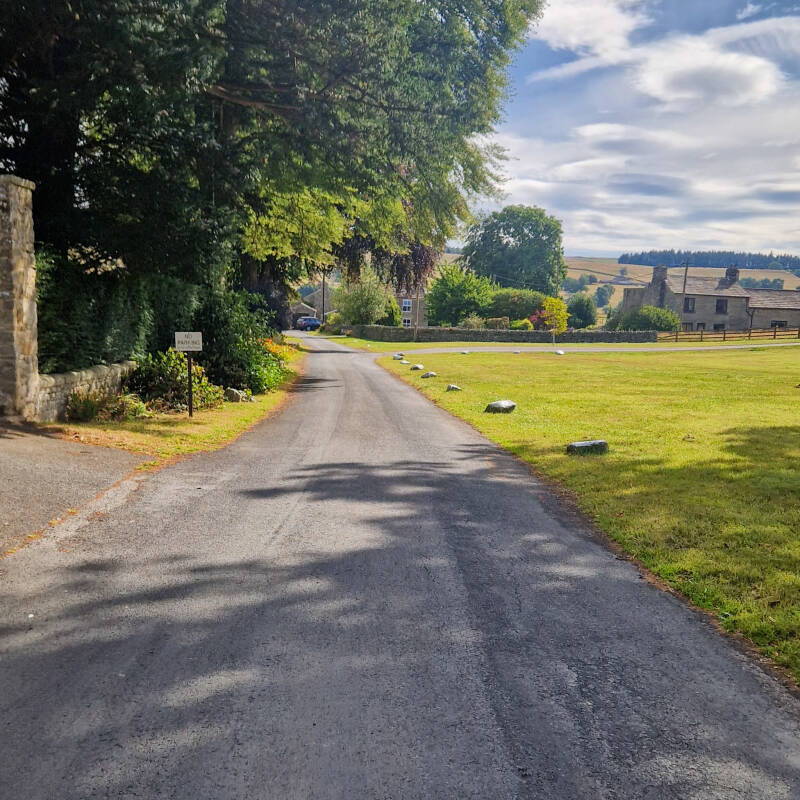
Romaldkirk
The walk begins and ends around Romaldkirk's old village green. Before leaving, look for the stocks beside the Kirk Inn, then take Water Gap towards the first woodland section of the route.
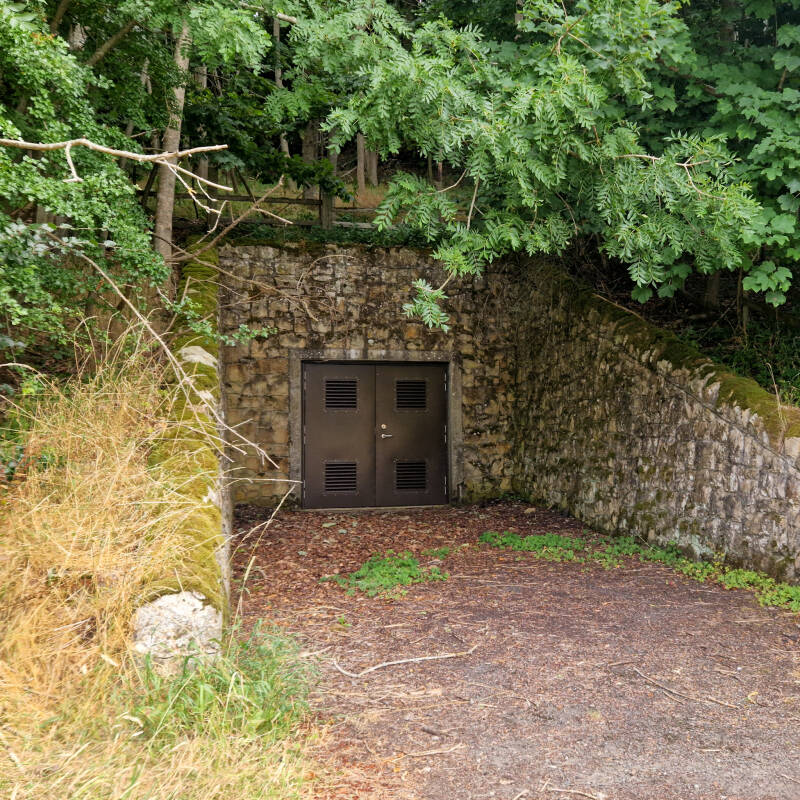
The Tyne Tees Tunnel Access
These heavy doors are easy to pass without a second glance. They sit at the Eggleston end of the Kielder water transfer system, which can release transferred water into the River Tees.
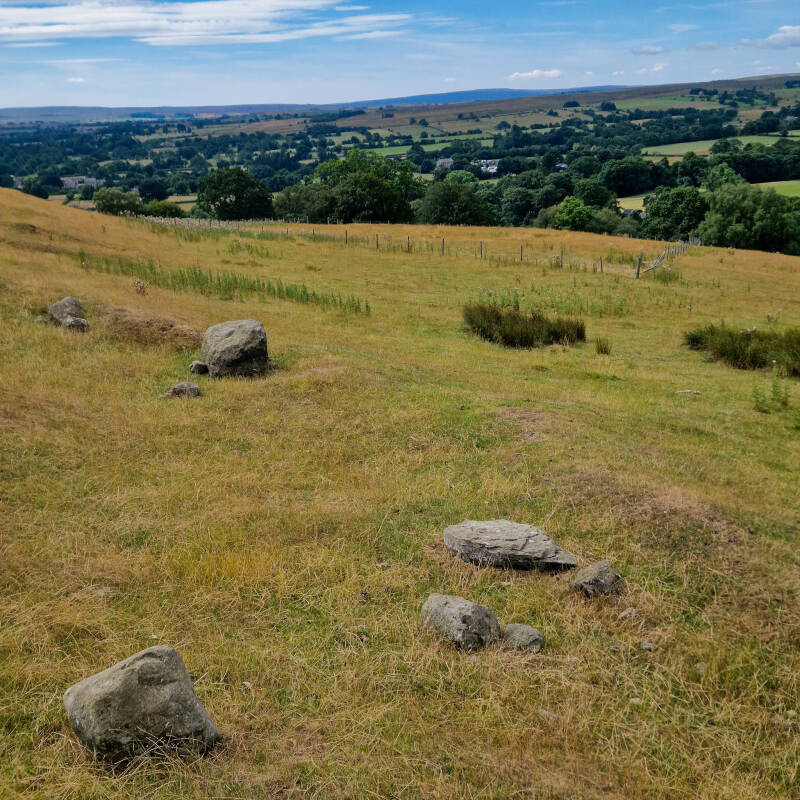
Shipley Wood Enclosed Settlement
The banks in this field are archaeological remains rather than simply uneven ground. Research records a roughly 40 metre square enclosed settlement here at Shipley Wood, although its exact date remains uncertain.
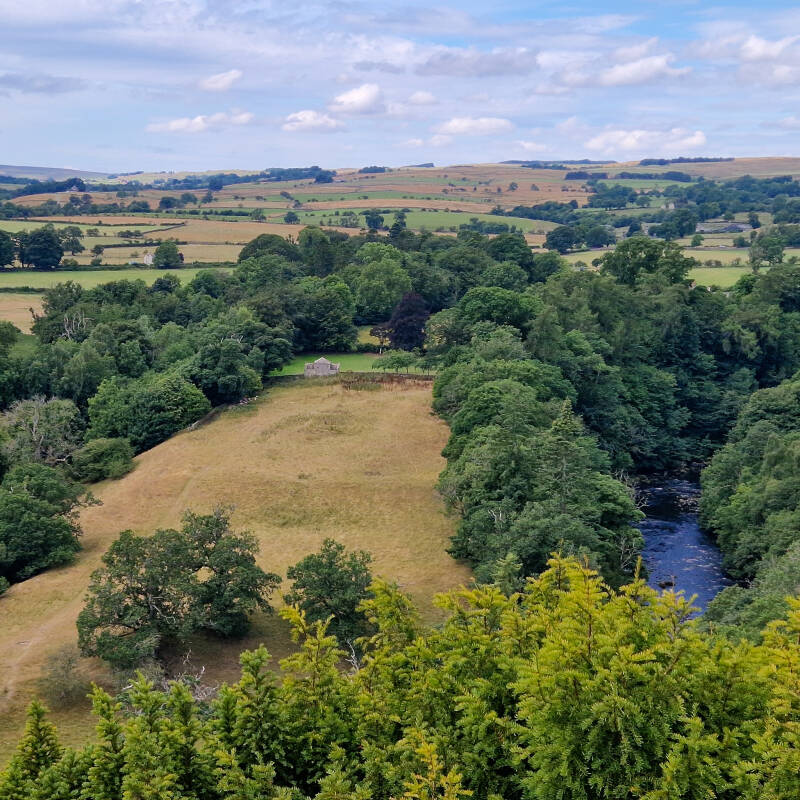
Percy Myre Rock Viewpoint
Make time for the short stop at Percy Myre. The viewpoint sits high above Shipley Wood and gives a brilliant look down towards the River Tees and across the surrounding Teesdale countryside.
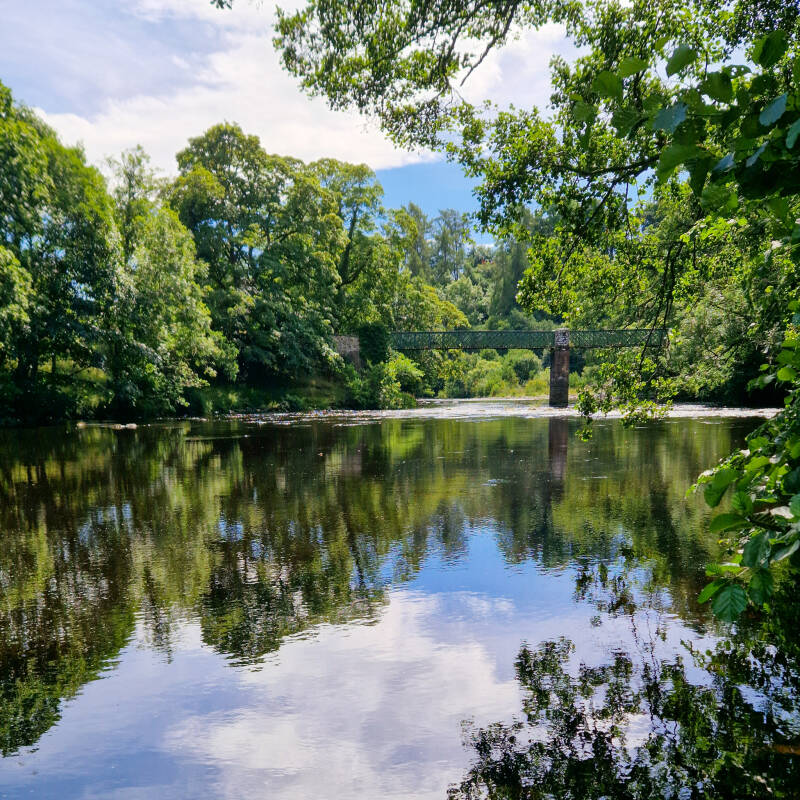
The Hagg at Cotherstone
The route drops from the high fields to the riverside at Cotherstone, where the Balder meets the Tees. Cross the footbridge here before turning back upstream through woodland and open fields.
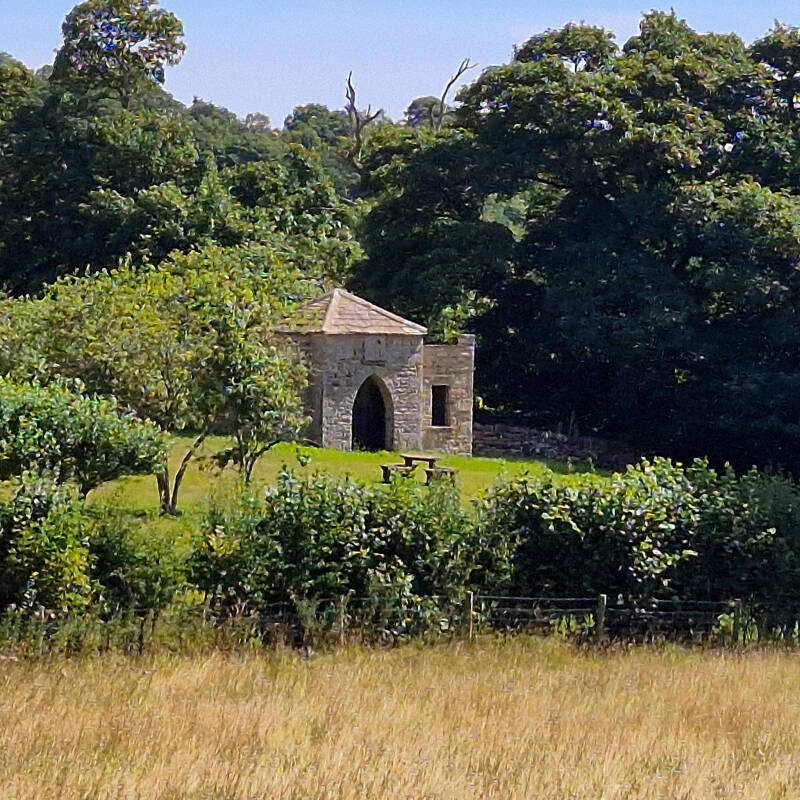
Woden Croft Summerhouse
This little Gothic building has a much bigger story than its size suggests. Its sundial remembers the education Thomas Branson received at Woden Croft Lodge between 1807 and 1815.
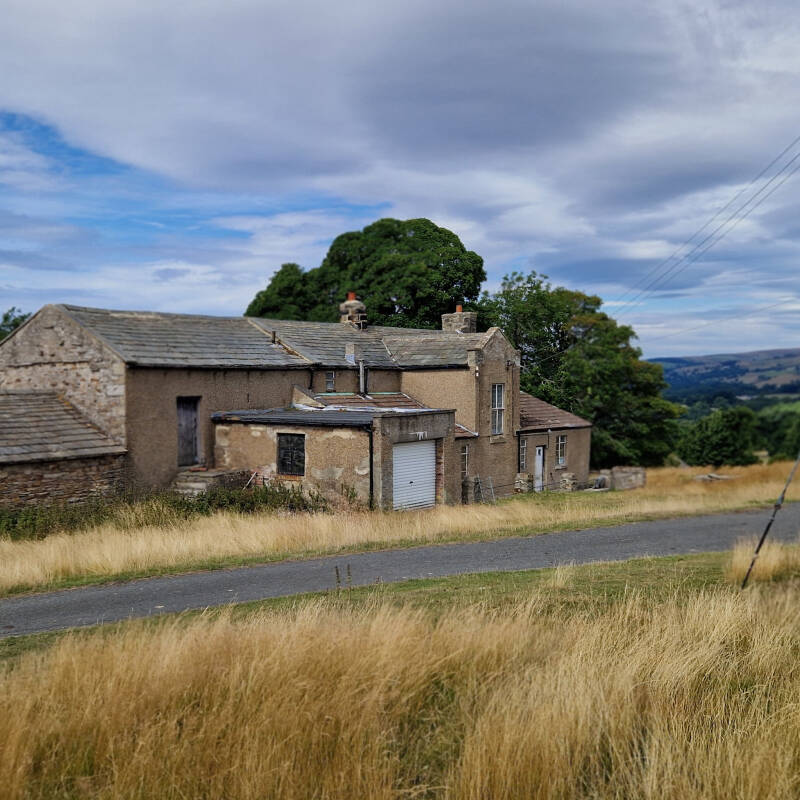
East Barnley Farm
You pass East Barnley Farm after climbing out of the woodland above Eggleston Bridge. From here the route opens into wide fields, with the prehistoric farmstead earthworks above Shipley Wood just a little further on.
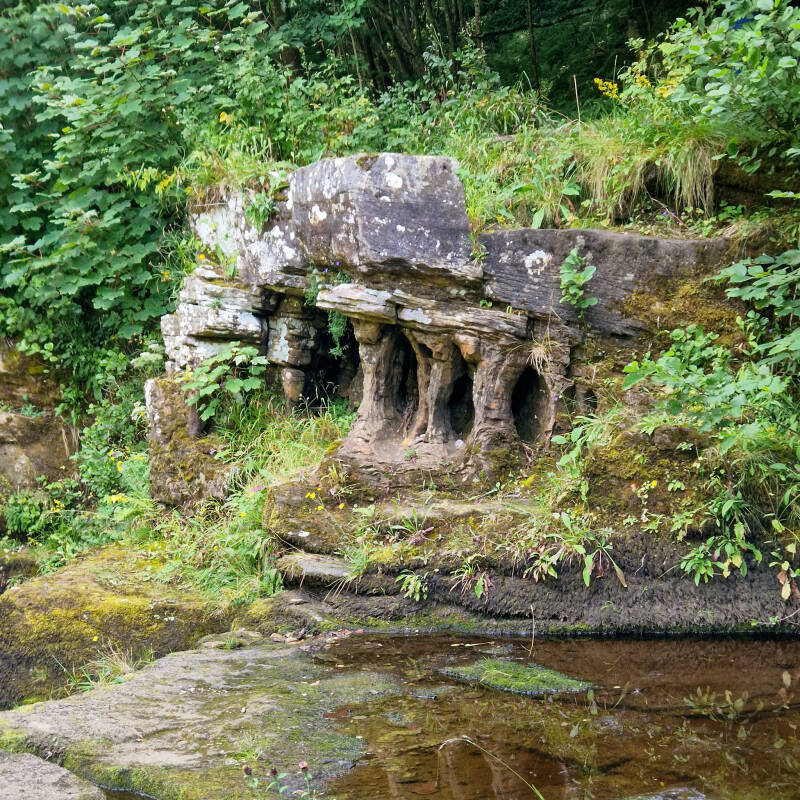
The Fairy Cupboards
Keep looking along the riverbank as you follow the woodland path. The Fairy Cupboards are a curious row of openings in the rock beside the Tees and are very easy to miss.
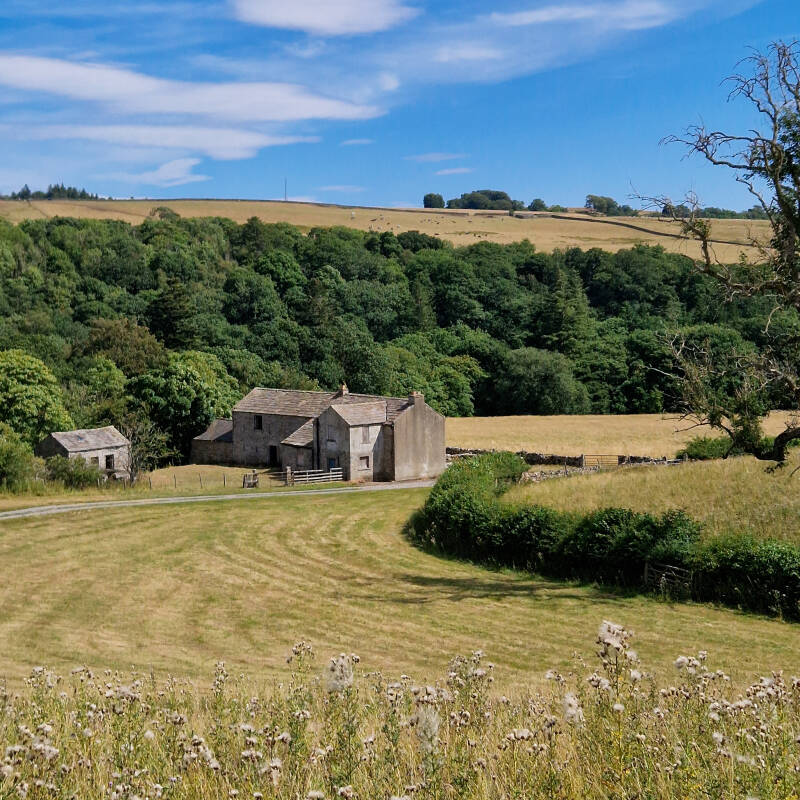
Low Garth Farm
Low Garth appears as the woodland opens back into fields. The old farmhouse stands alone above the Tees, with the public footpath carrying you past before the final return towards Romaldkirk.
Why This Walk Is Special
What makes this route work for us is that some of its best bits do not announce themselves.
The big Teesdale views are lovely, especially from Percy Mire, but we came home talking just as much about the things we almost could have missed. The doors in the hillside. The shape of the ground at Shipley Wood. The tiny inscription on the summerhouse. The Fairy Cupboards beside the river.
That is really what Outdoor Exploring Family is about for us. We enjoy reaching a waterfall or a viewpoint as much as anyone, but the walk becomes far more interesting when you start noticing the place between those bigger stops.
It is also a route where the landscape keeps changing. Romaldkirk gives way to a wooded path, then open fields, the Tees at Eggleston Bridge, high countryside above Shipley Wood, the descent to Cotherstone and finally the riverside woods on the way back. You never spend the full 5.45 miles looking at the same scenery.
There is history here stretching across very different periods too. Eggleston Bridge carries traces of a much older crossing, the earthworks above Shipley Wood belong to an archaeological landscape that predates the modern farms, Woden Croft takes you into the world of an 18th and 19th century private academy, and the water tunnel brings the story right into the industrial planning of the late 20th century.
By the time you arrive back in Romaldkirk, you have not just completed a circular walk. You have actually looked at a little piece of Teesdale properly.
Explore More Around Romaldkirk
If this walk has made you want to look a little closer at Romaldkirk, there is plenty more to discover around the village. Our Romaldkirk guide brings together the places, history and walks we have explored around the village.
You can find out more about St Romald’s Church, the historic church at the centre of Romaldkirk, or take a closer look at the Romaldkirk village stocks and the old water pump and trough beside the village green.
One of the easiest things to miss on this walk is the Fairy Cupboards, Romaldkirk beside the River Tees. We have a separate page looking more closely at the curious rock feature and the stories connected with it.
For something shorter, our Romaldkirk Circular Walk stays closer to the village and makes a good choice if you do not want to tackle the full 5.45 mile Romaldkirk and Cotherstone route.
You can also find more routes in our Teesdale Walks collection, explore walks in and near Barnard Castle, or head back to Discover Teesdale to find more places we have walked, photographed and explored across the dale.