Lady Ann Day: The White Lady of Barnard Castle
Welcome to another of our Teesdale Tales, where local folklore, history and the landscape of the dale come together.
This page tells the story of Lady Ann Day, the sorrowful White Lady said to haunt the ruined walls of Barnard Castle. For generations, her name was linked with the castle battlements, the River Tees below and the old ghost stories once told around the town after dark.
The story belongs to folklore, but it has also been preserved in Victorian newspaper accounts and local Teesdale traditions. That makes Lady Ann Day one of Barnard Castle’s most haunting and enduring legends.
So, let the story carry you back to a time when the castle above the Tees was not only a place of stone walls, towers and history, but also a place where people believed a lonely figure in white still walked beneath the night sky...

The Story of Lady Ann Day
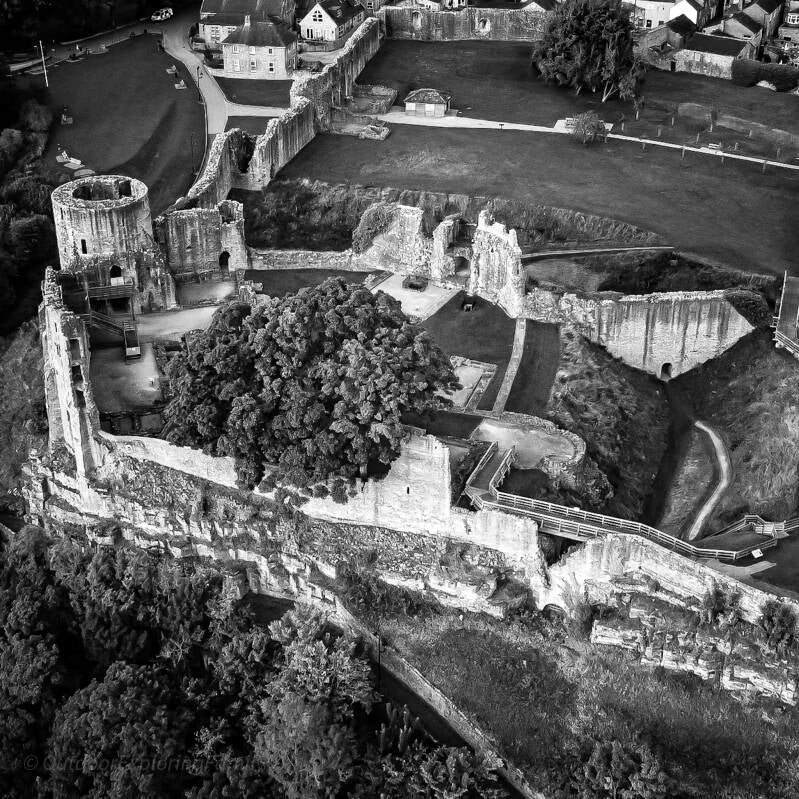
Barnard Castle has always had two faces. By day, it stands proudly above the River Tees, its broken towers and weathered walls looking out across the dale. Visitors walk through the ruins, pause at the viewpoints and look down towards the river as it bends below the castle banks. In daylight, it is easy to see Barnard Castle as history: a fortress, a ruin, a place of kings, soldiers, sieges and stone.
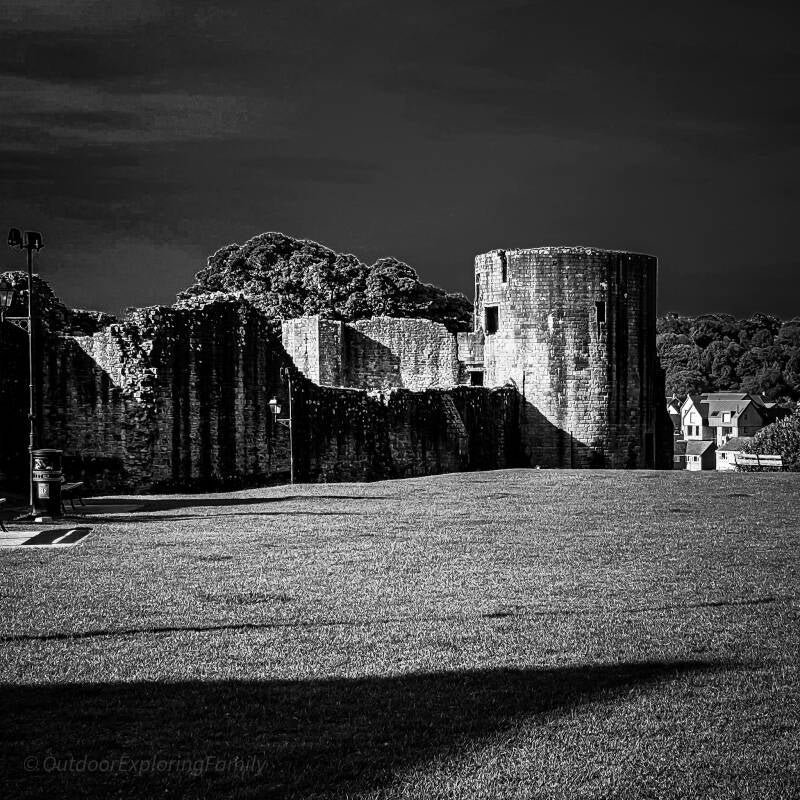
But when evening settles over Teesdale, the castle feels different. The last of the light leaves the battlements, the river darkens beneath the walls, and the empty windows turn black against the sky. The town grows quieter below, the jackdaws settle into the towers, and the old stones seem to hold onto every story ever told about them. It was at times like this, when the castle became a shadow above the Tees, that people remembered Lady Ann Day.
She was known as the White Lady of Barnard Castle, a sorrowful figure dressed all in white who was said to walk the castle walls after dark. Some claimed to have seen her moving slowly along the battlements above the River Tees. Others heard her before they saw her, a cry carried on the night air from the ruined towers before fading into silence. No one said she came to harm the living. She was not a monster of the water like Peg Powler, nor a warning spirit waiting beside a dangerous riverbank. Lady Ann was something quieter and sadder: a ghost of grief.
The old tale carries us back to the reign of Queen Mary, when England was divided by religion and suspicion. Barnard Castle was still a place of power then, with soldiers in its garrison, watchmen on its walls and the affairs of the country reaching even into the strongholds of the north. According to the legend, Lady Ann was the daughter of Sir John Day, who was said to have been Governor of Barnard Castle. She lived within the castle, behind its guarded gates and high stone walls, looking out across the same River Tees that still runs beneath the ruins today.
There, among the soldiers of the garrison, Lady Ann fell in love with a young Protestant officer. His name has not survived in the old accounts. Perhaps it was forgotten long before the story was ever written down. Perhaps it was never known beyond the castle walls. In the legend he remains unnamed, but not unremembered: young, brave and doomed from the moment Lady Ann gave him her heart.
Their love was dangerous from the beginning. This was a time when faith could divide families, neighbours and kingdoms, and a Protestant officer loved by the daughter of a Catholic governor was never likely to be accepted. The castle that had sheltered Lady Ann became the place that trapped her. The young officer was accused of treason, and although the old story says the charge was false, false accusations could still end a life. He was condemned to die, and before long he was beheaded.
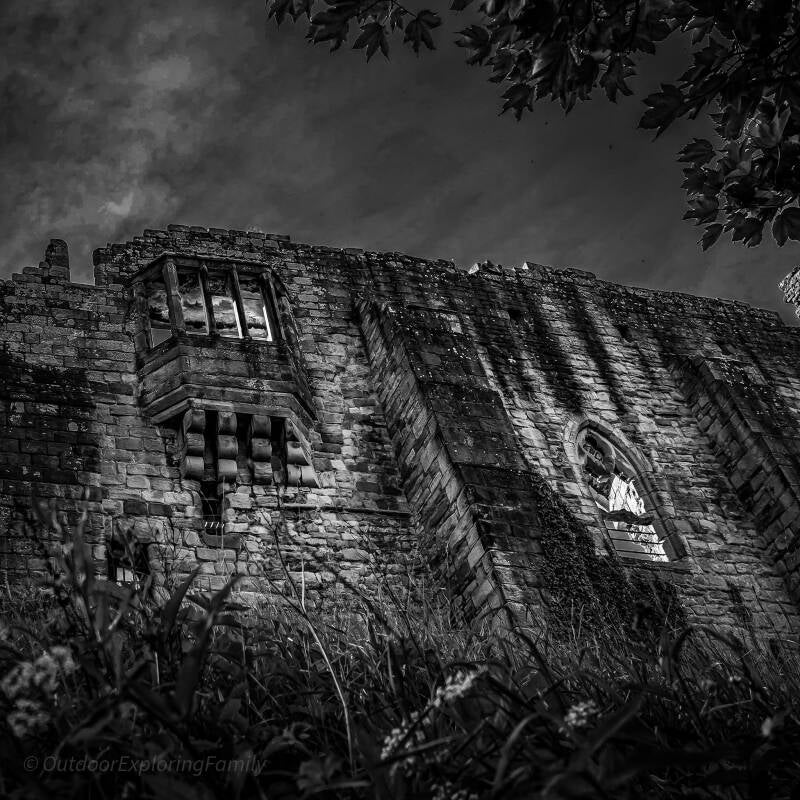
Lady Ann was not allowed to go to him. She could not plead for him, save him, or even say farewell. The tale says she was shut away high in one of the castle towers while the man she loved was led to his death. When the news finally reached her, something inside her broke. She went to the window of the tower. Below her were the rocks, the steep banks and the darkening River Tees. Behind her was a life she could no longer bear. Lady Ann stepped out into the night.
The fall ended her life, but the people of Barnard Castle believed it did not end her sorrow. After that, they said, she returned. Night after night, the White Lady was seen upon the battlements, dressed as pale as moonlight against the ancient stone. She wandered the walls where she had once lived, looking out over the river as though searching for the young officer who would never return.
Some said she stood so still upon the walls that those who saw her hardly dared to breathe. Others believed she moved along the broken battlements and vanished suddenly into the dark. On quiet nights, when the town had gone still and the river could be heard below, people said her cry drifted above the Tees. It was not remembered as a cry of anger, nor as a warning to those who heard it, but as the sound of heartbreak lingering where the tragedy had happened.
In some tellings, Lady Ann did more than walk the walls. She was said to relive her final moment, appearing high on the castle before throwing herself down once more, only to vanish before reaching the river below. That image, of a white figure falling from the ancient battlements and disappearing into darkness, became one of the most haunting parts of the tale.
So the story stayed with the town. Children heard it from older voices. Travellers heard it when they came through Barnard Castle. Those who crossed Bridgegate after dark knew better than to look too closely towards the ruins, especially when the castle stood black above the river and the night felt unusually still. Lady Ann Day was not the only ghost remembered in Barnard Castle, for the Briggate Dobbie was said to haunt the lower streets and Lady Shuttleworth had her own restless tale. In older days, people protected their homes with horseshoes and rowan, because the unseen world felt close, especially after sunset.
But Lady Ann belonged to the castle. The Dobbie had the dark streets. Peg Powler had the river. Lady Ann had the battlements. For years her story lived in the shadows above the Tees, told whenever the castle turned black against the evening sky and the wind moved through the empty windows.
Then the town began to change. Gas lamps came to Barnard Castle, lighting streets that had once been left to darkness. The old corners were no longer quite so black, and footsteps after nightfall no longer sounded quite so lonely. The shadows where ghosts had gathered began to shrink. As the lights spread through the town, people said something curious happened. The Briggate Dobbie was seen no more. Lady Shuttleworth faded from the streets. And Lady Ann Day, the White Lady of Barnard Castle, seemed to vanish from the walls.
Perhaps the ghosts feared the light. Perhaps people simply stopped expecting to see them. Or perhaps Lady Ann still walked there, but only on the darkest nights, when the castle is quiet, the town is asleep, and the River Tees moves unseen below the ruins.
Even now, when evening settles over Barnard Castle and the last light leaves the towers, it is easy to understand why the story survived. The stones are still there. The river is still there. The battlements still look out across Teesdale. And somewhere between history and folklore, Lady Ann Day still belongs to them.
Behind the Legend
The story of Lady Ann Day belongs to folklore, but it was not invented for a modern ghost book or tourist tale.
By the time Victorian newspapers began recording the old supernatural stories of Barnard Castle, the White Lady was already remembered as one of the town’s familiar ghosts. Her story seems to have lived first in the same place as many of Teesdale’s strongest legends: in spoken memory, in fireside tales, in warnings after dark, and in the local imagination surrounding the ruined castle above the River Tees.
The earliest newspaper reference found so far appeared in the Teesdale Mercury in 1857. In that account, Lady Ann Day was already linked with Barnard Castle, appearing as a woman in white who mourned for her lost lover. The same article placed her among other local apparitions, including the Briggate Dobbie and Lady Shuttleworth, showing that she belonged to a wider tradition of Barnard Castle ghost stories rather than standing alone.
A fuller version followed in 1868. This account gave the legend its tragic shape: Lady Ann was described as the daughter of Sir John Day, said to have been Governor of Barnard Castle during the reign of Queen Mary. She fell in love with a young Protestant officer of the garrison, who was accused of treason and beheaded. Lady Ann, imprisoned in one of the castle’s highest towers, heard of his death and threw herself from the window onto the rocks below.
These records matter because they show the story was already known before it was written down. The newspapers were not creating Lady Ann Day from nothing. They were preserving a tale that had already become part of Barnard Castle’s memory.
The White Lady in Victorian Teesdale
Lady Ann Day was not remembered simply as a tragic young woman from the past. She was remembered as a ghost who still belonged to the castle.
The old accounts describe her as appearing on the battlements above the River Tees, dressed all in white. Some versions say she wandered the walls in sorrow. Others say she was seen throwing herself from the castle heights, reliving the final moment of her life before vanishing into the night.
This image of the White Lady was powerful because it fitted the place so well. Barnard Castle was already a romantic ruin by the nineteenth century, with broken towers, empty windows and steep drops towards the river. It is easy to understand how such a setting held onto a story of grief, lost love and a restless figure seen after dark.
The tale also belonged to a wider world of local belief. Victorian writers remembered a time when people protected their homes with rowan and horseshoes, and when the dark streets of Barnard Castle were thought to hold more than ordinary dangers. The Briggate Dobbie haunted the lower part of the town. Lady Shuttleworth had her own restless story. Lady Ann Day belonged to the castle itself.
Gas Lamps and the Vanishing Ghosts
One of the most fascinating details in the old newspaper accounts is the arrival of gas lighting in Barnard Castle.
Writers looked back on a time when the streets were darker, quieter and more open to fear. In those days, a strange sound after nightfall might become the Briggate Dobbie dragging its chain, a shadow near the chapel might become Lady Shuttleworth, and a pale shape on the castle walls might be Lady Ann Day.
As gas lamps began to light the town, the old ghosts seemed to fade. The Briggate Dobbie was said to vanish. Lady Shuttleworth was seen no more. Lady Ann Day, too, seemed to disappear from the battlements.
It is a wonderful detail because it shows folklore changing with the town itself. Perhaps people really believed the ghosts had gone. Perhaps the new lights made the old shadows less frightening. Or perhaps Barnard Castle was simply moving into a modern age, leaving some of its older fears behind.
Either way, the story of Lady Ann Day did not disappear completely. Even when people stopped expecting to see her, they carried on telling her tale.
Was Lady Ann Day Real?
This is where the legend becomes more difficult.
The newspaper accounts consistently name Lady Ann as the daughter of Sir John Day, who was said to have been Governor of Barnard Castle during the reign of Queen Mary I. They also describe her lover as a young Protestant officer of the garrison.
So far, no contemporary Tudor record has been found to prove that Sir John Day held that position. No reliable record has been found for Lady Ann Day herself, and the young officer is never named in the surviving versions of the legend.
That does not mean the story is unimportant.
Many old legends preserve memories that cannot now be fully untangled. The names may have changed. The historical setting may have been added later. A real tragedy may have been reshaped over generations until it became impossible to separate fact from folklore.
At present, Lady Ann Day is best understood as a traditional Barnard Castle ghost story rather than a proven historical event.
Other Versions of the Story
Most of the older Teesdale newspaper accounts tell the same central tale: forbidden love, the execution of the Protestant officer, and Lady Ann’s leap from the castle tower.
Modern ghost stories sometimes give a different version. In these later retellings, Lady Ann is said to have been murdered and thrown from the castle walls into the River Tees. This version keeps the image of the White Lady falling from the castle, but changes the cause of her death.
That kind of change is common in folklore. Stories shift as they pass from one writer to another, especially when they move from local memory into ghost books and online retellings.
For this page, the older Teesdale newspaper tradition is the strongest version, because it is closest to the local sources and appears repeatedly across many decades.
Why the Legend Endures
Lady Ann Day has survived because Barnard Castle still feels like the kind of place that could hold a story like this.
The ruins still stand above the River Tees. The towers still catch the evening light. The river still moves below the castle walls, and the old battlements still look out across the dale.
Today, we may read the story as folklore, but the feeling behind it remains easy to understand. It is a tale of love, loss, fear, religion, power and grief, set in one of Teesdale’s most atmospheric places.
That may be why Lady Ann Day has never quite disappeared.
She belongs to Barnard Castle.
And as long as the castle stands above the Tees, her story will still feel at home there.
References
This page is based on surviving local newspaper and folklore references, including Teesdale Mercury accounts from 1857, 1868, 1871, 1894, 1912 and 1928, which record Lady Ann Day, the Briggate Dobbie, Lady Shuttleworth and other Barnard Castle apparitions. It also draws on the known history of Barnard Castle and later modern retellings, while clearly separating the older Teesdale newspaper tradition from unverified ghost-book versions of the story.
Explore More in Teesdale
Discover more local folklore on our Teesdale Tales hub, where we are collecting the stories, legends and old traditions of the dale.
Read the legend of Peg Powler, the mysterious river spirit of the Tees, another of Teesdale’s best-known traditional tales.
Explore Barnard Castle in our town guide, including the castle ruins, riverside walks, independent shops and historic streets.
Start with our Discover Teesdale hub to explore more of the dale, including local walks, waterfalls, reservoirs, historic places, dark skies and family-friendly days out.