Peg Powler | The River Spirit of the Tees
Welcome to another of our Teesdale Tales, where local folklore, history and the landscape of the dale come together.
This page tells the story of Peg Powler, the mysterious river spirit said to haunt the River Tees. For generations, her name was carried through riverside villages, farms and families, becoming one of Teesdale’s most memorable traditional tales.
The story belongs to folklore, but it has also been preserved in historical records, local traditions and the writings of nineteenth-century folklorists. That makes Peg Powler one of the River Tees’ oldest and most enduring legends.
So, let the story carry you back to a time when the River Tees was not only admired for its beauty, but also feared for what might lie beneath its waters...

The Story of Peg Powler
The River Tees has always had two faces. On a still summer evening it can run softly through Teesdale, shining beneath the wide sky, slipping past old bridges and turning quietly below the woods. From the bank it may look gentle enough, a river of light and reflections, moving peacefully through the dale as though it has never harmed a soul.
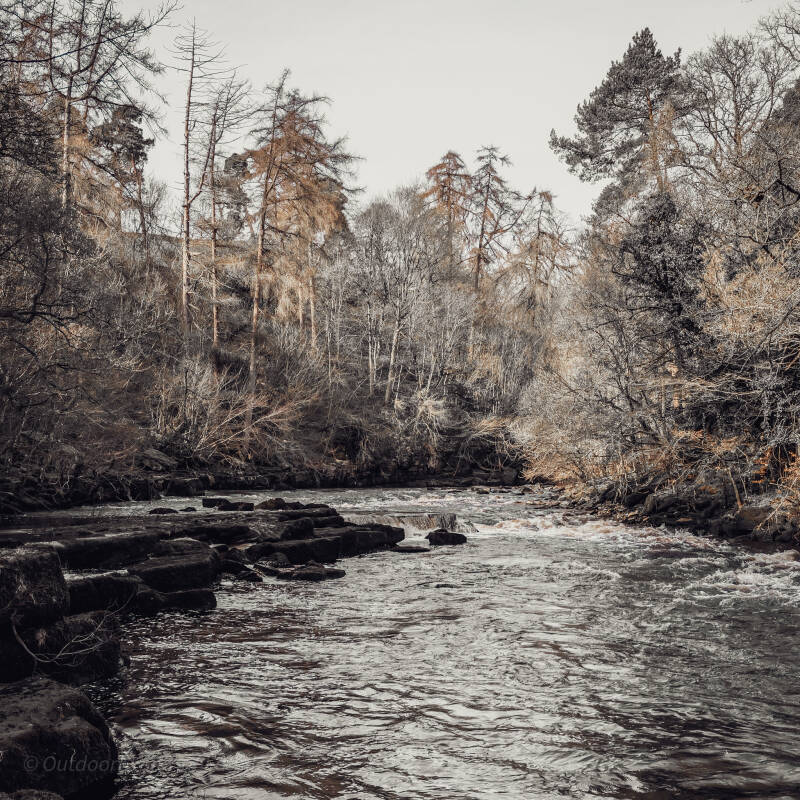
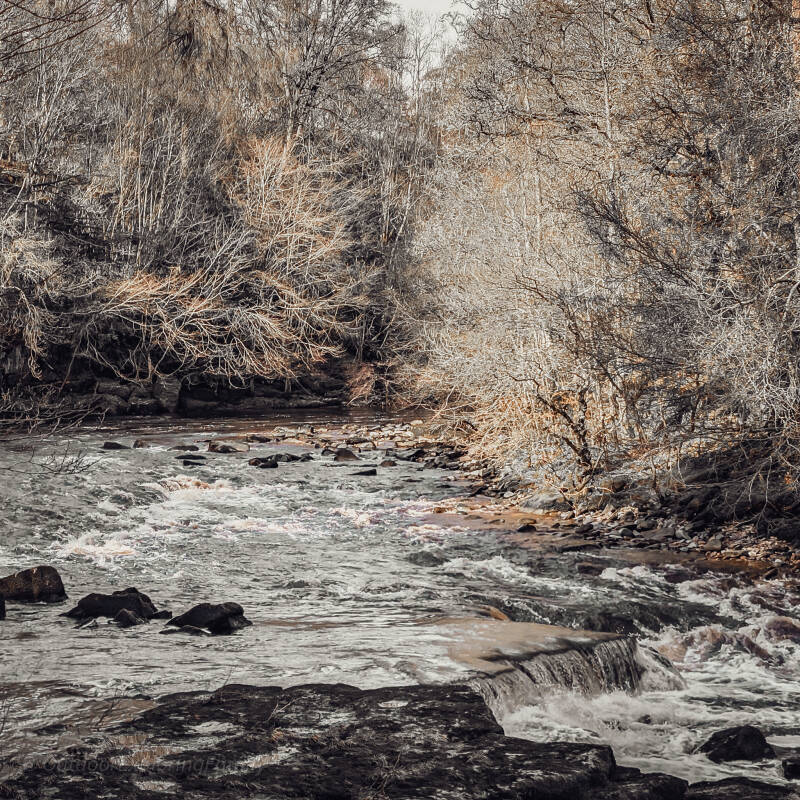
But when the rain comes down over the high ground, the Tees changes. The water darkens, the stepping stones disappear, and the quiet pools begin to move with a strength that cannot be seen from the surface. Branches are carried downstream. Foam gathers around the rocks. The river speaks louder then, and in the old days, when the Tees rose after rain, people remembered the name they had been told since childhood.
Peg Powler.
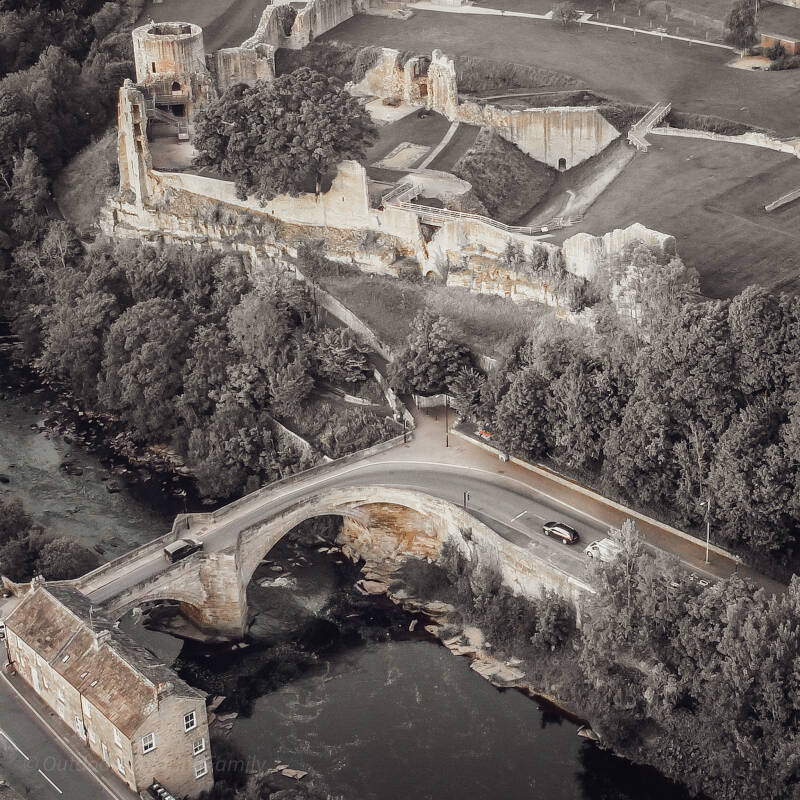
She was the spirit of the River Tees, and no one could ever say exactly where she lived. Some believed she kept to the deep black pools where the water stayed cold even in summer. Others said she moved with the river itself, travelling wherever the current took her. She might be in the wilder water above Middleton-in-Teesdale one day, beneath the riverside paths of Barnard Castle the next, or farther down towards Gainford where the Tees bends quietly through the fields.
That was the trouble with Peg Powler. You never knew where she would appear.
Some who told the tale remembered her as a green thing of the water, with sharp teeth, long arms and hair tangled like weeds pulled from the riverbed. Others said she was pale and thin, with skin like wet stone and fingers cold enough to stop the breath in your throat. But there was another telling too, and this was the one that made children look twice at the riverbank when the evening light began to fade.
Peg Powler, they said, did not always show herself as a monster.
Sometimes she came as a beautiful woman beside the Tees, standing quiet and still where the water ran deep. Her face was calm, her voice soft, and there was something about her that made a child want to step closer. Just one step down the bank. Just one foot onto the wet stones. Just near enough to see who she was and why she was waiting there alone.
Then the river would change.
The pretty face would vanish. The stillness would break. There would be a flash of green hair, a pale hand from the water, a shape rising where no shape had been before. Before the child could cry out or turn back to the bank, Peg Powler would have them, pulling them down into the cold dark Tees.
Those who walked beside the river knew to watch the water carefully. A quiet pool could hide her. A sudden swirl might be her turning below. A patch of foam might mean she had passed that way only moments before. When the Tees came down full after rain and the white froth gathered on the surface, people called it Peg Powler’s Suds.
The suds drifted in pale streaks along the darker water. They caught against stones, spun in little circles and clung to the edges of the deep pools. In calmer places, where the foam lay thicker and softer on the surface, it was sometimes called Peg Powler’s Cream. It was said she had been washing in the river, stirring the water from below and leaving her marks behind.
Children were told to keep well back when Peg Powler’s Suds were on the Tees. If the foam was gathering, she was awake. If the cream lay on the water, she was near. And if she was near, no child should be standing too close to the bank.
In some places, people knew her by another name. They called her Nanny Powler. But whether she was Peg Powler or Nanny Powler, the old fear was the same. She belonged to the deep water, to the cold pools, to the hidden places where the river looked calm until it was too late.
So her name travelled with the Tees. It was carried through riverside cottages, farms, villages and lanes, from the upper dale down towards the lower water. Children heard it at home, on walks, beside bridges and near the bends where the current turned dark. They learned that the river was never empty, and that when the water rose and the white foam began to gather, Peg Powler might be moving beneath the surface.
On bright days, when the Tees ran low and clear, it was easy to forget her. Children could laugh beside the bank and watch the sunlight dance on the water. But when the sky closed in, when rain filled the hills, when the river turned brown and restless, the old story returned.
Peg Powler was in the Tees.
And those who followed her too close to the water might never come home.
Behind the Legend
The story of Peg Powler belongs to folklore, but it was not invented for a modern ghost book or tourist tale.
It was already old by the time nineteenth-century writers began recording the traditions of the North Country. Before then, Peg Powler seems to have lived where many of the strongest folk tales lived first: in spoken memory, in family warnings, and in the everyday language of people who knew the River Tees well.
Writers such as Michael Aislabie Denham, William Longstaffe and William Henderson helped preserve the legend in print. Their work shows that Peg Powler was not simply a passing local ghost story, but part of a much older tradition connected with the Tees and its dangers.
In Denham’s nineteenth-century collections, Peg Powler appears as one of the feared beings of northern folklore. Henderson later described her as a green-haired water spirit of the River Tees, the kind of figure used to frighten children away from dangerous pools and riverbanks. Longstaffe also helped keep the name alive through his interest in Teesdale traditions and local history.
These records matter because they show the tale was already known before it was written down. Peg Powler had belonged to the river for generations before the folklorists caught hold of her name.
Other Names and Older Beliefs
Peg Powler was not the only name connected with the old river tale. In some traditions, she was also remembered as Nanny Powler, another form of the same water spirit. The change of name is typical of folklore, where stories shift slightly from place to place while keeping the same meaning.
The legend also left traces in old dialect. The word Peg-powlers appears in older records, showing how deeply the name had entered local speech. It was not only a story told once and forgotten. It became part of the language around the river.
There are also links with wider Teesdale folklore, including the mysterious High Green Ghost. Unlike Peg Powler, whose home was always the water, the High Green Ghost belonged more to the surrounding landscape. Together, these stories show how rich the old folklore of Teesdale once was, with rivers, fields, lanes and lonely places all carrying their own traditions.
Peg Powler’s Toll
One of the strangest traditions connected with Peg Powler was the belief that she expected a yearly toll from the River Tees.
In some versions, the river had to claim a life each year. If no one was taken, Peg Powler was still waiting for what was owed.
It is a dark belief, but it reflects the reality of life beside a powerful river. The Tees was beautiful, useful and loved, but it could also be dangerous. Floods, deep pools and sudden currents were part of life in the dale, and the idea of a river taking its toll was not difficult for earlier generations to understand.
Why the Legend Endures
Peg Powler has survived because the River Tees still feels like the kind of place that could hold a story like this.
Walk beside the water after heavy rain and the old tale is easy to understand. Foam gathers around the rocks. Deep pools turn dark beneath the surface. The current moves with a strength that is not always obvious from the bank.
Today, we may see Peg Powler as folklore, but the warning inside the story still matters.
Before safety signs, lifebelts and rescue services, people used stories to teach children about danger. Peg Powler gave the river a face, a name and a memory that could be passed down.
That may be why she remains one of Teesdale’s most powerful old tales.
She belongs to the River Tees.
And as long as the river keeps moving through the dale, her story will still feel at home here.
References
This page is based on surviving historical and folkloric sources, including Michael Aislabie Denham’s nineteenth-century folklore collections, William Henderson’s Folklore of the Northern Counties, William Longstaffe’s writings on Teesdale traditions, older dialect records mentioning Peg-powlers and Nanny Powler, and newspaper references from 1915 and 1929 which show the story was still remembered into the twentieth century.
Explore More Teesdale Tales
Peg Powler is only one of the old stories woven into the landscape of Teesdale.
You can return to our Teesdale Tales hub to discover more local folklore, legends and true stories from across the dale, including tales from Barnard Castle, Egglestone Abbey, Baldersdale, Bowlees and the River Tees.
Explore the full Teesdale Tales collection:
Teesdale Tales
You may also enjoy:
The Mad Monk of Egglestone Abbey
A strange Teesdale tale of a hooded figure, forbidden love and a quiet moment on Abbey Bridge.
William Gibson at Gibson’s Cave
The story of the outlaw said to have hidden behind the waterfall at Summerhill Force.
The Wynch Bridge Disaster
The true story of the early suspension bridge at Low Force and the tragic collapse of 1802.
Robin Hood’s Pennystone
A long-recorded Teesdale legend about the great stone near Selset Reservoir.
The Tale of the Market Cross Bullet Holes
A much-loved Barnard Castle story linked to the real musket marks on the Market Cross.