Broadgates Chapel
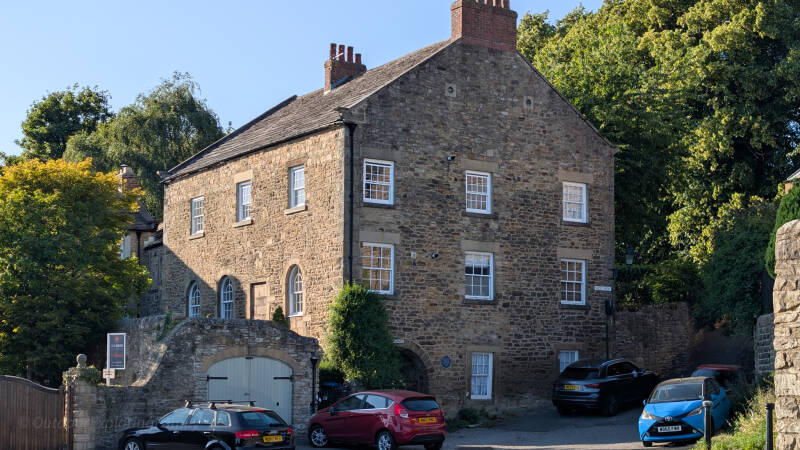
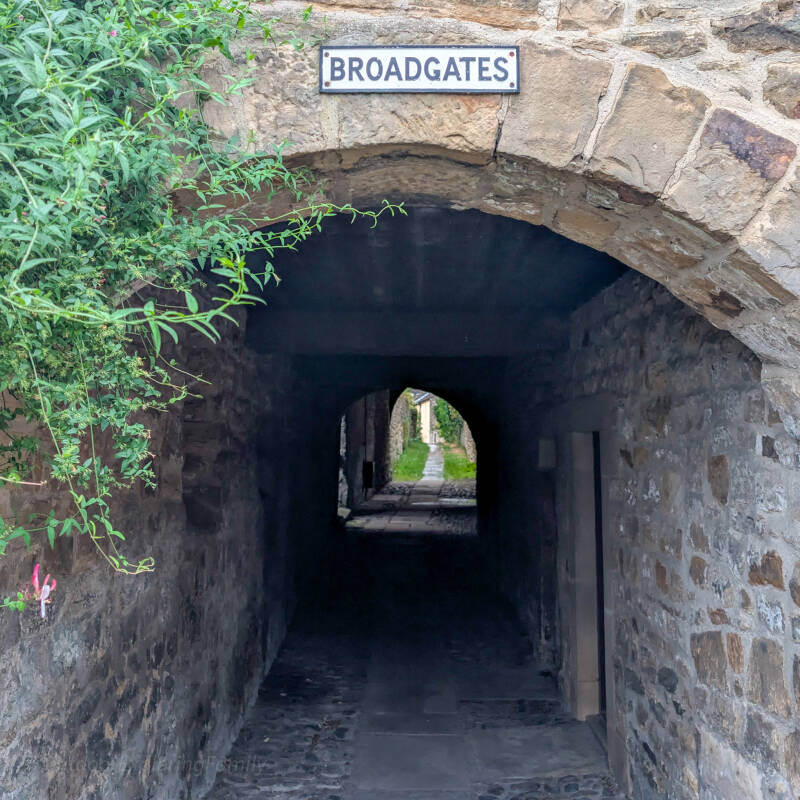
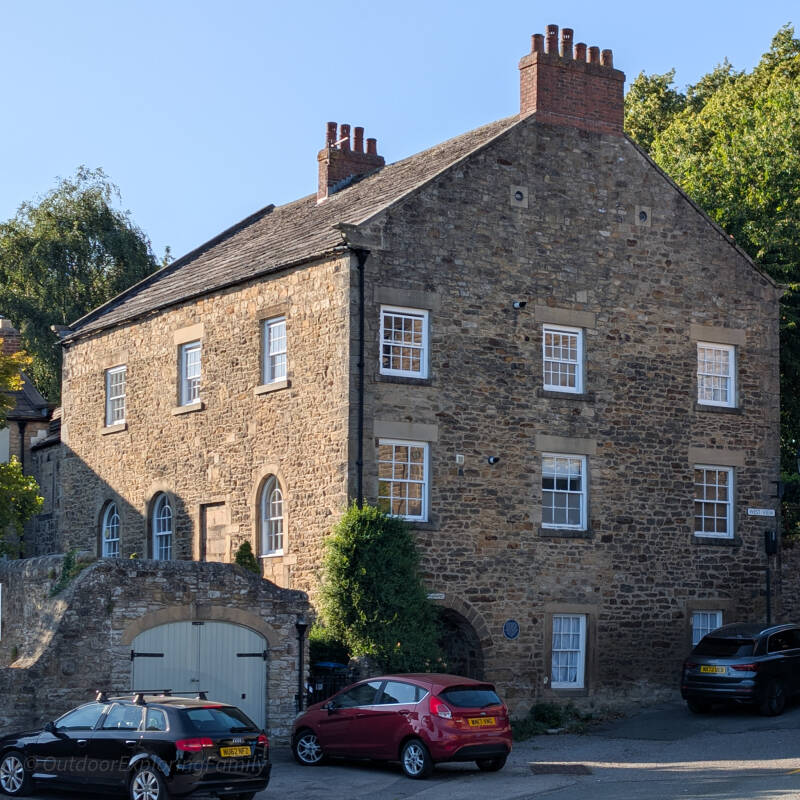
Walk through Broadgates today and it is not immediately obvious that the building at the end was once at the centre of Methodist life in Barnard Castle. The old chapel is now part of West View, a group of stone homes reached through the narrow passage below The Bank. Its tall, rounded windows offer a clue, while a blue plaque on the wall explains what happened here more than 260 years ago.
Broadgates Chapel was built in 1764 to replace the earlier Methodist meeting room at the Hole-in-the-Wall. It was the first chapel built for the growing Methodist congregation in Barnard Castle, and much of the labour was provided by men and women who belonged to it.
On Saturday 13 April 1765, John Wesley arrived in Barnard Castle after travelling through wind and rain. That evening, he preached inside the new building for the first time. The chapel remained the main Wesleyan place of worship in the town until the early 1820s, when the congregation moved to a larger building in Wycliffe Yard.
That replacement chapel has since been demolished. Broadgates, however, has survived. It was later used by Unitarians and eventually converted into homes, preserving the building that gave Barnard Castle’s early Methodists their first purpose-built chapel.
Quick Facts
Location: Broad Gates, Barnard Castle, County Durham
Built: 1764
What was it? Barnard Castle’s first purpose-built Methodist chapel
Replaced: The Hole-in-the-Wall Meeting House
Opened by: John Wesley
Opening service: Saturday 13 April 1765
Built with help from: Men and women of the Methodist congregation
Later addition: A minister’s residence beside the chapel
Methodist use: 1765–1823
Next Methodist chapel: Wycliffe Yard
Later religious use: Unitarian chapel
Present name: West View
Present use: Private homes
Listed status: Grade II

Before Broadgates Chapel
Methodism in Barnard Castle began around 1747. Joseph Cheesebrough, a shoemaker from the town, encountered the early Methodist movement while living in Leeds. After returning to Barnard Castle, he began speaking to others about the faith he had discovered there.
Joseph Cheesebrough’s efforts helped establish the early Methodist society in the town. Catherine Graves came from Darlington to form a Methodist class, while Joseph Garnett and John Loadman became two of Barnard Castle’s earliest local preachers. A Methodist class was a small group whose members met regularly for prayer, religious instruction and mutual support.
The first gatherings took place in private houses. The Methodist Circuit history describes men and women meeting each evening in a house in Galgate to read the Bible and Wesley’s writings, sing hymns and pray. As attendance increased, ordinary homes could no longer hold everyone.
The congregation then began using the building now known as the Hole-in-the-Wall Meeting House. Its secluded position gave the group more room while allowing its members to gather without attracting unwanted attention.
John Wesley probably preached at the Hole-in-the-Wall during his visit to Barnard Castle in 1761. By 1764, however, the congregation had again outgrown its surroundings. The solution was not another borrowed room but a chapel of its own.
The story of those early gatherings and Wesley’s first visits to the town continues on our Hole-in-the-Wall Meeting House page.
Building the First Methodist Chapel
The new chapel was built at Broadgates, between The Bank and the Demesnes. The site was close to the centre of Barnard Castle but set back from its busiest streets.
Historic England dates both the former chapel and its extension to 1764. The surviving plaque adds an important detail that does not appear in the architectural description: much of the physical labour involved in erecting the building was undertaken by men and women from the congregation.
That does not mean every part of the chapel was built without professional craftsmen. Stone buildings required skilled work. It does tell us, however, that the congregation played a direct part in creating its new place of worship rather than simply paying for a finished building.
The chapel was practical rather than grand. Historic England describes rubble stone walls, ashlar dressings and roofs covered with stone slates. On the Broadgates side are three tall, round-headed windows, features that still help reveal the building’s former religious purpose.
A house in the adjoining garden was built later as the minister’s residence. That fact is recorded on the plaque attached to the building. It allowed the minister to live beside the chapel and became part of the group of buildings now known as West View.
John Wesley Opens Broadgates Chapel
The strongest evidence for the opening comes from John Wesley himself.
On Saturday 13 April 1765, Wesley and his companions travelled through heavy wind and rain to reach Barnard Castle. In his journal, he described preaching that evening in the new preaching house, adding that it had not been opened before.
He preached there again at eight o’clock the following morning. Wesley intended to hold Sunday evening’s service outside, where more people could have gathered, but the weather forced everyone back into the building.
His journal does not record the size of the congregation or the subject of the opening sermon. It does, however, place Wesley inside the newly completed chapel on the first weekend it was used. The date on the modern plaque therefore agrees with Wesley’s own account.
For the congregation, the opening marked the end of a journey that had begun in private houses and continued at the Hole-in-the-Wall. After almost twenty years of growth, Barnard Castle’s Methodists finally had a chapel built for their own use.
A Growing Methodist Congregation
Broadgates solved the immediate problem of overcrowding, but Methodism continued to grow in Barnard Castle and across Teesdale.
The chapel was enlarged with the construction of a west wing. By 1810, a Sunday school had also opened. The building was therefore serving not only as a place for preaching and worship but also as somewhere children could receive religious teaching.
Eventually, Broadgates could no longer provide the space the congregation wanted. Its position among the existing buildings also limited how far it could be enlarged.
The move to the next chapel took place across 1822 and 1823. Specialist Methodist records state that the Broadgates building was sold in 1822. The Methodist Circuit dates the opening of the larger Wesleyan chapel in Wycliffe Yard to 1823. Historic England describes the replacement as standing behind No. 40 The Bank.
The Wycliffe Yard chapel served the congregation until 1894. On 30 March that year, Trinity Wesleyan Methodist Church opened on Galgate. The Wycliffe Yard building was later demolished, leaving Broadgates as the surviving chapel from the earliest period of Methodism in the town.
Broadgates After the Methodists Left
The sale of the building did not bring its religious history to an immediate end.
Specialist Methodist records state that the former chapel was used by a Unitarian congregation from 1846. We have not yet found a reliable date showing when the Unitarian congregation stopped meeting there, nor do we know exactly how the building was used during every year between its sale in 1822 and the beginning of Unitarian worship.
The exact date when the former chapel was converted into homes has not yet been confirmed either. Historic England now describes it as a Methodist chapel converted into flats, together with associated cottages, and records that the building was restored around 1970.
West View was placed on the statutory list in February 1973 and is protected as a Grade II Listed Building. Its listing was amended in 1994. Although the interior has been divided and the building adapted for residential use, its eighteenth-century stonework and several of its chapel windows remain.

Broadgates Chapel Today
The former chapel stands within West View at Nos. 5–9 Broad Gates. It remains private residential property, but its exterior can be seen from the public passage.
The easiest features to recognise are the tall round-headed windows along the side of the former chapel. The blue plaque is attached near the archway and records the congregation’s work, Wesley’s opening service and the later construction of the minister’s residence.
Broadgates and the Hole-in-the-Wall are only a short walk apart. Seen together, they tell the beginning of Methodism in Barnard Castle. The Hole-in-the-Wall was the meeting room used when the congregation had nowhere purpose-built to gather. Broadgates shows what followed when that congregation became large enough to build a chapel.
The larger Wycliffe Yard chapel that replaced Broadgates has disappeared, but the building opened by Wesley in 1765 is still standing. It no longer holds services and now forms part of people’s homes, yet its original shape can still be traced in the stone walls and rounded windows.
Broadgates Chapel survives because it continued to be useful after its congregations moved elsewhere. More than two and a half centuries after John Wesley arrived through the wind and rain, the first Methodist chapel built in Barnard Castle remains part of the town.
Continue Exploring Barnard Castle’s History
Broadgates Chapel forms part of a much wider story. Discover the earlier meeting place used by Barnard Castle’s first Methodists, follow the growth of the town through its historic streets and buildings, or return to the main history hub to explore more local stories.
Explore the Barnard Castle History and Heritage Hub