The Hole in the Wall, Barnard Castle
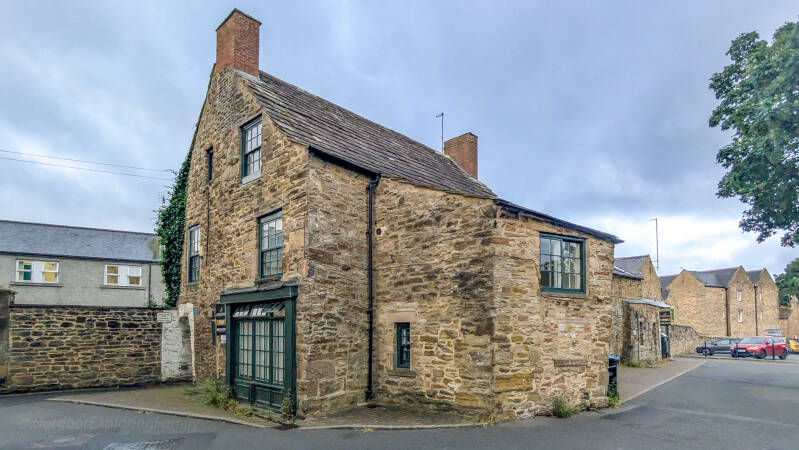
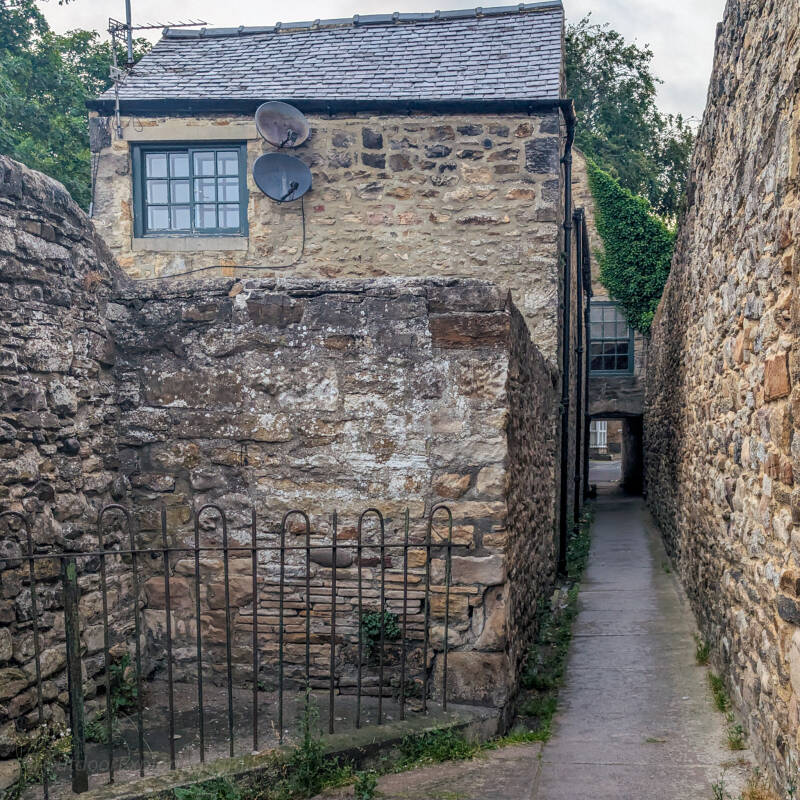
Beside Queen Street car park in Barnard Castle stands an old stone building known as the Hole in the Wall. A narrow passage runs underneath it, carrying people from Queen Street beneath the rooms above and into the yard and car park behind.
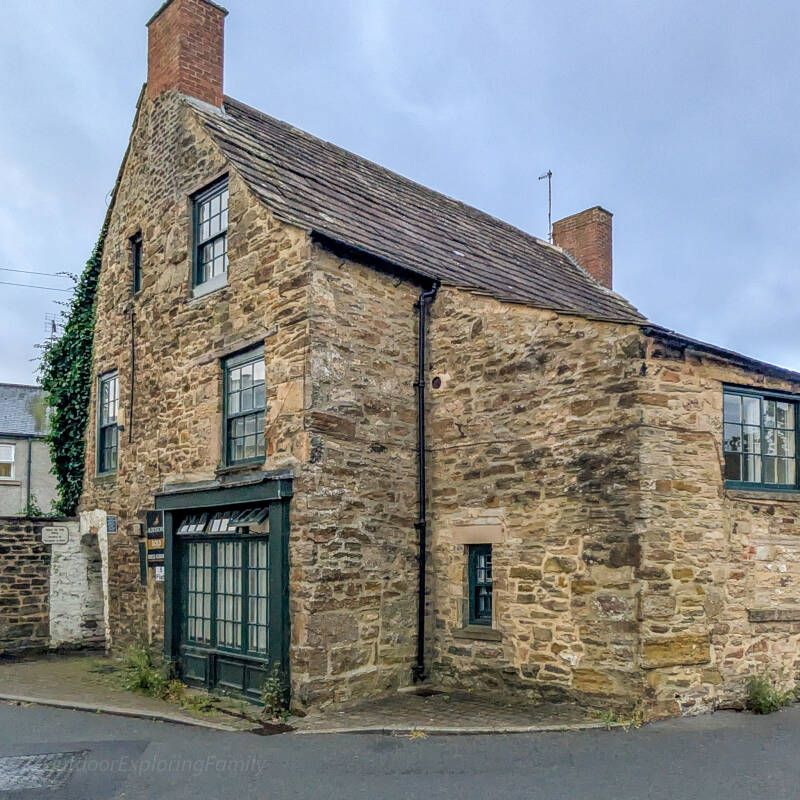
It is one of those buildings that can easily be passed without giving it much thought. Its walls are uneven, several old openings have been blocked, and different parts appear to have been added or altered at different times. Yet this quiet building has been used for worship, education, storage, dining and housing during almost three centuries of Barnard Castle’s history.
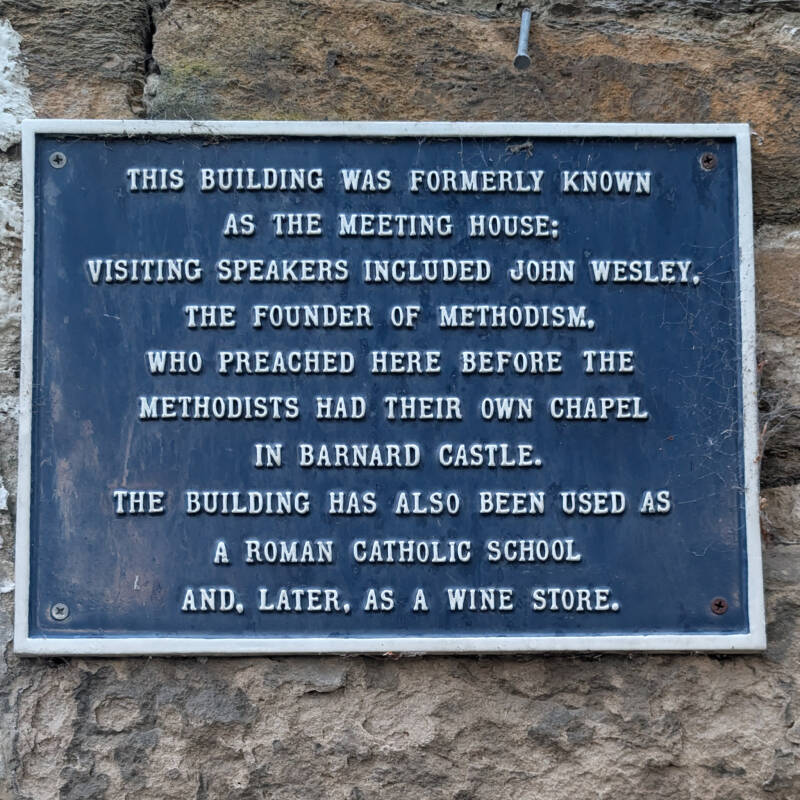
It was the meeting place of the town’s first Methodist society and became closely connected with John Wesley’s visits to Barnard Castle. It later served as a Roman Catholic school and a wine and spirits warehouse. In the 1990s it was transformed into the Hole in the Wall Brasserie before being converted into five flats known as The Meeting House.
The building has changed many times, but the passage that gave it its name still runs beneath it.
Quick facts
Location: Queen Street, Barnard Castle, County Durham
Historic name: The Old Meeting House
Official listed name: Hole in the Wall Warehouse
Later restaurant: Hole in the Wall Brasserie
Modern residential name: The Meeting House
Date: Mainly early to mid-eighteenth century, with an earlier archway
Listed status: Grade II
Early Methodist use: From about 1750 until 1764 or 1765
John Wesley’s visits: 25 May 1752 and 10 June 1761
Later uses: Roman Catholic school, wine and spirits warehouse, restaurant and flats

A building raised over an older archway
The Hole in the Wall was not built all at once. It developed as a group of connected stone buildings that were altered whenever their use changed. The main structure dates from the early or middle eighteenth century, but Historic England records that it incorporates an earlier archway. The rooms seen today were therefore built around a feature that was already standing, although the original purpose and date of that earlier opening have not yet been found.
The property was constructed from rubble stone, with larger dressed stones around its corners and openings. Its roof was traditionally covered with stone flags. Over the years, windows were blocked, vehicle and loading doors were inserted, and some openings were altered with timber lintels, rubble and brick. Those changes can still be read in the walls and show how often the building was adapted.
At the Queen Street end, the passage has a shallow curved head. The lane passes directly beneath the building before opening into the yard and car park behind. No early document explaining the name has yet been found, but the surviving passage provides the clearest explanation for Hole in the Wall. It describes exactly what people still see today: a narrow way passing through an opening beneath the stone building.
Methodism arrives in Barnard Castle
The best-known part of the building’s history began in 1747, when Methodism first became established in Barnard Castle. A local shoemaker named Joseph Cheesebrough had encountered the growing Methodist movement while in Leeds and brought its ideas home with him. Methodism was still young, spreading largely through small groups of ordinary people who gathered to pray, read scripture and listen to travelling preachers.
After returning to Barnard Castle, Cheesebrough began speaking among friends and neighbours, and a small society gradually formed around him. Catherine Graves of Darlington helped organise the group and became leader of the Methodist class in the town. Its members first met in an upper room in a private house in Galgate, where they read the Bible and Methodist writings, sang hymns and prayed together.
These meetings took place during a period when Methodists often faced ridicule and hostility. They had no chapel, little public standing and no certainty that their gatherings would be left undisturbed. One of the men drawn into the society was Thomas Hanby, who was said to have attended a meeting intending to disrupt it but instead became deeply affected by what he heard. Hanby later became a Methodist preacher and eventually served as President of the Methodist Conference in 1794.
The small room in Galgate could not contain the society for long. As more people joined, the Methodists needed somewhere larger.
The Old Meeting House
By about 1750, the Barnard Castle Methodists had moved into an upper room at the Hole in the Wall. They did not build the property. The stone building was already standing and incorporated the earlier archway beneath it. The Methodists took over a room within the existing structure and turned it into their first established meeting place in the town.
It was a useful location. The room was larger than the private house in Galgate but remained tucked away from Barnard Castle’s main streets. The narrow approaches and enclosed position offered some protection from people who opposed the new movement. This was not a chapel in the form we would recognise today. There was no grand frontage, tower or purpose-built worship space. It was a simple room above an old passage, filled with people singing, praying and listening to travelling preachers.
In later years it became known as the Old Meeting House. The room appears to have become extremely crowded, and one of the strongest stories attached to it concerns the travelling preacher William Darney. During one of his services, part of the upper floor gave way and members of the congregation fell into the room below. People were bruised, but nobody appears to have been seriously injured.
The accident showed how heavily the building was being used. Barnard Castle’s Methodist society was growing quickly, and the Hole in the Wall would not remain large enough for much longer.
John Wesley and the Hole in the Wall
John Wesley visited Barnard Castle while the Methodist society was using the Hole in the Wall as its meeting place. His first recorded visit took place on 25 May 1752, when he attempted to preach in the street. A large and noisy crowd gathered, and some of his opponents fetched the town’s fire engine and threw water over the congregation. Wesley continued for around three-quarters of an hour before returning indoors.
That first sermon was held outside rather than in the meeting room. Wesley returned to Barnard Castle in June 1761, while the Hole in the Wall was still being used by the town’s Methodist society. Historic England records that he probably preached here during that second visit, which is why the building has remained closely associated with him.
The connection between Wesley and the building is therefore genuine, even though the surviving record does not describe exactly where he stood. The Hole in the Wall was the meeting place of the Methodist community he visited and supported, and it formed part of the religious life he encountered in Barnard Castle.
A small pointed recess inside the building later became known as a place where Wesley had sat or preached. Customers were shown the feature when the building became a restaurant in the 1990s, but no document has yet been found connecting him with that exact spot. Barnard Castle historian Alan Wilkinson thought it looked more like a small prayer cupboard, perhaps intended for someone kneeling there to pray.
The Methodists move to Broadgates
By the early 1760s, Barnard Castle’s Methodist society had outgrown the Old Meeting House. A purpose-built chapel was erected at Broadgates in 1764 and came into use during 1765, giving the congregation more room and bringing its regular use of the Hole in the Wall to an end.
The Old Meeting House had already played a vital part in the movement’s early survival. It gave Barnard Castle’s Methodists somewhere to gather before they had the money, confidence or support needed to build a chapel of their own. Once the congregation moved to Broadgates, the building above the passage was free to begin another chapter.
The Roman Catholic school
The Hole in the Wall was later used as a Roman Catholic school, although this is the least understood part of the building’s history. The use is recorded on the plaque outside and was also mentioned when the property was restored in the 1990s, when part of the building was described as a former chapel schoolroom.
So far, we have not found the school records, names of teachers or pupils, or firm dates for when it opened and closed. We also do not yet know whether the school used the whole building or only one section of it.
That does not mean the school should be left out. It was clearly one of the building’s later uses, but there is still more to uncover. We will keep searching for Catholic parish records, school papers, rate books and old property documents that may finally fill in this missing chapter.
The wine and spirits warehouse
After the school closed, the Hole in the Wall became commercial premises. The plaque describes it as a wine store, while the history recorded when the restaurant opened in 1996 gives the fuller description of a wine and spirits warehouse.
The surviving building is well suited to that later use. Historic England records inserted vehicle doors at ground level, an upper loading door, a boarded shutter and several blocked openings. These features would have allowed goods to be moved and stored through different parts of the building, although the precise date of each alteration has not been established.
The identity of the wine and spirit merchant remains one of the largest gaps in the building’s history. Several such businesses operated in Barnard Castle, but none has yet been securely connected with this particular warehouse.
When the building was added to the National Heritage List for England on 28 November 1994, it was described as a warehouse and given the official listed name Hole in the Wall Warehouse. The Grade II listing recognised both its surviving architecture and its importance to the early history of Methodism in Barnard Castle.
The Hole in the Wall Brasserie
In late 1996, the old warehouse reopened as the Hole in the Wall Brasserie. The restaurant was created by Richard and Joyce Braithwaite with their son Paul. Richard was an architectural designer with a practice in Yarm and designed the conversion himself.
The family wanted the restaurant to feel as though it belonged inside the historic building. Rather than filling the rooms with new fittings made to look old, they found genuine pieces from churches, chapels and other historic properties. The bar counter was made from a pulpit removed from a disused Methodist church at Tow Law, while its door was reused as the entrance to the kitchen. The finished counter became known as the pulpit bar.
Dining tables were made using pews from St Aidan’s Church at Blackhill. Steel columns supporting beams in the restaurant came from a chapel at Hurworth, while cast-iron radiators had previously been used in a hospital in Durham. The old pointed recess linked with John Wesley remained visible inside and became one of the restaurant’s most memorable features.
Paul Braithwaite became head chef. He had trained and worked at Crathorne Hall and other leading hotels, while chef Graham Maloney joined the restaurant as a consultant during its opening weeks. The Hole in the Wall Brasserie served coffee and snacks throughout the day, alongside lunches and evening meals. The family wanted to provide freshly prepared food at prices local people could afford, and Christmas Day lunch was advertised at £17.50 per person.
The wider restoration created more than the restaurant. By 1997, the connected buildings also contained a manager’s flat and offices in the former schoolroom. The work received a 40 per cent grant through the Barnard Castle Conservation Area Partnership Scheme and was recognised in the County Durham Environment Awards. A blue plaque was installed outside in 1997, recording the building’s use as a Methodist meeting room, Roman Catholic school and wine store.
In 1998, Joyce Braithwaite applied for the alcohol licence to be transferred into her name. The licence allowed alcohol to be sold for drinking inside the restaurant and for customers to take away. By 1999, Caroline Banks was managing the restaurant, while Paul remained head chef.
That year, Richard Braithwaite became involved in a disagreement with Teesdale District Council over an advertising sign attached to a council-owned wall in Newgate. Planning permission had already been granted, but the council wanted to charge the restaurant £150 each year to keep the sign there. Richard chose to remove it rather than pay the annual fee.
The brasserie was still trading in March 1999. Its exact closing date has not yet been identified, but after the business ended the building stood empty and began to deteriorate.
From restaurant to affordable homes
The former restaurant was eventually acquired by Endeavour Housing Association. Working with Teesdale District Council, the association converted the connected buildings into affordable housing and created five self-contained flats arranged over three floors.
The conversion retained many of the old features. Stone stairs, heavy roof timbers and the irregular layout of the historic buildings were incorporated into the new homes. The project gave the Hole in the Wall another purpose and prevented the empty property from slipping further into decline.
The recess disappears
During the housing conversion, the small Gothic-shaped recess associated with John Wesley disappeared behind the new work. Its absence was noticed, and Councillor John Hinchcliffe raised the matter at a Teesdale District Council planning meeting. Planning officer Trevor Watson also remembered that the recess was meant to remain visible.
The feature had not been removed. Angela Lockwood, housing services director for Endeavour Housing Association, explained that it had been carefully covered and preserved. Its position and the requirements of modern building regulations had made it difficult to leave exposed in its previous form, so the possibility of revealing it from inside one of the flats was considered.
A pointed recess can be seen beside a bath in the building’s 2026 sales photographs. Its shape closely resembles the feature described during the conversion and suggests that the old recess may later have been uncovered from inside the flat. Without the conversion drawings, however, that final identification cannot yet be treated as certain.
The Meeting House name
The name for the new flats was debated as the housing conversion moved towards completion. Councillor John Watson proposed The Meeting House, reflecting the building’s early Methodist use and its association with John Wesley.
Barnard Castle’s mayor, Margaret Hamilton, preferred Wesley House, but this was considered too similar to the nearby Wesley Terrace. Alan Wilkinson wanted to retain the older and more distinctive name Hole in the Wall. When concerns were raised about residents having an unusual address, he joked that he would happily live at 6 The Quagmire.
The housing development was eventually named The Meeting House. The name was therefore chosen during the modern conversion. It was intended to remember the building’s past rather than revive an official name used throughout its history.
The Hole in the Wall in 2026
In May 2026, the complete freehold property was placed on the market through Addisons Chartered Surveyors for £175,000. The sale included five self-contained flats across three floors under Land Registry title DU204827.
The property retained sash windows, exposed beams, stone stairs and the uneven arrangement created by joining several old structures together. Flats 1, 2 and 3 had individual or shared access, while Flats 4 and 5 were reached through a separate entrance and stone steps. The interiors required considerable updating, and Flat 5 had been removed from the current council-tax list.
By July 2026, the building was marked sold subject to contract. Its new owner would be taking on far more than a block of flats. The sale included a building that had already served Barnard Castle as a meeting room, school, warehouse, restaurant and home.
Nearly three centuries beneath one roof
The Hole in the Wall has survived because it has never remained trapped in one period of history. It gave Barnard Castle’s first Methodists somewhere to gather before they had a chapel of their own. John Wesley visited the town while the society was based there, and the building became part of the early Methodist story of Teesdale.
It was later used as a Roman Catholic school before becoming a working wine and spirits warehouse. During the 1990s, Richard, Joyce and Paul Braithwaite filled the old rooms with diners, rescued church furniture and the sounds of a busy family restaurant. When the brasserie closed, the building changed again and became five homes.
The narrow passage still runs beneath it. Blocked openings, vehicle doors and loading doors show how often the building was adapted, while stone stairs and roof timbers survive inside. The pointed recess once shown to restaurant customers as John Wesley’s seat also appears to have survived within one of the flats.
There are still parts of its history waiting to be recovered. The original builder and owner remain unknown. The full story of the Roman Catholic school has yet to be found, and the wine merchant who used the warehouse has not been identified.
Those missing details do not weaken the building’s story. They show how much history can survive in one place while still leaving questions for future researchers.
The Hole in the Wall is one of Barnard Castle’s most unusual historic buildings: an old meeting room built around an earlier archway, repeatedly changed by the people who needed it, but never stripped of the layers that make it worth stopping to notice.
Explore more of Barnard Castle’s history
The story of the Hole in the Wall continues at Broadgates Chapel, where Barnard Castle’s growing Methodist congregation moved after leaving the old meeting room in the 1760s.
You can also discover The Witham, another building created to serve the people of the town through learning, public events and medical care, or follow How Barnard Castle Grew from the first Balliol fortress and medieval borough to the streets and landmarks seen today.
Nearby, Blagraves House tells the story of one of the town’s oldest buildings, while The History of Barnard Castle follows the castle, the families who controlled it and the town that developed around its walls.
Return to the Barnard Castle History and Heritage Hub to explore more buildings, streets and people from the town’s past, or visit our Barnard Castle Town Guide to plan your visit.