Bowlees Quarry in Teesdale
A Former Quarry Beside Bow Lee Beck
Just above Bowlees Visitor Centre, there is a part of the landscape that quietly holds a deeper story of Teesdale. Bowlees Quarry sits beside Bow Lee Beck, close to some of the most popular walking routes in the area, yet many people pass it without fully realising what it once was.
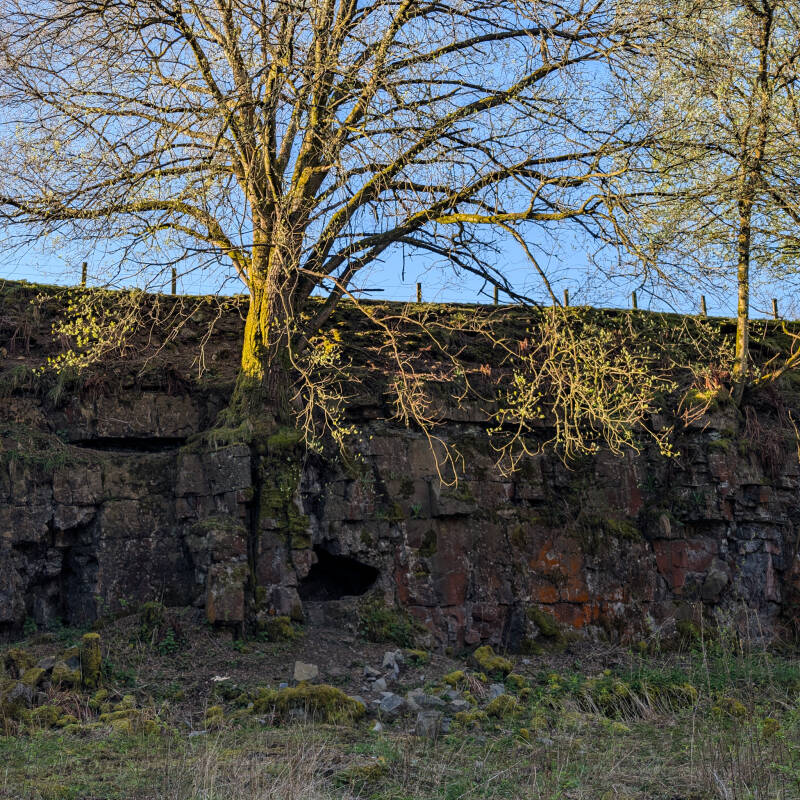
This was once a working limestone quarry, part of the local industry that supported farming, building and everyday life across the dale. Today, it feels very different. The sharp edges have softened, grass has spread across the ground, and nature has gradually taken the space back.
It is a place where the past has not disappeared, but settled into the landscape around it.

Where to Find Bowlees Quarry
Bowlees Quarry is easy to reach, but it is just far enough away from the main flow of visitors that it can be missed if you do not know where to look.
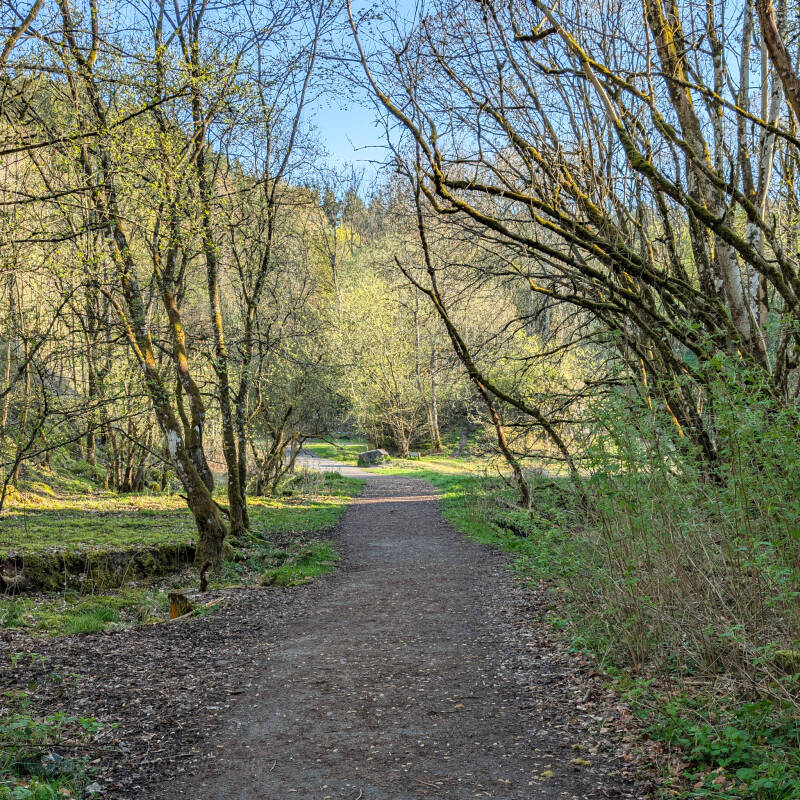
From the top of the Bowlees Visitor Centre car park, do not cross the wooden bridge towards the visitor centre. Instead, follow the path straight ahead, keeping Bow Lee Beck close by as you walk.
After roughly 280 metres, the landscape begins to open out and the quarry area appears on your right.
It is a short and simple walk, but the change in ground and space makes it clear when you have arrived.
The route is short and easy to follow, and for most people, reaching the quarry is just as enjoyable as the place itself.
Access and terrain
Bowlees Quarry is one of the easier places to reach around Bowlees.
From the car park, a broad path leads towards the quarry beside Bow Lee Beck. The route is pushchair accessible, with a mixture of tarmac, hard compact and stone surfaces, although some sections can be uneven or muddy depending on the weather.
Wheelchair users may want to check the latest Bowlees accessibility information before visiting, as conditions and surfaces vary along the route.
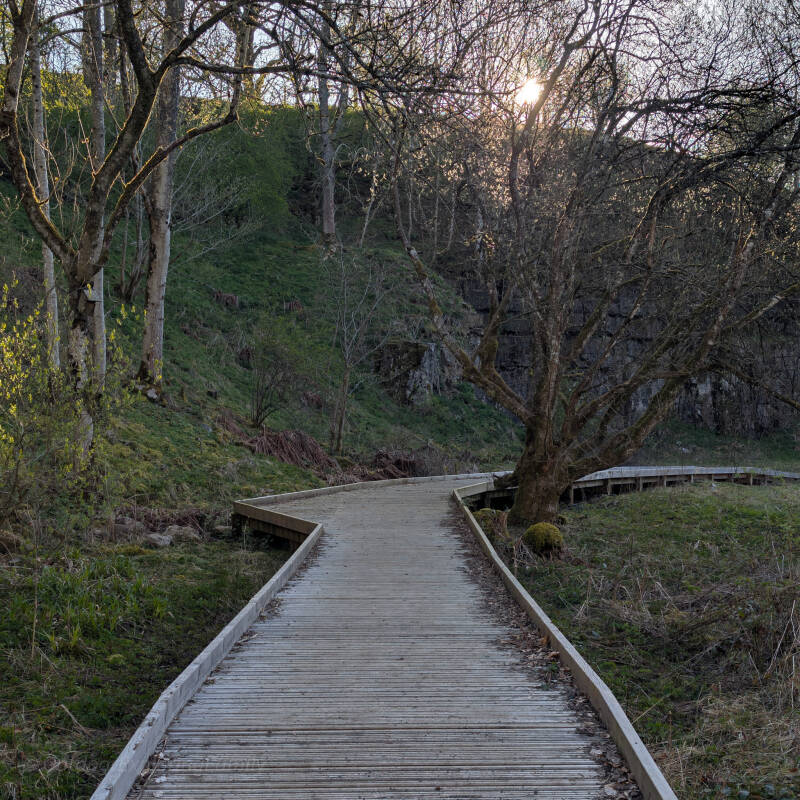
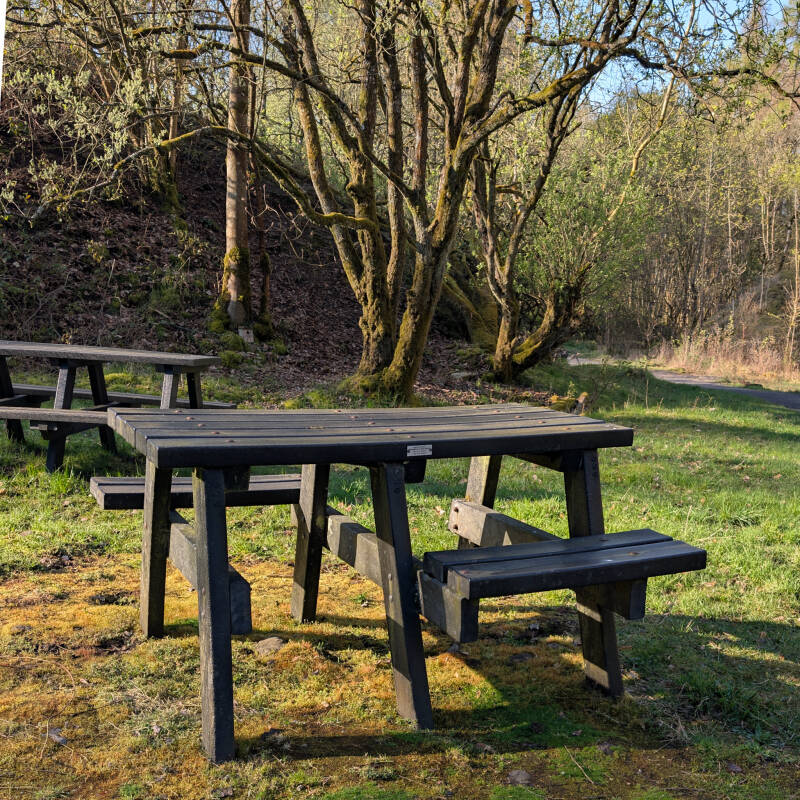
As you reach the quarry, a wooden boardwalk leads into the main area, and there is an accessible picnic bench where you can stop and enjoy the surroundings.
The path runs beside Bow Lee Beck, with a drop towards the water in places, so just take normal care as you walk through.
What You Will See Today
At first glance, Bowlees Quarry does not feel like a former industrial site.
The ground is now a mix of grassland, damp patches and areas of developing woodland. The nearby beck brings movement and sound, while the varied conditions support a wide range of life.
This is why the site is now recognised by the North Pennines National Landscape as a Special Invertebrate Site.
Across the year, different species move through the area. In spring, early bees begin to appear. Through summer, pollinators spread across the grassland, while dragonflies hunt along the beck. Even into autumn and winter, the site continues to support insect life.
It is a quiet example of how quickly nature returns when the land is left to recover.
The Working Quarry Years
Historical environment records show that Bowlees Quarry was opened around 1920 to extract limestone. The stone was used for local road building and for the iron and steel industry on Teesside.
A narrow gauge railway once ran through the site, carrying stone to a storage area, and by 1935 a crushing plant had been built to process the limestone into road building material.
The quarry itself appears to have ceased extraction in 1946.
A second chapter after quarrying
Although quarrying had stopped, the story of Bowlees Quarry did not end there.
Evidence from local newspaper reports shows that by 1947, a company trading as Philip Beadle Ltd was operating from Bowlees Quarry. Advertisements promoted immediate supplies of lime for farmers, builders and local use.
By the 1960s, adverts show a wider range of materials including limestone, sand, whinstone dust, bitumenised macadam and agricultural lime. The business also offered services such as laying tarmac footpaths and drives.
These adverts continue until 1966, closely matching historical records which suggest that crushing operations at the site continued into the late 1960s using stone brought in from nearby quarries such as Stable Green.
Understanding the different names
Historical records refer to the Bowlees Quarry Company as the original operator of the site during its quarrying phase.
Later newspaper evidence shows the site being run by Philip Beadle Ltd, suggesting a change in ownership or use after quarrying had ended.
Rather than being conflicting information, these names appear to represent two different stages in the life of the quarry:
Early phase: limestone extraction under the Bowlees Quarry Company
Later phase: processing and supply of materials under Philip Beadle Ltd
This transition from quarrying to processing reflects a wider change seen across Teesdale, where smaller extraction sites closed but continued to operate as supply or processing centres.
A Place People Gathered
One of the most interesting glimpses into the quarry’s later history comes from a report in the Teesdale Mercury in May 1974.
On a Sunday with perfect weather, almost 300 walkers gathered at Bowlees Quarry to take part in a country trail organised by the Upper Teesdale and Weardale Fell Rescue Association. The event was arranged as a way of thanking supporters, with involvement from the Nature Conservancy and local organisers.
This moment shows the quarry at a point of change, no longer a working industrial site, but already becoming a place for people to meet, walk and explore.
Bow Lee and Bowlees
There is also a small detail in the name that reflects the history of the area.
The beck beside the quarry is known as Bow Lee Beck, and older records and maps often use the name “Bow Lee” for nearby features, including the chapel and bridge.
Over time, modern usage has shifted to “Bowlees”, which is now used for the visitor centre and surrounding area. The quarry itself appears in historic records as Bowlees Quarry, sitting between the older and newer forms of the name.
It is a small change, but one that shows how places evolve over time, both in landscape and in language.

Geology Beneath the Surface
Bowlees Quarry sits within one of the most geologically important parts of Upper Teesdale.
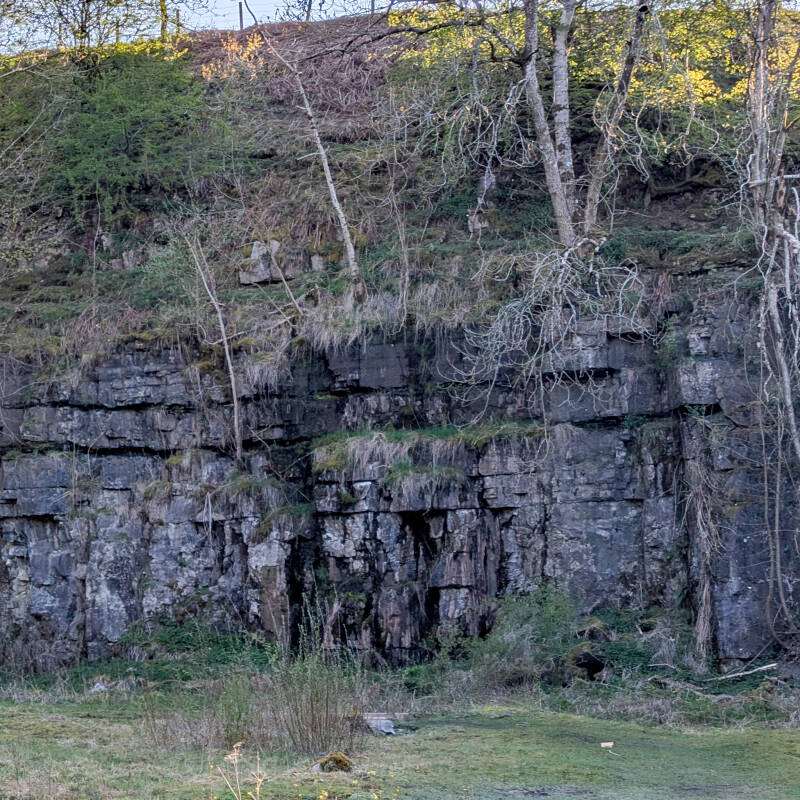
The quarry exposes part of the limestone and sandstone sequence that shapes the surrounding landscape. Nearby features such as Gibson’s Cave help reveal how these layers were formed and later uncovered.
This means the quarry is not only part of Teesdale’s industrial past, but also part of the deeper geological story that shapes the waterfalls, valleys and rock formations across the area.
A Landscape That Has Changed
Bowlees Quarry is not a dramatic landmark, and it is not somewhere most people set out to visit on its own.
But it adds something important to the Bowlees area.
It shows how the land has been used, reshaped and then gradually returned to nature. It sits quietly between the better known routes to Low Force and Gibson’s Cave, offering a different kind of interest for those who take a moment to notice it.
A Moment of Calm
There is a stillness to Bowlees Quarry that feels different from the busier paths nearby.
Where there was once noise and activity, there is now open ground, soft grass and the steady sound of Bow Lee Beck.
It is not a place that demands attention, but one that rewards it.
Standing here, it becomes less about what used to be here, and more about how the landscape has settled again over time. A place that was once shaped by industry, now easy to reach and quietly full of life, feels like a small but complete part of the Bowlees story.
Explore More from Bowlees
Bowlees Quarry is just one small part of a much bigger landscape. From here, you can return to Bowlees Visitor Centre and explore a range of walks from Bowlees Visitor Centre in Teesdale, leading out towards waterfalls, woodland paths and longer routes along the River Tees.
Close to the car park, you can also see the Bowlees Molluscarium, a unique carved stone sculpture that often catches people’s attention before they even begin their walk. Just beyond, a hidden waterfall sits quietly beneath Bowlees Bridge, while woodland paths lead you towards Summerhill Force and Gibson’s Cave.
Following the river further brings you to Low Force and Wynch Bridge, with the option to continue on to High Force or walk beyond to the quieter Bleabeck Force. There are also routes nearby to explore Flushiemere Beck waterfall, along with longer circular walks that take you deeper into the surrounding Teesdale landscape.