The History of Bowlees Visitor Centre in Teesdale
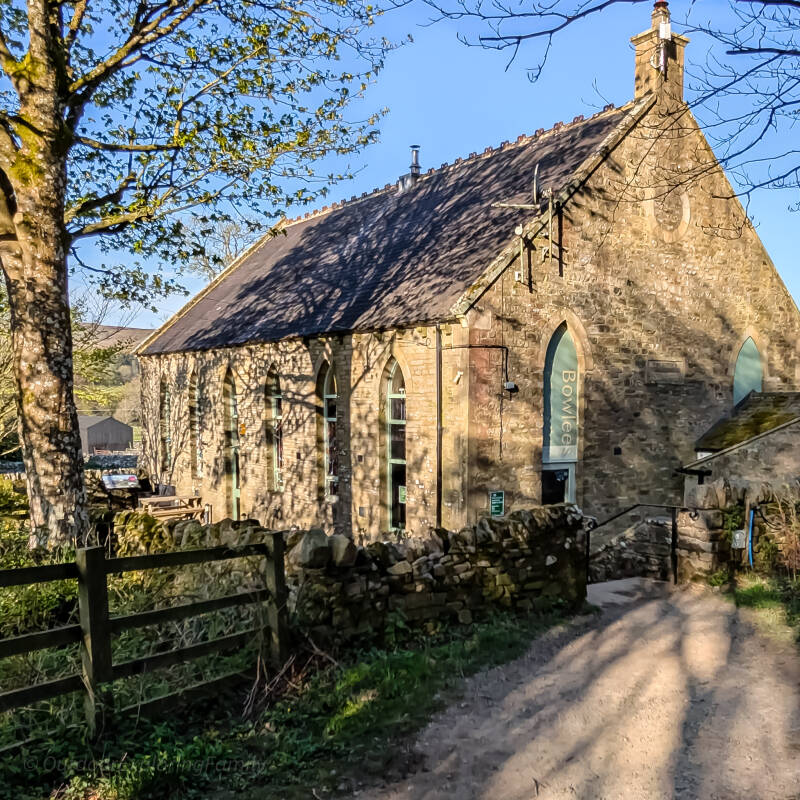
Set quietly beside Bowlees Beck, Bowlees Visitor Centre feels like it has always belonged here. Surrounded by woodland, waterfalls, old stone walls and open Teesdale scenery, it is now one of the best known starting points for exploring this part of Upper Teesdale.
But before walkers set off from here towards Low Force, Gibson’s Cave, Summerhill Force or the wider Bowlees paths, this building had a very different purpose.
For over a century, it was Bowlees Primitive Methodist Chapel. A place built by local people, used by local families, and shaped by the working life of the dale around it.

A Chapel Built for the Dale
The story of Bowlees chapel begins in the mid 1800s, when Primitive Methodism was growing across Teesdale.
Chapels like this were often built close to where people lived and worked. In Upper Teesdale, that meant small rural communities, farming families, lead mining families and scattered hamlets where people could not always travel far for worship.
At Bowlees, the first chapel was built in 1845 and opened the following year. As the congregation grew, it was extended in 1852 before being rebuilt in 1868 into a much larger chapel. The building was later altered again in 1904, which is the date still shown on the front today.
That timeline is not just written in old records. It can still be seen in the building itself.
The Story Written in Stone
One of the most interesting things about Bowlees Visitor Centre is that parts of its history are still visible in the stonework.
Around the rear and sides of the building, different stones tell different chapters of the chapel’s life.
A hidden stone at the back records Primitive Methodist Chapel 1845, linking the site directly to the original chapel.
A separate stone marked 1868 can also be seen on a nearby outbuilding, likely reused from an earlier phase of the chapel.
On the front gable, the date 1904 marks another phase of alteration, helping explain why the building visitors see today carries a later date, even though the chapel story began much earlier.
Together, these stones create a quiet timeline of the building. They show how Bowlees changed over time, from a small rural chapel into the visitor centre that now welcomes people to Upper Teesdale.
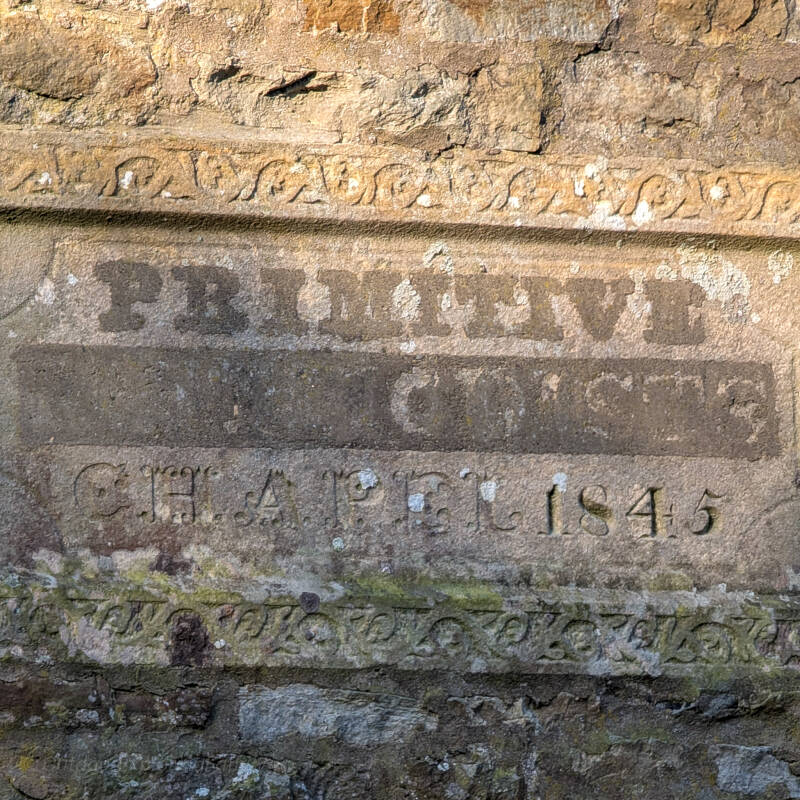
1845 Chapel Stone
A surviving stone marking the original Primitive Methodist chapel built in 1845.
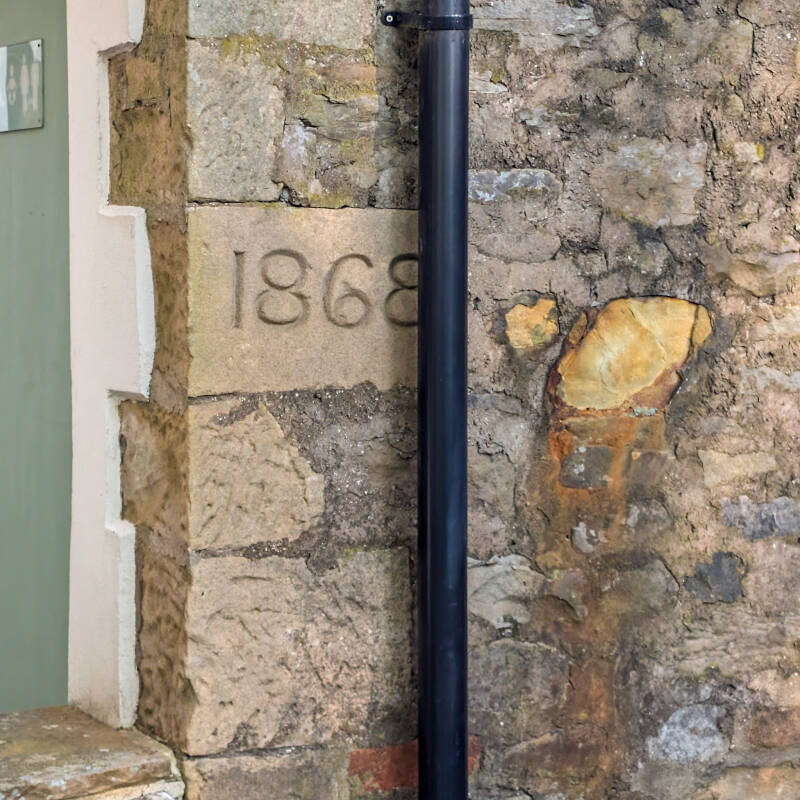
1868 Dated Stone
A carved stone marked 1868, likely reused from an earlier phase of the chapel.
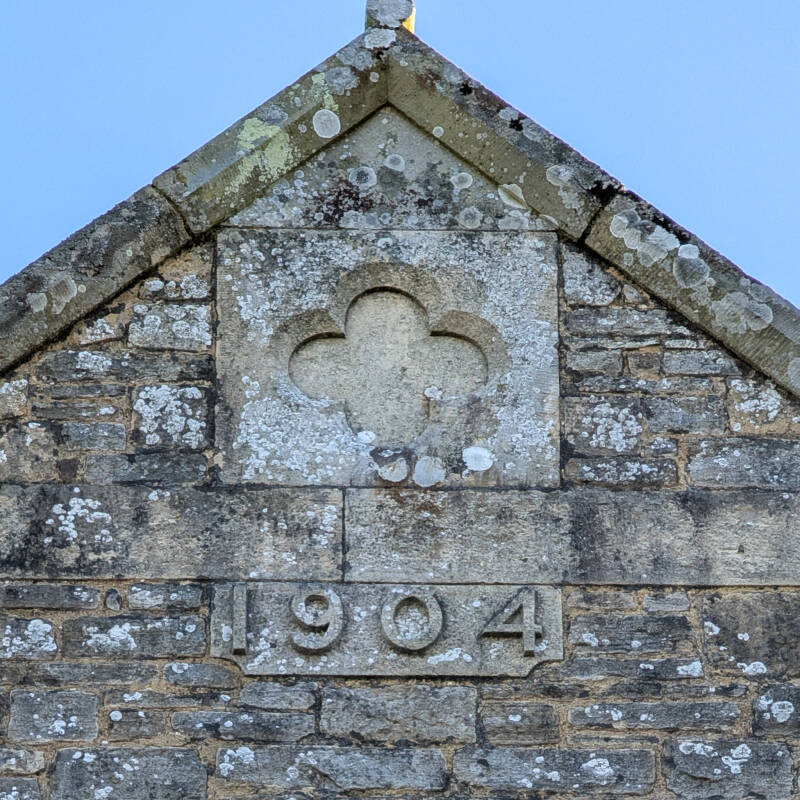
1904 Date Stone
The date shown on the front of the building, marking a later phase of alteration.
A Busy and Lively Place
Old newspaper records bring the chapel to life in a way simple dates never can.
In 1857, a Sunday School anniversary at Bowlees drew around 300 people. There was tea, sermons, children’s recitations, visiting preachers and a large congregation gathered in this small Teesdale community.
At its peak, Bowlees chapel was much more than a place of worship.
It was a place where families gathered, children learned, visiting speakers came, and people from across the dale met together.
By the early 1900s, the chapel was still remembered for its choir, anniversary events and well known coffee suppers. These gatherings were looked forward to for weeks, with homemade food, shared tables and visitors travelling from different parts of Teesdale.
It was a simple building, but full of life.
A Story Passed Through Generations
There is also a local story connected with how the chapel first came to be.
It centres on Willie Wilkinson, a man from Holwick, who is said to have repeatedly asked for land to build a Primitive Methodist chapel at Bowlees. The land belonged to the Duke of Cleveland, and the story tells how Wilkinson finally got the chance to make his case.
He is said to have argued that a chapel would improve the area and might even help turn troublesome poachers away from trouble.
Whether every detail of the story is exact or partly shaped by memory, it reflects something important.
Bowlees chapel existed because local people wanted it. It was built through persistence, community effort and belief in creating something lasting in the dale.
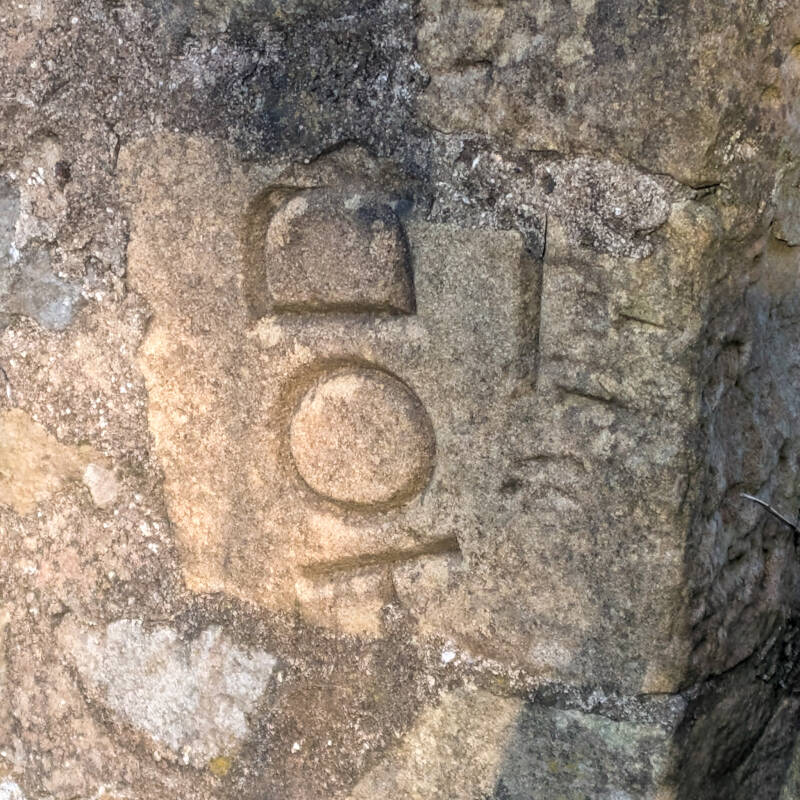
Carved Stone Detail
A reused carved stone set into the wall, hinting at earlier materials used in the building.
Rear View of the Chapel Building
The back of the building where earlier stonework and hidden details can still be found.
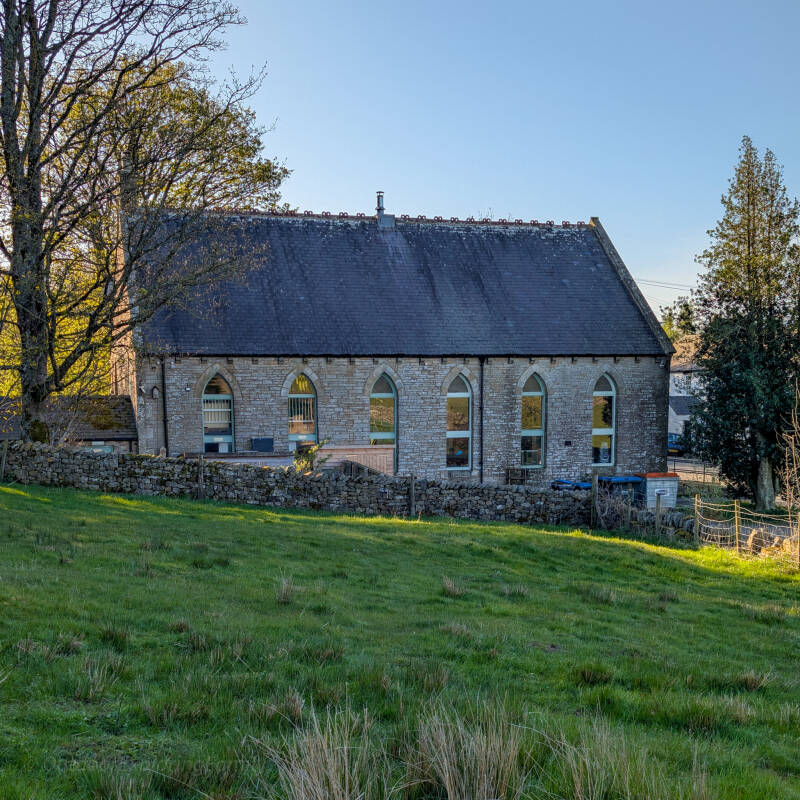
Side View Across the Field
A quieter angle showing the chapel sitting within the Teesdale landscape.
Changing Times
Like many rural chapels, Bowlees did not stay the same forever.
By the mid 20th century, records describe a chapel that had seen both busy gatherings and quieter years, when only a smaller group kept services going.
Even into the 1960s, the chapel was still active, with concerts, services and anniversary events continuing.
But in 1968, Bowlees Primitive Methodist Chapel closed as a place of worship.
A New Purpose for a Changing Landscape
The building was not lost.
In 1975, plans were approved to convert the old chapel into an interpretive centre for Upper Teesdale. At the time, the project was not without debate. Around £22,000 was invested in the conversion, with the aim of helping visitors understand the dale, its wildlife, its history and its fragile landscape.
This was not simply about creating a tourist stop.
The idea was to help people appreciate why Upper Teesdale mattered, and to encourage better care of the countryside at a time when more visitors were discovering the area.
In many ways, this gave the old chapel a new purpose that still fitted the place. It remained a building about learning, gathering and understanding.
From Wildlife Trust to National Landscape
Over the years, Bowlees continued to evolve.
It was run for a time by Durham Wildlife Trust, becoming a small but important place where visitors could learn about the landscape, wildlife and history of Upper Teesdale.
After a period of closure in 2011, the centre was brought back to life in 2013 when the North Pennines partnership took on the building and reopened it following a major redevelopment. The North Pennines Management Plan later described Bowlees as becoming an important economic, environmental and social asset.
Today, Bowlees Visitor Centre is managed by the North Pennines National Landscape team. Their work reaches far beyond Teesdale alone, supporting nature, heritage, geology, education and responsible enjoyment across the wider North Pennines National Landscape and UNESCO Global Geopark.
Here at Bowlees, that wider work becomes something visitors can see and experience before heading out into the dale itself.
It is something we quietly appreciate. The work they do helps keep places like this special, not just for today, but for anyone who visits in the future.
A Starting Point for Exploring Bowlees
Step outside the building today and the purpose feels natural.
From Bowlees Visitor Centre, you can walk towards Low Force, follow the woodland path to Gibson’s Cave and Summerhill Force, or explore a range of walks from Bowlees into the surrounding landscape.
The building may no longer hold services, but it still brings people together in a different way.
People arrive here for coffee, maps, toilets, information, family walks, waterfall routes and quiet moments beside Bowlees Beck.
The chapel has changed, but the idea of gathering before stepping out into the wider dale is still there.
A Quiet Part of Teesdale’s Story
What makes Bowlees special is how naturally its story fits into the landscape around it.
It began as a chapel because people lived and worked here.
It became a visitor centre because people still come here.
Through all its changes, the purpose has stayed surprisingly similar.
A place to gather.
A place to learn.
A place to begin.
Sources and Local Records
This page is based on local historical records, including references from the Teesdale Mercury archive, Primitive Methodist chapel records, and specialist historical sources relating to Upper Teesdale.
Explore More from Bowlees
Bowlees is one of the best places to start exploring Upper Teesdale. From here you can follow a range of walks from Bowlees Visitor Centre, discover a hidden waterfall beside Bowlees Bridge, or head through the woodland to Summerhill Force and Gibson’s Cave.
You can continue along the River Tees to Low Force and Wynch Bridge, visit the impressive High Force waterfall, or walk further to the quieter Bleabeck Force. There are also routes to explore Flushiemere Beck waterfall, along with longer circular walks that take you deeper into the surrounding landscape.