Flatts Wood, Barnard Castle
There are places that become part of a town's story, and Flatts Wood is one of them.
For generations, people from Barnard Castle have walked these paths to escape the noise of everyday life. Long before anyone spoke about mindfulness or mental wellbeing, local people came here for exactly the same reasons many still do today. To slow down, enjoy some fresh air and spend time surrounded by nature.
The woodland follows the valley of Percy Beck as it winds its way towards the River Tees beneath Barnard Castle. Along the way you'll find mature woodland, wooden bridges, hidden viewpoints, rocky stream beds, the old railway viaduct and a surprising amount of local history.
What makes Flatts Wood special is that it is much more than a woodland walk. This landscape has connections to medieval hunting parks, forgotten riverside paths, Victorian health walks, the old Barnard Castle Spa and even the creation of Waterman Island during the Great Flood of 1771.
Today it remains one of the best places in Barnard Castle to step outside, slow down and reconnect with nature.

Where Is Flatts Wood?
One of the things that makes Flatts Wood so special is how quickly you can escape into nature without ever leaving Barnard Castle.
From the town centre, simply follow Flatts Road behind the Post Office, continue along Raby Avenue and within a few minutes you'll find yourself beneath the trees. What begins as an ordinary walk through town suddenly becomes a network of woodland paths, bridges and hidden corners waiting to be explored.
Many visitors also arrive from the Startforth side of the River Tees. Crossing the Silver Bridge, the wooded valley of Percy Beck rises ahead of you, marking the entrance to one of Barnard Castle's most loved green spaces.
There are several other ways into the woods too. Riverside paths connect Flatts Wood with the River Tees, while routes through Percy Beck, Broom Close and the surrounding woodland allow you to create a different walk each time you visit.
Perhaps that is why so many people return here. Flatts Wood does not feel like a single woodland with one entrance and one route to follow. Instead, it feels like a collection of paths, viewpoints, streams and hidden corners all connected together, inviting you to slow down, explore and discover something new each time you visit.
More Than Just A Woodland
Step into Flatts Wood and it doesn't take long to understand why generations of local people have been drawn here.
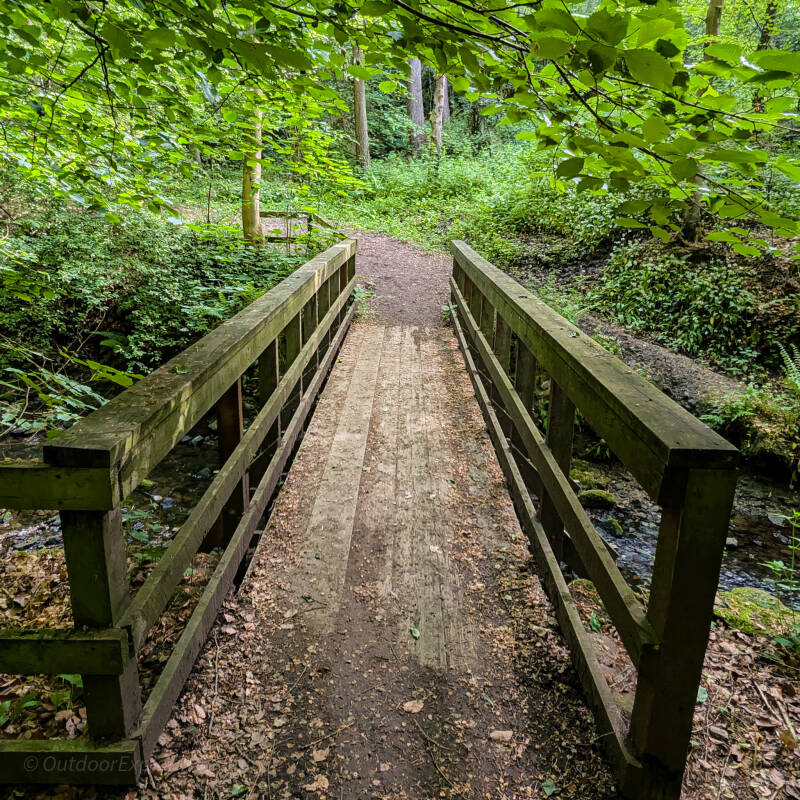
Within a few minutes of leaving the streets of Barnard Castle, the sound of traffic fades away and is replaced by the gentle flow of Percy Beck beneath the trees. Wooden bridges cross the stream, winding paths disappear into the woodland and hidden viewpoints open up above the River Tees.
Take your time here.
Follow a path simply to see where it leads. Pause on one of the benches beside the beck. Look up through the trees and see if you can spot the old railway viaduct appearing unexpectedly above the woodland canopy. Even if you've visited before, you may be surprised by how large it feels when you suddenly find yourself standing beneath it.
This is not a woodland designed to be rushed. It is a place to slow down, explore and reconnect with nature at your own pace.
The name Flatts Wood can actually be a little misleading. Historically, "The Flatts" appears to have referred to a much larger area than the woodland shown on modern maps. Early guidebooks describe an elevated terrace north of Barnard Castle overlooking the River Tees, an area that closely matches the open ground around today's Scar Top and Flatts Road. During medieval times this land is believed to have been used as a military training ground associated with Barnard Castle.
By the early nineteenth century, visitors were already being encouraged to explore a network of walks stretching far beyond the woodland around Percy Beck. The routes wandered through Broom Close, followed the River Tees, connected with the Barnard Castle Spa and opened up views across the wider riverside landscape.
Reading these early descriptions reveals something surprising. Historic Flatts Wood was not simply the woodland shown on modern maps. Instead, it appears to have been a much broader landscape of woods, paths, viewpoints, open ground and riverside scenery stretching westwards along the Tees.
Understanding that bigger picture helps explain why Flatts Wood has fascinated visitors for generations. It was never just a patch of woodland. It was an entire landscape waiting to be explored.
Dr George Edwards and Why Flatts Wood Exists Today
If you've ever walked through Flatts Wood after a difficult day, followed Percy Beck beneath the trees or simply sat quietly listening to the water flow past, there is one person you can probably thank more than anyone else.
Dr George Edwards.
During the nineteenth century, Edwards became one of the driving forces behind creating and improving the woodland walks around Barnard Castle. At a time when many local people worked long hours and opportunities for recreation were limited, he believed access to fresh air, exercise and beautiful outdoor spaces could improve people's health and quality of life.
Rather than simply talking about the idea, he helped make it happen.
Using his own money alongside public subscriptions and support from local residents, Dr Edwards helped improve and extend a network of paths through the woods, along the River Tees and around Barnard Castle's mineral springs. Historic guidebooks specifically credit him with improving the Spa Walks beside the River Tees, while other accounts link his efforts to routes leading towards the Red Well spring and the wider woodland landscape. Thanks to these improvements, places that had once been difficult to reach became some of the town's most popular walking routes.
The routes became some of the best known walks around Barnard Castle. Victorian guidebooks recorded names including King's Walk, Scar Walk, Rock Walk, Cleveland Walk, Marwood Terrace, Barnard Castle Terrace, Darlington Terrace, Broom Close and the Spa Walks. These were not simply paths from one place to another. They were carefully planned routes designed to showcase woodland scenery, river views, dramatic cliffs and peaceful places to rest.
What makes Dr Edwards particularly remarkable is how modern his thinking now seems. Long before people spoke about green spaces, mental wellbeing or the benefits of spending time in nature, he understood the value of helping people spend time outdoors.
More than 150 years later, thousands of people still walk the paths he helped create. The woodland has changed, some of the original route names have faded from memory and parts of the old Spa have been lost to time, but the reason people come here remains much the same.
To enjoy fresh air.
To slow down.
To clear their minds.
To spend time in nature.
In many ways, Flatts Wood is one of Barnard Castle's oldest wellbeing spaces, and Dr George Edwards helped ensure future generations could continue enjoying it.

Percy Beck
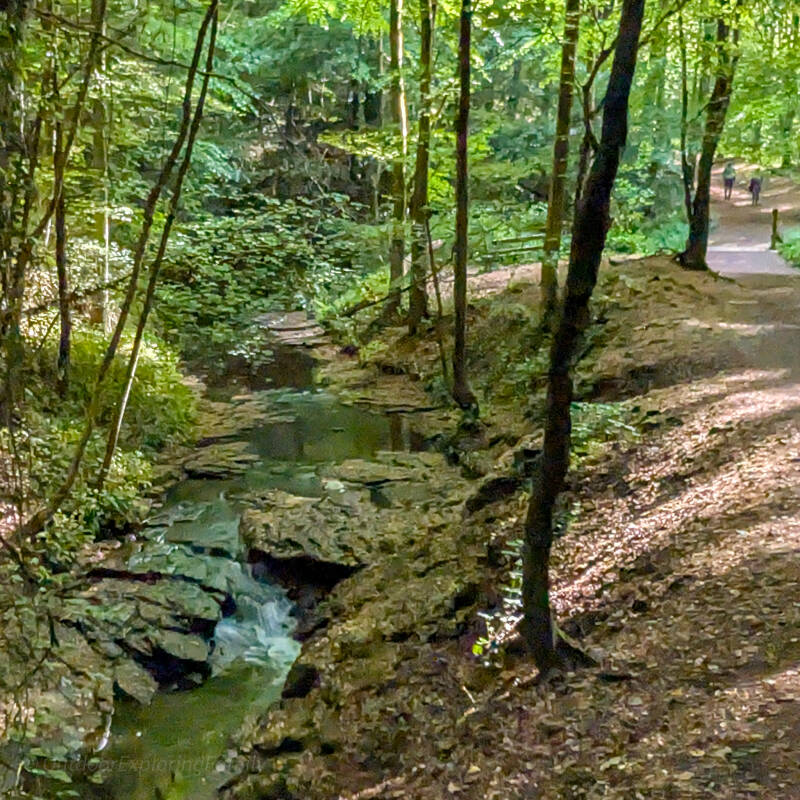
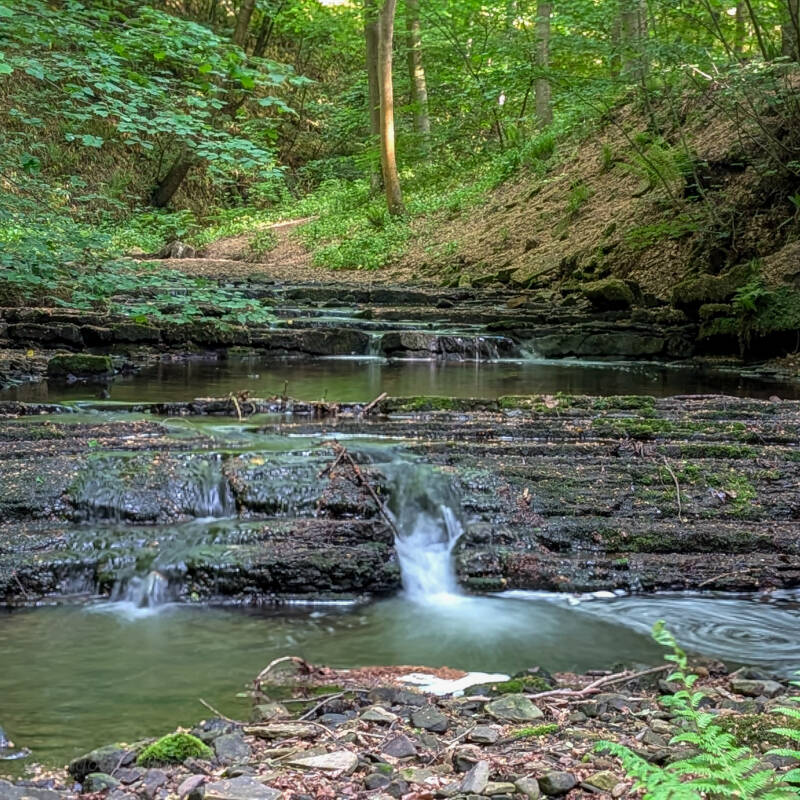
At the heart of Flatts Wood is Percy Beck, a small stream that has quietly shaped this landscape for thousands of years.
Long before the woodland paths, railway viaduct and Victorian walking routes appeared, Percy Beck was cutting its way through the sandstone and limestone beneath Barnard Castle. Over time it created the steep wooded valley that gives Flatts Wood much of its character today.
As you follow the paths through the woods, the beck is never far away. In places it flows gently beneath wooden bridges and over rocky shelves. Elsewhere it tumbles through small waterfalls and narrow channels hidden beneath the trees. The sound of running water follows you through much of the woodland and helps create the feeling that you are much further from the town than you really are.
The beck is one of the reasons Flatts Wood feels different from many other local walks. Within a few minutes of leaving Barnard Castle's streets, you find yourself surrounded by woodland, flowing water and steep valley sides that feel surprisingly wild for such an accessible location.
The character of the beck changes throughout the year. During summer, the trees provide welcome shade and the woodland becomes a cool retreat on warm days. Autumn brings colour to the valley as leaves turn gold and copper above the water. After heavy rain, the quiet stream can transform into a powerful torrent rushing through the gorge, providing a reminder of the natural forces that created this landscape in the first place.
For many visitors, Percy Beck is the feature that makes Flatts Wood special. It is not a dramatic waterfall or a famous landmark. Instead, it is the constant presence of water, woodland and wildlife working together to create one of the most peaceful corners of Barnard Castle.
The Railway Viaduct
One of the most striking landmarks in Flatts Wood is the railway viaduct that spans Percy Beck.
Built as part of the South Durham and Lancashire Union Railway during the Victorian era, the viaduct rises above the woodland and remains one of the defining features of the landscape today. Although trains no longer cross it, the structure still stands as a reminder of a time when Barnard Castle was connected by rail to communities across the North.
Victorian visitors were fascinated by the contrast between the peaceful woodland and the arrival of the railway. An 1883 newspaper article described a walker standing in Broom Close surrounded by little more than woodland, flowing water and the sound of birds. Then, without warning, the silence would be broken by the sound of an approaching train before it burst across the viaduct overhead, its thunder echoing through the valley.
More than a century later, the experience is different but no less impressive. The trains have gone, yet the viaduct remains. Seen through the trees, towering above Percy Beck, it has become one of the most photographed features in the woodland and a reminder of how nature and history have become intertwined here.
For many visitors, it is the moment when Flatts Wood reveals another side of its story. What appears at first to be a peaceful woodland walk is also a landscape shaped by engineers, railway workers, Victorian visitors and generations of local people who have walked these paths before us.
We have written a full guide to Percy Beck Bridge for anyone who wants to look deeper into its story, from the Victorian railway works and local builder D. P. Appleby to the bridge’s survival after the railway closed.
The Forgotten Barnard Castle Spa
Hidden in the trees is one of the most overlooked parts of Barnard Castle's history.
The Barnard Castle Spa.
Today, many people assume references to a historic spa in Barnard Castle relate to Red Well Spring above Harmire. However, the original Barnard Castle Spa was a separate location beside the River Tees within the wider Flatts and Broom Close landscape.
During the nineteenth century, the spring was well known locally and attracted visitors who came to drink the iron rich water and enjoy the surrounding woodland scenery. Contemporary guidebooks spoke highly of the spa and suggested the location possessed all the qualities needed to become a successful health retreat.
The spring was considered important enough for paths, steps and access routes to be maintained for visitors. Historical newspaper reports even complained when the area fell into disrepair, describing damaged paths, broken seating and deteriorating access to the spring. Local writers argued that the spa and surrounding walks were among Barnard Castle's greatest natural attractions and deserved proper care.
One nineteenth century writer went so far as to suggest that, with the right investment, Barnard Castle Spa could rival some of the better known spa destinations of the day. That vision was never fully realised, but for a period the spring was an important part of the town's identity.
Although little remains today to suggest visitors once travelled here specifically for its waters, the spa survives as a reminder of a very different chapter in Barnard Castle's history. Hidden amongst the woodland paths and riverside scenery is a place that was once seen as one of the town's most promising attractions.
Waterman Island and the Great Flood of 1771
One of the most fascinating stories connected to Flatts Wood is the creation of Waterman Island.
What surprises many people is that the island did not always exist.
According to local records, the story begins with a man named Joseph Waterman, who quarried stone from the riverbank beside the Tees. Then came the Great Flood of 1771, one of the most destructive floods ever recorded in northern England.
The floodwaters burst into the excavated ground and carved a completely new channel through the riverside land. When the water finally subsided, a piece of land had been cut off from the bank and surrounded by the river. Waterman Island had been born.
For many years the island became a recognised landmark in the Tees below Barnard Castle. Gravel beds built up around it, trees took root and visitors regularly mentioned it in local accounts. Yet the story did not end there.
The River Tees continued to reshape the island. Newspaper reports from the 1860s describe floods tearing away sections of land, carrying off trees and depositing huge quantities of gravel downstream. Writers of the time predicted that the island would eventually disappear altogether as the river reclaimed it.
Waterman Island also became the centre of several unusual local stories. In 1866, while workhouse labourers were breaking stones collected from the river near the island, an iron screw nail was reportedly discovered embedded inside a rounded piece of freestone. The strange find attracted local attention and was displayed for curious visitors to inspect.
The waters around the island developed another reputation too. A deep section of river nearby became known as the Gentleman's Hole and was considered one of the most dangerous swimming spots around Barnard Castle. Newspaper reports recorded several drownings there, leading local people to call for warning signs to be erected along the riverbank.
Today, most visitors pass through Flatts Wood without realising they are walking beside a landscape that was dramatically altered by one of Britain's greatest floods. Yet the story of Waterman Island remains a reminder that the River Tees is not simply part of the scenery. It is one of the forces that helped create the landscape we see today.

The Lost Landscape of Marwood
One of the most surprising discoveries hidden within the history of Flatts Wood is that this landscape may have been important long before Barnard Castle itself existed.
An early guidebook published in 1828 claimed that Barnard Castle was built from the ruins of Marwood, an earlier settlement believed to have stood roughly half a mile north of the modern town. Whether that claim is entirely accurate is open to debate, but it shows how closely the history of Flatts Wood has always been connected to the wider story of Marwood, a name that still survives today through Marwood Parish.
For centuries, the land surrounding Barnard Castle formed part of Marwood Park and Marwood Chase, a large medieval hunting park belonging to the Lords of Barnard Castle. This was a very different landscape from the one we see today, with woodland, open grazing land and managed hunting grounds stretching across the countryside above the River Tees.
The deer have long since disappeared from Marwood Chase itself, although the tradition of keeping deer within parkland survives nearby at Raby Castle, where large herds can still be seen today.
Much of this medieval landscape has now vanished, but the old guidebooks, maps and local records help reveal a forgotten world that once surrounded Barnard Castle. Hidden within Flatts Wood are some of the surviving clues to that story.
The Old Park Wall of Marwood
Perhaps the most overlooked historic feature around Flatts Wood is the old Park Wall of Marwood.
Nineteenth century writers traced its route from the woods westwards beside the River Tees, following the remains of a boundary that once enclosed the medieval deer park known as Marwood Chase. Believed to have been built shortly after Barnard Castle was founded, the wall marked the edge of an important hunting park belonging to the Lords of Barnard Castle.
Even in the 1870s substantial sections were still standing. Contemporary accounts describe stretches several feet high, covered in mosses and trailing plants. In some places it formed part of field boundaries, while elsewhere only grass covered foundations remained visible beneath the trees.
Near the old Spa, observers recorded the remains of a small square structure built into the line of the wall. Some believed it may have been a shelter for a deer keeper watching over the park, while others suggested it could have provided refuge for animals within the enclosure. Whatever its purpose, it was already a mystery more than 150 years ago.
The old accounts also describe ancient yew trees, steep riverside cliffs and secluded corners where the wall disappeared into woodland above the Tees. These writers were clearly captivated by the area, describing scenes that still feel familiar to anyone exploring the woods today.
Much of the wall has now vanished through river erosion, woodland growth and centuries of change. Yet the surviving descriptions offer a fascinating glimpse into a forgotten medieval world that once stretched across the slopes above the River Tees.
Explore Flatts Wood on Foot
Want to experience Flatts Wood for yourself?
Our Flatts Wood Circular Walk follows many of the woodland paths described on this page, taking in Percy Beck, the River Tees, the old Percy Beck Railway Bridge, the remains of the Tees Viaduct and views back towards Barnard Castle.
A Place to Slow Down
The more you read about Flatts Wood, the more one theme keeps appearing.
People came here to feel better.
Long before phrases such as mental wellbeing, mindfulness and green spaces became common, local writers were describing the woodland as a place to escape the pressures of everyday life. They wrote about fresh air, peaceful walks, quiet woodland paths and the simple pleasure of spending time outdoors.
Perhaps that is why Dr George Edwards worked so hard to improve the walks. He understood that places like this mattered.
More than a century later, those reasons still feel just as relevant.
Whether you are following Percy Beck beneath the trees, standing below the old railway viaduct, looking out across the River Tees, or simply sitting quietly on a bench for a few minutes, Flatts Wood offers something that can be difficult to find elsewhere.
Space.
Space to think.
Space to breathe.
Space to step away from the noise of everyday life for a while.
The paths have changed. The woodland has changed. Barnard Castle itself has changed. Yet the feeling people find here seems remarkably similar to the one described by visitors more than 150 years ago.
For us, that is what makes Flatts Wood special.
It is not just a woodland walk. It is a place where history, nature and wellbeing come together, quietly helping people slow down, clear their minds and reconnect with the outdoors.
Explore More Around Barnard Castle
If you've enjoyed exploring Flatts Wood, there is plenty more to discover nearby.
Planning a visit? Our Barnard Castle Town Guide brings together the town's history, attractions, riverside walks and places worth exploring.
Looking for parking, toilets or EV charging? Use our Barnard Castle Town Map to find car parks, public toilets, cash points, family attractions and local landmarks.
Want another woodland walk? Explore Deepdale Woods, one of the most atmospheric woodlands in Teesdale, home to hidden paths, dramatic scenery and fascinating local history.
Enjoy discovering unusual places? Find the story behind The Monk's Head, a mysterious carved face hidden within Deepdale Woods, or visit The Great Stone, one of the area's most intriguing natural landmarks.
Interested in local history? Follow the path to Red Well Spring, a historic iron rich spring whose story stretches back centuries and forms part of Barnard Castle's forgotten spa heritage.
Whether you're interested in history, nature, walking or simply finding somewhere peaceful to spend an hour or two, Barnard Castle has far more to explore than many visitors realise.