The Old Police Station and Magistrates Court in Barnard Castle
The old police station on Queen Street is easy to pass without realising how much of Barnard Castle’s history happened behind its stone frontage. For more than a century, this was where crimes were reported, people were detained, magistrates heard cases, coroners examined sudden deaths and police officers gathered for inspections, retirements and presentations.
The building dates from around 1840, placing it within the first years of organised county policing in Durham. Before then, Barnard Castle relied on local constables, while the Market Cross had served as a courtroom and lock-up. Queen Street belonged to a new era: a permanent police station that later became an important centre of justice for Barnard Castle and communities across the surrounding district.
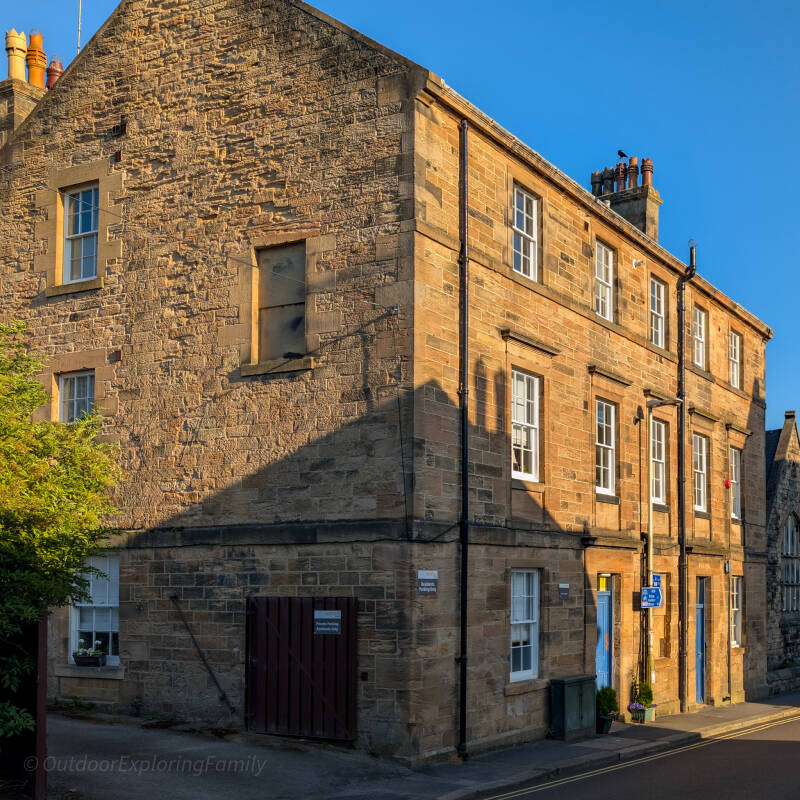
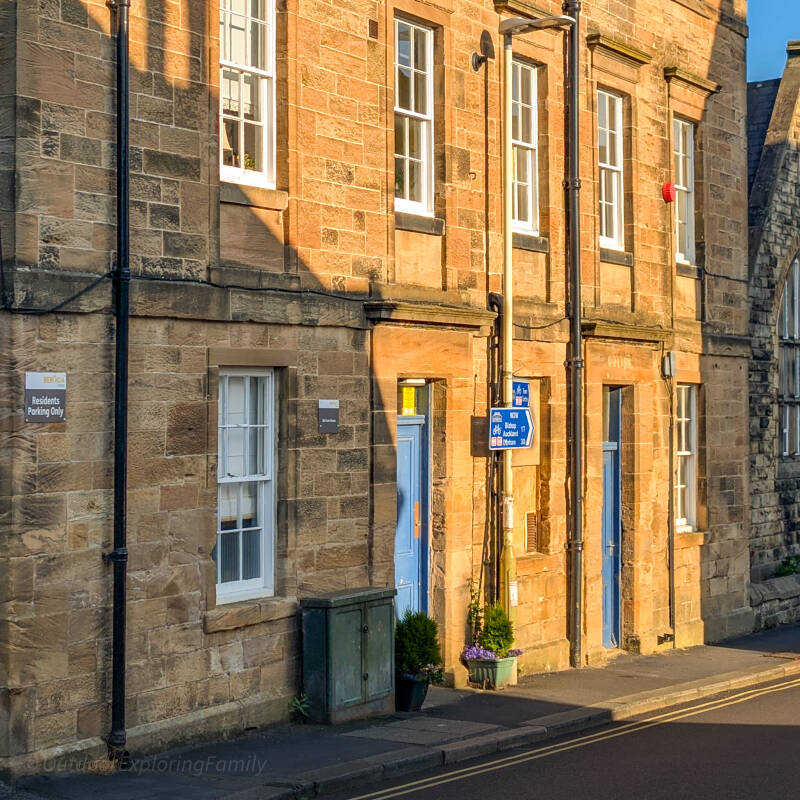
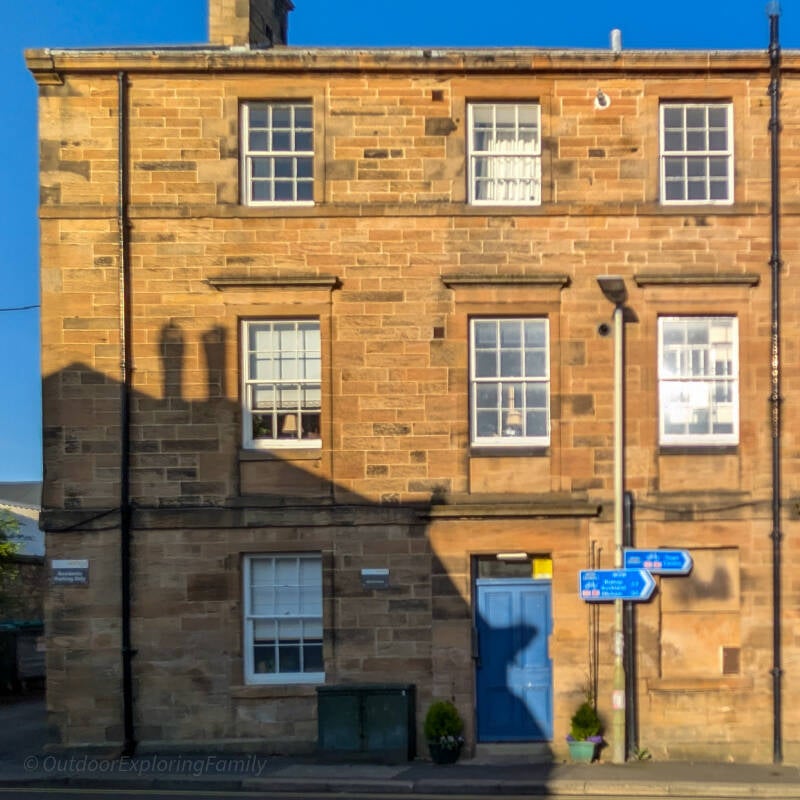
The police remained here until 1977, when they moved to a purpose-built station at Bede Kirk off Harmire Road. The magistrates’ court continued after the police had gone, and the building was later converted into homes known as the Old Court House. Its two formal entrances, sash windows, blocked ground-floor opening and small iron footscraper still survive, leaving visible clues to the public building that once stood at the heart of policing and justice in the town.
Quick facts
Built: Around 1840
Original use: Police station
Later use: Magistrates’ court and other offices
Location: Queen Street, Barnard Castle
Listed status: Grade II
List entry number: 1218619
First listed: 22 February 1973
Listing amended: 28 November 1994
Police moved out: 1977
Later official name: Magistrates’ Courts
Present use: Private homes known as the Old Court House
What survives: Stone frontage, sash windows, two doorways, blocked central opening and an iron footscraper

Before Barnard Castle had a police station
Barnard Castle did not always have a permanent police station or a professional force of uniformed officers. Before the nineteenth century, much of the everyday work of keeping order was handled by local constables appointed for the parish or township. Their duties included keeping the peace, dealing with disturbances, carrying out warrants and bringing accused people before the magistrates. It was an older system without the permanent staff, organised ranks and county-wide structure that later became familiar.
The Market Cross, also known as the Butter Market, formed part of this earlier system of local government and justice. During its long history it was used as a courtroom and lock-up, as well as serving as a town hall and fire station. Legal business and the temporary confinement of prisoners therefore took place inside one of the most familiar buildings in the centre of Barnard Castle.
Published histories give dates for alterations made to create the courtroom and lock-up, but we have not yet traced the original documents behind those dates. We have also not found the exact date when the Market Cross stopped being used to hold prisoners. Queen Street should therefore not be described as replacing the Market Cross on one particular day.
What we can see is a gradual change from an older local system centred on constables and the Market Cross to a permanent police station serving the town. The Queen Street building represents that change, even though the exact handover between the two places has not yet been found.
A new police station for a new police force
The Queen Street building dates from around 1840, placing it at a major turning point in the history of policing. County police forces were beginning to replace the older mixture of parish constables, watchmen and other local arrangements with permanent officers working under an organised chain of command.
The date is particularly interesting because Durham County Constabulary also began operating in 1840. Queen Street therefore belongs to the first years of organised county policing in Durham, although we have not yet found the original papers showing who commissioned the Barnard Castle station or the exact date on which it opened.
We have also not yet found the architect’s name, the builder or the original cost. Historic England describes it as a police station dating from around 1840, but the listing does not tell us how the project began or how quickly officers moved in. We will keep looking for documents that explain who ordered the work, how the building was originally arranged and when it came into use.
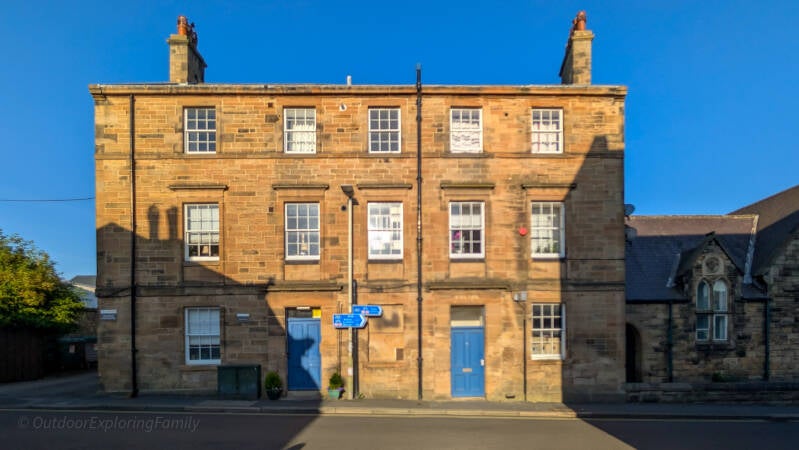
Even without those missing details, the building was clearly intended to have an official presence. It rises through three storeys, stretches across five window bays and has two substantial entrances facing Queen Street. Compared with many of the houses around it, this was a large and formal public building designed to be noticed.
The stone building on Queen Street
The old station was built from coursed squared stone, with carefully worked ashlar around its doors, windows and corners. The frontage rises through three storeys and is five windows wide, giving the building a strong and balanced appearance. Rows of sash windows face Queen Street, while horizontal stone bands help divide the different floors.
The two main entrances stand in raised stone surrounds and are finished with entablatures and cornices above. Between them is a former ground-floor window that has been blocked with sandstone, apart from a small pane of glass near its lower right corner. The date and reason for this alteration have not yet been established, so it cannot safely be connected with a particular change in the building’s use.
The roof is covered with Welsh slate and finished with stone gable copings, ridge tiles and chimneys at each end. One of the smallest surviving details is also one of the most interesting: a wrought-iron footscraper fixed into the wall beside one entrance. In the days of horse traffic and muddy streets, officers and visitors may have used it before stepping inside.
Several different activities took place behind this frontage. Police business was carried out here, people were detained here and magistrates and coroners held hearings inside the building. We have not yet found an original floor plan showing the positions of the cells, offices, courtroom or stairs, and Historic England did not inspect the interior when the official listing description was prepared.
For now, the exterior gives us clues but not answers. The two entrances, blocked opening and rear buildings all formed part of the working station, but it would be wrong to assign a particular purpose to them without a plan.
The police station for Barnard Castle and the wider district
Queen Street did not serve only the people of Barnard Castle. The magistrates sitting here dealt with cases from a wide petty sessional district that included communities across Teesdale. Places connected with that court district included Gainford, Staindrop, Middleton-in-Teesdale, Cockfield, Egglestone, Newbiggin, Winston, Whorlton, Woodland and Forest and Frith.
On court days, magistrates, police officers, witnesses, defendants and their families could arrive from communities many miles beyond the town. Some travelled from villages, farms and scattered rural settlements, making Queen Street much more than a small local police office. It became an important centre of justice for a large district.
The station was also the place where local crimes were reported and investigated. In March 1875, a cash box was stolen from the premises of John Howson, a draper in the Market Place. It contained around £20 in gold and silver, a substantial amount of money at the time. Information about the theft was received at Barnard Castle Police Station, placing the Queen Street building at the centre of the investigation.
This small case gives us a clear glimpse of the station at work. A crime had taken place only a short distance away, the alarm reached Queen Street and the police began dealing with it from there. By the later nineteenth century, the station had become a familiar place to turn when something serious happened in the town.
The police station became a court
Queen Street was closely connected with the work of the magistrates. By the early twentieth century, petty sessions were held at the police station on the second and last Wednesday of each month, and the court served a large area around Barnard Castle.
Petty sessions were the everyday local courts of their time. Magistrates commonly dealt with matters such as drunkenness, assault, theft, poaching, licensing offences, damage to property, road offences and family maintenance. Serious criminal cases could also begin before local magistrates before being sent to a higher court.
Court days brought together magistrates, clerks, police officers, solicitors, witnesses and defendants. Some of those attending Queen Street had travelled from villages and rural communities across the district. For the people involved, this was not simply another public building. Decisions made here could result in a fine, the loss of a licence, an order to make payments or a case being sent on for a more serious trial.
The court gradually became as important to the identity of the building as the police station itself. When the police moved to Bede Kirk in 1977, the magistrates continued using Queen Street, allowing its legal role to survive after its policing role had ended.
The man who walked in and confessed
One of the most memorable stories connected with Queen Street happened in November 1925. Robert Wilson, who had no fixed address, entered Barnard Castle Police Station and confessed to a burglary committed at Corwen in North Wales.
He had not been arrested in Barnard Castle or brought to the station by an officer. He chose to walk through the door and give himself up. The local police detained him while officers travelled from Wales to collect him.
For a time, Wilson remained inside the Queen Street building, far from the place where the crime had taken place. His story shows how a local station could become part of a case stretching across the country. It also reminds us that police stations were not only places where people were taken. Sometimes people arrived by choice, carrying stories and secrets from far beyond Teesdale.
Inquests at the police station
The building was also used for coroners’ inquests. These were formal hearings held to establish the circumstances of a death when it was sudden, accidental or unexplained.
Several inquests are recorded at Barnard Castle Police Station during the 1920s and 1930s. In October 1926, Deputy Coroner E. B. Proud held an inquest there into the death of twelve-year-old Herbert Thompson. Further hearings were held at the station in 1932, showing that Queen Street served as an inquest venue on more than one occasion.
An inquest brought relatives, medical witnesses, police officers, other witnesses and a jury into the building. Evidence was heard and a formal conclusion was reached about how the death had occurred. The atmosphere would have been very different from an ordinary police enquiry or a routine court sitting.
These hearings show another side of the old station. It was not used only for reporting crime or bringing people before magistrates. Local families also entered the building at some of the most difficult moments of their lives, when a sudden death had left questions that required a formal answer.
Thomas Lane and life inside the police division
The history of Queen Street is also the history of the officers who worked there. One of the best surviving glimpses of station life comes from the retirement of Police Constable Thomas Lane in 1927.
Lane retired from Durham County Constabulary on 31 October after 26 years of service. He had worked at Bishop Auckland before serving in the Barnard Castle Division. His retirement was marked during an inspection day at the Queen Street station, bringing officers from across the district together.
Inspector A. Gould presented Lane with an oak smoker’s cabinet bought by members of the division. Sergeant Glover and Police Constable Henderson also took part in the occasion. The cabinet carried an inscription marking Lane’s long service and retirement.
This was not a public ceremony in a grand hall. It happened inside the working police station, among colleagues who had shared years of patrols, investigations, court appearances and difficult incidents. It gives us a rare sense of the building as a workplace where friendships formed and long careers were recognised.
Bravery recognised in Queen Street
Another gathering at the station took place in June 1928, when W. Bowron of Middleton-in-Teesdale was presented with a silver wristwatch.
Bowron had helped Police Sergeant Kitching arrest two violently drunken men in Middleton. During the struggle, Bowron was assaulted, but his help allowed the officer to bring the situation under control.
Officers from the Barnard Castle and Staindrop divisions raised money for the gift. Inspector Gould made the presentation at Queen Street in front of sergeants and constables from across the area.
The event shows the station acting as the centre of a wider police community. An incident that happened in Middleton was remembered in Barnard Castle, where the courage of a member of the public was recognised by the officers he had helped.
What was inside the old police station?
The surviving exterior shows that the building was divided into different working areas, but it does not reveal how those areas were arranged. Two separate doorways face Queen Street, the former window between them has been blocked and the building extends behind the main frontage.
Without a floor plan, we cannot tell which entrance led to the police offices, the court or any other part of the building. We know that police work, court hearings and the detention of people took place here, but we have not yet been able to identify the cells, courtroom, offices or routes through the building on a plan.
Historic England did not inspect the interior when the official listing description was prepared. The surviving account therefore tells us a great deal about the frontage but very little about the rooms behind it.
We will keep looking for original or later plans that show how the building worked. Until those are found, it is better to preserve the question than to give individual doors and rooms a purpose they may never have had.
The police move to Bede Kirk
By 1974, replacement police buildings were being planned for Barnard Castle. The old Queen Street station had already served the town for more than a century, but the surviving reference does not set out every reason why the decision was made to leave it.
In 1977, Durham Constabulary moved from Queen Street to a purpose-built station at Bede Kirk, off Harmire Road. The later Harmire Road station was described in 2017 as having been built in 1977, giving us a firm year for the move.
The change ended more than a century of active policing at Queen Street. Officers left the Victorian building that had served generations of constables, inspectors, prisoners and members of the public. The old station did not close, however, because the magistrates and court offices remained.
For the first time since the nineteenth century, the police station and the magistrates’ court were no longer operating together from the same Queen Street building.
Queen Street after the police left
After 1977, the building continued as Barnard Castle Magistrates Court and associated offices. Its identity slowly shifted from police station to courthouse, although both parts of its history remained visible in the structure and in its official records.
It had already been given Grade II listed status on 22 February 1973, when it was still recorded as the Police Station. The listing was amended on 28 November 1994, by which time its official name had become Magistrates’ Courts.
The date of the final court sitting has not yet been found. We know the building continued in legal and office use after the police moved out, but we have not yet been able to establish when the last magistrates left Queen Street.
That remains one of the final missing dates in the building’s public history, and we will keep looking for it.
From courthouse to the Old Court House
By the end of the twentieth century, the building’s long public life was coming to an end. In November 1999, a planning application proposed converting the former courthouse into six flats, with an outbuilding becoming a seventh home.
The building was later converted for residential use and is now known as the Old Court House. Without the completed planning file and floor plans, we cannot yet show exactly how the former police and court accommodation was divided or confirm that every part of the 1999 proposal was carried out unchanged.
The conversion gave the listed building a new purpose after its police and court work had ended. Many former police stations and court buildings have been lost, left empty or demolished, but Queen Street survived by becoming homes.
The building is now private residential property and cannot be explored inside. Its history must be read from Queen Street, through the surviving exterior and the records left by the people who worked, appeared and were detained there.
The Bede Kirk police station
The Bede Kirk station opened in 1977 and remained Barnard Castle’s police base for 40 years. It stood off Harmire Road and was built for a very different style of policing from the Victorian building on Queen Street.
By the 2010s, Bede Kirk had itself become dated and inefficient. Barnard Castle police moved again in April 2017, this time into a new emergency-services hub on Wilson Street.
The £3.78 million building brought together police, fire, ambulance and the Teesdale and Weardale Search and Mountain Rescue Team. It was described as the first station in the country to house all four services under one roof.
One familiar object made the move from Bede Kirk to Wilson Street: the station’s portrait of Queen Elizabeth II. It was placed behind the front counter in the new building, carrying a small piece of the former station into the next chapter of policing in Barnard Castle.
What survives today
The old Queen Street police station remains one of Barnard Castle’s strongest reminders of nineteenth-century public life. Its five-window stone frontage, sash windows, chimneys, formal doorways and blocked ground-floor opening can still be seen from the street. The iron footscraper survives beside one entrance, a small piece of the working building that once stood here.
For more than a century, crimes were reported and investigated at Queen Street. People were detained inside, magistrates heard cases from Barnard Castle and the wider district, coroners held inquests and police officers gathered to mark retirement and courage. The building witnessed both routine public work and moments that could change the lives of the people who entered it.
Today the doors open into private homes rather than police offices and courtrooms, but the old frontage remains. Stand on Queen Street and it is still possible to picture a court day, with officers, witnesses, magistrates and local families arriving at a building that once stood at the centre of policing and justice in Barnard Castle.
Explore more of Barnard Castle’s history
The old police station forms part of a much wider story of how Barnard Castle was governed, protected and shaped over the centuries.
Read How Barnard Castle Grew to follow the town from the first castle and medieval borough through its markets, bridges, churches, railway and public buildings.
Discover the darker history behind Barnard Castle Gallows, including Galgate’s earlier name, John Balliol’s court and the executions connected with the Rising of the North.
Explore The History of Barnard Castle to meet the Balliol family, Richard III, the defenders of the castle in 1569 and Frank Shield, who later made his home inside the Round Tower.
Continue to The Witham, Barnard Castle for the story of another important public building, created for education, medical care, meetings, concerts and community life.
Return to the Barnard Castle History and Heritage Hub to find more stories about the buildings, streets and people that shaped the town.
Planning a visit? Our Barnard Castle Town Guide brings together the castle, riverside walks, historic streets, attractions and practical information for exploring the town.