Barnard Castle Gallows
Galgate is one of those Barnard Castle street names most of us use without ever stopping to think about it. People drive along it, call into the shops and head out towards Harmire Road every day, but the name is a shortened form of something much older.
Galgate was once Gallowgate, the road associated with Barnard Castle’s gallows.
This was not simply a grim story created to explain the street name. A medieval record from 1293 confirms that John Balliol, lord of Barnard Castle and King of Scots, held gallows here as part of the authority exercised through his court. The same record mentions a pillory and tumbrel, showing that public punishment formed a real part of life in medieval Barnard Castle.
The gallows have disappeared, and no surviving document gives us their exact position. The strongest clue comes from an 1884 guide, which looked towards the head of Galgate, where the roads crossed. This appears to mean the upper end of the historic street, around the broader area near today’s Harmire Road junction, although it is not possible to place the gallows beneath one particular building, road or stretch of pavement.
A second possible clue comes from an account attributed to a local diary of 1833, which mentions ground called Cripple Hill and records a belief that it had been the Balliol execution place. The original diary has not yet been independently traced, so Cripple Hill cannot be used to fix the site with certainty.
The story reaches far beyond the street name. It takes us into John Balliol’s medieval court, through the Rising of the North and the fate of twenty men who escaped over the castle walls, and into the later years when the old execution place could apparently still be recognised. What survives is a dark but important part of Barnard Castle’s history, hidden within the name of one of the town’s most familiar roads.
Quick Facts
First firm record: 1293
Medieval lord: John Balliol
Old street name: Gallowgate
Modern name: Galgate
Other punishments recorded: Pillory and tumbrel
Major later event: Twenty men selected for execution after the Rising of the North
Most likely area: Towards the head of historic Gallowgate
Exact site: Not known

John Balliol and the Power to Condemn
The clearest proof that Barnard Castle had gallows comes from a record written in 1293, when John Balliol was lord of Barnard Castle and had recently become King of Scots. By then, the Balliol family had controlled the castle and the surrounding land for generations. Their power did not stop at the fortress walls. They collected rents, controlled the market and fair, appointed officials and helped decide how the town was run.
The castle was not only a defended home overlooking the River Tees. It was also the centre of local government and justice. Certain disputes and crimes could be dealt with through the lord’s own court, rather than every offender being taken away to Durham or another royal court. For people living in medieval Barnard Castle, decisions made by the lord and his officials could affect where they traded, what they paid and how they were punished.
The 1293 record says that John Balliol had a market and fair at Barnard Castle, together with a pillory, a tumbrel and gallows. It also says that the belongings of felons found guilty in his court could pass to the lord. These few lines are important because they prove that the gallows were not a later story created to explain the name Galgate. They belonged to a real system of justice already in place during the Balliol period.
The record also uses the old legal word infangthief. In simple terms, this gave the lord the right to deal with certain thieves caught within his lands, especially when the stolen goods were found with them. It did not mean John Balliol could judge every crime committed in and around Barnard Castle. Medieval law was divided between the Crown, the Bishop of Durham and local lords, and different offences could be heard in different courts. Even so, the record shows that the Balliol lordship had genuine power to arrest, judge and punish some offenders within Barnard Castle itself.
That power could have serious consequences. Lesser punishments might involve public shame in the pillory or another penalty ordered by the court, but the gallows stood at the end of the system. A person found guilty of a serious offence could be condemned locally and taken to the town’s own place of execution.
The record does not tell us the names of those who died there, how often executions took place or what the gallows looked like. Most of the ordinary people who passed through the court have disappeared from history. What remains is clear evidence that medieval Barnard Castle had its own court, its own punishments and, in the most serious cases, the power to take a life.
Punishment in the Medieval Town
The gallows stood at the harshest end of a wider system of public punishment. The same record that names them also gives Barnard Castle a pillory and tumbrel, both intended to expose an offender in front of the community.
A pillory held a person upright in a wooden frame, usually in a busy public place. The punishment was not only physical. It was designed to shame the offender before neighbours, traders and visitors, damaging their reputation as well as their body. A tumbrel was also used for public punishment and was often connected with offences against market rules, including dishonest trading by brewers and bakers.
These punishments depended upon being seen. Medieval justice did not take place quietly behind prison walls. The crowd was part of it.
Before anyone reached the gallows, there would have been an accusation, an arrest, a hearing and a sentence. We cannot follow one named medieval prisoner through that process because the surviving Barnard Castle records do not give us such a story. It would be wrong to invent one. What we can understand is why the final punishment was made public.
An execution warned everyone watching. The condemned person suffered the sentence, but the sight was meant for the whole town. It reminded residents that the lord’s court had real power and showed visitors that Barnard Castle was a place governed by its own laws and privileges.
That helps explain why the gallows were likely positioned beside an important road and towards the edge of the settlement. They needed space, but they also needed an audience. A gallows hidden away in a remote corner would not have carried the same message as one seen by people entering or leaving the town.
Gallowgate and the Lost Place of Execution
More than three hundred years after John Balliol’s rights were recorded, property deeds were still using the name Gallowgate. A lease from 1605 described land called Hallyday Closes lying at the head of Gallowgate beside the Flatts, and another deed from 1625 used the same description. By 1640, a deed concerning the closes was using the shorter name Galgate.
In northern England, “gate” often meant a road or way rather than an opening through a wall. Gallowgate can therefore be understood as the road associated with the gallows, perhaps because it led towards the place where executions were carried out. The name does not tell us whether the structure stood beside the street, at its end or on nearby open ground, but it preserves a clear connection between this part of Barnard Castle and the town’s place of execution.
A guide published in 1884 gives the best surviving description of the likely area. It calls Galgate by its former name, Gallowsgate, and records that stepping-stones and a broad pavement had been uncovered at the head of the street, “where the roads cross”. Some people believed the remains belonged to an earlier market cross, while the guide’s writer connected them with the place of execution.
The writer went further and suggested that the stones might have supported a device used for beheading. Nothing else found during this review supports that idea, and no archaeological record, plan or surviving object proves that such a device stood on Galgate. The value of the account lies in the area it identifies, not in its explanation of the stones.
The head of the old street appears to have been around the upper end of modern Galgate, near the wider Harmire Road junction. This is the best-supported general area, but it remains an interpretation of old descriptions rather than a proven modern location. The gallows may have stood on open ground nearby, and the surviving evidence is not precise enough to place them beneath one particular shop, house or stretch of pavement.
Cripple Hill and the Lost Execution Ground
Cripple Hill enters the story through an account attributed to a local diary written in 1833. The wording repeated in later local material describes a piece of freehold ground in Galgate called Cripple Hill, which was “supposed to have been the place of execution in the time of the Balliols”.
The wording is worth noticing because it does not claim that the location had been proved. Even in 1833, Cripple Hill was being remembered as the supposed execution place rather than identified through a surviving medieval deed or court record.
The difficulty is that the original diary has not yet been traced through an archive catalogue or checked from a photograph of the relevant page. We do not yet know Gibson’s full identity, where the manuscript is held or whether the quotation has been copied exactly. Cripple Hill may have been a genuine small plot or an old local name which has since disappeared, but its position cannot presently be matched with confidence to one building or part of Galgate.
It remains an interesting clue because it shows that a particular piece of ground in Galgate was being connected with Balliol executions by the early nineteenth century. It cannot, however, prove that the gallows stood beneath a modern shop or pavement, nor can it safely be treated as another name for the upper-Galgate site described in 1884.
Sir George Bowes and the Men Who Went Over the Walls
The next part of the story belongs to the winter of 1569, when Barnard Castle was pulled into the Rising of the North. The earls of Northumberland and Westmorland had rebelled against Elizabeth I, and Sir George Bowes held the castle for the Queen with a garrison gathered from across the surrounding area. For eleven days the old fortress was under siege, and as the pressure grew the men inside were pushed back through the outer wards towards the stronger heart of the castle.
The situation soon became desperate. Food was running short, the defenders were losing confidence and the rebels cut or damaged the pipes carrying water into the fortress. Once the water supply failed, the walls could only protect the garrison for so long. Men began trying to get out, some climbing down and others leaping from the walls. Bowes later wrote that a number were badly injured in the attempt, with broken legs, arms and even necks.
We do not know what each man was thinking as he went over the wall. Some may have believed the castle could no longer be held. Others may have been frightened, exhausted or simply desperate to get home alive. Whatever their reason, the authorities did not see frightened men escaping a collapsing defence. They saw deserters who had abandoned a royal garrison during rebellion.
When the rising failed and control returned to the Crown, the punishment was severe. A Bowes family paper from January 1570 lists the numbers of people chosen for execution in different parts of the Bishopric of Durham. Beside Barnard Castle are the words “that lape over the walles”, followed by the number twenty.
It is a cold little entry for such a terrible event. The men are not named. We are told nothing about their ages, their families or the villages they came from. They survive only as twenty men who had gone over the castle walls and were then marked down to die at Barnard Castle. Some may have been local, while others had probably been drawn into the garrison from across the wider district.
The document does not tell us where in the town they were executed, or whether every one of the twenty was eventually captured and put to death. What it does show is that the siege did not end when the rebels left the castle. For some of the men who escaped its walls, the real danger came afterwards.
Letters written by Sir George Bowes show that executions ordered across the bishopric were being carried out in January 1570, so it is very likely that men were put to death at Barnard Castle. Whether they were taken to the old gallows on Gallowgate is another matter. It would have been a natural place to use if the gallows were still standing or could be made ready again, but the surviving order gives no street or landmark. It says only Barnard Castle.
The executions have since been placed outside the castle entrance, beside the Flatts and on the old gallows ground, but none of those places is named in the original paper. All we can say with confidence is that twenty men who had escaped over the castle walls were marked down to die at Barnard Castle. The final journey they took through the town was never recorded.
John Spearman and the Place People Still Remembered
By the time John Spearman’s account appeared in 1729, the Balliols had been gone from Barnard Castle for centuries and the castle itself had fallen into ruin. The older system of local justice had also changed, with serious felony cases no longer being handled in the same way through the lordship of Barnard Castle.
Spearman wrote that the place where felons had been executed was still apparent. His words show that the old execution ground was believed to remain recognisable in the early eighteenth century, although he did not describe it closely enough for us to identify the plot on a modern map.
We do not know what made the place apparent to him. It may have been recognised through the shape or use of the ground, an old boundary, surviving remains or simply a name that was still understood locally. The record does not allow us to choose between those possibilities, and it does not say clearly whether any part of the gallows structure remained.
Spearman also connected Barnard Castle with an earlier period when serious matters were tried locally before felony cases were taken to Durham. That does not mean prisoners were tried at the execution ground. The court and the gallows belonged to the same system of justice, but a prisoner could be judged in one place and taken elsewhere for the sentence to be carried out.
His account preserves an important moment in the story. In 1729, the precise location may not yet have become the mystery it is today. People could apparently still recognise the place, even though Spearman did not leave enough detail for later generations to find it again.
How the Gallows Disappeared
No surviving record tells us when Barnard Castle’s gallows were last used or finally removed. The medieval document proves that John Balliol held gallows in 1293, but it does not describe their construction or tell us whether one structure remained standing permanently.
Gallows were commonly made from timber, so any structure at Barnard Castle would have required repair or replacement if it remained in use over a long period. It is possible that different sets of gallows stood on the same ground, or that a structure was prepared when required, but no local record has yet been found which tells us what happened here.
The right to maintain gallows could also survive longer than the particular timber structure used to carry out a sentence. As serious felony cases came to be tried at Durham rather than through Barnard Castle’s older jurisdiction, the execution ground would have lost much of its former purpose.
By 1729, John Spearman could still refer to a recognisable place of execution, but his account does not tell us whether the gallows themselves remained. All we can say with certainty is that the structure and the exact plot eventually disappeared from view, while the connection lived on through old descriptions and the name Gallowgate.
What the Records Do Not Tell Us
We know Barnard Castle had gallows, but no surviving description tells us what they looked like. They were probably made from timber and may have been repaired or rebuilt many times, but no drawing or detailed account has been found.
The records also say nothing about bodies being left beside the road after an execution. There is no firm evidence that Barnard Castle had a permanent gibbet where bodies were displayed, and nothing supports the idea that a nearby tree was used instead of proper gallows.
There are still gaps in the story, but the parts we can prove are powerful enough. Barnard Castle had its own court and place of execution, the road leading towards it became known as Gallowgate, and twenty men were selected to die after escaping from the castle during the Rising of the North.
Standing on Galgate Today
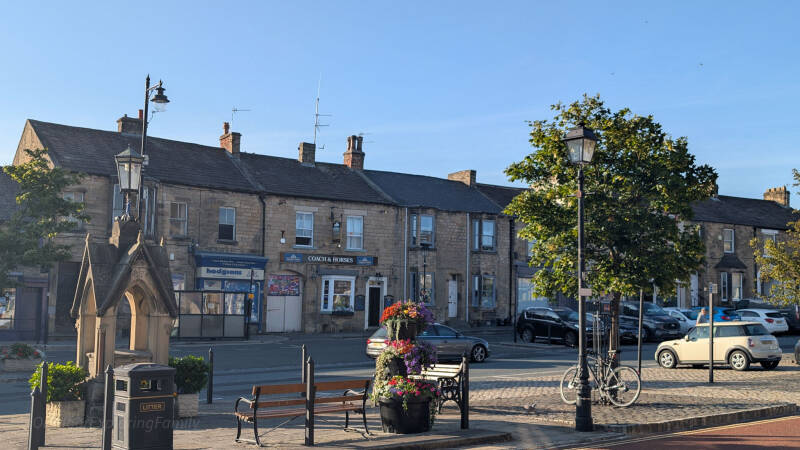
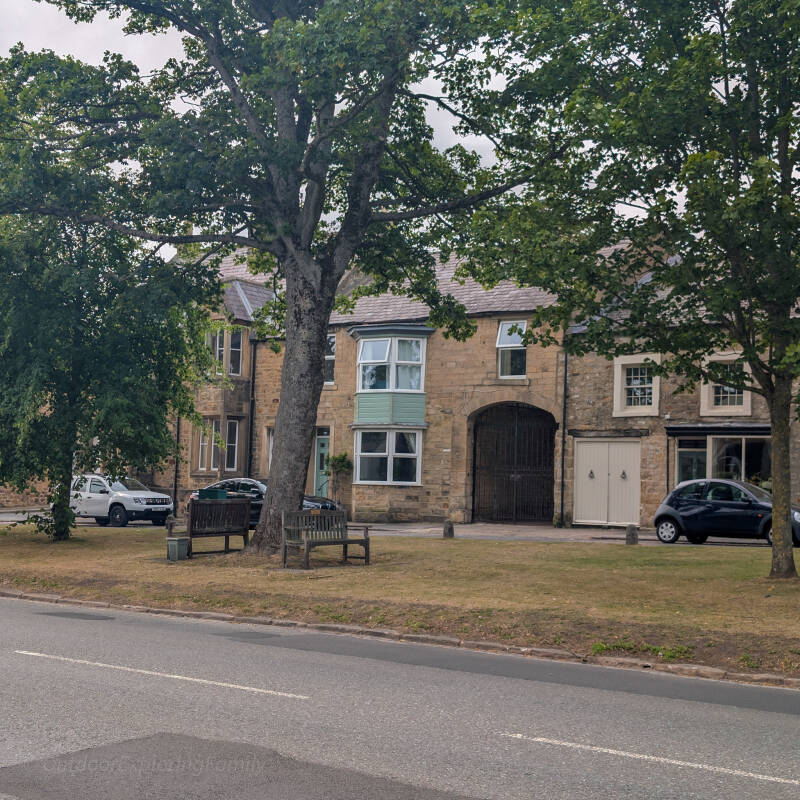
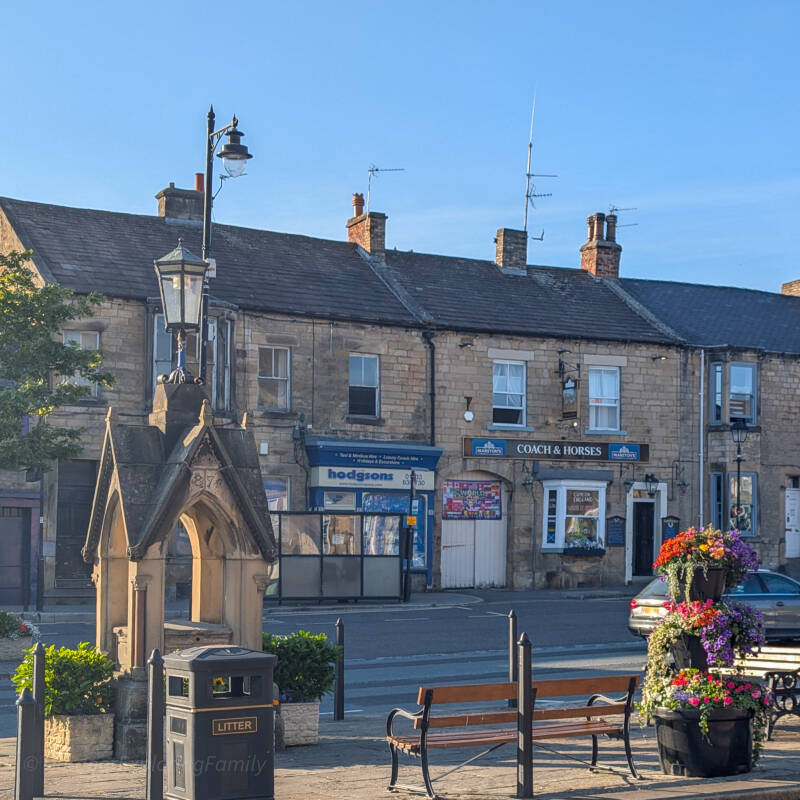
Standing on Galgate today, it is hard to picture the road as part of Barnard Castle’s darker past. At the lower end there are shops, pubs and places to eat. Farther up are houses and care homes before Galgate reaches Harmire Road. Beyond there, the route continues towards the point where one road heads for Bishop Auckland and another towards Darlington.
The road and the land around it have changed greatly. Ground which once lay near the edge of the town has been built over, old boundaries have disappeared and the historic crossroads now form part of modern Barnard Castle. Nothing marks the precise place where the gallows stood, because that precise place has not been recovered.
The past has not vanished completely. It survives most clearly in the street name. Galgate developed from Gallowgate, a name recorded naturally in seventeenth-century property deeds. Each time the road is named today, part of the medieval town is still being spoken.
That is what makes Galgate such an interesting part of Barnard Castle. The shops, homes and traffic belong to the town as it is now, while the old name leads back to John Balliol’s court, the recorded right of gallows and an execution place which could apparently still be recognised in John Spearman’s time.
The twenty men selected for execution after the Rising of the North also belong to the wider story, although no surviving document places their deaths on Galgate. They had escaped over the castle walls during a desperate siege and were later marked down to die at Barnard Castle. Whether their final journey brought them to the old gallows ground remains unknown.
Very little of this history can now be seen simply by walking along the road. Once the name and the records are brought together, however, Galgate becomes more than another street. It is one of the places where modern Barnard Castle still carries the outline of the town that came before it.
Explore more of Barnard Castle’s history
Galgate is only one part of the story written into the streets of Barnard Castle. To understand how the town grew around its medieval stronghold, follow the full history of Barnard Castle, from the Balliol family and Richard III to the siege of 1569 and Frank Shield’s unusual life among the ruins.
You can also discover the history of Blagraves House on The Bank, one of the town’s most intriguing old buildings, or explore the story of the former Barclays Bank and the generations of people and businesses connected with it.
For another side of the town’s past, read about the Hole in the Wall on Queen Street and its links with Barnard Castle’s early Methodist community.
To find more historic buildings, streets and stories in one place, return to the Barnard Castle History and Heritage Hub. For help planning a wider visit, including walks, attractions and practical information, use our Barnard Castle Town Guide.