Abbey Bridge, Teesdale
A bridge, a toll gate and nearly two centuries of stories.
Today, crossing Abbey Bridge takes only a few seconds. Cars pass over it, walkers stop to admire the view and visitors heading for Egglestone Abbey rarely give a second thought to the journey across the River Tees.
For much of its history, things were very different.
For nearly two hundred years, Abbey Bridge was a toll bridge. Travellers paid to cross. A toll collector lived beside the bridge. Visitors bought refreshments and postcards from a small shop overlooking the river. Cyclists gathered here before rides through Teesdale and local families passed through the toll gate on their way to market, work or home.
Not everyone had to pay. Some local people could cross completely free of charge.
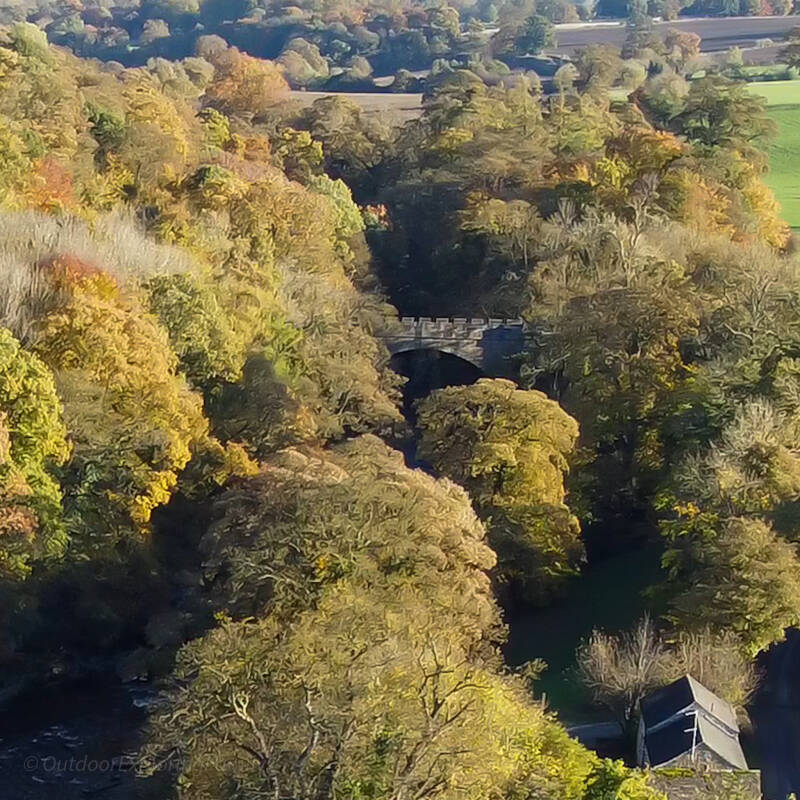
Standing between the ruins of Egglestone Abbey and the landscaped grounds of Rokeby, Abbey Bridge has witnessed generations of change. It has welcomed artists, inspired writers, carried travellers across the Tees and become one of the most interesting crossings in the valley.
The tolls have long gone and the gatehouses have disappeared, but the bridge remains much as it did in the eighteenth century.
Quick Facts
Location: Egglestone Abbey, Teesdale
Crosses: River Tees
Built: 1773
Commissioned by: John Sawrey Morritt
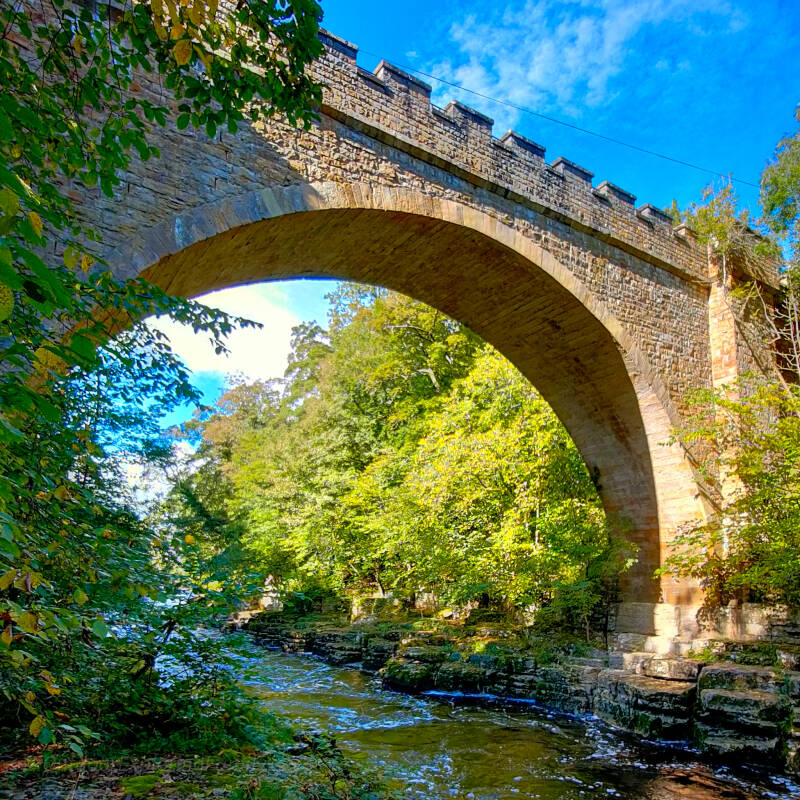
Bridge Type: Single stone arch
Listed Status: Grade II*
Span: Approximately 23 metres
Tolls Abolished: 1958
Notable Connections: William Hutchinson, Sir Walter Scott, J. M. W. Turner

Building Abbey Bridge
Abbey Bridge was built in 1773 for John Sawrey Morritt of Rokeby.
At the time, the Morritt family were shaping the landscape around Rokeby and improving access across their estate. The new bridge provided a direct crossing of the River Tees below Egglestone Abbey, replacing a less convenient route and helping connect Rokeby with the surrounding countryside.
Constructed from dressed sandstone, the bridge was built as a single arch spanning the river below. More than two and a half centuries later, the structure remains remarkably unchanged.
The bridge's elegant design is often overlooked because it sits so naturally within the landscape. Yet the engineering was impressive for its time. The arch spans approximately twenty three metres and carries the road high above the river below.
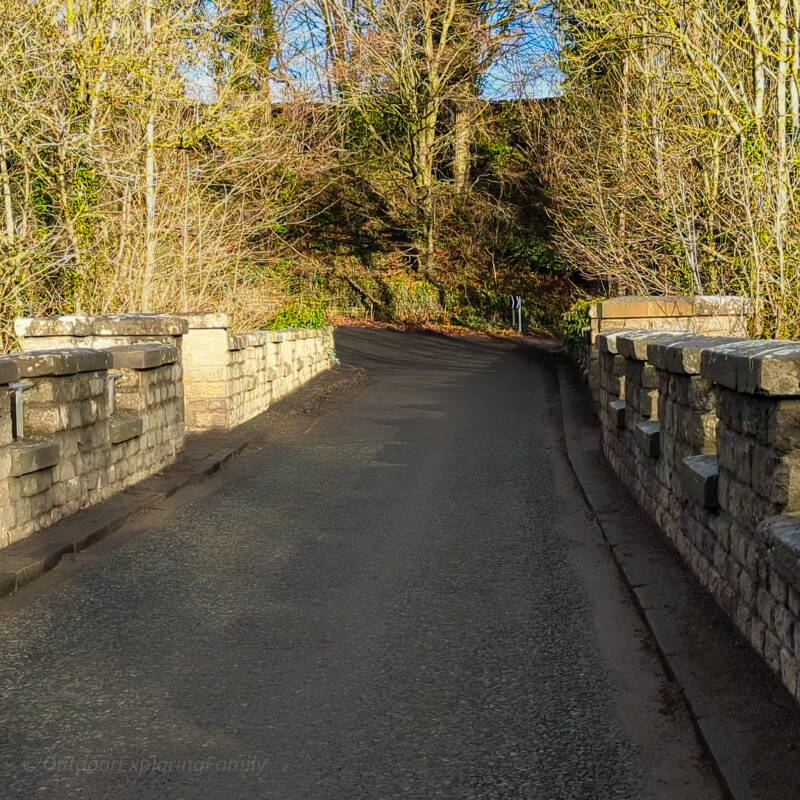
The battlemented parapets that visitors see today were part of the original design and remain one of the bridge's most distinctive features.

The Day the Foundation Stone Was Laid
The construction of Abbey Bridge was marked by a public celebration, reflecting the importance of the new crossing to the local area.
On 19 June 1773, a large procession gathered for the laying of the foundation stone. The ceremony attracted considerable local interest and marked an important moment in the development of the Rokeby estate and the surrounding countryside.
More than a century later, the event was still being remembered. During a Masonic gathering in 1910, Lord Barnard recalled the ceremony and noted that the entire cost of the bridge had been paid by John Sawrey Morritt of Rokeby.
The proceedings were led by William Hutchinson, the well known County Durham historian and antiquary, who later recorded the occasion in his publication 'The Spirit of Masonry'. His involvement provides one of the strongest surviving links between Abbey Bridge, local history and eighteenth century Freemasonry.
The fact that the ceremony was still being discussed almost 140 years later highlights the importance attached to Abbey Bridge from the very beginning. It was not simply a practical crossing of the River Tees, but a major local project that attracted public attention and ceremonial celebration from the day its foundations were laid.
Today, thousands of people cross the bridge each year without a second thought. In 1773, however, the creation of a permanent crossing below Egglestone Abbey was considered important enough to bring together local dignitaries, historians and a large public procession.
Crossing the Tees Came at a Price
For generations, crossing Abbey Bridge meant paying a toll.
Unlike most bridges on the River Tees, Abbey Bridge remained privately owned and operated as a toll crossing. Travellers using the bridge were expected to pay before continuing their journey.
As decades passed, the bridge became one of the few remaining toll bridges in the area.
The tolls were not universally popular. Many local people felt it was unfair that a bridge carrying everyday traffic should continue charging while other crossings had become free.
Yet the tolls remained.
Year after year, travellers arriving at Abbey Bridge reached the same point where payment was required before crossing the river.
An advertisement published in April 1872 shows that the right to collect tolls at Abbey Bridge Toll Gate was being offered by tender under the authority of W. J. S. Morritt of Rokeby. The tolls were valuable enough to be leased separately, demonstrating that Abbey Bridge generated a regular income from travellers crossing the River Tees.
The Curious Case of the Free Crossing
Not everybody paid.
One of the most unusual discoveries in the history of Abbey Bridge is that tenants of the neighbouring Westwick Estate were exempt from the tolls.
The exemption was well established and applied to the estate's tenants. Earlier records also show that John Bowes and his servants and workpeople could cross without payment.
While most travellers stopped at the toll gate, Westwick tenants continued on their way free of charge.
The reason for this arrangement has largely been lost to history, but it provides a fascinating glimpse into life in nineteenth century Teesdale and the privileges that existed between neighbouring estates.
A Day Out Across Abbey Bridge
On a September day in 1861, Abbey Bridge played a small but memorable role in what must have been one of the happiest events of the year for many local children.
More than 300 children from Barnard Castle and Stainton made their way to Egglestone Abbey to celebrate the anniversary of the National School system. Their destination was the open ground around the abbey, where tea, games and outdoor activities had been arranged for the day.
Abbey Green, a riverside area beside the bridge, was opened for recreation during the celebrations.
At the time, Abbey Bridge was still a toll crossing. To help the children enjoy the occasion, John Sawrey Morritt of Rokeby paid the charges at Abbey Bridge Gate and made Abbey Green available for recreation.
After tea, the children spent the afternoon playing games in the fields surrounding the abbey before returning home later that evening.
The event offers a fascinating glimpse into everyday life around Abbey Bridge during the Victorian period. More than 160 years later, the bridge remains a quiet crossing above the River Tees, but for one day in 1861 it became part of a journey remembered by hundreds of excited schoolchildren on their way to a celebration beside Egglestone Abbey.
The Toll Houses of Abbey Bridge
For much of the twentieth century, two small stone buildings stood beside Abbey Bridge on the Yorkshire side of the River Tees.
These were the toll houses.
One building served as the toll office and a small shop selling refreshments, postcards and souvenirs to visitors exploring Egglestone Abbey, Rokeby and the surrounding countryside. The second provided living accommodation for the toll collector and family. Beneath the buildings, a cellar had been dug into the hillside, creating additional space below the bridge approach.
By the early twentieth century, Abbey Bridge had become far more than a way to cross the River Tees. Families arrived by car, bicycle, horseback and on foot to enjoy the scenery around the bridge, while cycling clubs often used the crossing as a meeting place before setting off across Teesdale.
One of the earliest named toll keepers was Mr W. Little, who relinquished his position in 1870 through age and infirmity after many years associated with the crossing.
The people who lived here became part of the bridge's story. Mr and Mrs Coulthard spent twenty seven years at Abbey Bridge Toll House before retiring in November 1928. Their departure marked the end of an era for the crossing.
They were succeeded by Thomas Young and his wife Elizabeth Jane Young, who took over responsibility for the toll house and bridge. Alongside collecting tolls from travellers crossing the Tees, the couple ran the small shop serving visitors arriving at the bridge.
The Young family would become closely associated with Abbey Bridge for decades. Visitors remembered stopping at the shop before exploring Egglestone Abbey, walking towards Rokeby or simply spending time beside the river. By this period, Abbey Bridge had become a destination in its own right rather than simply a crossing.
A newspaper article published in 1921 included Abbey Bridge alongside famous Teesdale landmarks such as High Force, Cauldron Snout and High Cup Nick, showing how highly regarded the location had become. Standing on the bridge, visitors looked down into the wooded gorge of the River Tees and across the landscape that had inspired artists, writers and generations of travellers.
The toll houses remained in use until the end of the toll era. In 1958, responsibility for Abbey Bridge passed to Durham County Council and the tolls were finally abolished. The buildings were demolished shortly afterwards, bringing nearly two centuries of toll collecting history to a close.
Today the toll houses have disappeared, but their foundations can still be found beside the bridge. Easy to overlook, these low stone remains mark the spot where Thomas and Elizabeth Young, the Coulthard family and generations of toll collectors once lived and worked while welcoming travellers to one of Teesdale's most historic crossings.
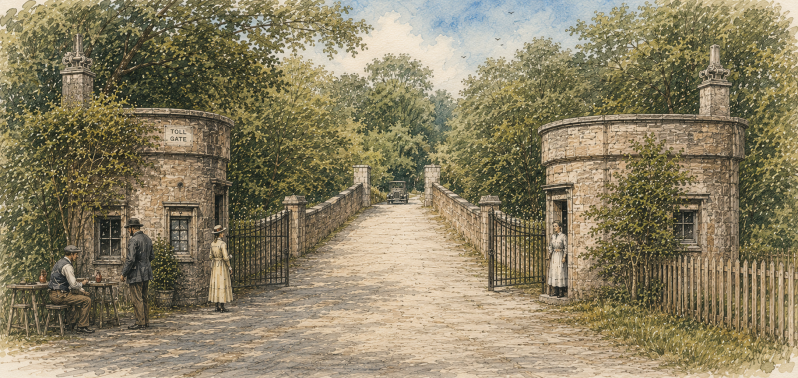
Artist's impression showing how the former Abbey Bridge toll houses may have appeared during the early twentieth century. Created using historic photographs, maps and local research.
Victorian Visitors and Days Out
By the late nineteenth century, Abbey Bridge had become one of the most popular visitor destinations in this part of Teesdale.
The combination of the River Tees, the wooded scenery, the nearby ruins of Egglestone Abbey and the landscaped grounds of Rokeby attracted visitors from well beyond the local area. Excursion parties travelled from places including Newcastle, South Shields and Sunderland to spend the day exploring the countryside around the bridge.
As visitor numbers increased, facilities were improved to accommodate them. An older wooden refreshment building, remembered for its rose covered walls, was eventually replaced with a larger structure serving the growing number of tourists arriving at the bridge.
For many visitors, Abbey Bridge formed the starting point for a day of exploration. People crossed the bridge to visit Egglestone Abbey, walked through the Rokeby estate, followed riverside paths towards the Meeting of the Waters or simply spent time enjoying the views from the bridge itself.
The bridge also became a popular gathering place for cyclists. During the late nineteenth and early twentieth centuries, cycling clubs regularly met here before setting out on rides through Teesdale and the surrounding countryside.
At a time when organised excursions and day trips were becoming increasingly popular, Abbey Bridge offered visitors exactly what they were looking for: beautiful scenery, historic landmarks and a peaceful corner of the Tees valley away from the growing industrial towns of the North East.
Long before modern tourism campaigns promoted Teesdale's attractions, people were already travelling considerable distances to spend their free time around Abbey Bridge.
The Fight to Remove the Tolls
By the late nineteenth century, many people felt Abbey Bridge's tolls had outlived their purpose.
In 1891, a petition was launched calling for the bridge to be freed from toll charges. Supporters argued that Abbey Bridge had become an important public crossing and that local people should no longer have to pay simply to cross the River Tees.
At the heart of the debate was the fact that Abbey Bridge remained private property belonging to the Rokeby Estate. While most travellers were required to pay, tenants of the neighbouring Westwick Estate enjoyed the right to cross free of charge, a long established arrangement that highlighted the unusual status of the bridge.
The campaign attracted considerable local interest. Supporters pointed out that many other bridges had already become free crossings, while Abbey Bridge continued to charge tolls despite carrying everyday traffic, visitors and tourists.
Although the campaign did not immediately succeed, the issue refused to disappear. Decade after decade, the future of the tolls remained a topic of discussion.
Even in 1950, nearly sixty years after the petition, local authorities were still debating the future of the charges. By this point, many people viewed the tolls as a relic of an earlier age.
The end finally came in 1958 when responsibility for Abbey Bridge passed to Durham County Council. After generations of toll collectors, toll houses and toll gates, the charges were abolished and the bridge became free for everyone to use.
For the first time in its history, every traveller crossing Abbey Bridge could do so without reaching for their pocket.
1958: The End of an Era
In 1958, responsibility for Abbey Bridge passed from the Rokeby Estate to Durham County Council.
For the first time in its history, the bridge became free for everyone to cross.
The tolls were abolished and the gatehouses that had stood beside the bridge for generations were demolished soon afterwards, bringing nearly two centuries of toll collecting to an end.
Today only their foundations survive.
Look carefully beside the bridge approach and traces of the old buildings can still be found. Filled with gravel and reduced to low stone remains, they are easy to overlook among the grass and roadside verge.
Yet these modest foundations are among the last physical reminders of the toll bridge era. For generations travellers stopped here to pay their fee before crossing the River Tees. Now the bridge stands open to everyone, but the remains of the toll houses still mark the spot where one of Teesdale's most unusual ways of life finally came to an end.
Sir Walter Scott and the Abbey Bridge Landscape
The scenery around Abbey Bridge inspired one of Britain's most celebrated writers.
In 1809, Sir Walter Scott stayed at Rokeby while exploring Teesdale and gathering material for what would become his famous poem, Rokeby (1813).
Published in 1813, the poem brought national attention to the area and introduced many readers to the landscapes around the River Tees.
Abbey Bridge sits within the very landscape that inspired Scott's writing.
The wooded valley, the river below and the nearby ruins of Egglestone Abbey all form part of the scene that captured his imagination.
J. M. W. Turner at Abbey Bridge
Another famous visitor arrived a few years later.
In 1816, J. M. W. Turner visited the area and produced sketches and paintings connected with Abbey Bridge, Egglestone Abbey and Rokeby Hall.
One of Turner's surviving works records views from Abbey Bridge itself, looking towards Rokeby Hall and the abbey.
More than two hundred years later, visitors standing on the bridge can still enjoy many of the same views that inspired one of Britain's greatest landscape artists.
A Bridge Worth Pausing For
It is easy to cross Abbey Bridge without thinking much about it.
Yet beneath your feet lies a story stretching back more than 250 years.
A bridge built for the Morritt family.
A toll crossing that lasted for generations.
A place where some people paid and others did not.
A home for toll collectors and their families.
A destination for visitors, artists and writers.
And a crossing that still links both sides of the River Tees today.
Next time you stop at Abbey Bridge, take a moment to look beyond the stone arch and the view below.
The river is still flowing through the gorge.
The abbey still stands nearby.
And although the toll collectors have long since gone, their story remains part of the landscape.
See Abbey Bridge on Foot
One of the best ways to experience Abbey Bridge today is on our Egglestone Abbey to Meeting of the Waters Walk.
Starting at Egglestone Abbey, the route passes Abbey Bridge before following the River Tees through peaceful countryside towards the Meeting of the Waters. Along the way, you'll also pass through Paradise Wood, one of the quieter corners of the Rokeby estate.
The walk offers a chance to see the bridge within its wider landscape and experience the scenery that has attracted visitors to this part of Teesdale for generations.
Explore More Bridges in Teesdale
Abbey Bridge is part of our wider Bridges of Teesdale collection, where we explore the historic river crossings, viaducts, aqueducts and footbridges that helped shape the valley.
You may also enjoy our guides to County Bridge, Thorngate Bridge, Deepdale Aqueduct and the Egglestone Abbey to Meeting of the Waters walk.