Barnard Castle to Egglestone Abbey Circular Walk
This circular walk from Barnard Castle to Egglestone Abbey gives you a little bit of everything without asking too much in return. Beginning at the Demesnes, it follows the River Tees past the old weir, crosses open fields towards Egglestone Abbey and returns through woodland along the quieter north bank of the river.
At just under three miles, it is not a long walk, but it feels surprisingly varied. You begin between the old stone houses of Thorngate, cross the Green Bridge and soon leave the town behind. Along the way there are views of The Bowes Museum, a peaceful stretch of the Tees, the old packhorse bridge over Thorsgill Beck, Egglestone Abbey and the great stone arch of Abbey Bridge.
We walked and photographed the full route again in August 2026, checking the field crossings, gates and less obvious turns as we went. It is easy overall, with no long climbs, but the woodland path on the return is narrow, rough and rooted in places. This is definitely one to take slowly rather than race around. There is far too much worth noticing along the way.
* marks affiliate links. If you buy or sign up, we earn commission at no extra cost to you.
It helps cover website costs and keeps our guides free.
Quick Facts
Distance: 2.9 miles
Walking time: Around 1 hour 10 minutes
Time with an abbey visit: Allow around 1½ to 2 hours
Start and finish: The Demesnes, Barnard Castle
Postcode: DL12 8PA
Route type: Circular
Difficulty: Easy overall, with some narrow and uneven riverside paths
Terrain: Pavements, riverside paths, woodland, grass fields and short road sections
Gates and stiles: Several gates, with no large stiles when we last walked it
Dog friendly: Dogs can complete the route, but livestock may be present and leads are essential
Pushchair friendly: No, the return path is too rough and narrow
OS Map: Explorer OL31*
Digital Route: See the route*
GPX files: Free download here

Parking and Access for the Walk
The walk starts from the small parking area on the Lower Demesnes. The entrance is reached from Gray Lane, opposite the Blue Bell at the bottom of The Bank. Use DL12 8PA for navigation, then look for the road leading down towards the riverside open space.
Parking was free when we last checked the route in August 2026, but the area is small and fairly informal rather than a large marked car park. It can become busy on fine weekends, so it is worth arriving earlier in the day. There is also a children’s play area and picnic benches beside the Demesnes, which makes this an easy place to begin or finish a family walk. The Demesnes play area is managed by Barnard Castle Town Council.
Most of the route is straightforward, but there are grass fields, gates and narrow paths beside the river. The ground can become muddy after rain, particularly through the woodland on the return. Livestock may be present in several fields, including dairy cattle on the north bank, so dogs must be kept under close control.
Egglestone Abbey is free to enter. English Heritage currently lists it as open daily from 10am until 6pm, although it is always sensible to check before travelling. There are no toilets or refreshments at the abbey itself, and dogs are welcome on leads.
Barnard Castle to Egglestone Abbey Route Directions
1. Leave the Demesnes and Follow Thorngate
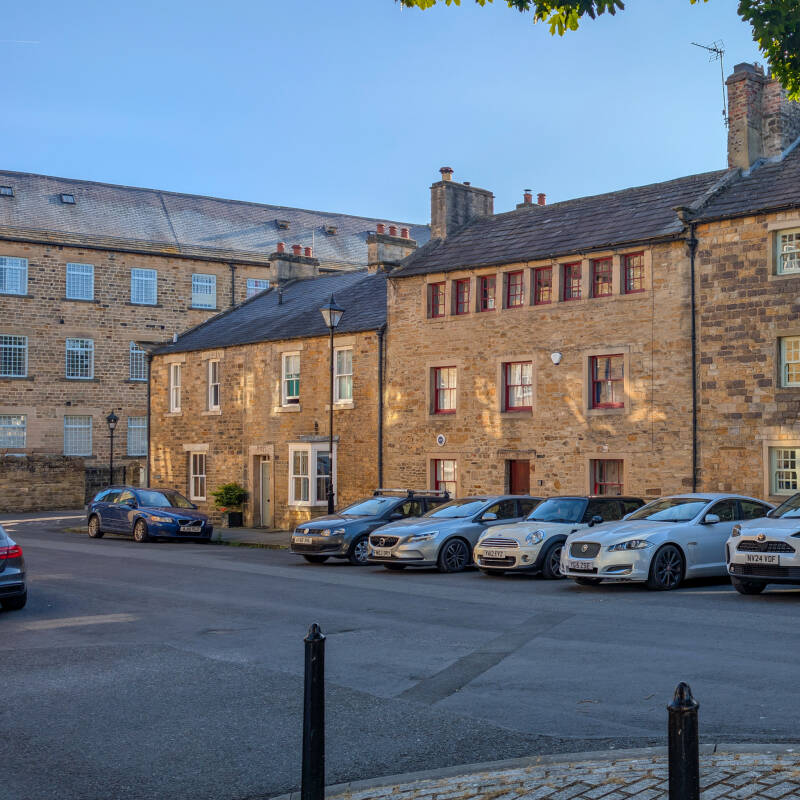
From the car park, walk back along Gray Lane towards the Blue Bell and turn left down Thorngate. This is a lovely way to begin, with old stone buildings gathered closely around the narrow street.
As you walk, look up at the rows of small windows across some of the upper floors. Several buildings on Thorngate were connected with the town’s weaving trade, including surviving early 18th century weavers’ cottages with long rows of linked windows designed to bring light into the upper workrooms.
Continue to the bottom of Thorngate and cross the Green Bridge over the River Tees.
2. Follow the River Tees Towards the Lendings
Once across the bridge, turn left onto the riverside path. You will pass several houses on your right before the path begins to feel more enclosed.
Keep an eye out for the garden gate carrying the warning that trespassers will be composted. It always makes us chuckle, although we have never felt tempted to test how serious they are.
Continue beside the river. When the path divides, keep left on the route closest to the water. The path becomes narrower as it passes the old weir and continues towards the Lendings Caravan Park.
3. Walk Through the Lendings and Across the Fields
Enter the caravan park and keep right, following the road gently uphill towards the exit. At the top, turn left beside the small wooden shed decorated with paintings and pass through into the first field.
Keep towards the bottom of the fields, following the tree line across. At the time of our latest walk, the route passed through four clear field sections.
Continue through each gate or opening, keeping the trees close to your left. At the end of the fourth field, pass through the small opening beside the stone gatepost and step onto Abbey Lane.
4. Follow Abbey Lane to Bow Bridge
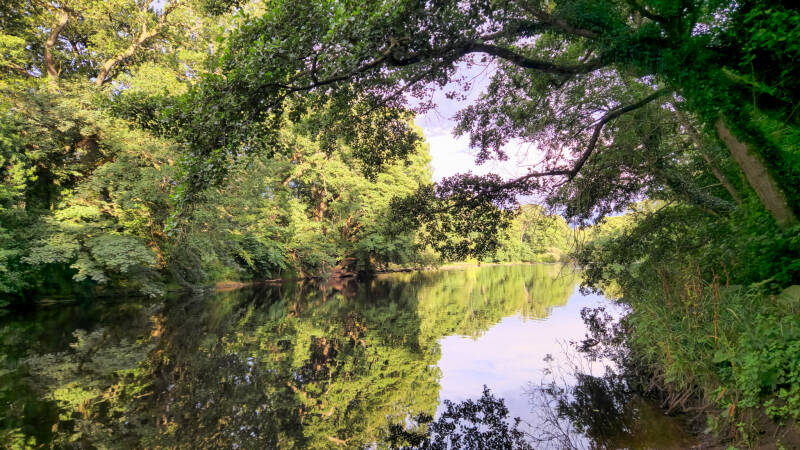
Turn left and follow Abbey Lane downhill. Just before crossing the beck, look for an opening between the trees. This reveals one of the calmest stretches of the River Tees, where the water broadens beneath the woodland and reflects almost everything around it.
Continue across the modern road bridge. Immediately beside it is Bow Bridge, the old stone packhorse bridge over Thorsgill Beck. Its official listed name is Bow Bridge or Thorsgill Beck Packhorse Bridge, and it is one of the loveliest little pieces of the route.
Shortly after the bridge, you will see a gate on the right leading towards Thorsgill Wood. That is not the way today, although it forms part of another lovely circular walk. Continue along Abbey Lane instead.
5. Explore Egglestone Abbey
Egglestone Abbey soon appears above the road on your right. Turn into the entrance if you would like to explore before continuing.
The abbey was founded between 1195 and 1198 for Premonstratensian canons, sometimes known as the White Canons because of the colour of their habits. Much of the surviving church dates from the 13th century, while other parts of the abbey were later converted into a house after the Dissolution.
It is worth allowing time here rather than simply walking past. The ruins are open and easy to wander around, with views across the fields and down towards the River Tees.
6. Cross Abbey Bridge and Join the North Bank
Return to Abbey Lane and continue towards Abbey Bridge. Cross the bridge carefully, watching for vehicles and using the wider refuges in the parapet if needed.
Abbey Bridge was built in 1773 for John Sawrey Morritt. Its single stone arch spans the River Tees, while two circular areas at the southern end are recorded as the probable bases of former toll houses.
Immediately after crossing the bridge, look for the narrow opening in the stone wall on your left. Pass through and enter the woodland.
7. Follow the Riverside Woodland Path
Follow the path through the trees with the River Tees below you on the left. This is the roughest section of the walk, with exposed roots, narrow ground and uneven patches, but there are no major climbs.
The path stays close to the river and gradually becomes more open. Take your time here, as small gaps through the trees reveal some beautiful views across the water and back towards the abbey.
Eventually the woodland ends and the route continues through open riverside fields. Keep the river on your left and follow the fence line along the lower edge of the fields.
8. Cross the Riverside Fields
Continue through the gates, staying close to the bottom boundary of each field. One of these fields regularly contains dairy cattle, although livestock can be moved at any time.
Give cattle plenty of room, keep dogs on a short lead and never walk between a cow and its calf. If cattle or horses become threatening, do not put yourself at risk trying to hold onto your dog let the dog off the lead so you can both move to safety.
The line of the footpath remains close to the river and fence, so there should be no need to climb higher across the field.
The route eventually enters a more enclosed path, with the river still on your left and trees and fencing on your right.
9. Pass Demesnes Mill and Return to the Car Park
Follow the enclosed path towards Demesnes Mill. The mill is now a private home, so please remain on the public path and respect the privacy of the people living there.
The surviving building is a Grade II listed former water powered corn mill, once known as Barker’s Mill. Historic England records that parts of the old machinery remain inside, including millstones and undershot water wheels.
From the path you get another good view across the old weir. Continue beside the river and the route soon brings you back onto the Demesnes, only a short walk from the car park, play area and picnic benches.

What You’ll See on This Walk
This gentle loop has a lovely mix of riverside scenery, history and quiet nature. As you make your way around the route, the landscape changes from town streets to peaceful woodland, open fields and views across the River Tees. Each part of the walk has something different to enjoy, whether it’s old stone bridges, wildlife on the river or the ruins of Egglestone Abbey coming into view.
Thorngate’s Weavers Cottages
Look up at the long rows of upper windows on some of Thorngate’s old cottages, a reminder of the street’s links with Barnard Castle’s weaving trade.
The River Tees from Green Bridge
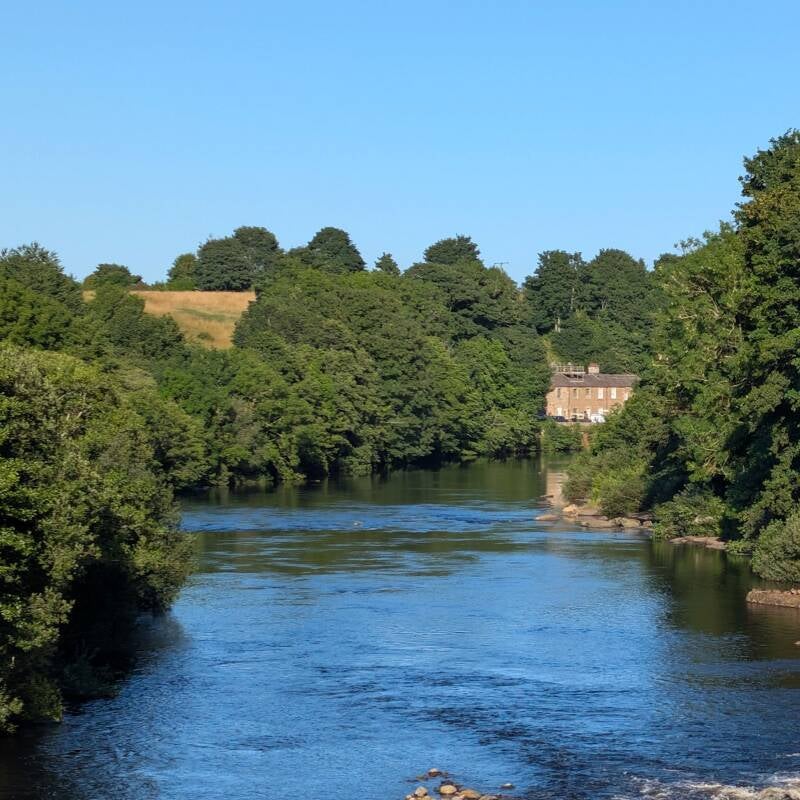
The first proper river view of the walk. Stop for a moment on Green Bridge and look along the Tees before turning onto the riverside path.
Barnard Castle Weir
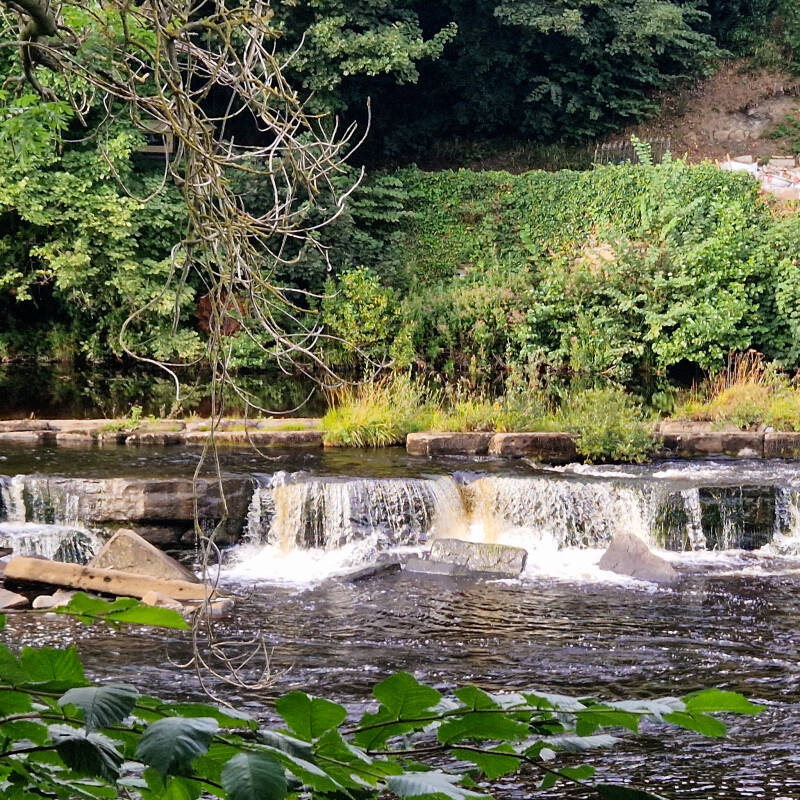
Just beyond the bridge, the path passes the old weir beside Demesnes Mill. It is a lovely place to slow down and watch the water.
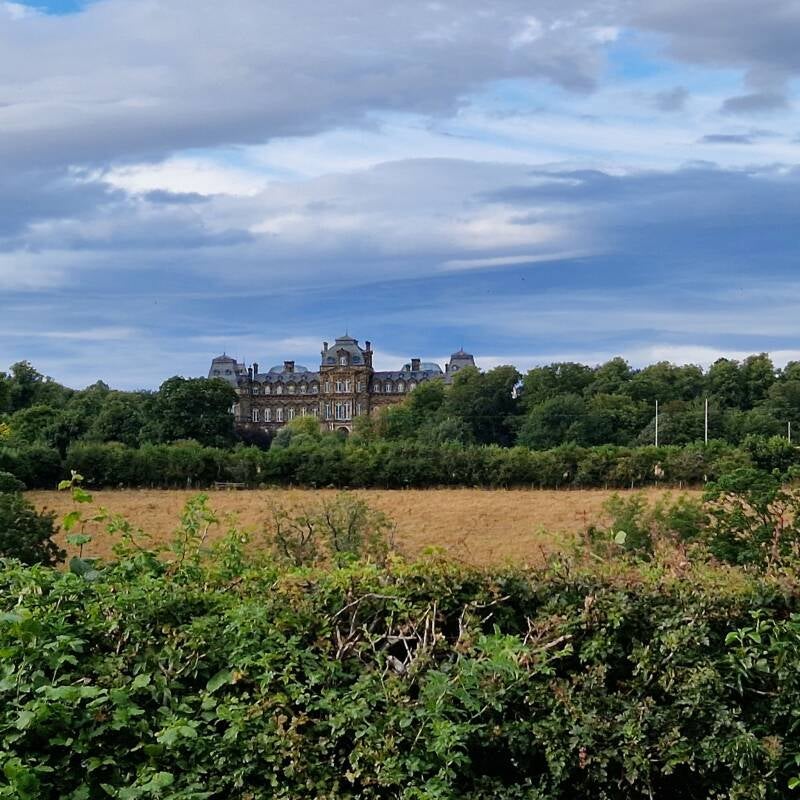
The Bowes Museum from the Lendings
As you leave the Lendings, look back across the fields and you will catch The Bowes Museum rising above the trees behind Barnard Castle.

The River Tees Below Egglestone Abbey
Near Abbey Lane, a gap in the trees opens onto one of the calmest stretches of the Tees, especially lovely when the water is still.

Entrance to Thorsgill Wood
This gate marks the entrance to Thorsgill Wood, where another lovely walk branches away through the trees. For this route, keep straight on towards Egglestone Abbey.
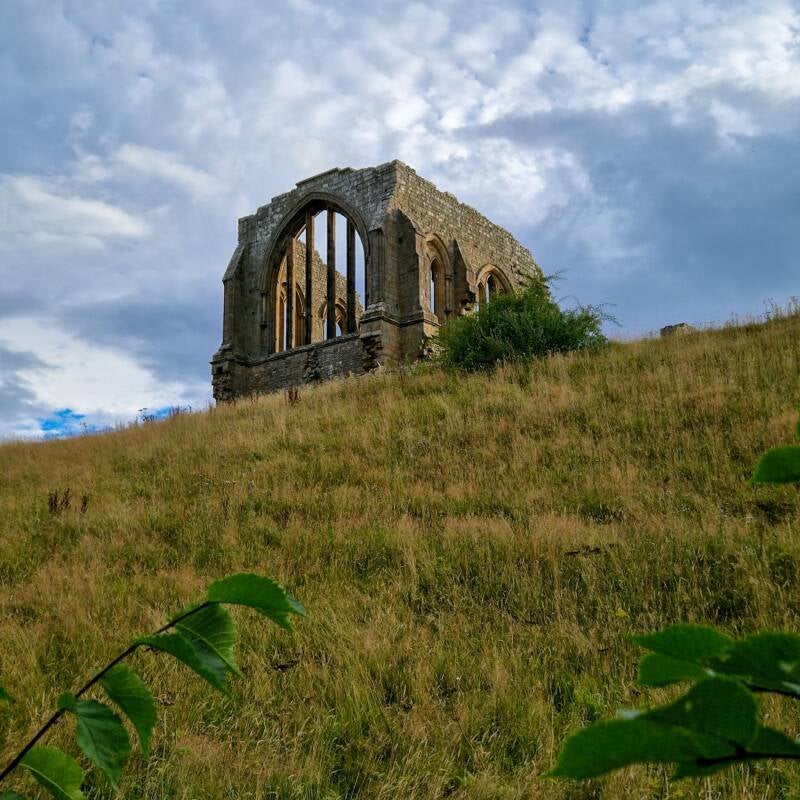
Egglestone Abbey
The abbey appears above the lane almost out of nowhere. It is free to explore and well worth giving yourself a little time to wander.
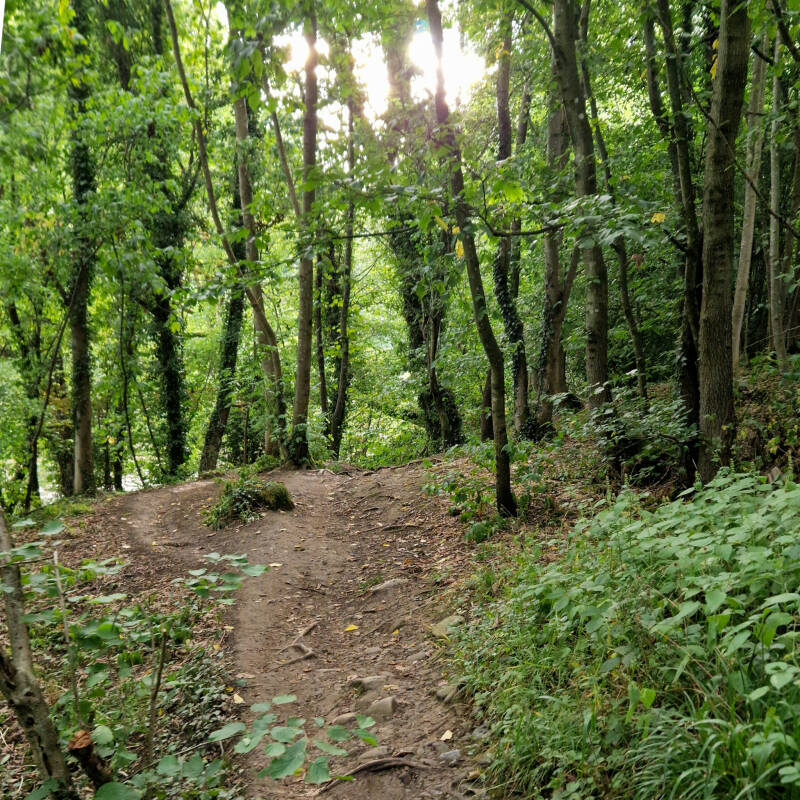
Woodland Along the River Tees
After Abbey Bridge, the return slips into woodland beside the Tees. The path is rougher here, but it is one of the quietest sections.
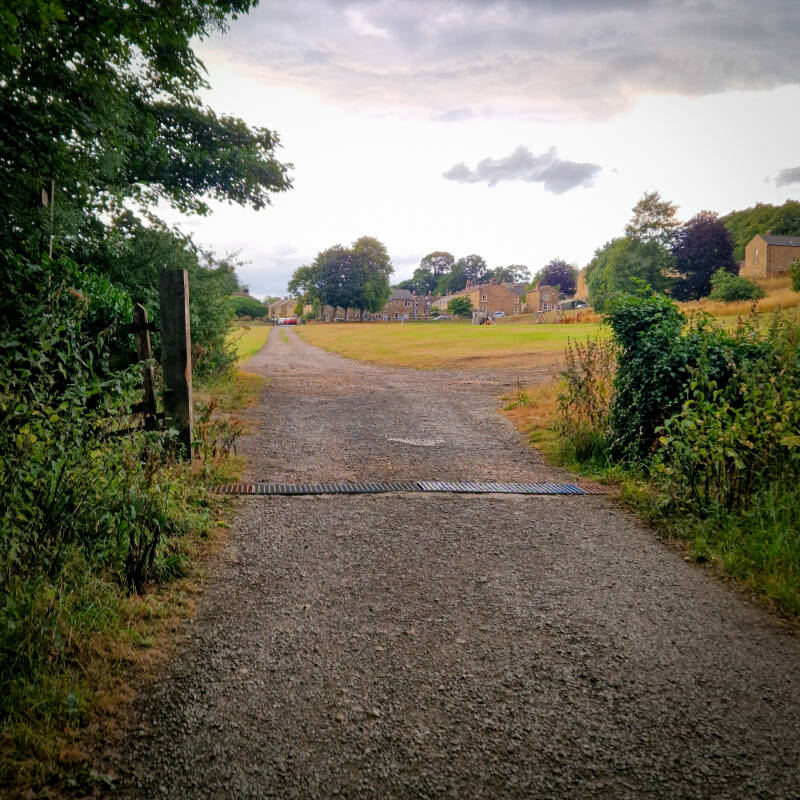
Back to the Demesnes
The final stretch follows the river towards the Demesnes, with trees on one side and the water on the other before the walk opens out again.
Why This Walk Is Special
This is the kind of walk that reminds you a route does not need to be long or difficult to feel like a proper day out. In less than three miles, it moves from the old streets of Barnard Castle to riverside woodland, open fields, a medieval abbey, two very different historic bridges and a quieter return beside the Tees.
There are plenty of things to notice, but nothing feels crowded together. The weaving windows on Thorngate, the silly composting sign, the view back towards The Bowes Museum and the first sight of Egglestone Abbey all appear naturally as the walk unfolds.
The stretch of river below the abbey is perhaps our favourite part. The water can become so calm that the trees are reflected almost perfectly, and it is one of those places where you naturally slow down without having to tell yourself to.
That is really what this route is about. It is not about reaching the finish as quickly as possible. It is a chance to step away from the noise for a while, notice what is around you and let your mind settle into the pace of the river. By the time the path brings you back to the Demesnes, the town is close again, but your head often feels a little less busy.