Reverend Monsignor Thomas Witham of Lartington Hall
Reverend Monsignor Thomas Witham of Lartington Hall was one of the most important but often overlooked figures in nineteenth century Teesdale.
Born in 1806, he was the son of Henry Witham of Lartington Hall, the geologist, collector and public benefactor remembered through The Witham in Barnard Castle. Thomas was not originally expected to inherit the estate. As a younger son from an old Catholic family, his life first followed the path of education, priesthood and service.
But after the deaths of his father and elder brother George, Thomas returned to Lartington Hall and became something unusual in Teesdale history: a Catholic priest, country house owner, estate figure, railway chairman, public benefactor and trustee of the Bowes Museum.
His life connects Lartington Hall, Barnard Castle, Gainford, the Tees Valley Railway, the Catholic Church, the Mechanics’ Institute, the Bowes Museum and the wider story of the people who shaped Teesdale.
Quick Facts
Full name: Reverend Monsignor Thomas Witham
Born: 1806
Died: 4 December 1897, aged 90
Main residence: Lartington Hall, near Barnard Castle
Father: Henry Thomas Witham
Mother: Eliza Witham, also recorded as Elizabeth Witham
Brother: George Witham of Lartington Hall
Inherited Lartington Hall: 1847, after the death of his elder brother George
Occupation and roles: Catholic priest, landowner, chairman of the Tees Valley Railway Company and local benefactor
Known for: His long connection with Lartington Hall, support for Catholic missions and charities, involvement in public life around Barnard Castle.
Barnard Castle connections: Linked with the Barnard Castle Mechanics’ Institute and lived during the same era as John Bowes and the early development of the Bowes Museum
Historical setting: Thomas Witham would have known Barnard Castle during a period of huge change, when the railway arrived, the Bowes Museum was being developed and landmarks such as the Market Cross and The Witham were already central parts of town life
Legacy: Remembered as a generous and respected figure in Teesdale who quietly supported religion, education, workers and community life from Lartington Hall
A younger son of Henry Witham
Thomas Witham was born into one of the north’s old Catholic family networks.
His father, Henry Witham, was born Henry Thomas Silvertop. In 1800, Henry married Eliza Witham of Headlam, heiress to the Witham estate at Cliffe near Piercebridge. Henry then took the Witham surname by royal licence and later became associated with Lartington Hall.
The family story is not simple because the names Maire, Lawson, Silvertop and Witham are closely connected. Over several generations, estates passed through heiresses, marriage settlements and name changes. This is why Lartington Hall can seem to belong to several families when, in reality, they were part of one connected Catholic family network.
Thomas was the fourth son of Henry and Eliza Witham. As a younger son, he would not have expected to become the main heir to Lartington Hall. That helps explain why he entered the priesthood. His future seemed to lie in the Church rather than in managing a country estate.
Stonyhurst, Ushaw and the Catholic priesthood
Thomas Witham was educated at Stonyhurst College, where he arrived in 1816 at the age of ten. He later studied at Ushaw College, one of the most important Catholic colleges in northern England.
This was no accident. The Withams, Silvertops, Maires and Lawsons belonged to a long Catholic tradition that had survived through centuries when Catholic worship was restricted or excluded from public life. The family had already produced bishops, priests and supporters of Catholic missions.
For Thomas, becoming a priest was not strange or unexpected. It fitted the world he was born into.
Before returning to Lartington Hall, he served as a priest at Stella and Gainford. At Gainford, he was strongly connected with the Catholic church and presbytery, traditionally dated to 1854.
The unexpected heir to Lartington Hall
Henry Witham died in 1844. Lartington Hall then passed to his eldest son George Witham.
George died in 1847, and the estate passed to Thomas. That changed the direction of Thomas Witham’s life.
He was still a priest, but he now became the resident figure at Lartington Hall. This made him an unusual combination: a Catholic clergyman and the head of a major Teesdale estate.
Newspaper reports and estate records repeatedly describe him as “of Lartington Hall”. By the 1860s and 1870s he was clearly active as a landowner, host and public figure.
Lartington Hall under Thomas Witham
Thomas Witham did not simply inherit Lartington Hall and leave it unchanged.
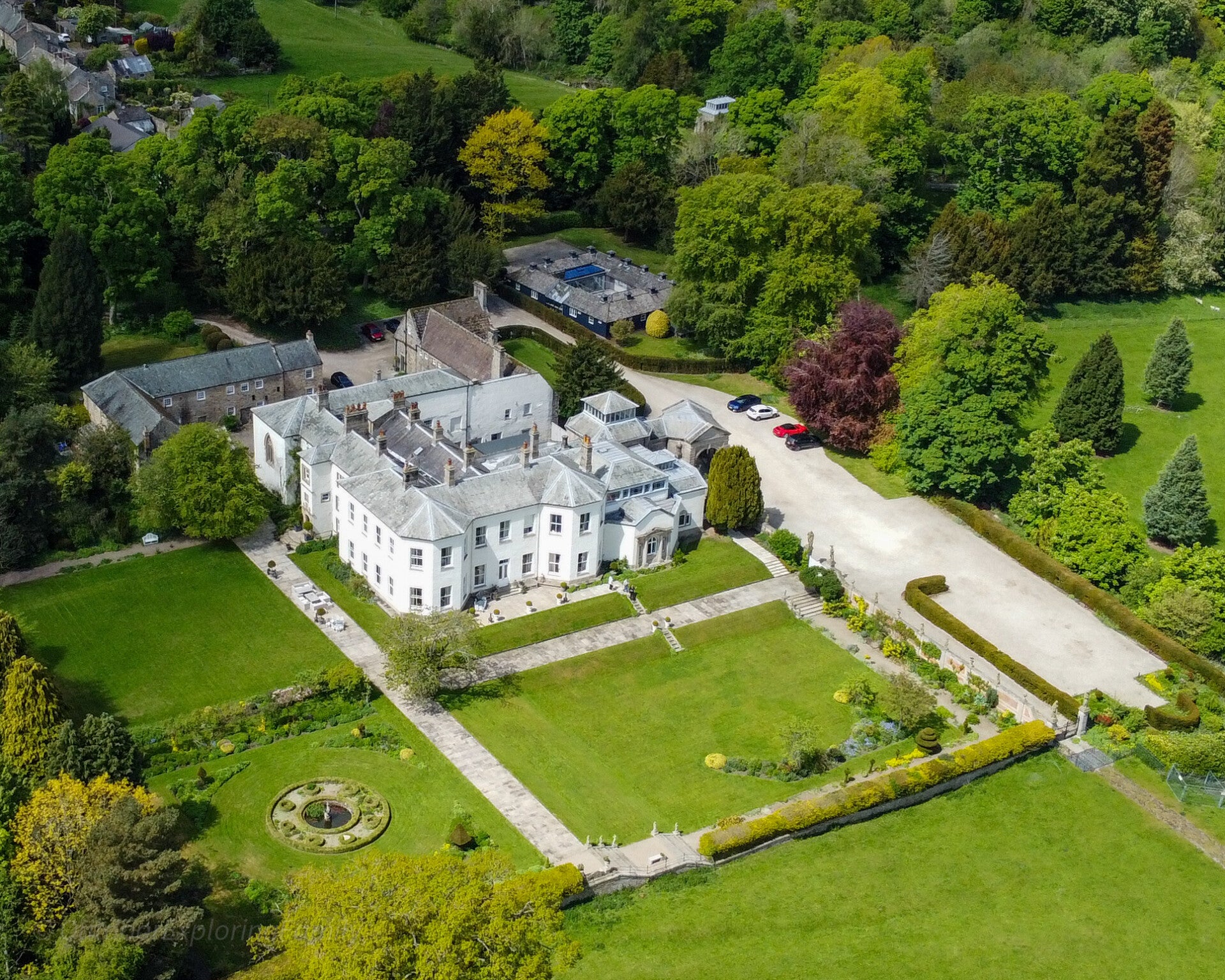
Henry Witham had added a museum for his geological specimens, paintings and books. Thomas changed the Hall in a different way. His alterations reflected hospitality, social life and ceremony.
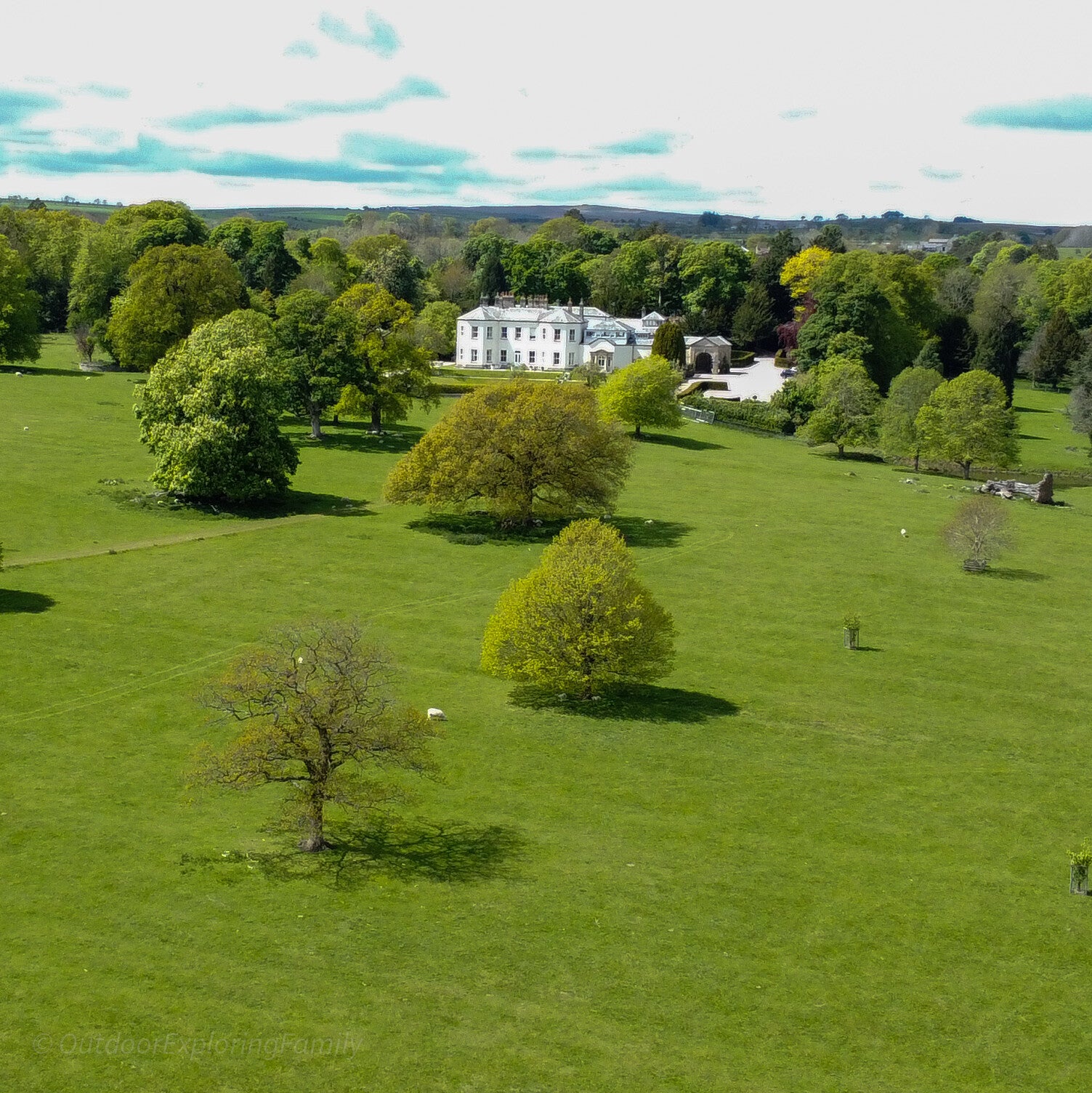
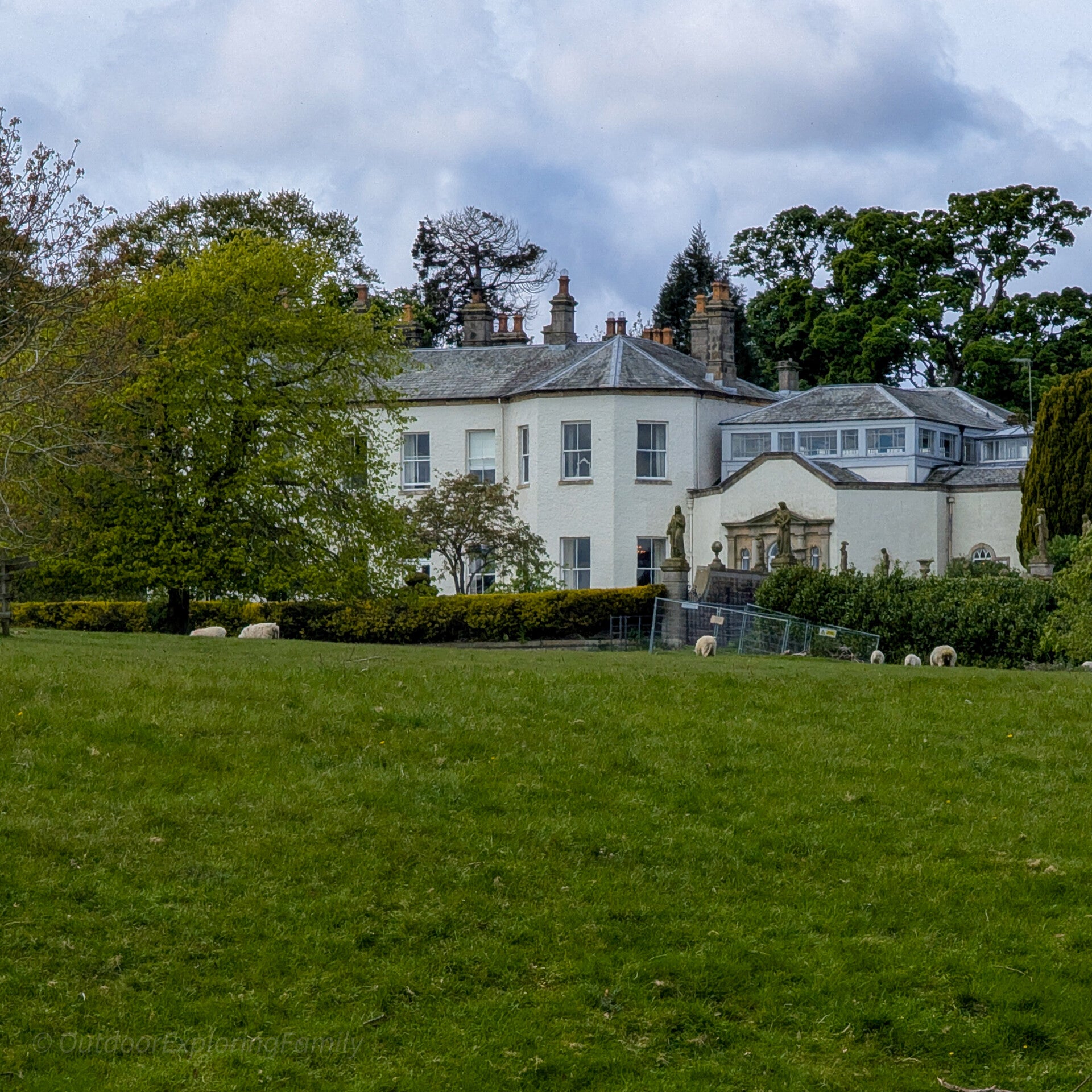
In 1861, he commissioned the architect Joseph Hansom to alter parts of the Hall. Rooms were joined to create larger spaces suitable for dancing and entertaining. A grand corridor and covered entrance were added, and improvements were made to the servants’ quarters.
The gardens were also improved. Formal gardens were reintroduced, railings were commissioned, and statues were added near the Hall entrance.
This gives a useful contrast between father and son:
Henry Witham made Lartington a place of science, collecting and geology.
Thomas Witham made it a place of hospitality, Catholic life and social gathering.
A kind master at Lartington
One of the strongest themes in Thomas Witham’s life is kindness.
A newspaper report from 1873 described his birthday being celebrated at Lartington Hall with a supper and ball for servants and friends. Dancing began at ten o’clock and continued into the early hours. The report said the annual treat was looked forward to with pleasure by those who received his kindness and bounty.
His will supports the same picture. Servants, labourers, gardeners, school staff, godchildren and long serving household figures were remembered carefully.
Among the gifts recorded in newspaper extracts from his will were legacies to former servants and workers, including substantial sums to his butlers. Francis Goundry, his former butler, received a gold watch and chain and £1,200. Thomas Boddy, his butler, received personal items and £2,000. Mrs Strong, the Lartington schoolmistress, received £100.
This was not casual generosity. It shows a man who remembered the people who had lived and worked around him.
Thomas Witham and Barnard Castle
Thomas Witham’s life was closely connected with Barnard Castle.
His father, Henry Witham, had helped inspire the creation of the Mechanics Institute later associated with The Witham hall. The building itself was erected in 1846 as the Witham Testimonial, created by public subscription in memory of Henry Witham.
Historic England records that one of the chief subscribers to the project was John Bowes, the future founder of the Bowes Museum alongside his wife Josephine. This places the Witham family and John Bowes within the same world of nineteenth century Barnard Castle philanthropy, education and civic improvement.
Thomas would also have known Barnard Castle as a place shaped by earlier benefactors. The Market Cross, often called the Butter Market, had been built in 1747 at the expense of Thomas Breaks, nearly sixty years before Thomas Witham was born.
By the time Thomas was growing up, the Market Cross already stood at the centre of town life. Henry Witham, John Bowes and Thomas Witham would all have known it as part of everyday Barnard Castle, passing it while moving through the same streets, meetings, shops and public buildings that connected nineteenth century Teesdale society.
That is part of what makes the Butter Market important today. It is not only a historic building, but a surviving link between different generations of people who helped shape Barnard Castle and Teesdale.
Thomas Witham and John Bowes
Thomas Witham and John Bowes were almost the same generation.
Thomas Witham was born in 1806 and John Bowes in 1811. Their lives overlapped for more than seventy years, and they moved within many of the same Teesdale circles of landed estates, public projects, legal networks and local institutions.
Thomas Witham also became directly involved in the story of The Bowes Museum. Joséphine Bowes’s will, dated 1871, names Reverend Thomas Witham of Lartington Hall as one of the trustees connected with the museum and park.
His involvement continued after both Joséphine and John Bowes had died. Durham archive records from the 1890s show Thomas among the trustees dealing with mortgages and the difficult financial arrangements surrounding completion and management of the museum.
In 1890, Thomas Witham and his fellow trustees raised a £5,000 mortgage on the Museum and Park. Further financial arrangements followed, including Charity Commission authority in 1893 for borrowing of up to £5,000 while existing mortgages totalled £7,700.
This shows that Thomas Witham was not simply a name loosely associated with The Bowes Museum. He was one of the people entrusted with helping carry John and Joséphine Bowes’s project through the difficult years before and after the museum finally opened in 1892.
Chairman of the Tees Valley Railway
One of the strongest discoveries about Thomas Witham is his role in the Tees Valley Railway.
In 1865, at the cutting of the first sod of the Tees Valley Railway at Middleton in Teesdale, Thomas Witham appeared as chairman of the Board of Directors. He stood alongside the Duke of Cleveland and Henry Pease.
The railway was intended to run from Barnard Castle through the valley towards Middleton in Teesdale, passing places such as Lartington, Cotherstone, Romaldkirk and Mickleton. It was promoted as a major improvement for agriculture, minerals, trade, tourism and communication.
Thomas Witham spoke at the ceremony and described the railway as part of the wider railway story that began with the Stockton and Darlington Railway. His comments show that he understood the railway as more than a business venture. He saw it as a public improvement for Teesdale.
Later reports show him still chairing Tees Valley Railway Company meetings and speaking about the proposed extension from Middleton to Alston. He discussed the line in relation to landowners, mineral development, public service and the future of the district.
This makes him an important figure in the modernisation of Victorian Teesdale.
Manor, land and estate affairs
Thomas Witham was also deeply involved in estate and legal affairs.
Archive records connect him with Lartington, Cotherstone, Startforth, Bowes, Romaldkirk and Barnard Castle. He appears in deeds, conveyances, estate settlements, mineral rights records and royalty disputes.
He was also linked to the Manor of Bowes. Notices from the 1890s describe the Court Leet and Court Baron of the Very Reverend Monsignor Thomas Witham, including one notice calling him the sole Lord in Trust for the Freeholders of the Manor of Bowes.
This does not mean he simply “owned Bowes” in a modern sense. The wording is more technical. But it does show that he held a formal manorial and legal role connected with older systems of land, freeholders, rents and local administration.
Coal royalties and family wealth
The Witham and Silvertop family wealth was not only based on land around Teesdale.
Records connect Thomas Witham with coal royalties and mineral rights, including the Stella Grand Lease Collieries and long running legal claims linked to coal worked from former family lands at Hutton Henry and Hurworth.
One of these disputes became an important legal case between the Witham family and the Vane family. The case eventually reached the House of Lords and was decided in favour of the Witham side in 1883.
In 1887, Thomas Witham sold a perpetual royalty payment of 6d per chaldron on coal worked from lands previously connected with the Duke of Cleveland’s predecessors. The payment for this agreement was £18,000.
This helps explain how Thomas Witham was able to support churches, missions, schools, servants and public causes. He was not simply a priest with a private income. He was part of a large estate and mineral rights network connected to land, coal and inherited family wealth.
Catholic benefactor
Thomas Witham’s generosity was especially important within the Catholic Church.
He supported Catholic work at Gainford, Lartington, Ushaw, Staithes, Loftus and other northern missions. Records show him helping the newly formed Diocese of Middlesbrough, supporting mission sites and even cancelling interest owed by Bishop Richard Lacy on money previously lent towards the purchase of a suitable house.
He also supported Ushaw College, donating paintings from his own collection and later contributing financially towards chapel work.
In 1884, Pope Leo XIII created him a domestic prelate, giving him the title Monsignor. This recognised his long service to the Catholic Church in northern England.
Evidence from accounts written after his death suggests he preferred to give quietly rather than seek public praise. At his funeral, it was said that he would have disliked being presented simply as a public benefactor. That fits the wider picture of a man remembered for generosity, duty and personal kindness rather than public recognition.
Final years and death
In 1897, Thomas Witham celebrated fifty years as squire of Lartington. He was then 90 years old.
Friends, tenants, tradesmen, neighbours and estate workers marked the occasion with a gold cup and illuminated address. Despite his age, he was still well enough to take a morning walk around the estate.
Preparations were being made for his ninety first birthday when he developed bronchitis. He died peacefully at Lartington Hall shortly after 7pm on Saturday 4 December 1897.
John Bowes had died in 1885, twelve years before him. That means Thomas Witham lived long enough to see the Bowes Museum open and to become involved in the legal and financial work that followed.
Funeral and burial
Thomas Witham’s funeral took place on Thursday 9 December 1897.
Bishop Lacy of Middlesbrough presided at the requiem Mass. More than forty clergy were present. Relatives and friends included members of the Silvertop family from Minsteracres, Sir John Lawson, Lord Barnard and Major Chichester Constable.
His nephew, Reverend George Silvertop, assisted at the service.
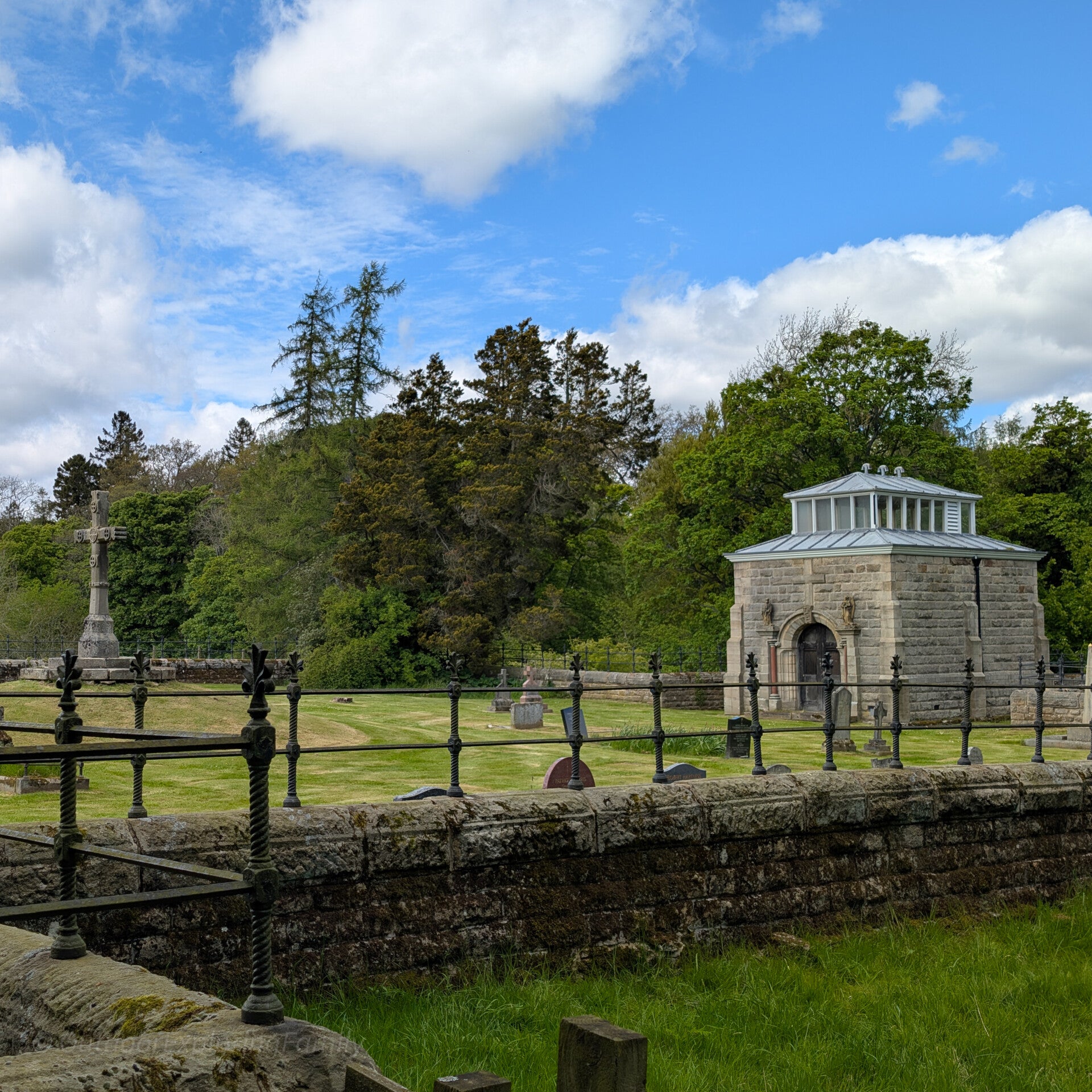
Although Thomas had built a mortuary chapel at Lartington in 1877, he was not buried inside it. Instead, he was buried just inside the cemetery gates, reportedly so that he could be closer to his people.
That detail says a great deal about how he was remembered.
What did Thomas Witham leave in his will?
Thomas Witham’s will was proved at York on 13 May 1898.
Newspaper extracts from the will show that he left gifts to servants, former workers, clergy, Catholic missions, family members and local figures. The full legal will is still important to locate because the printed extracts do not appear to include the complete estate succession.
However, the evidence strongly suggests that Lartington Hall and the wider estate passed through the Silvertop family line after Thomas’s death. The will extracts refer to Frank Silvertop and indicate that provision was made for the Roman Catholic mission at Lartington until he came of age.
This fits the wider family story. Thomas was a Catholic priest and had no children, so Lartington did not pass through his own descendants. Instead, the estate continued through the wider Witham and Silvertop family network before eventually being sold outside the family. Norman Field purchased Lartington Hall and its estate in 1917.
Why Thomas Witham matters
Reverend Monsignor Thomas Witham matters because he brings together so many parts of Teesdale’s nineteenth century story.
He was born into the same family world as Henry Witham, whose memory lives on through The Witham hall in Barnard Castle.
He overlapped with John Bowes and later helped as a trustee in the difficult financial story of the Bowes Museum.
He chaired the Tees Valley Railway Company and supported the railway as a public improvement for the dale.
He inherited Lartington Hall unexpectedly, then reshaped it as a place of hospitality, Catholic worship and estate life.
He gave generously to churches, missions, servants, workers, education and local causes.
And he remained remembered as a kind hearted man, not only a wealthy one.
Thomas Witham was more than Henry Witham’s son. He was one of the key people who carried the old Catholic estate world of Lartington into the modern Victorian age of railways, public institutions, museums and civic improvement.
Explore more people and places connected with Thomas Witham
Read about Henry Witham of Lartington Hall, Thomas’s father, the geologist and public benefactor remembered through The Witham in Barnard Castle.
Discover the story of John Bowes, founder of the Bowes Museum and one of the major Teesdale figures whose world overlapped with Thomas Witham.
Explore Barnard Castle Market Cross, also known as the Butter Market, built by Thomas Breaks in 1747 and seen by generations of Teesdale’s most important figures.
Learn more about Thomas Breaks, the Barnard Castle wool merchant whose gift still stands at the heart of the town.
Visit the People of Teesdale hub to discover more of the people who shaped Barnard Castle, Teesdale and the surrounding villages.
Part of Discover Teesdale by the Outdoor Exploring Family
Sources and Research Notes
This page has been created from a range of historical sources, including the Teesdale Mercury archives, probate and will records, National Probate Calendar entries, Durham Record Office catalogue material, National Archives records, Historic England information, Lartington Hall conservation and listing material, and Catholic history research connected with Ushaw, Lartington and the northern dioceses.
Where possible, the page has been checked against original records, archive references, historic newspaper reports and official heritage sources. Some details, especially around family relationships, estate finances and trusteeships, are based on surviving records and may be updated if further evidence becomes available.