The Ghost of Mortham Tower: The Mortham Dobby
Welcome to another of our Teesdale Tales, where local folklore, history and the landscapes of the dale come together.
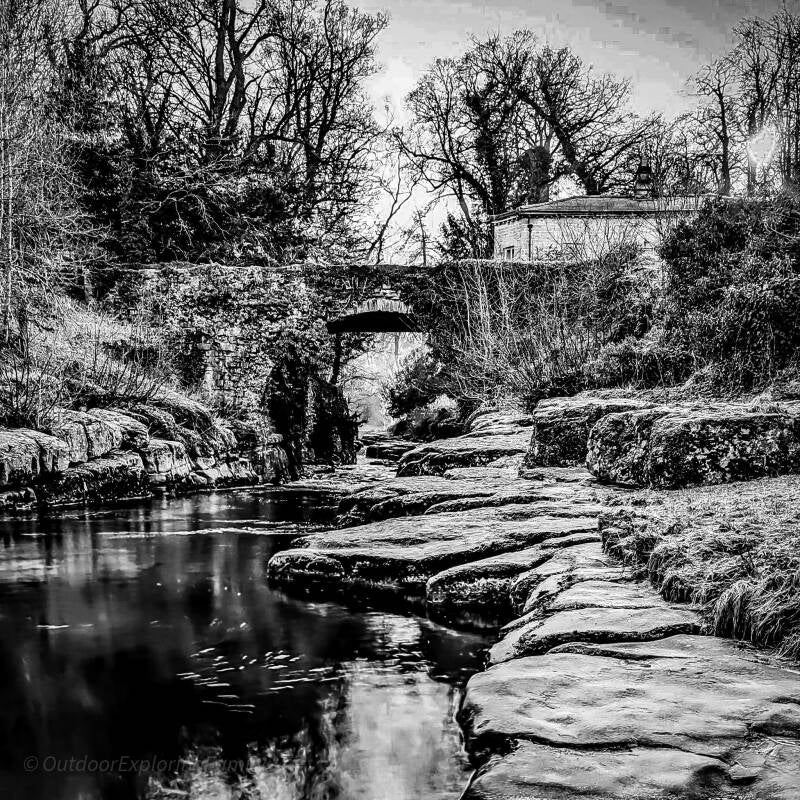
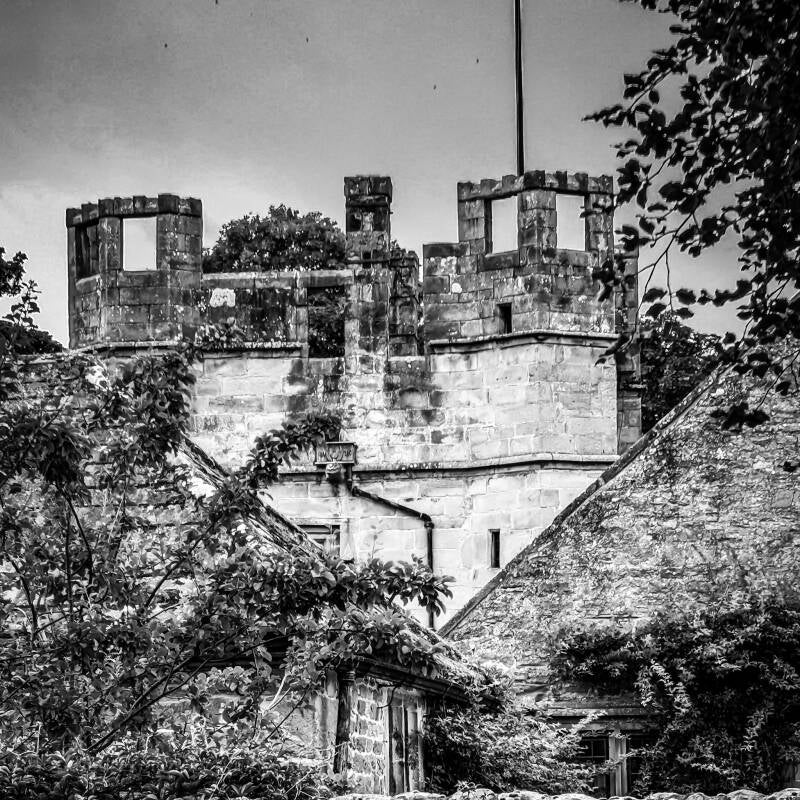
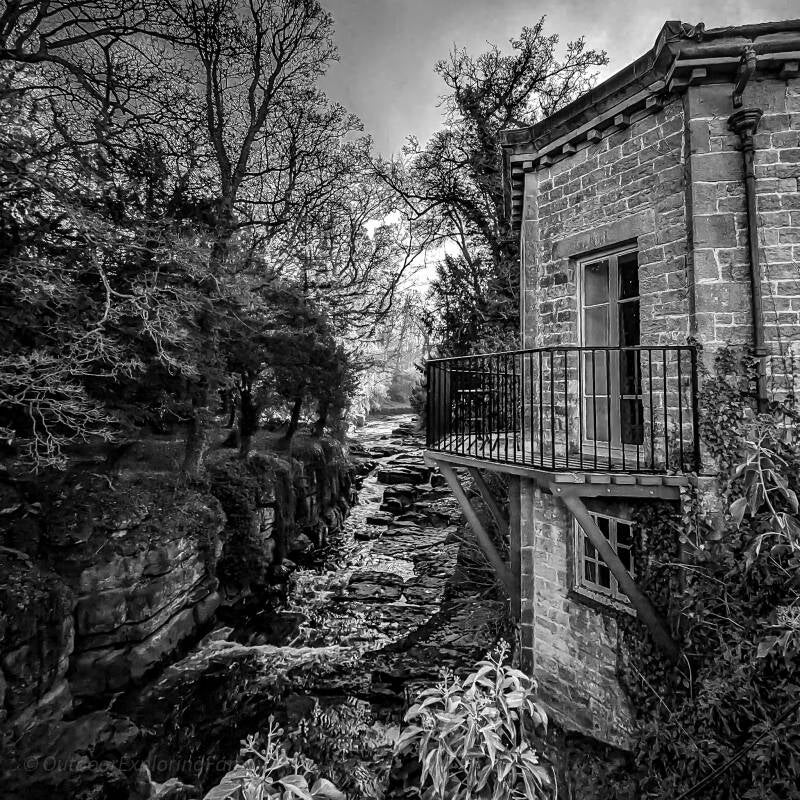
Not far from Barnard Castle, beside the peaceful woods of Rokeby and the winding River Greta, stands the medieval Mortham Tower. Today it is one of Teesdale's most beautiful historic buildings, but for generations local people remembered it for something far stranger than its ancient stone walls.
They spoke of the Mortham Dobby.
Some said she wandered from the tower itself. Others believed she haunted Dairy Bridge beside the River Greta. She was remembered as a fine lady dressed in white, yet without a head, and her story became one of the oldest ghost legends in Teesdale.
Unlike many modern ghost stories, the Mortham Dobby can be traced through early nineteenth-century writings, Victorian newspapers and the memories of local people. Even Sir Walter Scott asked for the story while writing Rokeby, helping preserve one of Teesdale's most enduring pieces of folklore.
So leave the busy roads behind and follow the River Greta into the quiet woods of Rokeby, where history, legend and imagination have walked side by side for more than two centuries...

The Story of the Mortham Dobby
Not far from Barnard Castle, where the River Greta winds through ancient woodland before meeting the River Tees at Rokeby, stands the medieval Mortham Tower.
Today it is a peaceful place.
The river slips beneath the trees, birds cross the valley and walkers follow the woodland paths without a second thought. Yet for generations, few local people cared to linger here after darkness fell.
They believed someone else still walked those woods.
They called her the Mortham Dobby.
No one could say exactly who she had once been.
Some believed she had been the young heiress of the Rokeby family, murdered deep within the woods of the Greta by a greedy relative who inherited the estate after her death. Others told a different tale. They said she was Lady Rokeby herself, killed by robbers while walking through the riverside grounds of the estate.
However she died, the ending was always the same.
She never truly left.
As daylight faded beneath the trees around Mortham Tower, people said a pale woman appeared among the shadows. She wore flowing white, with long white silk trailing behind her as she drifted silently through the woods. She did not walk like the living. She seemed almost to glide above the ground, vanishing between the trees before anyone dared follow.
Those who saw her remembered one detail above all others.
Her head was gone.
Where her face should have been there was only empty darkness, while her features appeared upon her breast instead, looking silently towards anyone unfortunate enough to meet her.
It was a sight few ever forgot.
The ghost became so well known that even the owner of Rokeby, John Bacon Sawrey Morritt, wrote about her in a letter to Sir Walter Scott in December 1811 while Scott was gathering local legends for his poem Rokeby.
Morritt admitted that no one could agree on who the White Lady had really been. One story named the murdered heiress of the Rokebys. Another claimed she was Lady Rokeby, killed by robbers. But whatever her true identity, he wrote that she certainly became a ghost.
He even gave her the name local people used.
The Mortham Dobby.
Morritt also recorded another curious piece of the legend.
The ghost was said to haunt the old bridge that once crossed the Greta near his dairy. A clergyman, speaking Latin, managed to trap the restless spirit beneath the bridge, leaving her unable to wander the woods.
There she remained...
...until disaster struck.
In 1771, floods swept away the bridge.
With the bridge destroyed, local tradition claimed the ghost escaped once more.
Old people who had known the story from childhood insisted she had been seen again afterwards, wandering the woods around Mortham Tower just as she had before.
Whether anyone truly believed the tale hardly mattered.
It had become part of Rokeby itself.
When Sir Walter Scott explored the Greta Gorge, climbed the rocky paths and wandered the woods around Mortham Tower, he listened carefully to stories like these. Later writers said Scott drew inspiration from the old traditions of Rokeby and the Greta, helping preserve stories such as the Mortham Dobby, the Felon Sow and the outlaw bands of Brignall Banks.
The ghost became part of the landscape as surely as the river, the tower and the ancient trees.
Even well into the twentieth century, newspapers were still repeating the old legend.
Visitors walking through Rokeby Park heard of the White Lady. Writers describing the beauty of the Greta still mentioned the Mortham Dobby as one of the valley's oldest stories. By then, few claimed to have seen her themselves, yet the tale refused to disappear.
Perhaps that is because Mortham still feels unchanged.
Pass Mortham Tower as evening settles over the Greta and the woods begin to fall silent.. Watch the last light fade beneath the branches, and it is easy to understand why earlier generations imagined a lonely figure drifting between the trees.
Whether she was a murdered heiress, Lady Rokeby, or simply a story carried from one fireside to the next, the Mortham Dobby has watched over these woods for more than two hundred years in written memory, and perhaps much longer in the imaginations of the people who called Teesdale home.
Behind the Story
The story of the Mortham Dobby was not created for modern ghost books. By the early nineteenth century it was already well known around Rokeby, suggesting it had lived in local memory for many years before it was ever written down.
Today it remains one of the oldest ghost stories associated with Mortham Tower, Dairy Bridge and the River Greta near Barnard Castle.
Who Was the Mortham Dobby?
No one agreed on the ghost's true identity.
One story said she was the heiress of the Rokeby family, murdered in the woods beside the River Greta by a relative who inherited the estate. Another claimed she was Lady Rokeby, shot by robbers while walking through the estate's woodland paths.
Whichever version people believed, they described the same ghost: a finely dressed lady with white silk trailing behind her, no head upon her shoulders and her face appearing upon her breast.
Sir Walter Scott and the Mortham Dobby
One of the strongest pieces of evidence for the Mortham Dobby comes from the friendship between Sir Walter Scott and John Bacon Sawrey Morritt of Rokeby Park.
In 1811, while gathering material for his poem Rokeby, Scott wrote to Morritt asking him to send "the traditions of your old house at Mortham, and the ghost thereunto appertaining."
Morritt's reply is remarkable because he did not tell Scott a single story. Instead, he admitted that local people remembered two different versions. One claimed the ghost was the murdered heiress of the Rokeby family. The other said she was Lady Rokeby, shot by robbers while walking through the estate.
Morritt then described the ghost herself as a finely dressed lady with white silk trailing behind her, no head upon her shoulders and her eyes, nose and mouth appearing upon her breast.
Perhaps the most revealing detail comes at the end of his letter. Morritt explained that he had heard the story many times from an elderly woman who had lived on the Rokeby estate when he was young. That tells us the Mortham Dobby was already part of local memory before Scott ever began writing Rokeby.
Dairy Bridge and the River Greta
The story was never confined to Mortham Tower alone. It was also closely connected with Dairy Bridge across the River Greta.
According to Morritt, local people believed a clergyman managed to imprison the ghost beneath the bridge by speaking Latin. There she was said to remain until the great flood of 1771 swept the bridge away, leading some to wonder whether the Mortham Dobby had been released.
The story continued to be remembered long afterwards. In 1895, the Teesdale Mercury described the Mortham Dobby as "the headless lady who used to live under" Dairy Bridge, showing that the old belief was still familiar to readers around Barnard Castle more than a century later.
Was the Mortham Dobby Real?
No historical record has been found to prove the identity of the woman remembered as the Mortham Dobby, and the two surviving versions of her story cannot both be correct.
What can be shown is that the story itself is genuinely old. From Morritt's 1811 letter to Victorian and twentieth-century newspapers, the Mortham Dobby has remained part of the folklore surrounding Mortham Tower, Rokeby, Dairy Bridge and the River Greta near Barnard Castle.
A Story Remembered
The Mortham Dobby did not disappear from local memory after Scott's lifetime.
Writing in 1921, the Teesdale Mercury said Scott had filled the Rokeby landscape with characters from his imagination alongside older local figures "such as the Mortham Dobby and the Felon Sow that were there before." It is an important comment because it recognises the ghost as part of Teesdale folklore that existed before Scott used the area as inspiration.
In 1932, during celebrations marking the centenary of Scott's death, the newspaper again published Morritt's description of the Mortham Dobby, ensuring the story was passed on to another generation.
Explore More in Teesdale
Discover more local folklore on our Teesdale Tales hub, where we are collecting the old stories, traditions and forgotten legends of the dale.
Explore the surrounding countryside on our Barnard Castle guide, with ideas for places to visit, historic sites and walks nearby.
Enjoy one of Teesdale's most peaceful riverside walks with our Egglestone Abbey to Meeting of the Waters Walk, following the River Tees through woodland to the meeting point of the Tees and Greta, not far from the setting of the Mortham Dobby story.
Read Lady Ann Day, the White Lady said to haunt the walls of Barnard Castle, another of Teesdale's best-known ghost stories preserved in Victorian newspapers.
Discover Peg Powler, the mysterious river spirit of the River Tees, whose story has been used for generations to warn children away from dangerous water.
Explore The Red Cloak Ghost of Cauldron Snout, the haunting story of Phillis Bell and the lonely moorland cottage beneath one of England's highest waterfalls.
Read The Mad Monk of Egglestone Abbey, where folklore, mystery and the old road across Abbey Bridge come together in another atmospheric Teesdale Tale.
Visit the Discover Teesdale hub to explore more of the dale, including walks, waterfalls, reservoirs, historic places, geology, dark skies and hundreds of places to visit around Barnard Castle and Upper Teesdale.