The Red Cloak Ghost of Cauldron Snout
Welcome to another of our Teesdale Tales, where local folklore, history and the landscape of the dale come together.
This page tells the story of the Red Cloak Ghost of Cauldron Snout, a lonely legend that has echoed across the wild fells of Upper Teesdale for generations. It tells of an elderly woman named Phillis Bell, a remote house known as Snout House, whispers of hidden gold, and the ghost said to wander the beck below one of England's most dramatic waterfalls.
The tale belongs to folklore, but it has also been preserved through historic newspapers, local tradition and the writings of nineteenth-century authors who recorded the stories they heard before they disappeared. Although many questions remain unanswered, the legend has become one of Upper Teesdale's most intriguing and enduring mysteries.
So, follow the old track below Cauldron Snout, where the roar of the waterfall drowns every sound, and discover the story of the woman in the red cloak whose legend still lingers among the lonely fells.

The Tale of the Red Cloak Ghost
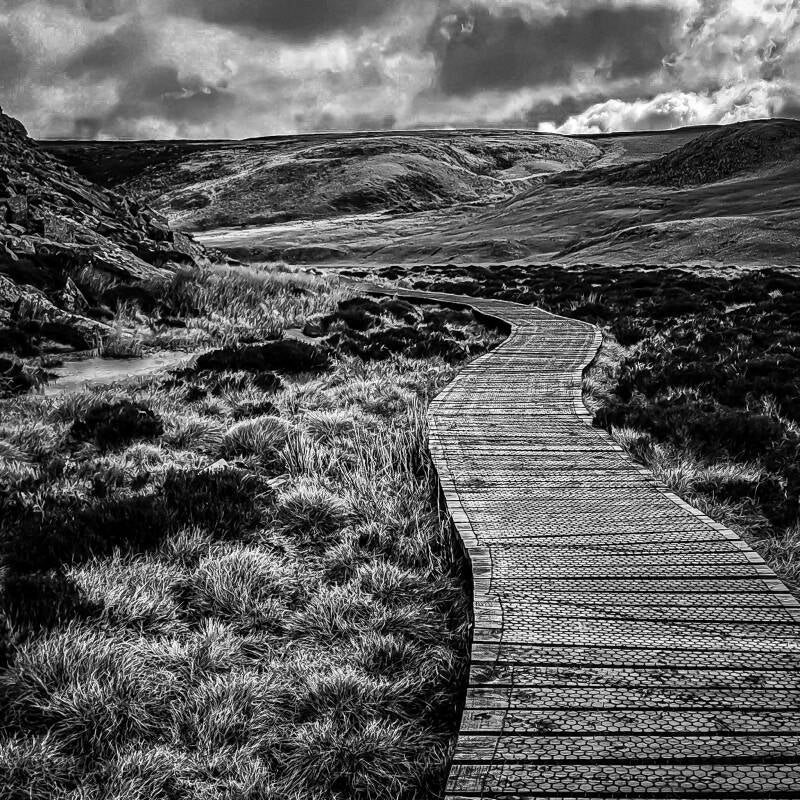
Long before the Pennine Way crossed the lonely fells, before Cow Green Reservoir drowned the upper valley and before the roar of Cauldron Snout drew walkers from across the country, there stood a small stone house below the great waterfall.
It was known simply as Snout House.
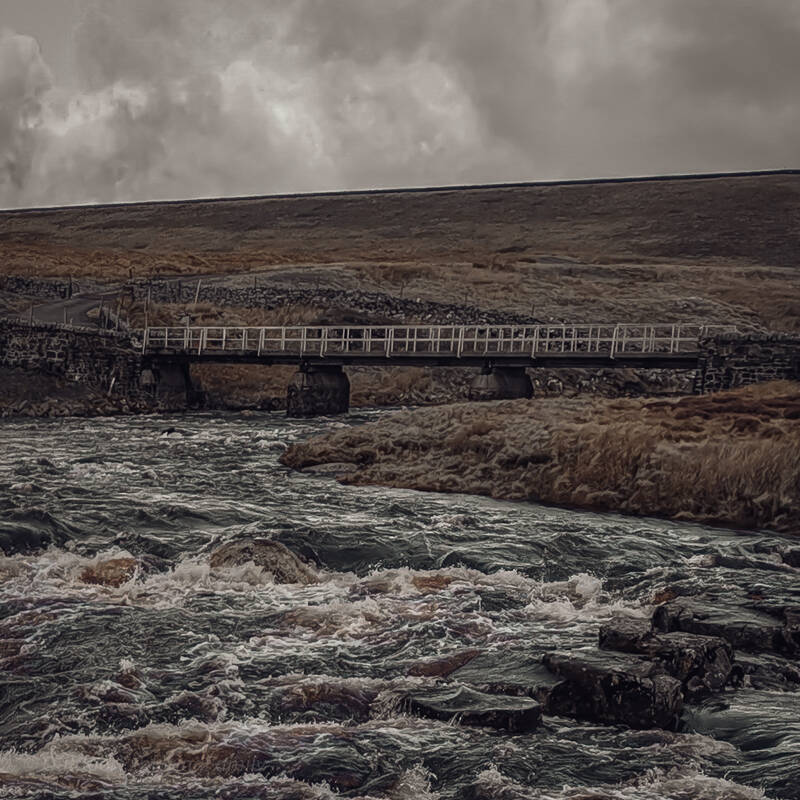
Its walls were thick enough to keep out the winter winds that swept across the moor, and its little windows looked across Maize Beck towards the River Tees below Cauldron Snout. Few people ever passed that way after darkness had fallen, for the nights were long in Upper Teesdale, and the lonely track between Birkdale and Cauldron Snout could leave even the bravest traveller feeling as though unseen eyes were following every step.
The house belonged to an old woman named Phillis Bell.
She had lived there alone for as long as anyone could remember. Some believed she had once known happier days, while others claimed she had always preferred the company of the lonely fells to that of other people. Yet it was not Phillis herself that people whispered about.
It was her gold.
No one knew where the rumour had begun. Perhaps a passing traveller had caught sight of a handful of coins. Perhaps a neighbour had spoken carelessly. Whatever the truth, the story spread from farm to farm until everyone believed the old woman had hidden a fortune somewhere within the walls of Snout House.
The rumour reached the wrong ears.
One bitter autumn evening, as the last light faded beyond the western hills and the roar of Cauldron Snout echoed through the valley, strangers arrived at the lonely house. They demanded the gold and searched every room, every cupboard and every floorboard. Phillis Bell refused to tell them where it was hidden.
By dawn she was dead.
The men lifted the floorboards and buried her beneath the house before continuing their search. They tore the little cottage apart from one end to the other, convinced they would uncover the treasure that had brought them across the lonely fell.
They found nothing.
As morning broke, they disappeared into the mist, leaving Snout House standing silent beneath the waterfall.
For many weeks no one passed the house.
When at last a traveller gathered the courage to look inside, Phillis Bell had vanished. The floor had been roughly laid again, the house stood empty, and no trace remained of those who had come in the night.
Then the sightings began.
A woman wrapped in a deep red cloak was seen wandering beside the beck below Cauldron Snout. Sometimes she stood perfectly still against the rocks. Sometimes she drifted through the morning mist. Those who saw her said she never spoke, never hurried and never looked towards them. She simply walked the lonely ground around Snout House before fading into the sound of the rushing water.
The people of Upper Teesdale soon learned another strange thing.
The Red Cloak Ghost could wander on either side of the River Tees, but never on both during the same night. If she appeared upon the Durham bank, those living across the water in Westmorland slept without fear, knowing she would not cross the river until another evening came. The old folk said running water formed a boundary even restless spirits could not pass.
Years turned into generations.
The little house slowly fell into ruin until at last it was pulled down. As the old floor was broken apart, workmen uncovered human bones hidden beneath the floorboards. Without ceremony they gathered them together and cast them into the River Tees, believing the rushing water would carry away whatever sorrow remained.
From that day onward, no one ever saw the woman in the red cloak again.
Only the tale remained.
And whenever strangers crossed the lonely track below Cauldron Snout, the old people would smile quietly and wonder whether they knew whose footsteps they were following.

Where Has the Story Been Recorded?
Although the Red Cloak Ghost is a tale passed down through generations, it has also been preserved in several historical sources spanning more than 150 years.
The earliest account discovered so far appeared in the Hexham Herald and Northumbrian Gazette on 13 June 1868. Even then, the newspaper described the events as something that had happened many years earlier, showing the story was already well established in local folklore.
The legend was later recorded by James Backhouse in his book Upper Teesdale, Past and Present (1896), where he described the tradition of Snout House while walking between Cauldron Snout and Birkdale.
In 1945, local historian Kenneth Raine revisited Backhouse's work in the Teesdale Mercury, repeating the story of Phillis Bell and noting that her ghost, wrapped in a red cloak, was still said to haunt the beck.
Another version appeared in the Blaydon Courier during 1931, proving the legend was still being shared among local people well into the twentieth century.
Together these accounts show that the Red Cloak Ghost is one of Upper Teesdale's oldest surviving pieces of folklore.
Searching for Snout House
One of the biggest mysteries surrounding the legend is the location of Snout House itself.
James Backhouse wrote that, while walking from Cauldron Snout towards Birkdale, he passed a cow-byre where local people believed an older building had once stood. That earlier building was remembered as Snout House, the home of Phillis Bell.
Historic Ordnance Survey maps reveal that the old track still exists today and passes Dale Byre, a stone barn standing beside the route to High Cup Nick. Although no surviving document has yet proved that Dale Byre occupies the exact site of Snout House, the landscape closely matches Backhouse's description.
Many walkers heading towards High Cup Nick pass this quiet corner of Upper Teesdale without realising they may be walking through the setting of one of the dale's oldest ghost stories.
A Geological Clue
During our research, an unexpected clue appeared in the records of the British Geological Survey.
Among thousands of geological samples collected across Britain is one recorded simply as "Snout House, Caldron Snout, Teesdale, Westmorland." The sample was collected from the Whin Sill and entered into the geological record using Snout House as the location.
Although the record tells us nothing about Phillis Bell or the legend itself, it provides something equally valuable.
It confirms that Snout House was recognised as a real place name, rather than simply a ghost story invented many years later. That small geological record offers another piece of evidence that the house once existed and was known well enough to be used as a recognised location.
Was Phillis Bell a Real Person?
This remains the greatest mystery.
Despite searching historic newspapers, maps and published records, no parish register, burial record, will or legal document has yet been found that can be linked with certainty to Phillis Bell.
That does not mean she never existed.
The earliest newspaper account already treats her as a woman who had lived generations before, suggesting the legend was already old by 1868. It is possible that records have been lost, remain undiscovered or survive under a different spelling of her name.
For now, Phillis Bell remains one of Upper Teesdale's unsolved mysteries, balanced somewhere between history and folklore.
From the Red Cloak Ghost to the Singing Lady
Today, many visitors arrive at Cauldron Snout having heard a different story altogether.
Modern ghost websites often tell of the Singing Lady of Cauldron Snout, a young woman whose sorrowful voice is said to echo above the waterfall after losing the man she loved.
Yet none of the earliest sources uncovered during our research tell that tale.
Instead, they consistently point towards Phillis Bell, Snout House, hidden gold and the mysterious Red Cloak Ghost.
Like many old legends, the story appears to have changed with time. As memories of Snout House faded and the landscape itself changed, a new version gradually took its place. Both tales now form part of the rich folklore of Upper Teesdale, but the Red Cloak Ghost remains the older tradition recorded in the historical sources discovered so far.
Explore More in Teesdale
Discover more local folklore on our Teesdale Tales hub, where we are collecting the stories, legends and old traditions of the dale.
Read the legend of Peg Powler, the mysterious river spirit of the Tees, another of Teesdale’s best-known traditional tales.
Discover Cow Green Reservoir and Cauldron Snout.
Explore Barnard Castle in our town guide, including the castle ruins, riverside walks, independent shops and historic streets.
Start with our Discover Teesdale hub to explore more of the dale, including local walks, waterfalls, reservoirs, historic places, dark skies and family-friendly days out.