Blagraves House: The Story Behind One of Barnard Castle's Most Famous Buildings
When Joseph Blagrave married Frances Binkes in the autumn of 1672, he could never have imagined that people would still be speaking his surname more than three and a half centuries later.
The couple could not have known that the old house standing on The Bank would survive civil war, changing fashions, Victorian rebuilding, two world wars and countless generations of local people. Yet although the family themselves disappeared long ago, their name never did.
Today, simply say Blagraves, and almost everyone in Barnard Castle knows exactly which building you mean.
Over the centuries the house has gathered stories like few others in the town. Richard III and the mystery of the Princes in the Tower have become linked with it. Oliver Cromwell is said to have spent a night beneath its roof. Its ancient cellars inspired ghost stories, while its rooms later became home to an extraordinary collection of antiques that attracted visitors from far beyond Teesdale. More recently, generations of local people have celebrated birthdays, anniversaries and family meals within its walls.
Some of those stories can be traced through surviving records. Others have been passed from one generation to the next without leaving much documentary evidence behind. Together they explain why Blagraves remains one of Barnard Castle's most recognisable and talked-about buildings.
This is the story of the house and the people who shaped it.
Quick Facts
Location: 30–32 The Bank, Barnard Castle
Listed Status: Grade I Listed Building
First Listed: 24 February 1950
Oldest surviving fabric: Late 16th to early 17th century
Named after: Joseph Blagrave and his family
Important date: 1672 – Joseph Blagrave married Frances Binkes.
Known as an inn: Approximately 1670–1730
Traditional associations:Richard III, Joan Forrest and Oliver Cromwell
Later attraction: Victor Mazzini Walton's House of Mystery
Later use: Restaurant, antiques and private residence

A House Older Than Its Name
Long before anyone called the building Blagraves, people were already passing its front door every day.
The Bank has always been one of the busiest streets in Barnard Castle. For centuries it formed the main approach from County Bridge into the heart of the town. Travellers arriving from Yorkshire climbed the steep hill towards the Market Place, merchants led packhorses carrying goods to market, farmers drove livestock through the streets and visitors caught their first proper view of the castle as they reached the top of the slope.
Standing beside the entrance to Broadgates, the old house quietly watched it all.
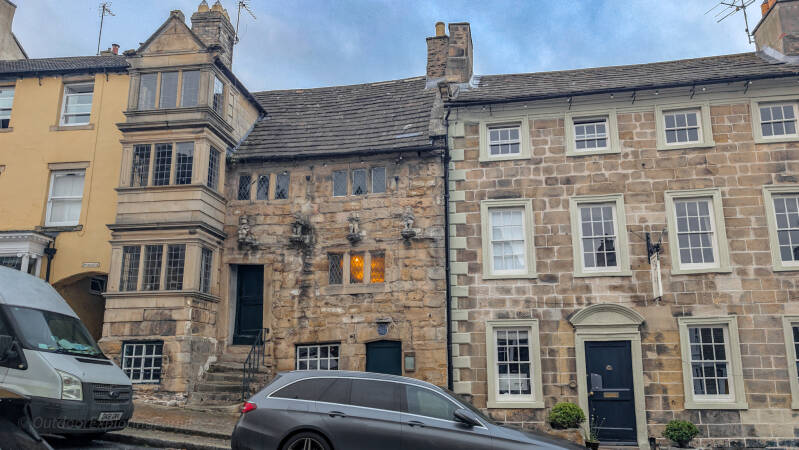
Although it is often described as medieval, most of the building seen today dates from the late sixteenth and early seventeenth centuries. Like many of Barnard Castle's oldest buildings, it was never completed in a single phase. Instead, each generation altered it to meet changing needs. Windows were replaced, roofs repaired, staircases rebuilt and rooms rearranged, leaving behind a building that reflects hundreds of years of continuous use rather than one moment in time.
Inside, much of that history still survives. Heavy oak beams span the ceilings, thick stone walls separate the rooms and large fireplaces remind visitors that comfort once depended entirely upon an open fire. One of the house's finest features is an elaborate decorative plaster ceiling carrying the date 1672, a detail that would later help connect the building with the family whose name it still bears.
Its position made it valuable long before street names or house numbers existed.
Anyone entering Barnard Castle from the south had little choice but to pass this point. That constant stream of travellers would eventually make the building one of the town's leading inns, but before that happened another story had already become attached to it — one involving England's last Plantagenet king.
Richard III, Joan Forrest and the Earliest Tradition
The story connecting Blagraves with Richard III begins with a genuine historical link to Barnard Castle, although the connection to this particular house is much less certain.
In 1484, Richard III granted financial support to Joan Forrest, the widow of Miles Forrest, and her son Edward from the revenues of the lordship of Barnard Castle. Miles Forrest had served Richard at Barnard Castle, so the family's connection with the town during Richard's reign is real.
Miles Forrest later became part of one of the most famous mysteries in English history. Years after Richard III's death, Sir Thomas More named him as one of the men involved in the deaths of the young Princes in the Tower. More's account has been debated by historians ever since.
Blagraves eventually became caught up in that story too, with a tradition developing that Richard III had given the house to Joan Forrest.
However, there is no surviving medieval evidence showing that Joan owned or lived in the building we now call Blagraves. Recent historical research suggests that the specific connection between the Forrest family, the Princes in the Tower and Blagraves became established much later, particularly through Victor Mazzini Walton in the early twentieth century.
That does not make the story uninteresting. In many ways it adds another layer to the history of Blagraves, showing how old buildings collect stories as well as documented facts.
The genuine connection is between Richard III, Miles Forrest and Barnard Castle. The link between that story and Blagraves itself is a later tradition rather than something we can trace back to the fifteenth century.
Joseph and Frances Blagrave
Although the house itself was already old, it did not become Blagraves until the arrival of Joseph and Frances Blagrave.
On 1 October 1672, Joseph Blagrave married Frances Binkes in Barnard Castle. It is only a brief entry in the parish register, but it marks the beginning of a story that still shapes the town today. More than 350 years later, local people continue to refer to the old house on The Bank simply as Blagraves.
The couple made the house their home at a time when Barnard Castle was a busy market town. Joseph was described as a gentleman of Barnard Castle, while Frances came from the well-known Binkes family. Together they took over the property on one of the busiest streets in the town and gradually transformed it into one of Barnard Castle's most important inns.
One of the house's finest surviving features dates from the very same year. An elaborate decorative plaster ceiling carries the date 1672, preserving the year Joseph and Frances began their married life together. Whether the ceiling was created to celebrate their marriage is impossible to say. No records explain why it was commissioned, but the coincidence is a remarkable one. The same year carved into the fabric of the house is also the year the family name became linked with it forever.
The location could hardly have been better. Anyone crossing County Bridge from Yorkshire climbed directly past the front door before reaching the Market Place and the castle. Merchants, farmers, travellers and local businessmen all passed along The Bank, making it the perfect place to eat, drink, rest and exchange news.
For Joseph and Frances, it was more than simply a family home. It was the beginning of a business that would make their surname one of the best-known names in Barnard Castle.
One of Barnard Castle's Most Important Inns
By the late seventeenth century, Blagrave's had become far more than somewhere to buy a drink.
The building itself reflected its importance. Beneath the house were large vaulted cellars cut into the hillside, providing cool storage for wine, ale and other provisions throughout the year. Inventories prepared after Joseph's death mention stocks of sack, Canary wine and locally brewed ale, suggesting an establishment that catered for prosperous merchants and gentlemen as well as ordinary travellers.
Above ground, the rooms echoed with conversation from morning until late into the evening.
Market days brought farmers and traders into the town, while travellers arriving from Yorkshire often made Blagrave's their first stop after crossing the bridge. News travelled with them. Long before newspapers became common, inns like Blagrave's were places where people learned about politics, trade, harvests, wars and events taking place hundreds of miles away. Business deals were discussed over dinner, friendships were formed and journeys planned.
The house became woven into the everyday life of Barnard Castle.
For Joseph and Frances, the inn was more than a successful business. It established their family name in the minds of local people. Visitors arranged to meet at Blagrave's, neighbours referred to it by the family who ran it and, little by little, the building itself became identified with their surname.
It was a reputation that soon placed the inn at the centre of one of the town's most important public celebrations.
A House at the Centre of Town Life
In 1685, news reached Barnard Castle that James, Duke of York, had become King James II.
Across England, towns marked the accession of the new monarch with official celebrations, and Barnard Castle was no exception. After the proclamation had been made, the leading figures of the town gathered at Blagrave's for a grand dinner.
Accounts of the celebrations record that wine flowed freely, musicians performed and silver trumpets sounded through the streets. Around £20 was spent on the festivities, an enormous sum at the time and clear evidence of the importance attached to the occasion. The decision to hold the celebration at Blagrave's says just as much about the inn as it does about the event itself. By the middle of the 1680s it had become one of the principal meeting places in Barnard Castle, known to local people and travellers. In little more than a decade, Joseph and Frances had built a reputation that would outlive them both.
Joseph did not enjoy that success for many more years.
He died in 1698, leaving behind an estate that included the inn and its contents. The inventory prepared after his death provides a rare glimpse inside a prosperous seventeenth-century household, listing furniture, household goods, wines and other possessions that reflected both family life and the business carried on within the building.
Frances appears only briefly in the surviving records after Joseph's death, and her later life remains uncertain. Whether she continued living at Blagrave's, remarried or died not long afterwards is no longer known.
The final prominent member of the family was Binckes Blagrave, whose will was proved in 1711. After that, the Blagraves gradually disappeared from the documentary record.
The family's ownership eventually came to an end, but their name did not. The inn passed into other hands, yet local people continued referring to it as Blagrave's. Over time the apostrophe disappeared and the spelling gradually settled into the form we recognise today — Blagraves.
That quiet change says everything about the reputation Joseph and Frances had built.
Families came and went. Businesses changed. New generations altered the building to suit their own needs.
Yet Barnard Castle never stopped calling the old house by the name of the family who had made it famous.
Cromwell and the Stories That Followed
By the beginning of the eighteenth century, the Blagrave family had disappeared from Barnard Castle, but the old house on The Bank remained part of everyday life in the town. New owners came and went, yet the building continued to watch over one of the busiest streets, welcoming travellers climbing the hill from County Bridge towards the Market Place.
As the years passed, more and more stories became attached to the old house.
One of the best known involves Oliver Cromwell. On 24 October 1648, during the Second English Civil War, Cromwell passed through Barnard Castle on his way north towards Scotland. Records from the time show that he was welcomed with burnt wine and short cakes before continuing his journey.
Somewhere along the way, people began saying that Blagraves was the house where Cromwell spent the night.
The trouble is that no surviving record tells us where he actually stayed. We know Cromwell was in Barnard Castle, but we cannot say for certain that he slept beneath the roof of Blagraves. Even so, the story became part of the building's history and was repeated for generations. Visitors came hoping to stand where Cromwell had stood, while local families continued passing the tale from one generation to the next.
Cromwell was not the only story linked with the old house. Its thick stone walls, ancient timber beams and deep vaulted cellars seemed made for ghost stories. Victorian writers described strange happenings beneath the building, while later generations spoke of unexplained noises and mysterious figures seen inside its rooms. Whether people believed those tales or simply enjoyed telling them, they became part of Blagraves' character. Like many buildings that have stood for centuries, it inspired as much imagination as it did historical curiosity.
By the early twentieth century, Blagraves had become one of Barnard Castle's best-known historic buildings. People visited not only because of its age, but because every generation seemed to add another story to its long history.
The next chapter would prove to be one of the most colourful of them all.
Victor Mazzini Walton and the House of Mystery
In 1923, Blagraves entered a remarkable new chapter when it was purchased from Lord Barnard by Victor Mazzini Walton, an artist living at Old Durham Gardens, Durham. Newspaper reports described the sale of the "fine old Tudor house of Blagroves," showing that the building was already recognised as one of Barnard Castle's architectural treasures.
Rather than modernising the old house, Walton chose to celebrate its age. The dark timber beams, uneven floors, ancient fireplaces and vaulted cellars became the perfect backdrop for the antiques and curiosities he spent years collecting. Instead of hiding the building's history, he made it part of the attraction.
Visitors wandered through room after room filled with unusual objects gathered from different periods. Every doorway seemed to lead to another surprise, while the house itself provided an atmosphere that no purpose-built museum could have recreated. Exploring Blagraves became just as memorable as viewing the collection it contained.
During the years that followed, the building became widely known as the House of Mystery. The name suited both Walton's collection and the centuries-old house that displayed it. Holidaymakers called in while visiting Barnard Castle, guidebooks mentioned the attraction and generations of local children remembered the excitement of exploring its remarkable rooms.
For many people, Victor Walton became almost as closely associated with Blagraves as Joseph Blagrave himself.
More than two hundred years after Joseph and Frances had made their surname famous, Walton gave the building a completely new identity. He ensured that another generation discovered the old house on The Bank, not simply as an historic building, but as somewhere full of curiosity, imagination and surprise.
Walton's years at Blagraves ensured that another generation discovered the old house on The Bank. Thousands of visitors crossed its threshold, drawn as much by the building itself as by the remarkable collection it contained. When the museum finally closed, the exhibits disappeared, but Walton had helped preserve something just as important – public interest in one of Barnard Castle's oldest buildings.
From Antiques to Restaurant
After the House of Mystery closed, Blagraves entered another new chapter.
Once again, the old house adapted to the needs of a new generation. Over the following decades it became best known as one of Barnard Castle's most popular restaurants, introducing countless local people and visitors to one of the town's most remarkable historic interiors.
Among its longest-serving custodians were Ken and Elizabeth Marley, who ran Blagraves for twenty-eight years. More than simply running a successful restaurant, they became dedicated guardians of the building itself, working closely with English Heritage to conserve its historic fabric while keeping it very much alive.
Ken Marley often described Blagraves as "a living, breathing house." Rather than treating it as a museum, he believed its greatest strength was that people continued to use it every day. Diners ate beside centuries-old fireplaces, walked beneath ancient timber beams and celebrated birthdays, anniversaries and family occasions in rooms that had welcomed travellers for hundreds of years.
Caring for a Grade I listed building was never straightforward. Traditional materials and historic building techniques were used whenever repairs were needed, ensuring that each generation passed the house on with its character intact. While customers enjoyed meals in the restaurant, conservation work quietly continued behind the scenes, helping to preserve one of Barnard Castle's oldest buildings for the future.
In 2024, Louise and Eleanor Dinnes opened the next chapter in Blagraves' history. The building reopened as a combination of interiors shop, café, cocktail bar and restaurant, while extensive restoration work allowed visitors to explore rooms that had been closed to the public for around sixty years. Historic features that had remained hidden within the private living quarters could once again be seen and appreciated.
Sadly, the business later closed following changes in the owners' personal circumstances. Announcing the closure, Louise and Eleanor thanked their staff, customers and the local community for their support, expressing the hope that the conservation work they had carried out would help protect Blagraves for future generations.
For many local people, however, the strongest memories of Blagraves have little to do with kings, soldiers or ghost stories. They remember family meals, celebrations and special occasions shared within its ancient walls. Few historic buildings remain part of everyday life for so long. Blagraves has done exactly that.

Blagraves Today
Walk along The Bank today and Blagraves still commands attention.
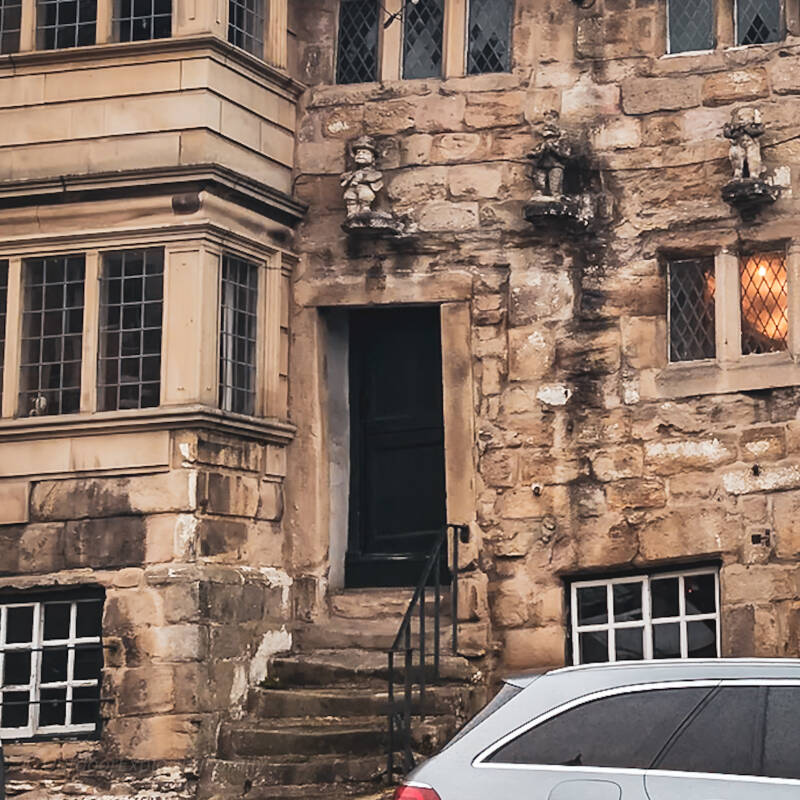
Traffic continues to climb the hill towards the Market Place just as it has for centuries. The horses and pack trains have disappeared, replaced by cars and delivery vans, but the old house remains one of the defining buildings of Barnard Castle's historic centre. Its stone walls, mullioned windows and timber-framed interior still remind visitors that this was already an old building long before the railway arrived in Teesdale or the Bowes Museum opened its doors.
Today, Blagraves is protected as a Grade I Listed Building, placing it among the most important historic buildings in England. That designation recognises not only its architectural importance but also its remarkable survival. While many of the inns that once lined Barnard Castle's streets have disappeared or been altered beyond recognition, Blagraves has retained much of the character that made it famous.
Richard III helped give Blagraves one of its oldest stories. Joseph and Frances Blagrave gave it the name that has endured for more than three centuries. Oliver Cromwell became part of its story too, even though nobody can say for certain that he stayed beneath its roof, while Victor Mazzini Walton introduced thousands of visitors to its ancient rooms through the House of Mystery. Later generations knew it as the restaurant where families gathered to celebrate life's special occasions.
Every generation has left something behind.
That is why Blagraves continues to fascinate. It is not simply an old building. It is a building that has remained part of the life of Barnard Castle for more than four hundred years.
A Name That Never Disappeared
The story of Blagraves is not really the story of kings, soldiers or ghosts.
Those chapters are certainly part of its history, but they are not the reason the building is still remembered today.
The real story belongs to the ordinary people who lived and worked within its walls.
Joseph and Frances Blagrave could never have imagined that their surname would still be spoken more than three hundred and fifty years after their marriage. They simply ran an inn on one of Barnard Castle's busiest streets. Yet their family name became so closely associated with the building that it survived long after the family themselves had disappeared from the town.
Victor Walton arrived two centuries later and gave the old house a new lease of life, filling it with antiques and curiosities that attracted visitors from across the country. Restaurant owners welcomed another generation through the same doorway, creating memories that many local families still treasure today.
Every owner left something behind. Some altered the building itself, while others added new stories or gave it a new purpose. Yet through every change, the house remained unmistakably Blagraves.
Standing on The Bank, it has watched Barnard Castle grow from a market town of horses and pack trains into the town we know today. Generations have passed beneath its windows, crossed its threshold and added their own small part to its story.
Buildings often outlive the people who build them. Some outlive the families who own them.
Blagraves has outlived both.
More than three hundred and fifty years after Joseph and Frances Blagrave began their lives together, the house still carries their name. Through wars, changing fashions, new owners and new purposes, it has remained one of Barnard Castle's best-loved landmarks.
Not many houses become part of a town's identity. Blagraves has.
Continue Exploring Barnard Castle
Blagraves has been part of life in Barnard Castle for centuries, but its story is only one piece of the town's history.
Just a few steps away, Broadgates Chapel and The Hole in the Wall tell the story of the early Methodist movement, while The Witham shows how local people came together in Victorian times to create a lasting home for education, entertainment and community life.
If today's streets have made you wonder how Barnard Castle grew into the town we know now, The History of Barnard Castle's Streets follows the development of The Bank, Galgate, Bridgegate and the other historic routes that still shape the town.
You'll find these pages, along with many more historic buildings, people and stories, in our Barnard Castle History Hub. If you're planning a visit, our Barnard Castle Town Guide will help you discover them for yourself.