Whorlton Bridge
Whorlton Bridge is one of Teesdale’s most remarkable river crossings. It spans the River Tees near the village of Whorlton, downstream from Barnard Castle, linking Whorlton with Wycliffe on the opposite bank. Historically, the river here divided County Durham from the North Riding of Yorkshire.
The bridge we see today opened on 7 July 1831, but the story of crossing the Tees here is much older.
Before the suspension bridge, people crossed by ford and ferry. Then came an ambitious plan for a three-arch stone bridge, begun in 1829 and destroyed by flood before it was finished. Out of that failure came the present suspension bridge, designed by John Green of Newcastle.
This page tells the story of Whorlton Bridge and the earlier crossings that came before it, from the ford and Wycliffe Ferry to the failed stone bridge, the toll house, wartime memories and the restoration of one of Britain’s most important early suspension bridges.
Whorlton Bridge reopened on 25 September 2026 following a major restoration programme, bringing the historic crossing back into use after more than seven years without vehicle traffic. The bridge had been closed to vehicles since 23 July 2019 and completely closed to pedestrians and cyclists from December 2020. Its reopening means people can once again cross the River Tees here on foot, by bicycle and by car, while the bridge continues to operate with restrictions designed to protect this remarkable structure.
Last updated: 25 September 2026
Quick Facts
Name: Whorlton Bridge
Also known as: Whorlton Suspension Bridge
Location: River Tees, between Whorlton and Wycliffe
Near: Barnard Castle
Opened: 7 July 1831
Designer: John Green of Newcastle
Bridge type: Road suspension bridge
Span: Around 53 metres
Height above river: Around 9 to 10 metres
Listed status: Grade II* listed
Scheduled status: Scheduled Monument
Original purpose: Turnpike road bridge
Earlier crossing: Ford and ferry
First bridge attempt: Three-arch masonry bridge, destroyed by flood in 1829
Toll house: North-west end of the bridge
Closed to vehicles: 23 July 2019
Closed to all users: 5 December 2020
Reopened: 25 September 2026
Vehicle weight limit: 3 tonnes

Is Whorlton Bridge open?
Yes. Whorlton Bridge reopened on 25 September 2026 following its major restoration and can once again be crossed on foot, by bicycle and by suitable vehicles. A 3-tonne vehicle weight restriction remains in place to help protect the historic bridge.
Before Whorlton Bridge
Long before the suspension bridge was built, people were already crossing the River Tees at Whorlton.
Stand by the river today and it is easy to see why this place mattered. Whorlton sits on the County Durham side of the Tees, with Wycliffe across the water on the North Yorkshire side. For centuries, anyone needing to move between the two banks had to deal with the river in front of them.
Before there was a bridge, the crossing depended on the ford. In low water it gave people a way across, but the Tees could quickly become dangerous. After heavy rain, or in the dark, what looked like a simple crossing could turn into something far more serious.
By 1691, a ferry was operating here. It carried people between the Whorlton bank and the Wycliffe side of the river, close to the cottages and the old Boot and Shoe Inn. This is slightly downstream from the current bridge.
This was not just a quiet bend in the river. It was a working crossing, with boats, riverside buildings, footpaths and people moving between Whorlton and Wycliffe long before the suspension bridge changed the landscape.
The Ferry, the Boathouse and the Boot and Shoe
The ferry crossing linked the Whorlton side of the river with Wycliffe on the south bank.
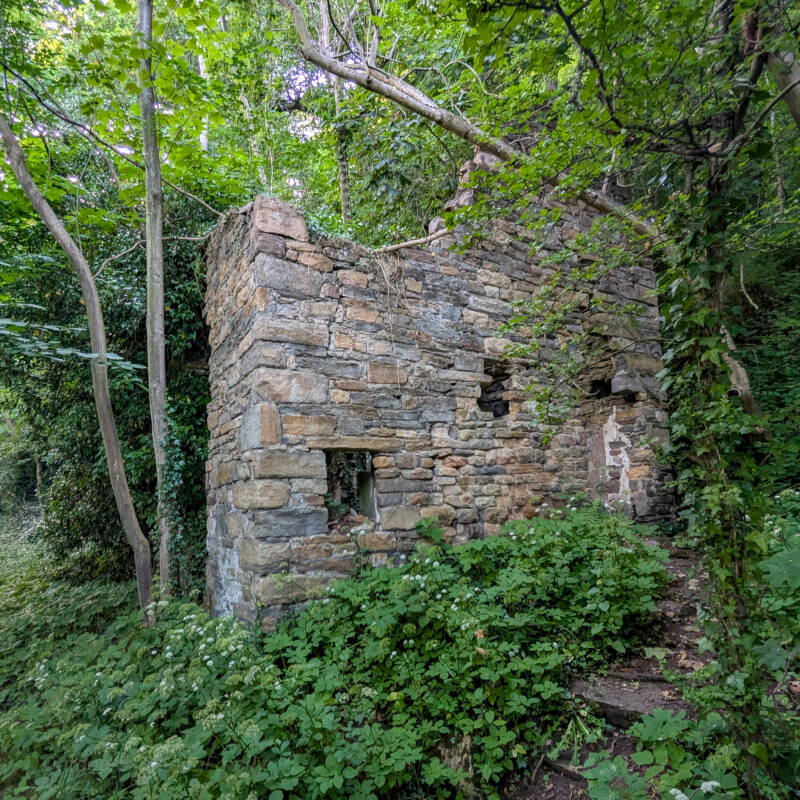
On the Whorlton side, the ruined riverside building later became known by some as Ferryman’s Cottage, but older local memory points to another name: the Boathouse. That name feels right for the site. The building stands close to the Tees, and its arched cellar was remembered as a place where boats could be brought in from the river.
The building is still there today, although only as a ruin. It is one of those places that makes the old crossing feel real, because you can still picture why a boat house would have stood there. The stonework is fragile and should not be entered, but from the riverside route you can still see the remains of the building and the steps leading down towards the water.
Across the river, the ferry reached the Wycliffe side near the cottages and the Boot and Shoe Inn. The modern Boot and Shoe Cottage still stands on the south bank of the River Tees at this old crossing point from Yorkshire into Durham. Its history as a pub and cobbler adds another human detail to the ferry landscape. It was the kind of place that made sense beside a crossing: somewhere close to the river, the road and the people moving between the two banks.
This was not a quiet beauty spot in the way we might see it today. It was a working riverside crossing, with a boat, cottages, a public house, paths, fields and people using the river as part of everyday life.
Even after Whorlton Bridge opened in 1831, the old ways did not disappear immediately. The ford was later destroyed, reportedly by being blown up, while the ferry continued into the 1850s. For around twenty years, the new toll bridge and the older ferry crossing existed side by side, which says a lot about local habits, tolls and the pull of the old route.
A Dangerous Crossing
The need for a proper bridge becomes clearer when you look at the dangers connected with this stretch of the River Tees.
One of the saddest recorded accidents came in 1896, long after Whorlton Bridge had opened. William and Louise Harrison, both aged 34, had been visiting relatives at Eppleby and were returning home when they tried to cross the river by boat. A friend, William Robinson, was with them.
The boat capsized in the Tees. Robinson survived, but William and Louise drowned, leaving six children without their parents.
The accident shows that the old habits of crossing the river did not disappear when the bridge opened. Even with a toll bridge nearby, people still used boats and older crossing places, sometimes with tragic consequences.
Local stories later linked the ruined riverside building with a ferryman and a family tragedy, but the clearest recorded event is the 1896 drowning of William and Louise Harrison.
At Whorlton, the Tees was not just a boundary between Durham and Yorkshire. It was a river people crossed, worked around, feared and depended on.
The First Whorlton Bridge Was Not a Suspension Bridge
The first plan for Whorlton Bridge was very different from the bridge that survives today.
In 1829, an Act of Parliament authorised a new bridge over the River Tees at Whorlton. The bridge formed part of a turnpike scheme linking Staindrop, Whorlton and Greta Bridge, with branches towards Barnard Castle and other local roads.
The original design was a three-arch masonry bridge.
A plan and elevation had already been prepared in November 1828 by George Atkinson. On 6 May 1829, the trustees entered into an agreement with three masons: John Duck of Darlington, John Peacock of Melsonby and Joseph Winn of Gisborough. Their contract was worth £1,170, and the bridge was to be completed by 10 December 1829.
Work began on 9 June 1829.
For a few months, Whorlton looked set to gain a stone bridge across the Tees. Then the river rose.
The Flood That Changed the Bridge
On 13 October 1829, a flood swept down the Tees.
The unfinished masonry bridge was destroyed before it could be completed. The stonework was washed away, and later accounts describe the failure as serious enough to ruin the contractors.
That moment changed the future of Whorlton Bridge.
The trustees had tried to build a conventional stone bridge across a river known for sudden floods and powerful changes in level. The Tees had shown how vulnerable that plan was. Instead of rebuilding the same idea, they turned to a different solution.
A suspension bridge needed strong towers and anchor points, but it did not rely on a line of heavy stone arches standing in the river. For Whorlton, after the disaster of 1829, that mattered.
John Green and the Suspension Bridge
The replacement bridge was designed by John Green of Newcastle.
Green was one of the important bridge engineers of his time, and Whorlton Bridge belongs to the early age of iron chain suspension bridges. Suspension bridge engineering was still developing, and not every early example proved successful. That makes Whorlton’s survival even more impressive.
On 18 May 1830, a draft contract was prepared with John and Joseph Welch of Gateshead for erecting the new suspension bridge over the River Tees. By 6 August 1830, John Green had prepared the specification for the masonry work.
The new bridge took shape through 1830 and 1831.
The Durham-side tower was completed on 19 August 1830.
The chains were successfully attached on 1 April 1831.
The bridge opened on 7 July 1831.
After years of dangerous crossings, a failed stone bridge and the destructive flood of 1829, Whorlton finally had its bridge.
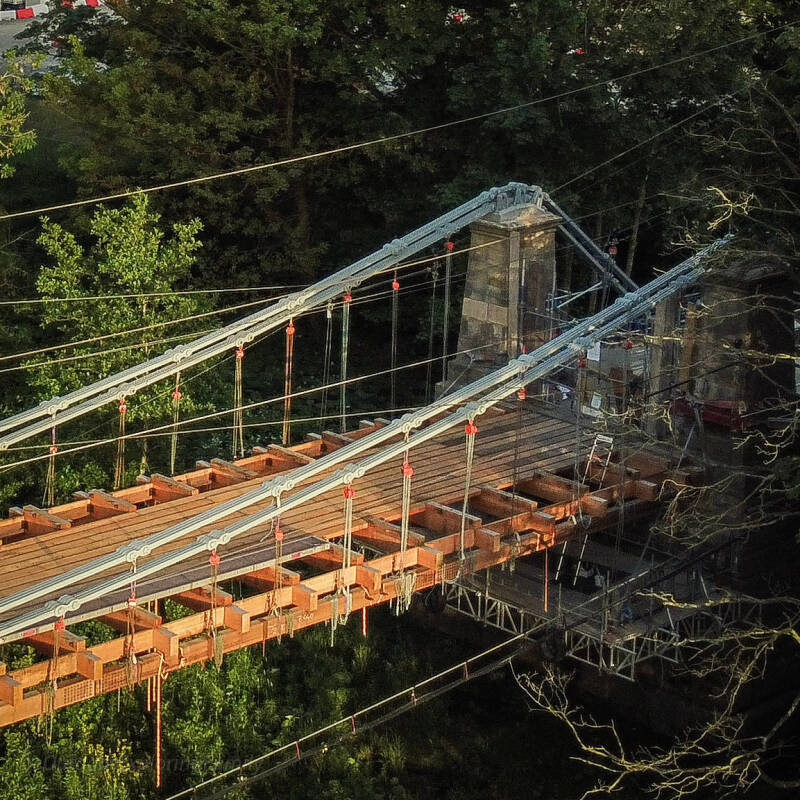
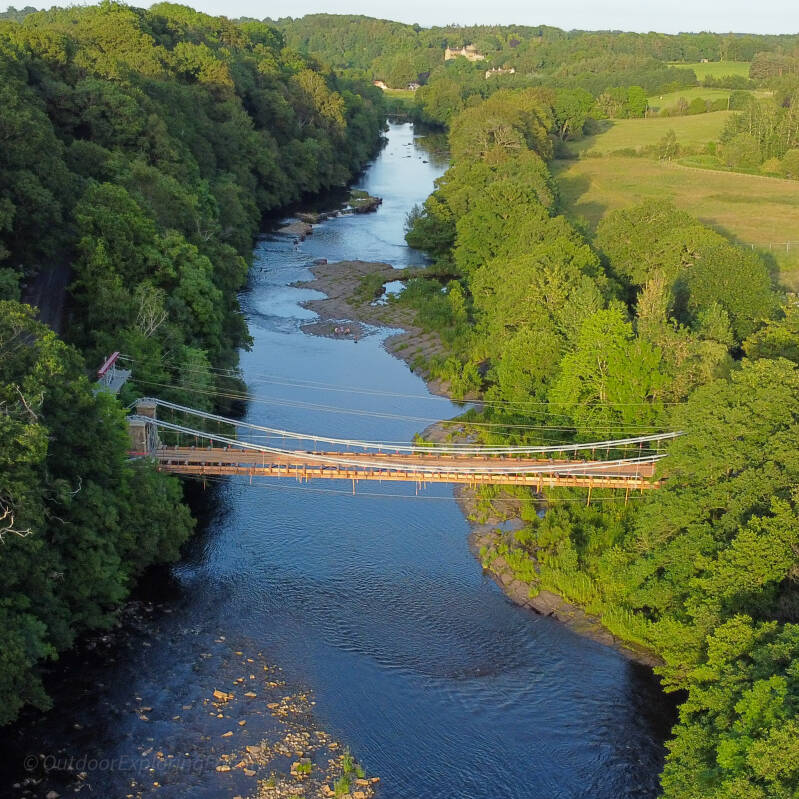
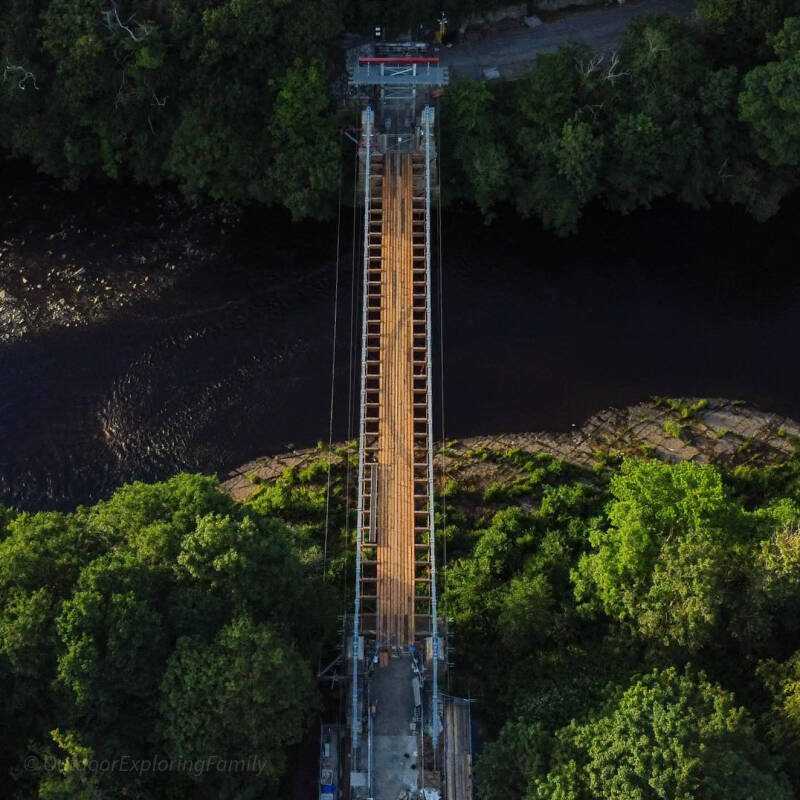
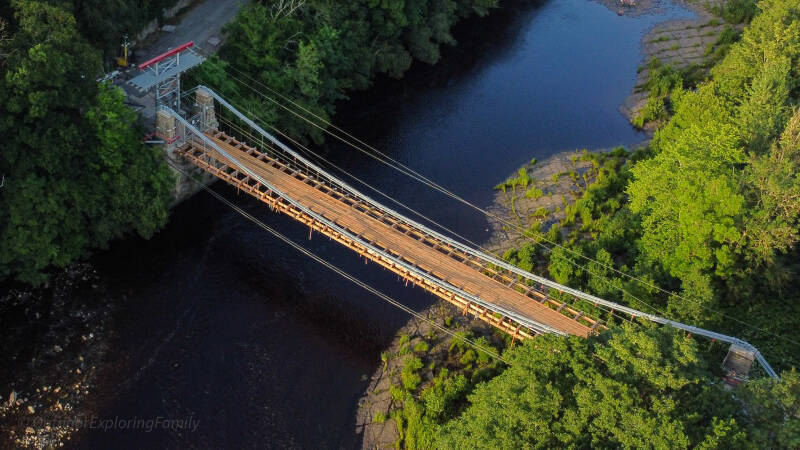
These photographs were taken during the restoration of Whorlton Bridge before it reopened on 25 September 2026. They show the scale of the work involved in bringing this historic crossing back into use.
Why Whorlton Bridge Is Important
Whorlton Bridge is one of the most important early suspension bridges in Britain.
Its timber roadway is carried by iron suspension chains, supported by large masonry towers at each end. The span is around 53 metres, with the deck standing roughly 9 to 10 metres above the River Tees.
Before its recent restoration, the bridge was widely noted for the survival of its original iron chains, which made it an especially rare example of early suspension bridge engineering. The modern restoration has been carried out because of that historic importance, with the aim of protecting the structure for the future.
Whorlton Bridge is Grade II* listed and is also a Scheduled Monument. These protections reflect both its engineering value and its place in the history of transport across the River Tees.
The Toll House
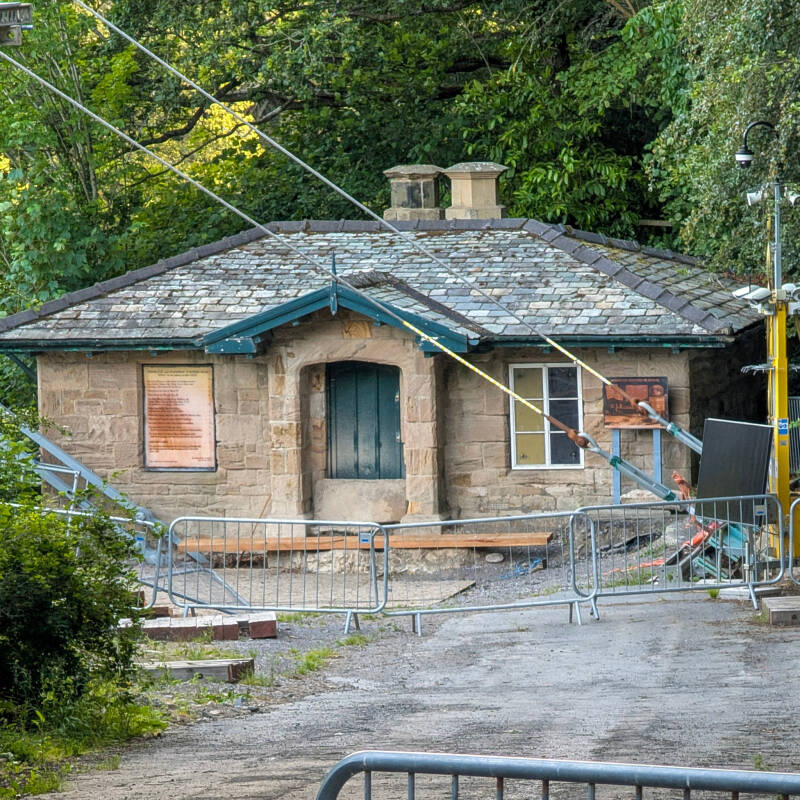
The small toll house at the north-west end of Whorlton Bridge is one of the clearest reminders that this was once a paid crossing.
Whorlton Bridge was built as part of the Whorlton and Staindrop Turnpike Road, not as a free public bridge. Anyone crossing here was using a managed route, and the toll house controlled that movement between the two sides of the Tees.
It is easy to imagine the scene when the bridge was new: carts approaching from Whorlton, people travelling towards Wycliffe and Greta Bridge, horses stepping onto the timber deck, and someone at the toll house collecting the charge before they crossed.
The old toll board gives a glimpse of what that meant in everyday life. Charges were set for horses, carts, wagons, cattle, calves, pigs and sheep. A horse or other beast, laden or unladen, was charged 1½d. A drove of cattle cost 5d per score, while calves, pigs or sheep were charged 2d per score. Carts and wagons were charged according to the width of their wheels and what they carried, with coal given its own separate rate.
Those small charges tell a much bigger story. Whorlton Bridge was not just a scenic crossing over the Tees. It was part of a working road used by farmers, carriers, traders, drovers and local people moving between Durham and the Wycliffe side of the river.
The toll house also had its own small business behind it. The right to collect the tolls could be rented from the bridge trustees for a fixed sum. In 1842, William Goldsbrough paid £72 for the toll rights at Whorlton Gate. Robert Forster of Billingham Gate paid £80 in 1844, and Thomas Pape of Whorlton Bridge paid £75 in 1845.
That meant the person running the gate had to collect enough from horses, carts, wagons, livestock and travellers to make the arrangement worthwhile.
Those details turn the toll house from a small stone building into part of everyday life. It was not just an office beside a bridge. It was where the cost of crossing the Tees was counted, day after day.
The building remained closely tied to the bridge long after the tolls had gone. A Durham County Council letting advert from 1986 described it as Whorlton Toll Cottage and stated that it had been constructed in 1829 as the toll house for the bridge. At that time, it was still substantial enough to be offered as a home, with a kitchen, one bedroom, living room, bathroom, separate WC, three outbuildings and a car parking area.
The bridge remained a toll crossing until after the First World War. For much of its working life, crossing Whorlton Bridge came at a price, and the toll house was the place where that part of the story happened.
The Fish Weir Beside the Bridge
Whorlton Bridge was not the only feature shaping this stretch of the River Tees.
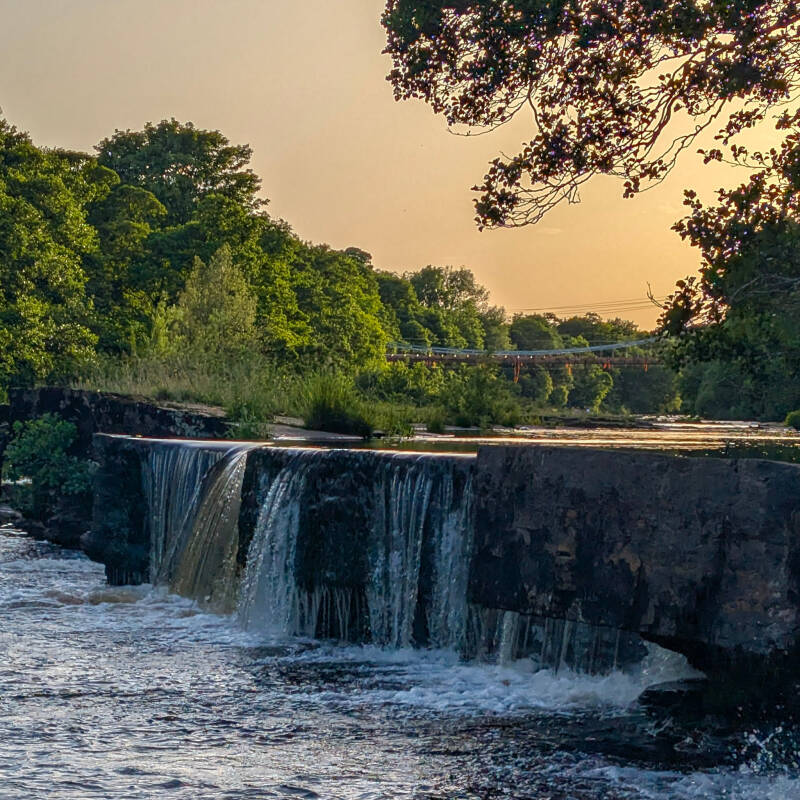
Old maps show two fish weirs on this stretch of the River Tees. One stood just below Whorlton Bridge, and another lay a little further downstream, past the old ferry crossing and the Boathouse. It is easy to overlook details like this, but they help show what the river once was: a working place, shaped by fishing, crossing points, tolls, roads and local life.
In 1868, the Tees Salmon Fisheries Landowners’ Association recorded work at the weir near Whorlton Suspension Bridge. A fish pass was being made so salmon could move upstream through the Tees, even when the river was low.
The weir was connected with Sir Clifford Constable at one end and Christopher Cradock at the other. Further along the river, other fish traps and mill dams were also being looked at as part of wider efforts to improve the salmon fishery.
It adds another layer to the Whorlton crossing. There was the bridge above the water, the ferry nearby, the toll house beside the road, and the fish weir in the river itself. This was a busy riverside landscape, shaped by travel, fishing, landownership and the daily life of the Tees.
Whorlton Bridge in 1913
By 1913, Whorlton Bridge was already causing concern.
Startforth Rural District Council discussed the bridge that year. At the time, it was still in private ownership, with Headlam and Stanton named as the owners. A substantial offer had been made to buy the bridge, and the council report suggested that accepting it might avoid the need to close the crossing.
That detail feels surprisingly modern. More than a century before the recent closure, people were already asking how Whorlton Bridge could be kept open and who should be responsible for it.
In 1914, the bridge was assessed and a 3-ton weight limit was recommended. That limit became part of the bridge’s later life and helped protect a structure that had been built for horses, carts and early road traffic, not the weight of modern vehicles.
Churchill at Whorlton Bridge
In December 1942, Whorlton Bridge became part of a wartime scene.
Prime Minister Winston Churchill stood on the bridge to watch soldiers training in the valley. The troops were exercising in the meadows on the south bank, wading through the River Tees and climbing the steep Durham-side cliffs.
It is one of those details that makes the bridge feel alive. Churchill, the narrow suspension bridge, the winter river and soldiers training below during the Second World War.
Repairs, Restoration and Vandalism
Whorlton Bridge has survived because it has been repaired and cared for many times.
Restoration work was recorded in 1993, with photographs showing the bridge before and after repair.
In 2003, Durham County Council carried out a £100,000 refurbishment. The work included replacing worn timber decking and repainting the iron suspension chains.
Only three weeks later, thieves attempted to steal part of the bridge. A coping stone was deliberately removed and pushed down into the woodland below. It was around two feet square, six inches high and very heavy. The repair was estimated at about £1,000, and the stone was to be secured with a steel dowel to stop it being removed again.
The damage was small compared with the bridge’s long history, but it shows how vulnerable historic structures can be, even after careful restoration.
Closure, Restoration and Reopening
Whorlton Bridge’s most significant modern chapter began in 2019. Following reports of damage and further inspection, the bridge was closed to vehicles on 23 July that year. Pedestrians and cyclists could initially still cross, but continuing investigations revealed much more serious structural problems. On 5 December 2020 the bridge was closed completely on safety grounds.
For local people this was much more than the loss of an old bridge. Whorlton Bridge had been part of everyday journeys across the Tees for generations, as well as forming a familiar part of the landscape for walkers, cyclists and visitors. With the crossing closed, a route that had connected the two sides of the river since 1831 suddenly disappeared from daily life.
Bringing it back was never going to be a straightforward bridge repair. Whorlton Bridge is Grade II* listed and a Scheduled Monument, so the work had to protect its historic significance while also making the structure safe enough to return to use. Durham County Council commissioned specialist contractor VolkerLaser in 2023, with the main restoration work beginning in January 2024.
The scale of the job became clearer as the bridge was taken apart. Components had to be individually examined, repaired or replaced where necessary, while the bridge itself was dismantled and rebuilt. The work included major repairs to the suspension system, replacement of damaged components and the installation of a new road deck.
After years behind barriers, Whorlton Bridge finally reopened on 25 September 2026. It was a significant day for a crossing that had already survived floods, nearly two centuries of traffic, wartime activity and generations of repair. More importantly, the bridge was no longer simply a historic structure being preserved. It became a working crossing of the River Tees once again.
Visiting Whorlton Bridge Today
Whorlton Bridge is now open again following the completion of its major restoration. It stands below Whorlton village, a few miles downstream from Barnard Castle, crossing the River Tees between the County Durham side of the river and the Wycliffe side.
The bridge can once again be crossed on foot, by bicycle and by suitable vehicles. A 3-tonne weight restriction remains part of the protection of the bridge, so drivers should follow the signs and restrictions at either end rather than treating it as an ordinary modern road crossing.
There is plenty here to look for beyond the bridge itself. On the Whorlton side are the old toll house, Whorlton village and St Mary’s Church. Down beside the river you can begin to piece together the much older crossing, including the remains of the Boathouse and the landscape associated with the former ferry. Across the Tees is the Wycliffe side of the old route, while the Teesdale Way passes through this part of the valley.
For the first time in years, you can now experience Whorlton Bridge as it was meant to be experienced: not simply viewed from behind barriers, but actually crossed. That makes 2026 another important date in a story that stretches from the old ford and ferry to the failed stone bridge of 1829, John Green’s suspension bridge of 1831 and one of the biggest restoration projects in its long history.
Why This Crossing Still Matters
Whorlton Bridge is special because the whole story is still there in the landscape.
The ford shows the earliest need to cross the Tees. The ferry and Boathouse show how people worked with the river before a bridge existed. The failed stone bridge of 1829 shows the power of the Tees, while the suspension bridge of 1831 shows how engineering adapted to that landscape.
Around it, the toll house, fish weirs, old maps, wartime memories, repairs and modern restoration all add layers to the story.
Whorlton Bridge is not just a way across the River Tees. It is nearly two centuries of local life, danger, engineering and survival in one crossing.
Timeline
About 1050: Whorlton is recorded as Queorningtun.
1691: A ferry is recorded locally as operating across the River Tees.
November 1828: George Atkinson prepares a plan and elevation for a proposed three-arch masonry bridge.
1829: An Act of Parliament authorises Whorlton Bridge and the Staindrop to Greta Bridge turnpike scheme.
6 May 1829: John Duck of Darlington, John Peacock of Melsonby and Joseph Winn of Gisborough contract to build the masonry bridge for £1,170.
9 June 1829: Work begins on the first bridge.
13 October 1829: A major flood destroys the unfinished stone bridge before it can be completed.
18 May 1830: A draft contract is prepared with John and Joseph Welch of Gateshead for the replacement suspension bridge.
6 August 1830: John Green prepares the specification for the masonry work of the new suspension bridge.
19 August 1830: The Durham-side tower is completed.
1 April 1831: The suspension chains are successfully attached.
7 July 1831: Whorlton Suspension Bridge opens across the River Tees.
1850s: The old ferry continues operating for a time alongside the newer bridge before eventually disappearing from use.
1868: A fish pass is recorded at the weir near Whorlton Suspension Bridge to help salmon move upstream.
1896: William and Louise Harrison drown after a boat capsizes on the River Tees, leaving six children without their parents.
1913: Startforth Rural District Council discusses the future of Whorlton Bridge and a possible purchase of the privately owned crossing.
1914: A 3-ton weight limit is recommended for the bridge.
December 1942: Winston Churchill stands on Whorlton Bridge while watching soldiers carrying out wartime training in the Tees valley below.
1993: Restoration work on Whorlton Bridge is recorded.
2003: Durham County Council carries out a £100,000 refurbishment, including work to the timber deck and iron suspension chains. Only weeks later, an attempt is made to steal one of the bridge’s coping stones.
23 July 2019: Whorlton Bridge closes to vehicle traffic after inspections identify safety concerns. Pedestrians and cyclists are initially still able to cross.
5 December 2020: The bridge closes completely to pedestrians and cyclists as further investigations reveal more serious structural problems.
2023: Durham County Council moves ahead with a major restoration programme for the historic bridge, with specialist contractor VolkerLaser involved in the project.
January 2024: The main restoration work begins, starting one of the most extensive repair programmes in the bridge’s history.
September–October 2024: The bridge is dismantled so its historic components can be individually inspected, tested, repaired and conserved.
2024–2026: Extensive specialist engineering and conservation work is carried out. Historic parts are retained wherever possible, damaged components are repaired or replaced where necessary, and the bridge is rebuilt with a new road deck.
April 2026: The careful reassembly of Whorlton Bridge begins, marking the final major stage of the restoration. New and refurbished components are installed before the suspension chains, timber deck and walkway are rebuilt.
25 September 2026: Whorlton Bridge formally reopens after more than seven years without vehicle traffic, restoring the historic crossing of the River Tees to pedestrians, cyclists and vehicles. The reopening follows one of the largest restoration projects in the bridge’s nearly two-century history.
Explore More Bridges in Teesdale
Whorlton Bridge is one of the great historic crossings of the River Tees and forms part of our wider Bridges of Teesdale collection.
You may also enjoy our guides to Abbey Bridge, Wynch Bridge, Winston Bridge and County Bridge, each with its own story of river travel, engineering and local history.