The Story of Hury Reservoir, Baldersdale
Hury Reservoir in Baldersdale, County Durham, was built for the Stockton and Middlesbrough Water Board, with the main construction beginning in 1884 under engineer James Mansergh and contractor Walter Scott & Co. By June 1892, water was rapidly filling the new reservoir, but getting to that point had taken years of land buying, excavation, railway building and hard physical work.
Before the water there were farms, fields, homes and Hury Mill, with people already living and working around this part of the River Balder. Then the Victorians arrived with one of the biggest engineering projects Baldersdale had seen. Labourers, quarrymen, engineers, temporary railways and locomotives became part of everyday Hury, and the works grew famous enough for visitors to travel out from Cotherstone simply to see them.
There was even a Hury Waterworks cricket team. There were arguments over thousands of pounds when the foundations had to be taken deeper than expected, a young quarryman lost his life around the railway workings, and years after the reservoir began filling, men were still travelling into Baldersdale hoping to find work there.
Quick Facts
Location: Baldersdale, County Durham
River: River Balder
Built for: Stockton and Middlesbrough Water Board
Engineer: James Mansergh
Main contractor: Walter Scott & Co. of Newcastle upon Tyne
Main construction began: 1884
Reservoir filling: Underway by June 1892
Contemporary capacity: Around 900 million gallons
Contemporary water area: Around 160 acres
Contemporary greatest depth: Around 90 feet

When was Hury Reservoir built?
There is not really one date that tells the whole story. Hury was part of wider water supply planning during the 1870s, the land around the proposed reservoir was being surveyed and negotiated over by the early 1880s, and the main construction began in 1884. By 22 June 1892, the reservoir was rapidly filling, while finishing work around Hury continued afterwards.
That makes 1884 to 1892 a much more useful way of understanding the main build than simply saying Hury was “built in 1892”. Even then, 1892 was not the moment every shovel was put away. Work around the reservoir was still being carried out in the middle of the 1890s.
Historic England's research record follows the same broad picture, with construction beginning in 1884 and Hury becoming operational in 1892.

Hury before the water
Hury was already an old working place long before anyone planned a reservoir here. By 1741 there was a water corn mill and kiln at Hury, and by the nineteenth century farms and buildings were spread around this part of the valley. A plan from around 1810 includes Thorngarth Hill Farm and Hury Mill Farm, names belonging to a landscape that existed before hundreds of millions of gallons of water covered part of it.
By the 1850s Hury appears regularly as a living community rather than simply a name on a map. There was a Hury Cattle Show, people were being born and dying at Hury, a blacksmith was working here and farming stock was being bought and sold. Baldersdale was a working agricultural landscape, with families making their living from the land and from places such as Hury Mill.
It is worth remembering that when standing beside the reservoir today. The water did not arrive in an empty valley. The Victorians were about to take a landscape that people already knew intimately and change it on a scale that would have been impossible to miss.
The old mill site itself was later lost as the reservoir landscape developed. Historic England's heritage record still identifies the site of the former Hury corn mill close to the reservoir today.
Why did Stockton and Middlesbrough need Hury?
The reason for building such a huge reservoir in Baldersdale lay many miles downstream.
Stockton and Middlesbrough had expanded enormously during the nineteenth century. More houses, more people and rapid industrial growth all meant greater demand for water. The upland valleys feeding the Tees offered the chance to collect large quantities of cleaner water and send it towards those growing towns.
By the 1870s, Hury had become part of that bigger plan. What was happening in Baldersdale was therefore not simply a local reservoir project. This quiet stretch of the River Balder was becoming part of a water system designed for communities and industries far beyond the dale.
Before any dam could rise, however, the Water Board first had to deal with something much more complicated than stone and clay: the land and the people already using it.
Farms measured, buildings valued and land changing hands
Between 1880 and 1883, surveyors were busy across the proposed reservoir landscape. Farms were measured, buildings described, land valued and compensation worked out. Hury Mill Farm was separately valued, and surviving material covers several tenancies as the Water Board worked through exactly what would be affected.
Some of it became contentious. Negotiations involving Ralph John Dent went as far as formal proceedings in March 1883. Building Hury was never simply a case of an engineer deciding where a dam should go and work starting the next morning. Every field had somebody connected with it, and farms and buildings had a value both on paper and to the people using them.
By the time the first major construction gangs arrived, several years of surveying, negotiation and paperwork had already changed the future of Hury.
The building of Hury begins
The main construction started in 1884. James Mansergh was the engineer responsible for the reservoir, while the enormous task of actually building it went to Walter Scott & Co. of Newcastle upon Tyne.
Plans for 4 August 1884 included a formal ceremonial beginning for Hury Reservoir and the associated board room, with the mayor of Middlesbrough at the centre of the occasion. Behind that ceremony was a job that would occupy Baldersdale for years.
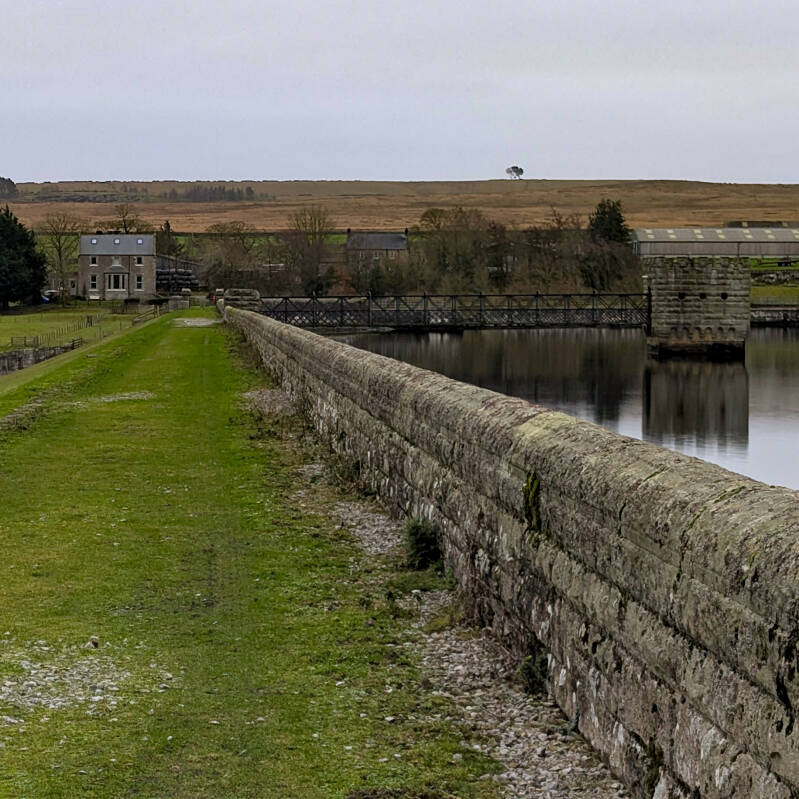
The scale of the work is difficult to picture from the quiet reservoir today. A huge earth embankment had to be built across the River Balder, foundations excavated, stone and concrete placed, clay brought in and large quantities of material moved around a valley that had never been designed for this sort of traffic.
Even some of the clay came from outside Hury. During 1884 and 1885 material from Lartington was being considered and supplied for the works, showing how far the construction operation reached beyond the reservoir itself.
And all of that material had to get here somehow.
Scott's Siding and the railway across the moor
The railway is one of the best parts of the Hury story because so little of it is obvious in the landscape now.
An agreement from 18 October 1884 concerns a railway siding created for Walter Scott's reservoir works around a mile west of Cotherstone station. It became known as Scott's Siding. The main Hury works were still roughly another two and a half miles away, so reaching the construction site involved more than simply unloading beside the main railway.
During the works, Walter Scott's contractors were also given permission in connection with laying a tramway over Cotherstone Moor to Hury Reservoir.
So the moor between Cotherstone and Hury once had construction rails running across it.
Instead of the quiet open landscape we know today, there were workers, wagons, materials and railway activity heading towards one of the largest building sites in the dale.
Hury Waterworks gets a cricket team
By May 1885, Hury Waterworks had already developed enough of a community to have its own cricket team.
On 20 May, Hury Waterworks played Cotherstone. The weather was poor, but the game still went ahead and Hury won by 88 runs to 26.
It is only a cricket score, yet it tells us more about daily life at the reservoir than many engineering plans ever could. These men were not simply arriving, digging and disappearing again. Enough people were spending their lives around the works for Hury Waterworks to become an identity of its own and field a team against the neighbouring village.
By 1890 a few individual names also survive around the works. James Atherton was working at Hury as a timekeeper and cowkeeper, James Harvey was an inspector and civil engineer George Nicholas Yourdi was based at Cotherstone as resident engineer for the Water Board.
They were just a handful among a much bigger workforce of labourers, quarrymen, masons, railway workers and others whose names are much harder to recover.
Hury was still a living dale
All of this construction did not mean ordinary Baldersdale life simply stopped.
Farmers and residents were still living around Hury while the reservoir was being built. The 1890 directory even places William Bainbridge at the Hare and Hounds and John Robinson at the Strathmore Arms at Hury. The engineering site, farms, homes and local pubs were all part of the same landscape for a time.
That makes the picture of Victorian Hury much richer. There were engineers worrying about foundations and contractors moving tonnes of material, while elsewhere cattle still needed tending, people still needed feeding and a cricket match could apparently be fitted in.
People actually travelled out to see the works
The building of Hury became impressive enough to attract visitors.
One Good Friday during construction, large numbers arrived at Cotherstone by train and a good number continued into the dale to see what was already being described as the “now famous water works at Hury.”
They were not coming to admire a peaceful finished reservoir. They were coming to look at the building site.
For anyone arriving from Cotherstone, there must have been plenty to see. Huge excavations were opening around the works, temporary railways were moving through the landscape, quarrying was taking place and an enormous embankment was gradually rising across the River Balder.
People were making a day out of watching Victorian engineering happen in front of them.
Then the ground caused a serious problem
By 1886, Hury had run into trouble.
The work around the dam had to be taken considerably deeper than expected when the contract was agreed. That immediately meant more digging, more concrete, more labour and far more expense.
For Walter Scott & Co., the additional work had become a serious financial problem. The situation reached the point where the contractors were prepared to stop unless the extra work was dealt with, while James Mansergh considered an adjustment to the payment arrangements justified.
The disagreement continued through the summer and reached special Water Board meetings. More than £4,000 of extra work had become part of the argument, although the surviving contemporary figures do not quite agree. One gives £4,131 2s, while another gives £4,331.
The precise total matters less than what the disagreement tells us about the construction. Hury had not simply gone a little over budget. Conditions beneath the dam had forced a major change in the amount of work required, serious enough to threaten the progress of the whole scheme.
At one point Mansergh believed the dam could ultimately cost around 66 per cent more than the original estimate. That was a warning made while the dispute was unfolding rather than Hury's eventual final bill, but it shows how difficult things had become.
Building the watertight heart of the dam
The problems did not stop the project forever, and by October 1887 work had reached another major stage: construction of the puddle wall.
The name makes it sound more complicated than it is. Hury Dam is mainly a huge embankment of earth. Inside it, a core of carefully worked clay helps stop water passing through the dam. That clay barrier is the puddle wall, or puddle core, and it was one of the most important parts of the structure.
Historic England still describes Hury as an earth embankment containing a concrete cut-off and puddle clay core, the same basic engineering system whose construction occupied the Victorian workforce.
The fact that the puddle wall was only beginning in 1887 also shows how misleading it would be to imagine Hury as a quick two or three year build.
By 1890 Hury was enormous, but still unfinished
By 1890, the scale of Hury could finally be appreciated. It was being described as around 1¼ miles long, approximately one third of a mile wide, with a greatest depth of about 90 feet, a water area of around 160 acres and room for approximately 900 million gallons.
At the time there was even an expectation that Hury would be finished during 1890, with the whole project expected to cost around £180,000. History did not quite follow that neat timetable. Work continued and the reservoir itself had not yet reached the moment when water began to fill it properly. That £180,000 figure is therefore useful as a contemporary estimate, not as a proven final bill.
Meanwhile the old Hury landscape was being steadily overtaken. By 1890 there was no working miller listed at Hury, although millers still appear elsewhere in the directory. That does not give us an exact date when Hury Mill stopped, but it fits the much larger transformation taking place around it.
Hury and Blackton begin to overlap
As Hury moved towards completion, work was already beginning to shift further up Baldersdale.
Walter Scott & Co. were making enough progress at Hury for the embankment to be expected to reach full height, while the same contractors were already being lined up for Blackton Reservoir.
That overlap is important. Baldersdale's reservoirs did not appear together overnight. Hury was being finished while the next major project was beginning upstream.
Historic England places Blackton's construction between 1889 and 1896, while Hury became operational in 1892.
The water engineering landscape that now seems such a permanent part of Baldersdale was actually moving gradually up the valley.
A young quarryman killed at Hury
The construction railway and quarry workings brought danger as well as speed.
In January 1892, David Macmillan, a quarryman aged just 25, was killed by a locomotive at Hury.
Very little else survives with that short notice. We do not know exactly which section of the railway or tramway he was working around, so there is no reason to invent an answer.
But his name and age matter.
Among all the figures for gallons, acres, clay cores and construction costs, David Macmillan brings the story straight back to the men actually doing the work. Hury was built around quarries, deep excavations, heavy materials and moving locomotives, and at least one young man never went home from it.
June 1892: the water finally rises
On 22 June 1892, after around eight years of main construction, Hury reached the moment the entire project had been heading towards.
“The Hury Reservoir is rapidly being filled with water.”
Those few words capture a huge change in the valley.
The farms had been measured, the land acquired, rails laid across the moor, foundations dug, millions of gallons of capacity created and an enormous dam raised across the River Balder. Now water was finally spreading through the new reservoir.
From the higher ground in Baldersdale the new lake was already becoming part of the view.
This is one of the strongest dates we have for Hury because it catches the reservoir in the act of becoming the place we recognise today. It was not simply listed as completed years later. In June 1892, people around Baldersdale could actually watch the water rising.
Water in the reservoir did not mean the job was finished
The arrival of water did not end the work.
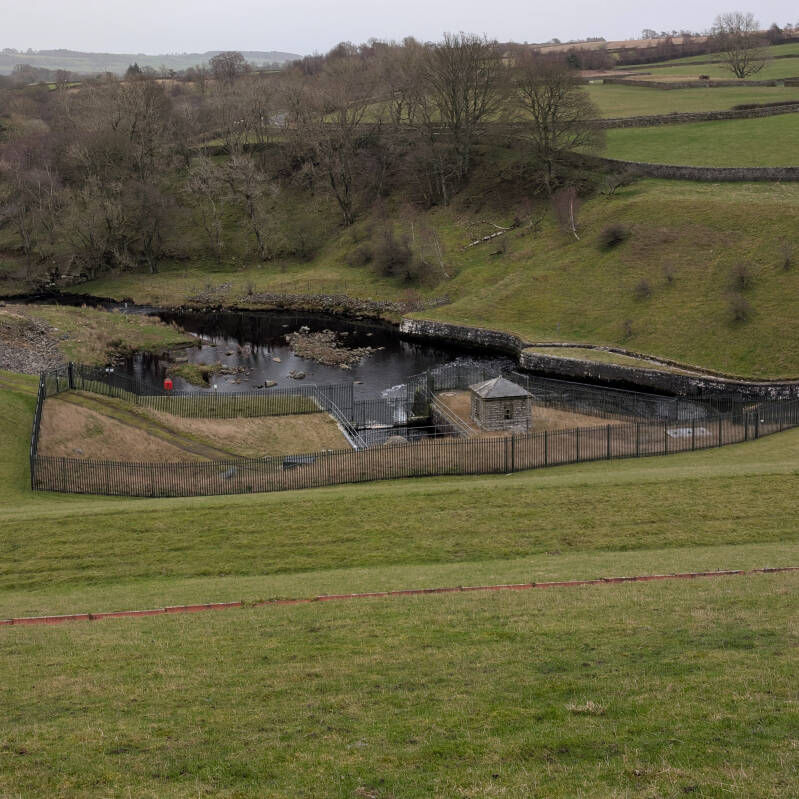
By the middle of the 1890s, men were still working around Hury. The slopes south of the by-wash were being trimmed and soiled, essentially shaping the ground and finishing it with soil around part of the overflow system.
The by-wash was there to help excess water move safely through or around the reservoir works rather than simply building up behind the dam.
At this stage Hury was already holding water. One measurement put its surface at 852.5 feet above Ordnance Datum, sitting 7 feet 6 inches below the overflow.
It is such a precise measurement that it almost freezes Hury at one moment in time. The reservoir existed and was doing its job, but around its edges the construction workforce had still not completely disappeared.
The same period even produced the wonderful newspaper heading “The Blessing of Pure Hury Water.” Hury was no longer being talked about only as an enormous building project. It had become part of the working water supply.
Sixty-five men arrive hoping for a job
Then in 1895 Hury became the centre of a very different story.
A severe winter had delayed work, and Walter Scott wanted more labour once the weather improved. Somewhere between 60 and 100 men were being sought for work connected with the reservoir.
For unemployed men in Darlington, that meant the possibility of a wage.
Men were told to reach North Road Station and take the 7am train to Cotherstone. A charity organisation helped with their fares and even agreed to provide a little money to keep them going until they received their first pay.
There was clearly no shortage of people needing work. Some men were so keen that they had already set out searching for jobs before the organised journey, with some walking in the direction of Cotherstone.
On the Monday morning, 65 men arrived at Hury expecting employment.
Only 12 got a job.
The old newspaper gives the rejected number as 55, which does not quite fit its own arithmetic, but the important part is painfully clear. Most of those men had travelled into Baldersdale believing work was waiting for them and then had to turn around again.
Each rejected man received one shilling. They travelled back through Barnard Castle and were able to continue by train as far as Piercebridge before having to make their way towards Darlington on foot.
It is difficult to find a better example of why the little stories around Hury matter.
To an engineer, Hury was a dam.
To the Water Board, it was infrastructure.
To the men stepping onto that 7am train, it was somewhere they hoped would give them a wage.
Even working out what Hury was worth caused a row
Hury created problems away from the actual building site too.
Once the waterworks existed, somebody had to decide how this enormous new piece of infrastructure should be valued for local rates. That turned into a lively argument of its own.
R. S. Bainbridge and Mr Robinson, C.E. offered to carry out the valuation for £110, including their own expenses. The £110 was their fee, not the value of Hury Reservoir itself.
The debate quickly became about much more than the figure. There were arguments over whether outside valuers were necessary, how the waterworks should be assessed and how land taken into the scheme should be treated.
The newspaper gave the whole exchange the wonderfully restrained heading:
“Valuation of the Waterworks: A Breeze.”
Victorian committee meetings were clearly not always quiet affairs.
While Hury was being finished, Blackton was taking shape
By the time finishing work was taking place around Hury's by-wash, the heavy engineering effort was moving upstream to Blackton.
At Hury, men were shaping and finishing slopes. At Blackton, work included draw-off pipes, a puddle trench, tunnel work, a valve-man's cottage, footbridges and excavation.
The contrast shows how the reservoir-building operation was gradually moving through Baldersdale. Hury had gone from farmland to construction site and then to working reservoir, while further upstream the whole process was starting again.
Today it is easy to look at Hury Reservoir and Blackton Reservoir as two neighbouring bodies of water. During the 1890s they represented different stages of one enormous Victorian engineering story.
What Hury changed in Baldersdale
Hury Reservoir changed much more than the River Balder.
Land that had been farmed for generations became part of a water supply system serving towns many miles away. The old Hury Mill landscape was transformed. Farms were surveyed and valued, new engineering structures appeared and railway infrastructure reached out from Cotherstone towards the works.
For a few years, a completely different Hury existed alongside the older farming community.
There were quarrymen and engineers, timekeepers and inspectors, railway workers and labourers. There were pubs and farms, a Hury Waterworks cricket team and visitors making a Good Friday outing to look at the construction. There were men arriving from Darlington desperate for employment and a 25 year old quarryman whose name survives because he was killed by one of the locomotives working around Hury.
Some of the older landscape survived around the edges, including Hury Mill Bridge. Other places now make more sense through old maps, archive material and what is still left on the ground. We are gradually putting those individual pieces together through Hury Mill, Yew Tree and the lost Hury landscape.
Hury Reservoir today
Hury feels completely at home in Baldersdale now.
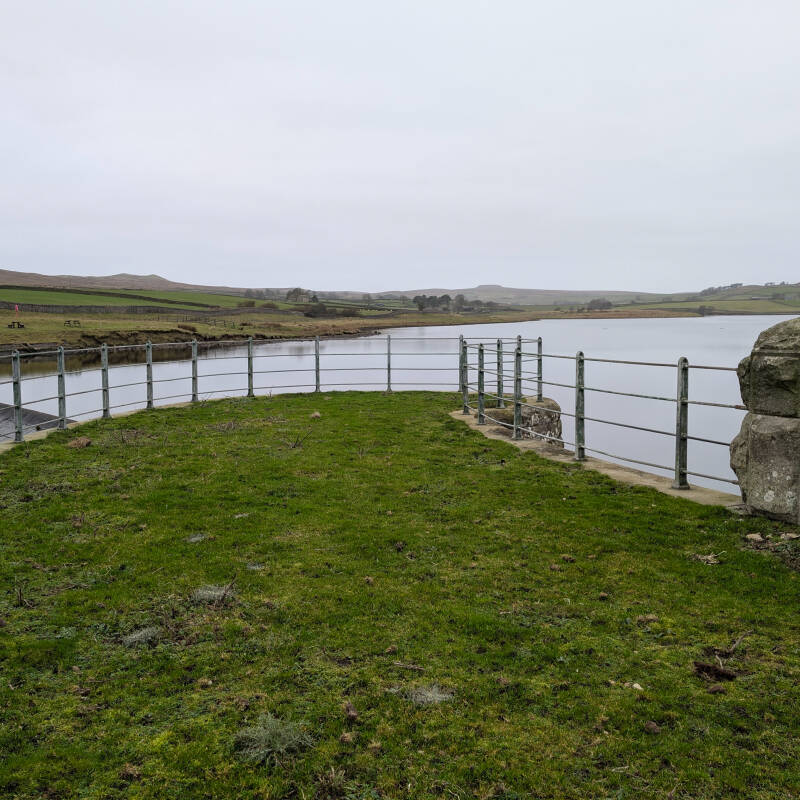
The water, dam and surrounding landscape have been here for so long that it is easy to imagine the reservoir has always looked this way. Yet for a few extraordinary years in the late nineteenth century this was one of the busiest places in the dale.
Rails crossed Cotherstone Moor. Locomotives worked around Hury. Men dug deep into the ground beneath the future dam. Clay was brought in, huge quantities of earth were moved and an embankment slowly rose across the River Balder. Nearby, people still farmed, drank in the local pubs and even played cricket under the name Hury Waterworks.
Then in June 1892 the water finally began to spread across the landscape they had spent years preparing.
The reservoir stayed. The temporary railways, construction workforce and much of the older Hury landscape disappeared.
But enough survives in the places, names and small human stories to put some of that lost Hury back.
For the latest information on the work taking place at the reservoir now, including access and what visitors can expect, see [Hury Reservoir current works]. More places around the valley can be found through [Baldersdale] and [Discover Teesdale].
Explore more around Hury
The history of Hury stretches far beyond the reservoir itself. Start with our main Hury Reservoir guide for the landscape as it is today, then explore Hury Mill, which once stood beside the River Balder, and Hury Mill Bridge, one of the oldest surviving features in this part of Baldersdale.
You can also read about Yew Tree Farm, discover the prehistoric Hury and Blackton Reservoir rock art, and follow the story of the Hury Reservoir drawdown and current improvement works taking place today.
For more reservoir history, head across Teesdale to Cow Green Reservoir, or explore more local stories through our Teesdale History & Heritage hub.
For the wider area, return to Discover Teesdale, or open the Discover Teesdale map and web app to find walks, history, places to eat, accommodation and things happening across the dale.