THE HERMIT OF BARNARD CASTLE
Discover the remarkable story of Frank Shield, the Victorian hermit who lived inside Barnard Castle, guided visitors through the ruins and later made his home at Egglestone Abbey.
Few figures connected to Barnard Castle are remembered quite like Frank Shield, better known locally as the Hermit of Barnard Castle. Part guide, part antiquarian and part local legend, Frank spent years living inside the ruins of the great medieval fortress overlooking the River Tees.
Born in Barnard Castle in 1815 as Francis Shield, he became one of the most unusual and memorable characters in Victorian Teesdale. Visitors travelled not only to see the castle itself, but to meet the strange bearded man who lived within its ancient walls, guided tourists through the ruins and seemed to belong to another age entirely.
His life later carried him from Barnard Castle to Egglestone Abbey, where he again lived among ruins and tried to care for the old stone buildings around him. But Frank’s story is not simply an entertaining local tale. It is also a deeply human story about solitude, identity, history, mental health and belonging.
Today, more than a century after his death, Frank Shield remains one of the most fascinating people ever connected to Barnard Castle and the wider Teesdale landscape.
Quick Facts
Full name: Francis Shield, later widely known as Frank Shields or Frank Shield
Known as: The Hermit of Barnard Castle
Born: 1815, Barnard Castle, County Durham
Died: 1881, Barnard Castle
Parents: William and Isabella Shield
Known for: Living inside Barnard Castle ruins and later at Egglestone Abbey
Connected places: Barnard Castle, Round Tower, Egglestone Abbey, Teesdale Union Workhouse
Occupation recorded in 1851: Recluse, antiquary and artist
Remembered for: Guiding visitors through Barnard Castle and becoming one of Victorian Teesdale’s most unusual local characters

Who Was Frank Shield?
Frank Shield was born in Barnard Castle in 1815 and baptised as Francis Shield. Over time, both Shield and Shields appear in records and retellings, something that was fairly common in the nineteenth century.
He was the son of William and Isabella Shield, a local working family connected with stable and labouring work. Later descriptions refer to Frank as the son of an ostler, someone responsible for looking after horses at coaching inns.
That background matters because it roots Frank firmly within the everyday life of old Barnard Castle. This was a busy market town filled with inns, travellers, horses, traders and river traffic. Long before he became famous as the castle hermit, Frank seems to have grown up surrounded by the movement and noise of a working Teesdale town.
Nothing about his early life suggested he would one day become one of the most recognisable characters in Barnard Castle history.
The Hermit of Barnard Castle
At some point during the 1840s, Frank took up residence inside the ruins of Barnard Castle.
Exactly why he moved there is still unclear. That missing piece of the story is part of what keeps him so intriguing. What is clear is that the castle gradually became much more than a shelter to him. It became his identity.
By 1851, Frank was describing himself in a remarkable way:
“Recluse, antiquary and artist in painting.”
Those few words reveal an enormous amount about how he saw himself.
Frank was not simply hiding from society. He viewed himself as someone connected to history, ruins and the past. An antiquary was someone fascinated by old buildings, historical remains and local history. Living among the ruins of Barnard Castle, Frank gradually became part historian, part storyteller and part living attraction.
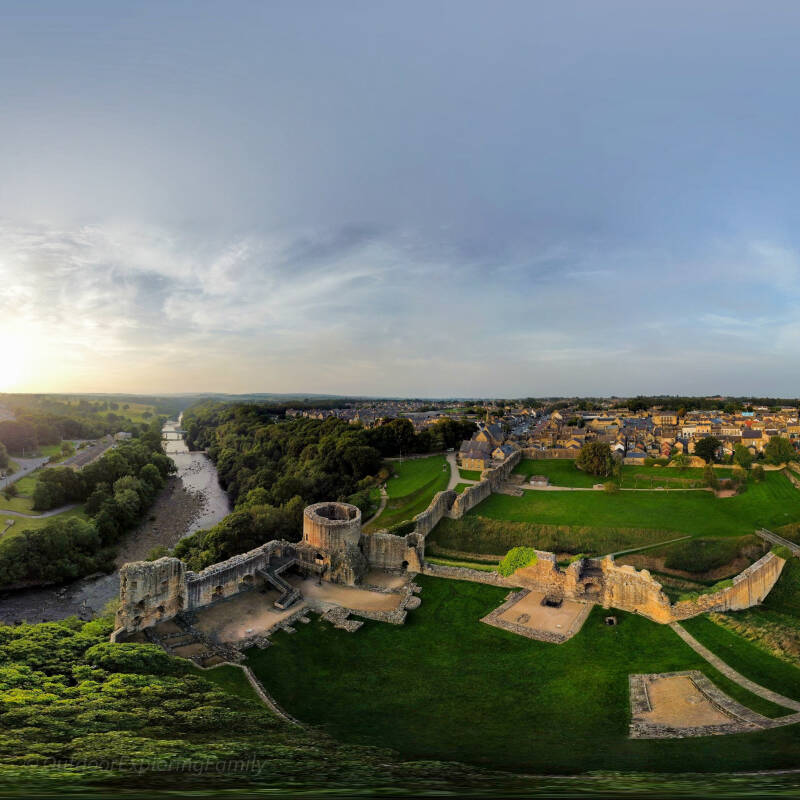
Victorian Britain was becoming increasingly fascinated by ruined castles, abbeys and romantic landscapes. Visitors arriving in Barnard Castle found not only dramatic medieval ruins overlooking the River Tees, but a mysterious man who actually lived inside them.
Frank became part of the experience.
Living Inside the Round Tower
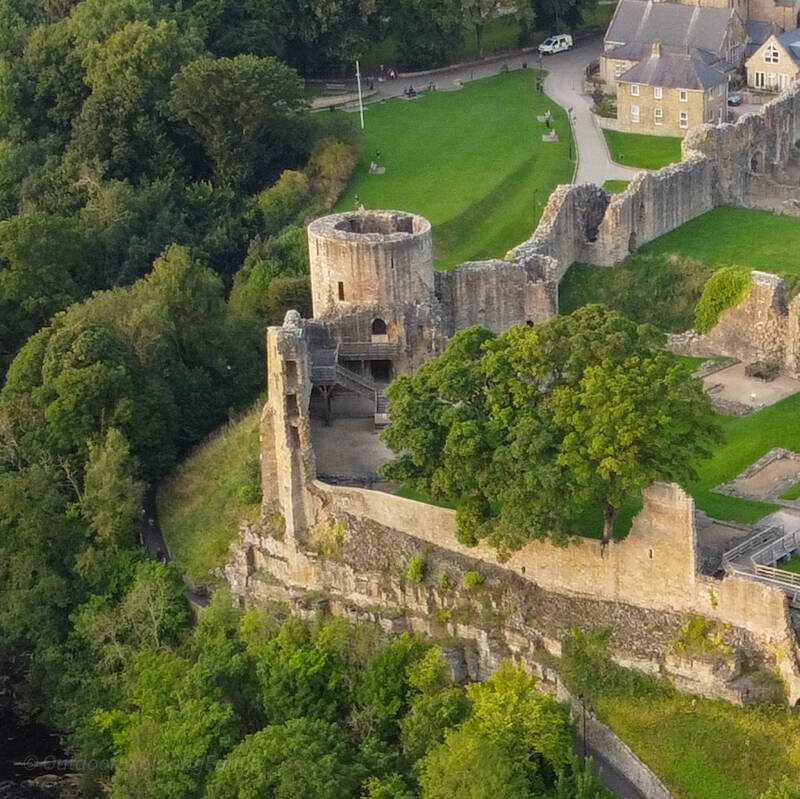
Frank’s home was inside the Round Tower of Barnard Castle, one of the castle’s most recognisable surviving features.
His small room or “cell” became famous in its own right. Frank adapted the space to suit his life among the ruins. Accounts from the time describe stone furniture, decorated walls, a stove and handmade features created inside the tower itself.
This was not simply somewhere to sleep.
Frank had turned part of the castle into a home.
Visitors remembered him as heavily bearded, unusual in appearance and almost monk like. To many tourists, he seemed less like a normal Victorian man and more like part of the medieval ruins themselves.
But Frank was far more than an eccentric curiosity.
He guided visitors through the castle, explained its history and became known for his knowledge of the site. Long before modern visitor centres, interpretation boards and guided tours, Frank Shield was introducing people to Barnard Castle’s history in his own unforgettable way.
In many respects, he became one of the castle’s earliest unofficial heritage guides.
Frank Shield as Guide and Storyteller
Frank spent years living among the stones of Barnard Castle. Over time, he developed a deep understanding of the ruins around him.
He learned the layout, the stories and the atmosphere of the castle. Visitors remembered him speaking confidently about its history and surroundings. He clearly took pride in his unusual role and seems to have seen himself as a guardian of the place.
That is one of the most important parts of Frank’s story.
He was not wealthy.
He was not formally educated.
He held no official title.
Yet he became part of Barnard Castle’s living history through passion, curiosity and sheer presence.
Today, many local history pages focus almost entirely on noble families, castles and famous owners. Frank’s story reminds us that ordinary people shaped the character of these places too.
A Strong Personality
Frank was remembered as humorous, independent and fiercely proud of his unusual way of life.
One surviving description paints a vivid picture of visitors arriving at his cell while he was eating a large meal inside the tower. After welcoming them in, he spoke openly and confidently about life, class and independence.
He joked that he was a better man than many lords and dukes because, unlike them, he knew how to cook his own dinner and survive without servants.
That detail matters because it shows the real Frank Shield beneath the myth.
He was not silent or ghost like.
He was opinionated.
Funny.
Strong minded.
Independent.
He may have lived among ruins, but he clearly carried himself with pride.
Tourism and the Victorian Fascination with Ruins
Frank became famous during a period when ruined castles and abbeys were attracting growing numbers of visitors.
Victorian tourists loved dramatic landscapes, medieval ruins and stories connected to the past. Barnard Castle was becoming an increasingly popular stop for travellers exploring Teesdale, Rokeby and the River Tees.
Frank fitted perfectly into that world.
Visitors climbed the hill to the castle not only to admire the ruins themselves, but also to meet the hermit living inside them. In many ways, Frank became part of the attraction.
His unusual appearance and lifestyle made him memorable, but it was his connection with the castle that truly fascinated people. He blurred the line between history and the present day, almost seeming like a surviving figure from another century.
Eviction from Barnard Castle
Frank’s years at Barnard Castle eventually came to an end in 1859 after an altercation.
The exact details remain unclear, but he was removed from the castle after many years living inside the ruins.
For Frank, this must have been devastating.
The castle had become his home, his identity and his purpose. Losing it appears to have left him increasingly vulnerable during the years that followed.
By 1861, records suggest that his circumstances had become difficult enough for his family to become involved in official maintenance proceedings connected with him.
Behind the colourful public image of the castle hermit was clearly a far more fragile human reality.
Frank Shield and Egglestone Abbey
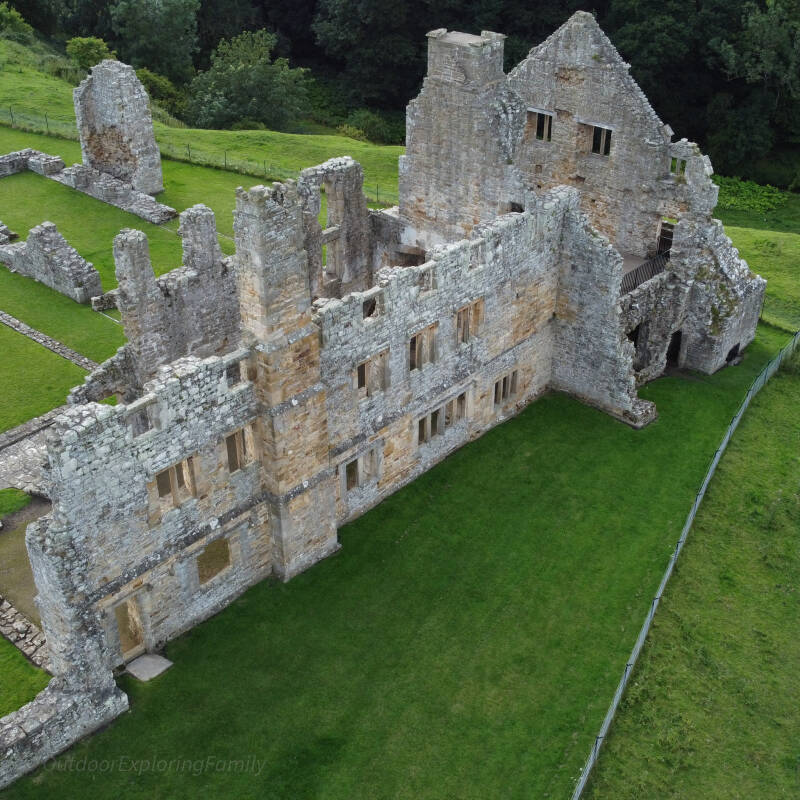
After leaving Barnard Castle, Frank later became connected with Egglestone Abbey.
Once again, he found himself living among old ruins and quiet stone buildings. During the early 1870s, Frank stayed within part of the abbey complex, helped clear sections of the site and continued speaking with visitors about local history.
He appears to have cared deeply about historic places. Much like Barnard Castle, the abbey seems to have become more than simply somewhere to stay. Frank understood these ruins as places filled with memory, history and meaning.
People locally appear to have recognised this too, and Frank was viewed as someone naturally suited to caring for old ruins and historic buildings.
During these later years, however, life appears to have become increasingly difficult for him. Records suggest that Frank was struggling mentally and living in increasingly isolated conditions. Victorian records used harsh language for mental illness, and later documents described him as a “lunatic”, a common term at the time.
In 1874, he was admitted to the workhouse after becoming distressed while living at Egglestone Abbey. Victorian workhouses were institutions designed to house poor, vulnerable and struggling people, although conditions were often harsh.
By 1881, Frank was still living within the Teesdale Union Workhouse in Barnard Castle. The census recorded him as aged 66, born in Barnard Castle, working as a gardener’s labourer and mentally unwell.
Today, this remains one of the strongest surviving official records connected to the Hermit of Barnard Castle and offers a small glimpse into the final years of his life.
The contrast between the well known castle guide of earlier years and the older man he later became feels especially sad looking back today.
Why Frank Shield Still Matters
Most stories connected to castles focus on kings, battles, noble families and powerful landowners. Frank Shield’s story feels very different.
He was not wealthy.
He was not famous in the traditional sense.
He did not build Barnard Castle or own Egglestone Abbey.
Yet somehow, through years spent living among ruins, guiding visitors and caring about old places, he became part of Teesdale’s identity.
That is what makes his story so memorable.
Frank reminds us that history is not only shaped by rulers and great estates. Sometimes it is shaped by unusual local characters, storytellers and people who quietly become part of a place over time.
More than a century after his death, the Hermit of Barnard Castle is still remembered because he left something behind that cannot easily be measured: memory, atmosphere and a lasting connection to Barnard Castle itself.
Visiting Barnard Castle Today
Visitors to Barnard Castle can still see the Round Tower connected with Frank Shield’s story.
Although the room he once decorated no longer survives as he knew it, the tower itself remains one of the most atmospheric parts of the castle.
Standing there today, it is easy to imagine Frank welcoming visitors through the ruins, speaking about the castle’s history and looking out across the River Tees below.
The castle is now professionally protected and interpreted, but Frank belongs to an earlier age of heritage and tourism, when one unusual local man became part of the experience of visiting the ruins.
Visiting Egglestone Abbey Today
Egglestone Abbey remains one of the most peaceful historic sites in Teesdale.
After leaving Barnard Castle, Frank later lived among these abbey ruins and helped care for parts of the old buildings.
The exact room or space he occupied has never been fully confirmed, so it is best not to point visitors toward one specific location. Even so, walking through the quieter parts of the abbey still creates a powerful connection to his later life.
The atmosphere there feels very different from Barnard Castle itself.
Quieter.
Softer.
More isolated.
That setting makes the final chapters of Frank’s story feel especially emotional.
Explore More People and History in Teesdale
Discover the story of John Bowes and the remarkable legacy behind The Bowes Museum and Streatlam Castle.
Learn about Henry Witham and his connection to science, geology and the creation of The Witham in Barnard Castle.
Explore the life of Reverend Monsignor Thomas Witham, the Catholic priest and landowner connected with Lartington Hall and several important Teesdale institutions.
Read about Thomas Breaks, the wealthy wool merchant remembered through the Market Cross in Barnard Castle.
Discover the story of Hannah Hauxwell, one of the most recognisable modern figures connected to the Teesdale landscape and rural life in the North Pennines.
Explore Egglestone Abbey and the peaceful ruins linked with the later years of Frank Shield’s life.
Visit Barnard Castle and discover the Round Tower where the Hermit of Barnard Castle once lived among the ruins.
For more local legends, folklore and true stories from across the dale, read our Teesdale Tales collection.
Historical Research and Sources
This page has been researched using historical newspapers, census and parish records, English Heritage material, workhouse records, local archives and historical publications connected to Barnard Castle and Teesdale.
Where details remain uncertain, they have been described carefully within the page.