Holy Island Visitor Guide
Holy Island, also known as Lindisfarne, sits just off the Northumberland coast and is reached by a proper surfaced road across the tidal sands. Even the journey onto the island feels like part of the adventure. You leave the mainland behind, drive out across the causeway and Holy Island gradually comes into view ahead. A few hours later, that same road can be completely covered by the sea.
That is part of what makes arriving on Holy Island feel so different. You are driving on a normal road, but one that only exists as a route to the island for part of each day.
I love Holy Island because it never feels like somewhere I need to rush. There is plenty to explore, including Lindisfarne Castle, the Priory, the old lime kilns, the harbour and centuries of history, but some of my favourite moments here are much simpler. Sitting beside the sea, wandering through the little village or noticing something in the landscape that makes you stop and look again can be every bit as memorable as the main attractions.
This Holy Island visitor guide is designed to help you understand what to expect before you arrive and plan your day once you are here. It covers the causeway, parking, the village, toilets, places to eat, walks and the main things to do on Holy Island, with links to our more detailed Lindisfarne guides if you want to explore somewhere further.

Explore Holy Island
If you want to see how everything fits together before you arrive, start with our interactive Holy Island map. It shows the visitor car park, toilets and the main places around Lindisfarne, with links to our individual guides.
You can also follow our Holy Island circular walk, discover the island's story in Holy Island History Through Time, or take a look at the island and surrounding coast through our Holy Island webcams.
How to Get to Holy Island
Holy Island lies off the Northumberland coast between Bamburgh and Berwick upon Tweed. Leave the A1 near Beal and follow the signs for Holy Island along the road towards the coast.
The final part of the journey is where a normal drive suddenly becomes something much more memorable. The road drops towards the sands and then heads straight across the tidal causeway to Lindisfarne. I still think crossing it feels like an adventure, no matter how many times we have done it.
The causeway is covered by the sea around high tide, so checking the official safe crossing times is the most important part of planning a visit to Holy Island. Northumberland County Council also advises allowing an additional 30 minutes because weather conditions can affect the published times.
Stay on the surfaced road when driving across. The marked walking route across the sands is different from the road causeway and the published road crossing times do not apply to that route.
Arriving and Parking on Holy Island
Once you are across the causeway, continue along the road towards the village. You pass the Holy Island sign and the main visitor car park at Chare Ends soon appears on your left.
It is a large, open car park and feels more like a big field than a town centre car park. Gravel lanes run through it with the parking spaces alongside, and although it can get busy, we have visited many times and have never struggled to find a space.
Chare Ends is the main visitor car park for Holy Island and the postcode is TD15 2SE. Parking is pay and display, with payment by cash, card or the PayByPhone app.
Once you have parked, you are already very close to the village. Leave the car park, turn left and within a couple of minutes you are walking into the centre of Holy Island.
Lindisfarne Castle is farther away than it can sometimes look in photographs. It is around one mile from the visitor car park, so allow time for the walk as well as whatever you want to explore once you reach it.
You can see Chare Ends Car Park, the public toilets and the main places around the island on our interactive Holy Island map.
Your First Walk Into Holy Island Village
The village is not massive, and that is part of its charm.
From Chare Ends it takes only a couple of minutes to walk in, and once you are there everything feels pleasantly compact. There are independent shops, cafés and a couple of pubs, along with little lanes that are worth wandering without trying to get anywhere in particular.
There are plenty of places to stop for something to eat or drink during the day. One place I highly recommend is Pilgrims Fudge Kitchen and Gelateria. There is a huge choice of flavours and it is honestly some of the best gelato we have tasted.
The village is also a useful centre point for exploring. Lindisfarne Priory and St Mary's Church sit close by, the Heugh rises above the shoreline and the harbour is only a short walk away. From there the landscape begins to open out towards Lindisfarne Castle.
Do You Have to Pay to Visit Holy Island?
There is no charge simply to cross the causeway or explore Holy Island itself.
You will need to pay if you use the main visitor car park, while attractions including Lindisfarne Castle and Lindisfarne Priory have their own admission charges.
There is still a huge amount you can enjoy without paying to enter an attraction. You can wander through the village, explore the harbour, walk beside the sea, visit viewpoints and discover several of the places around the island simply by exploring on foot.
Things to Do on Holy Island
For such a small place, there is a surprising amount to explore on Holy Island. Its history stretches from the early monastery associated with St Aidan and St Cuthbert through medieval religion, military defence, fishing, lifeboats and the industrial remains around Castle Point.
I would not try to race around everything. Pick the places that interest you, leave some room in the day for wandering and allow yourself time simply to enjoy being on the island.
Below are six of the places we think are most worth seeing. Click each image to find out more.
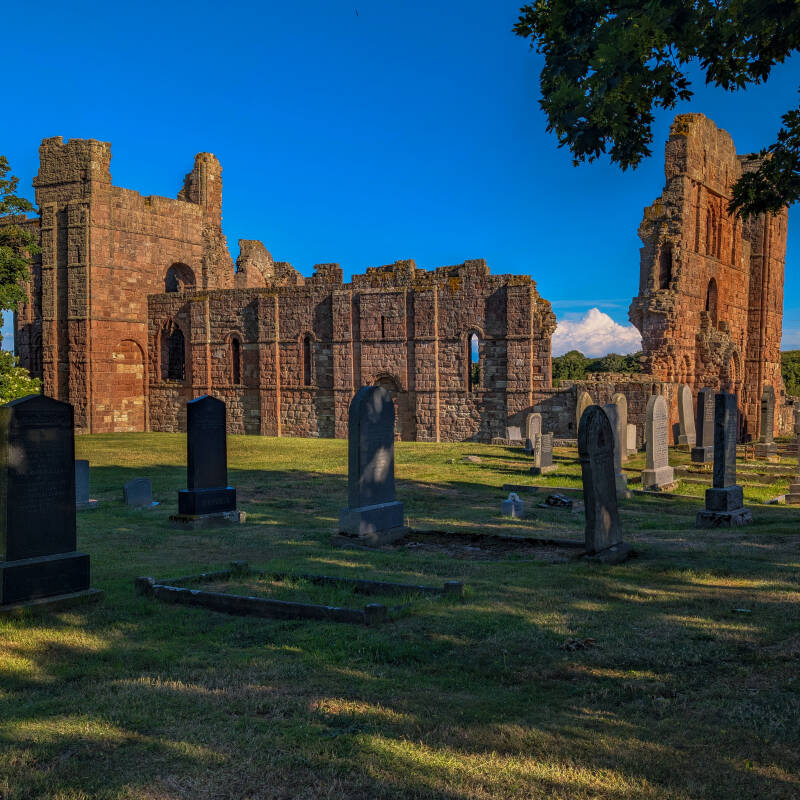
Holy Island History
From the monastery founded in AD 635 and the age of St Aidan and St Cuthbert, through Viking raids, the medieval priory and the centuries that followed, explore the story of Holy Island and how this small tidal island became one of the most important historic places in Britain.
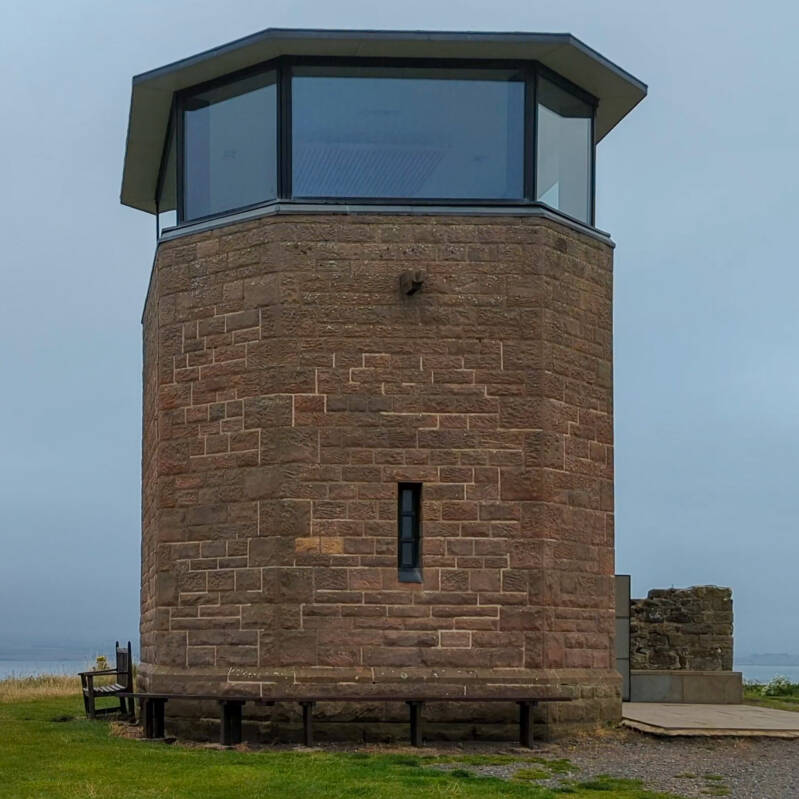
Holy Island Lookout Tower
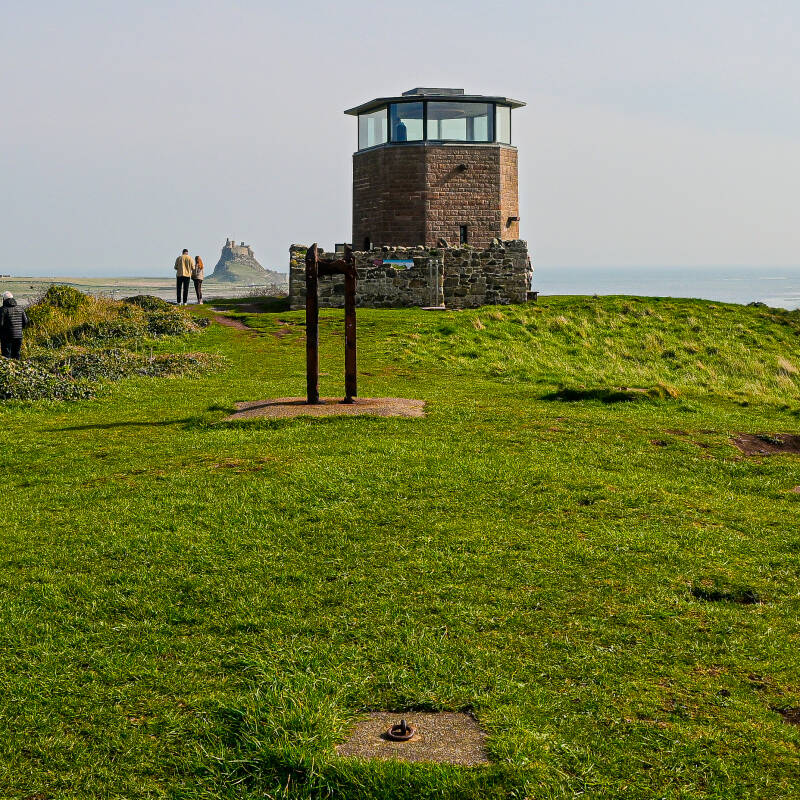
The Lookout Tower on the Heugh is a former coastguard lookout rather than a lighthouse. You can go inside, climb the steps and enjoy wide views across Lindisfarne Priory, the working harbour, Lindisfarne Castle and the surrounding coast.
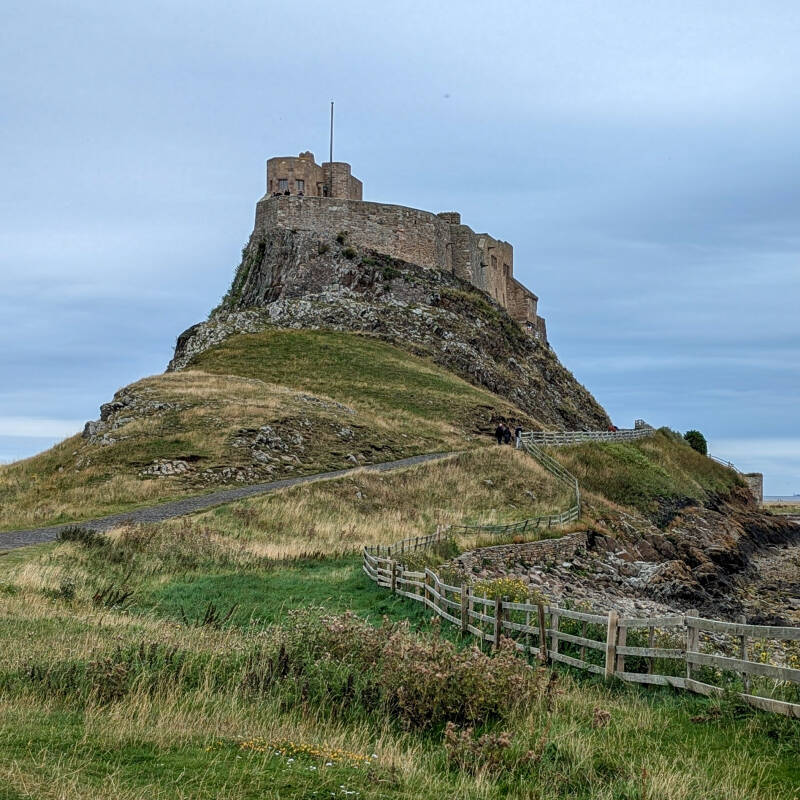
Lindisfarne Castle
Walk out across the island to Lindisfarne Castle, standing high on Beblowe Crag. The building began as a government fort before being transformed into an unusual holiday home for Country Life founder Edward Hudson.
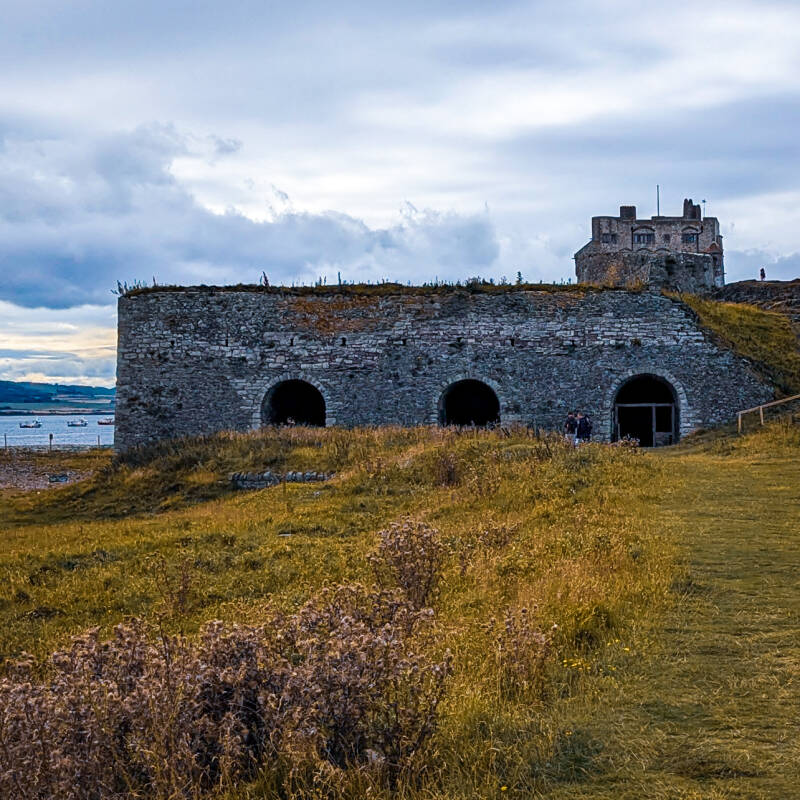
Castle Point Lime Kilns
The large lime kilns beneath the castle reveal a very different side of Holy Island’s history. Built during the 19th century, they were used to burn limestone quarried elsewhere on the island, with the industrial site connected by wagonways.
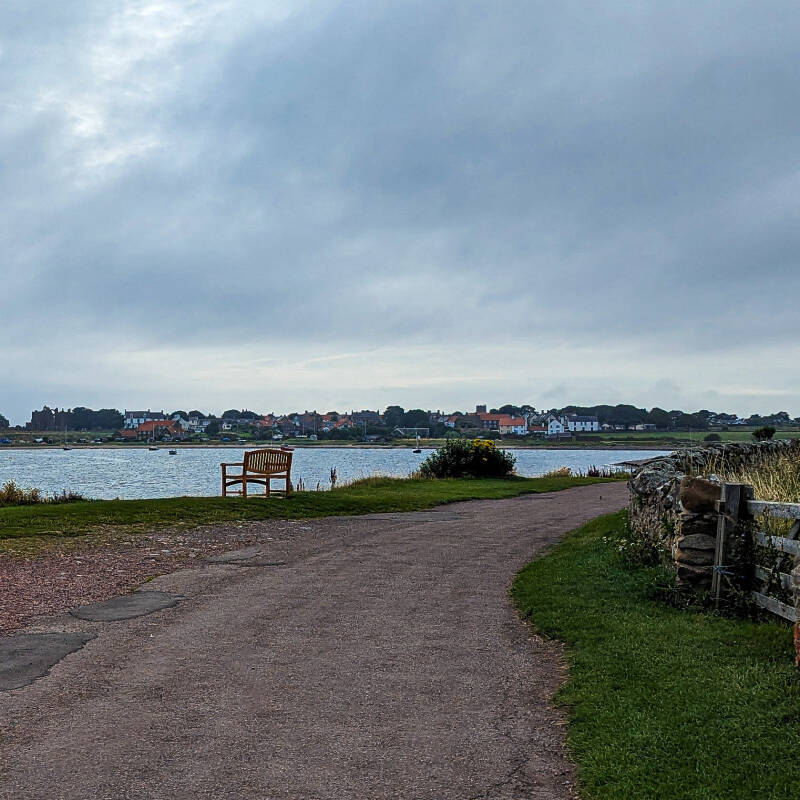
A Short Walk Around Holy Island
One of our favourite ways to explore is on foot, linking the village, priory, coast and castle area in one gentle walk. It gives you time to enjoy the views and discover quieter corners between the island’s better-known sights.
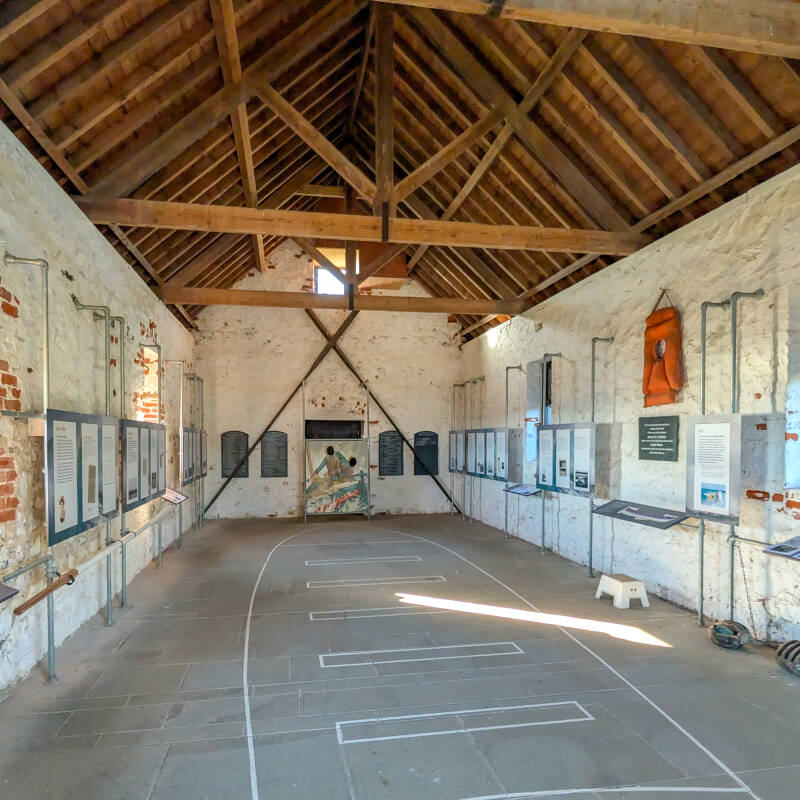
The Old Lifeboat House
The Old Lifeboat House near St Cuthbert’s Beach is now a small museum telling the story of Holy Island’s lifeboats and the islanders who went to sea in dangerous conditions.
How I Like to Spend a Day on Holy Island
I think Holy Island is better when you stop treating it like a list of attractions.
After parking, I like wandering into the village first and letting the day unfold from there. You can explore the Priory and church, climb onto the Heugh, head towards the harbour and then continue out towards the castle and lime kilns.
But I also leave plenty of gaps.
There are seats beside the sea where I could happily sit for ages just looking across the water. Sometimes the best part of the visit is not doing very much at all. Boats move around the harbour, the light changes across the coast and you begin noticing the smaller details that disappear when you are rushing.
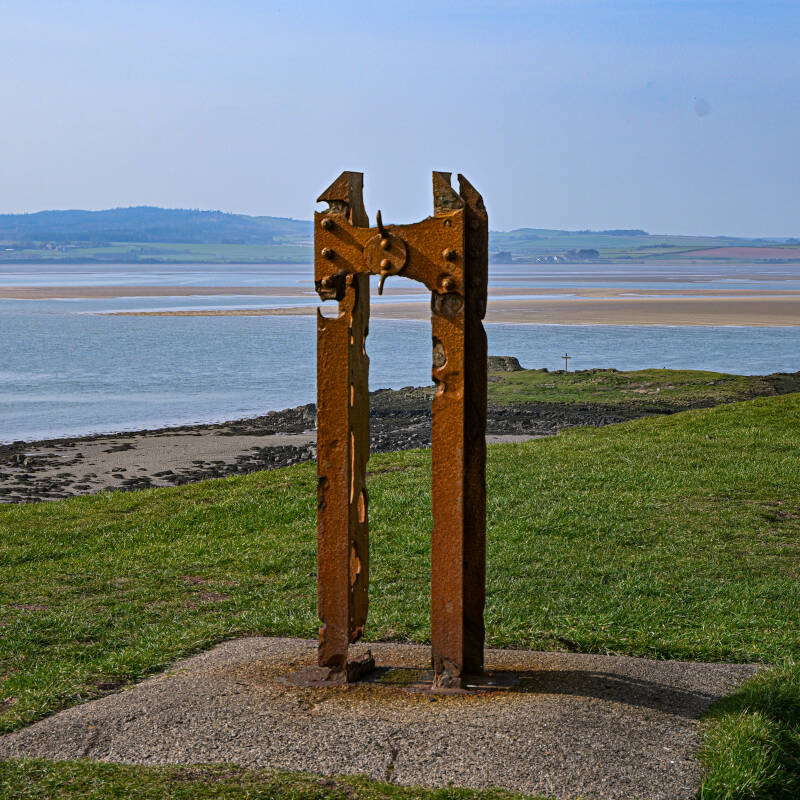
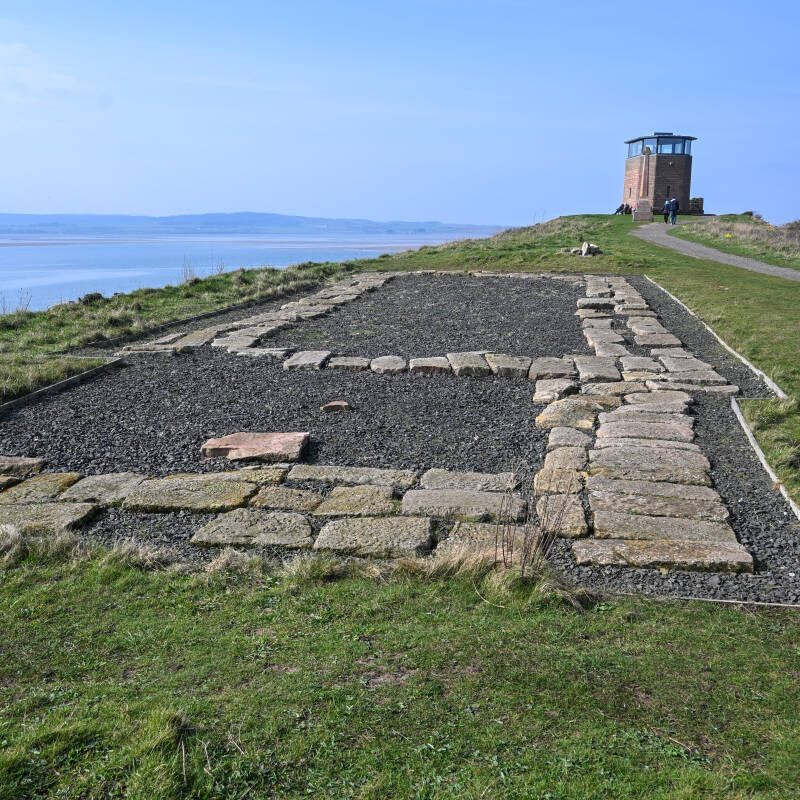
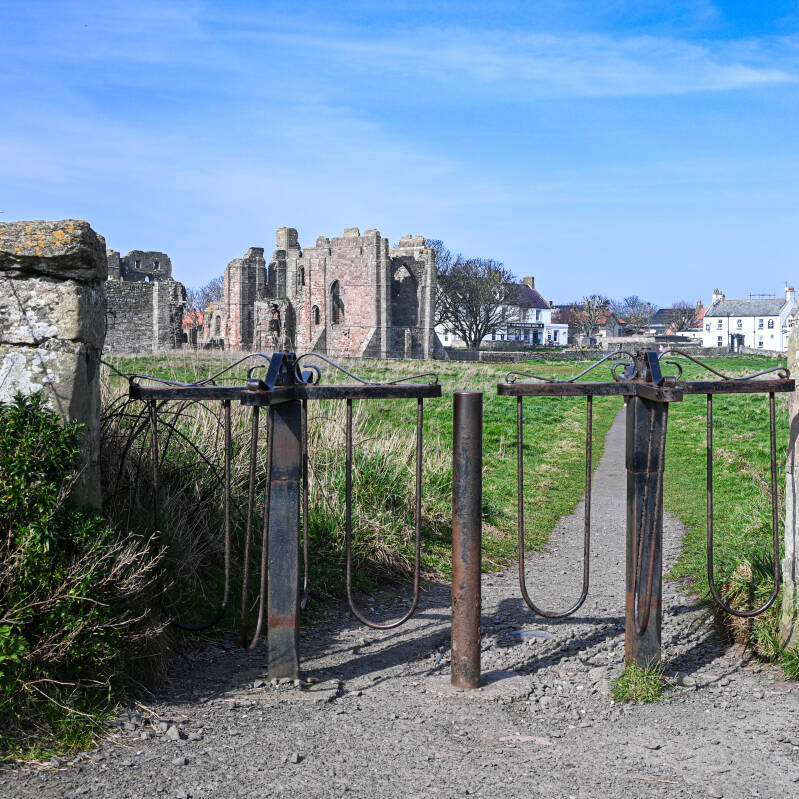
Old stonework, weathered buildings, tracks across the grass and little traces of the people who lived and worked here all make me stop and look.
That is what exploring means to me. It does not always have to be about how far you walk or how many places you manage to fit into the day. Sometimes it is simply slowing down enough to notice where you are.
Toilets on Holy Island
The main public toilets are at Green Lane, close to the village.
There are standard and accessible facilities here, including a fully equipped Changing Places toilet. Green Lane is also where the Blue Badge and coach parking is located.
The toilets are marked clearly on our interactive Holy Island map, which is useful if this is your first visit and you are trying to work out where everything is.
Visiting Holy Island with Children
If you are visiting Holy Island with children, there is plenty to keep the day interesting without having to rush from one attraction to the next. There are castles and ruins to explore, boats around the harbour, the Old Lifeboat House and plenty of coastline, although there can still be quite a bit of walking if you head all the way out towards Lindisfarne Castle.
We always stop for an ice cream at Pilgrims Fudge Kitchen and Gelateria while we are in the village. It has become part of a Holy Island day for us and there are usually far too many flavours to choose from.
One of the simple things we love doing together is heading down to the shoreline in front of the Old Lifeboat House and having a careful look among the stones and shallow pools for hermit crabs. We never take anything away and always leave everything exactly where we found it. It is one of those little parts of the day that costs nothing but can easily become one of the things everyone remembers.
Comfortable footwear is worth bringing because the walking soon adds up, especially if you are exploring the village, Priory, harbour, castle and coastline in the same visit. But there is no need to fit everything in. Holy Island is much nicer when you leave time for the smaller moments in between.
Is Holy Island Dog Friendly?
Our dog often comes with us when we explore Holy Island.
There is plenty of outdoor space, but much of the island is also part of the Lindisfarne National Nature Reserve, so dogs need to be kept under close control around wildlife and livestock.
The National Trust asks for dogs to be kept on short leads in the grounds around Lindisfarne Castle. Assistance dogs can enter the castle itself.
Shops, cafés and attractions have their own policies, so we simply check before going inside.
When the Tide Cuts Holy Island Off
One of my favourite ways to experience Holy Island is to stay while the tide covers the causeway.
We cross well within the official safe times and, when the timings suit us, stay on the island for the full tidal closure. This has to be planned properly because once the road closes you are there until it safely opens again.
But the change in atmosphere is something I love.
Traffic disappears. Many visitors have already headed back to the mainland. The village becomes quieter and the whole island seems to settle.
I find myself wandering more slowly because there is suddenly nowhere I need to be. You can head towards the harbour, sit beside the water or explore the village without constantly thinking about moving on to the next place.
Apart from the tide times, of course. Those are one thing you never stop paying attention to on Holy Island.
Always check the official crossing information, allow plenty of time and make sure everyone with you is happy to remain on the island throughout the closure.
Respecting Holy Island
Holy Island is not simply an attraction. People live and work here all year round and much of the surrounding landscape is internationally important for wildlife.
Park in the designated areas, follow signs, keep dogs under control, take litter away and give working areas around the harbour plenty of space.
It does not take much effort and it helps keep Holy Island the place people come here to experience.
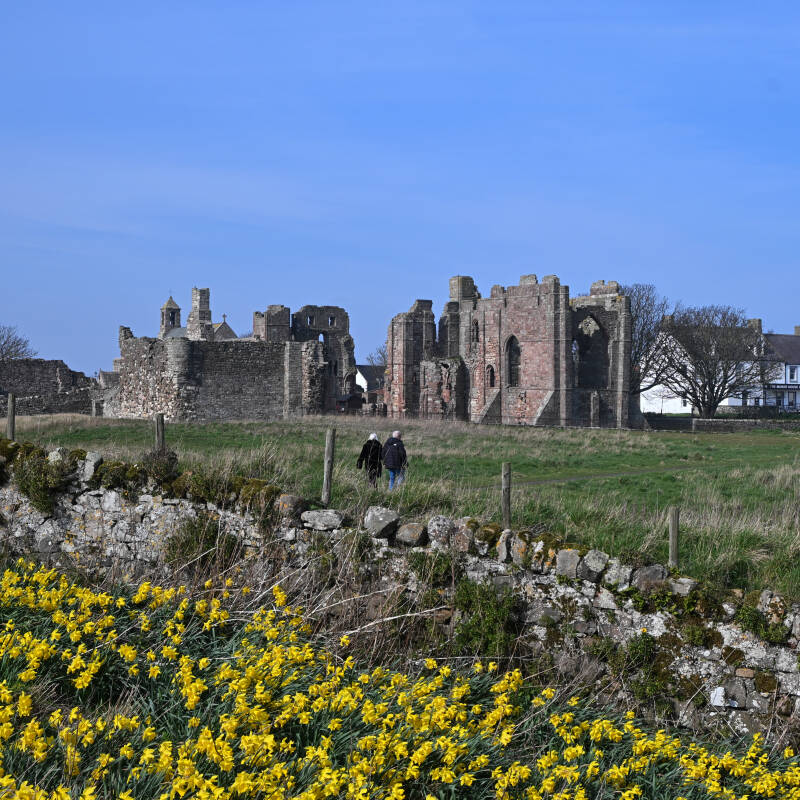
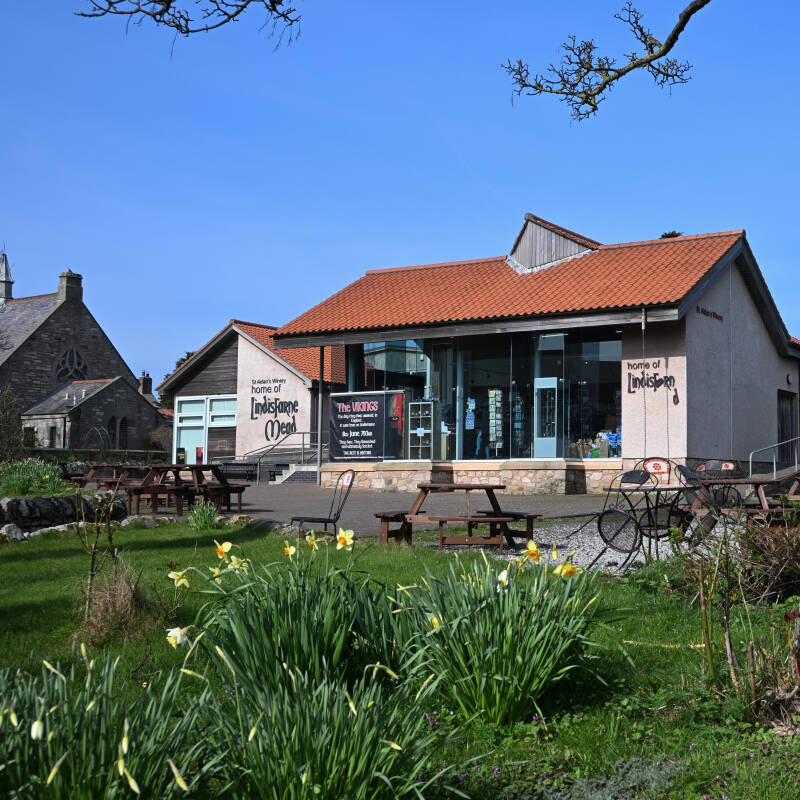
Explore More of Holy Island
There is much more to Holy Island than I could sensibly fit onto one page.
Use our interactive Holy Island map to find your way around, follow our Holy Island circular walk, discover the story of Lindisfarne Castle, step inside the Holy Island Lookout Tower, explore the Castle Point Lime Kilns or read about the island's Old Lifeboat House.
You can also travel through centuries of change with Holy Island History Through Time or check our Holy Island webcams before you visit.
However you explore Lindisfarne, give yourself time. The places you remember most are not always the ones you came intending to see.
If This Is Your Kind of Exploring
Outdoor Exploring Family is for anyone who feels better when they are outdoors. You do not need to walk huge distances or rush from one attraction to the next. Sometimes exploring means following an old track, discovering the history behind a ruined building, standing beside a waterfall or simply finding somewhere quiet to sit and take in the view.
I love places where nature and history come together, especially when there are smaller details to notice along the way. That is what I try to share across this website. Real places I have explored, the stories behind them and the practical information that helps you get out and experience them for yourself.
If that sounds like your kind of exploring, take a look at our Discover Teesdale guide. We have spent years exploring Teesdale and bringing together its walks, waterfalls, reservoirs, historic sites, old mines, villages and quieter corners into one place, with plenty more still to discover.