Holy Island Lime Kilns at Castle Point
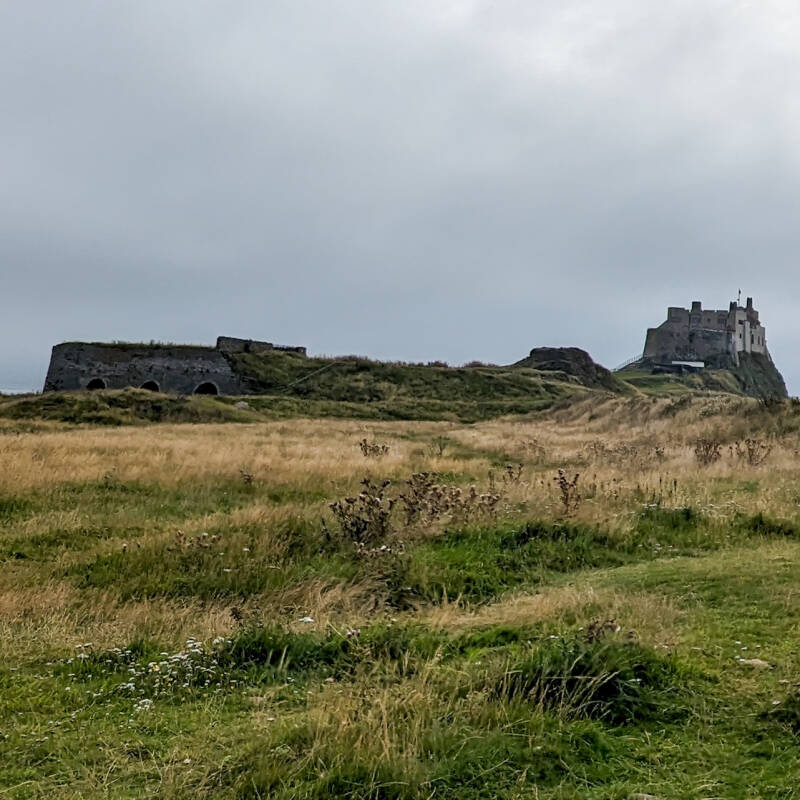
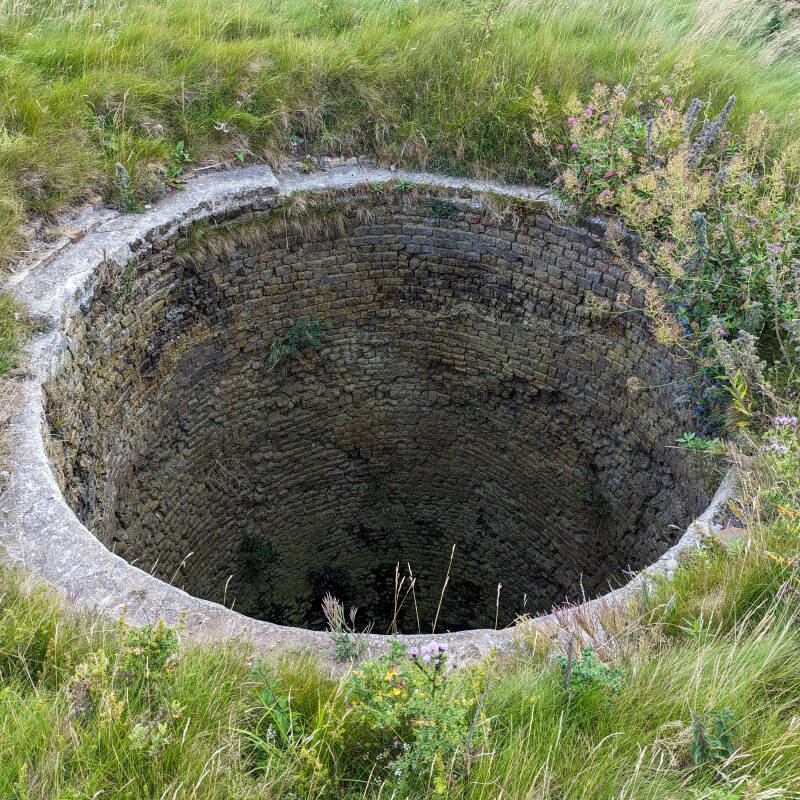
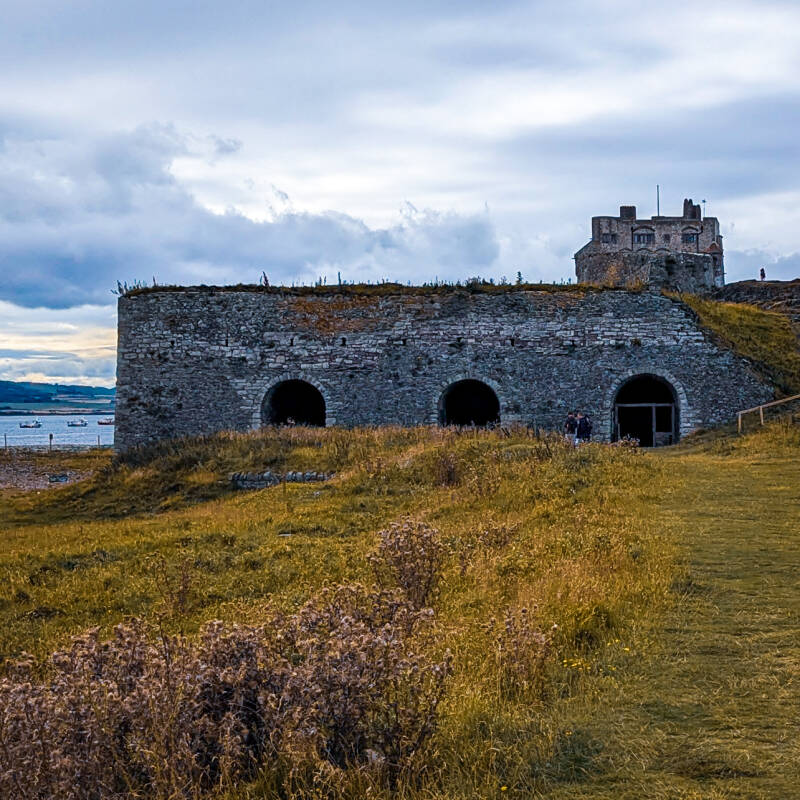
If you are walking out towards Lindisfarne Castle, carry on just a little further and you will find one of the most interesting free places to explore on Holy Island. The Castle Point lime kilns do not look particularly complicated from the outside, but walk through one of the stone arches and you suddenly find yourself inside a network of dark passages running beneath six enormous brick lined kiln pots. You can explore underneath them, walk around the outside and reach the upper level where you can look down into the deep openings where limestone and coal were loaded more than 160 years ago. It is a brilliant place to explore because you do not need to know anything about lime burning before you arrive. Once you understand what the different parts were used for, the whole structure starts to make sense.
Quick Facts
Location: Castle Point, Holy Island, Northumberland
What is it: A large Victorian lime kiln complex built in 1860
Number of kiln pots: Six
Cost: Free to explore
From the main Holy Island car park: Around a 20 minute walk
From Lindisfarne Castle: Around five minutes from the castle site gates
Historic status: Scheduled Monument
Dogs: Allowed in the surrounding grounds on short leads
Good for children: Yes, but keep children close around the deep kiln openings and uneven ground
Time to allow: Around 20 to 30 minutes if you want to explore the site properly
Ground: Grass, stone, slopes and uneven surfaces, with dark passages inside the kilns

Exploring the Holy Island Lime Kilns
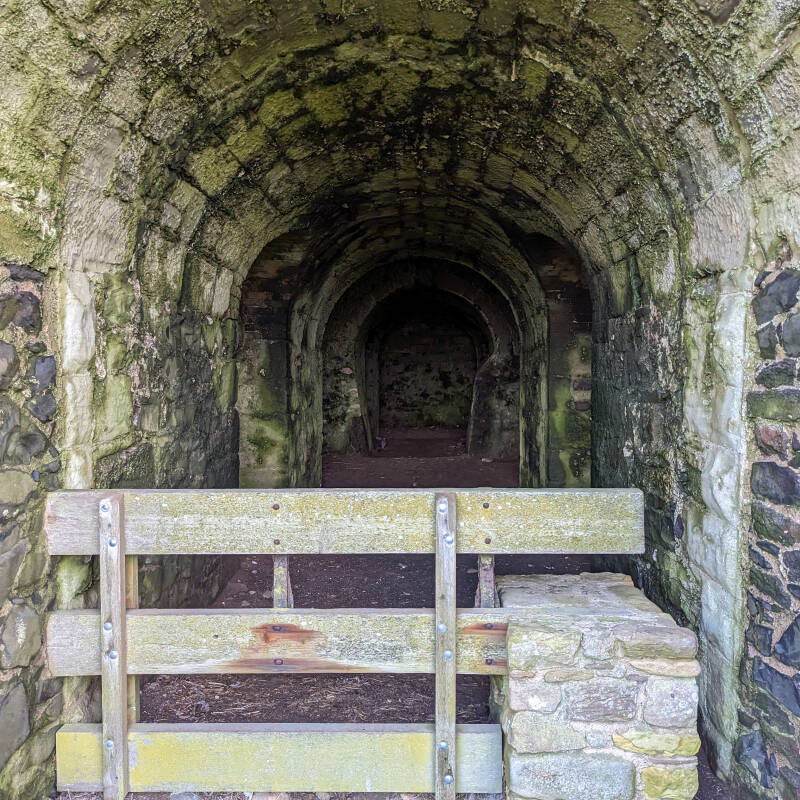
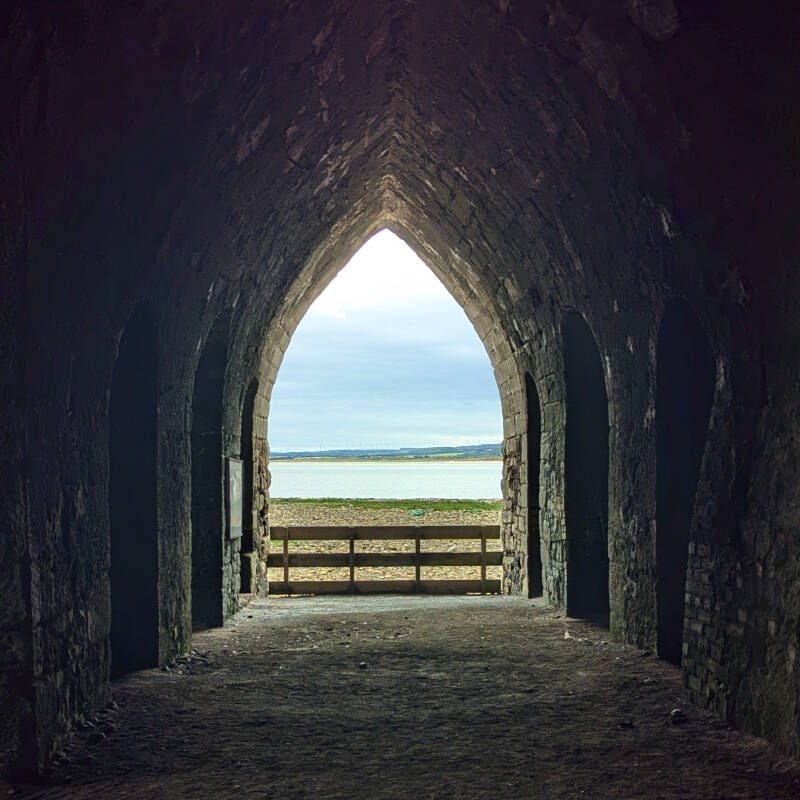
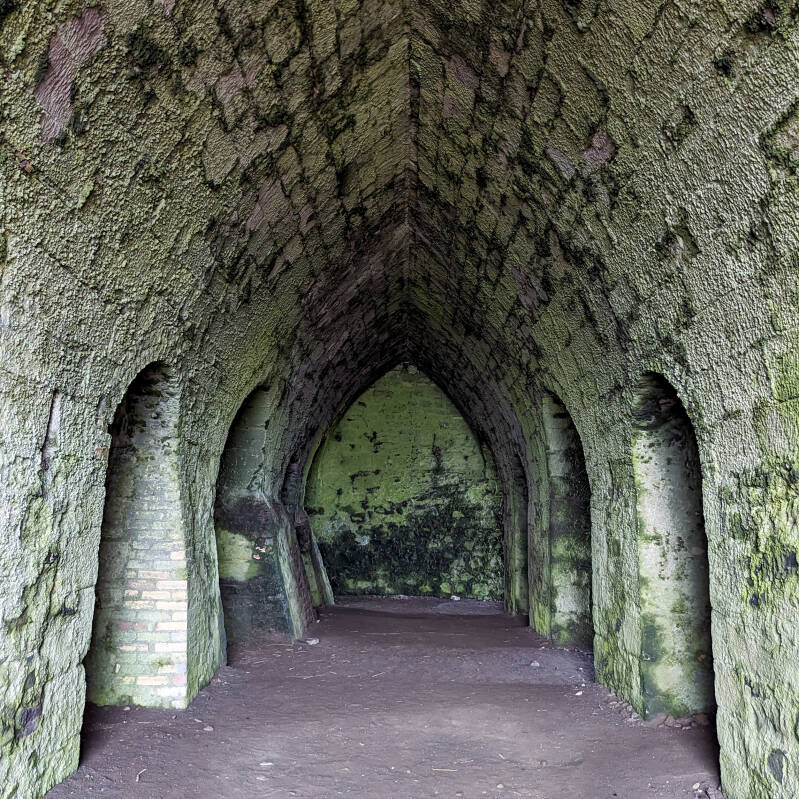
The best part of the Castle Point lime kilns is being able to walk into the lower level and explore the stone passages beneath the structure. From outside, the kilns can look like one large block of stonework, but once you step through the arches you begin to see how much is hidden inside. The passages are cool and noticeably darker than the open coastline outside, and the thick walls give the whole place a completely different feel.
Along the inside are smaller openings leading towards the bases of the six kiln pots where the limestone was burned. Historic England records a tunnel through the structure giving access to the internal drawing arches, with five external entrances around the building. The whole kiln battery is roughly 21 metres by 20 metres, which gives you some idea of the scale of the operation that once took place here.
The upper level is now fenced off, so you cannot walk freely around the tops of the kiln pots. You can still see parts of the structure from outside and get a good sense of how the kilns were arranged, but the main part visitors can properly explore is the lower network of passages and arches. This is where the finished lime was drawn from the kilns after burning, so you are still walking through one of the most important working parts of the site.
It is worth taking your time inside rather than simply walking straight through. Look at the shape of the arches, the depth of the stonework and the openings leading into the bases of the kilns. Once you understand that limestone and coal went in from above and the burned lime was removed down here, the whole structure becomes much easier to picture as a working Victorian industrial site.
The ground can be uneven and some of the passages are dark, so take a little care, especially with children. The fencing around the upper level is there for a reason, as the kiln pots are very deep.
What Were the Holy Island Lime Kilns Used For?
The Castle Point kilns were built to turn limestone into lime. In simple terms, limestone and coal were loaded into the large pots from above in layers. The kilns were then fired and kept extremely hot. Heating the limestone changed it into quicklime, which could be removed through the drawing areas at the bottom of the kilns. Water could then be added to quicklime to make slaked lime.
Lime was an incredibly useful material. It could be used for mortar, plaster and whitewash, while agricultural lime was spread on acidic land to improve the soil. This was not a strange little industry unique to Holy Island. Lime burning was an important part of farming, building and industry across Britain, but what makes Castle Point special is how much of the working site survives in one place. Historic England considers the kilns to be of national importance and describes the surviving structure as largely intact and in an excellent state of preservation.
One thing that is important to get right is their age. These particular kilns are Victorian. Holy Island has a much longer history of quarrying and lime working, but the Castle Point structure visitors explore today was built in 1860. It was not built by the medieval monks and it was not used to construct Lindisfarne Priory.
A Victorian Workplace Beside Lindisfarne Castle
It is easy to stand here today, with grass covering much of the surrounding ground and Lindisfarne Castle towering above, and forget that this was once a busy workplace. The Castle Point operation was developed by William Nicoll, a lime merchant from Dundee. Permission for the new works was given on 24 March 1860, and by the following year's census there were 35 men employed at the kilns.
Those men included quarrymen, lime burners, labourers and carters. Many had travelled to Holy Island for work, including men from Scotland and Ireland. Some of the workers who came to the island eventually stayed and became part of the local community. The lime industry therefore left behind more than kilns and old trackways. For a period it brought new people and families into a small island community and provided work on a scale that is difficult to imagine when you visit Castle Point today.
It was hard work as well. Working around burning kilns, quicklime and clouds of dust could be dangerous. Lime workers suffered caustic burns, while breathing the dust could damage the lungs and, in severe cases, eyesight. When you walk through the cool stone passages today, it is worth remembering that these were working spaces beneath kilns burning at tremendous heat. The quiet tunnels visitors explore now would once have been part of a noisy, dirty and demanding industrial site.
From the Quarry to the Kilns
The lime kilns make even more sense when you realise that the stone building was only one part of a much bigger operation. Limestone was quarried on the northern side of Holy Island and transported across the island to Castle Point using wagonways. Coal also had to be brought to the kilns, while the finished lime then needed to be taken away to ships waiting near the harbour.
Parts of those old transport routes can still be traced in the landscape around the castle. National Trust archaeological records describe separate wagonways serving the site, including a longer route bringing limestone from the northern quarries and another connecting the kilns with the jetties west of Lindisfarne Castle. Earthworks, retaining walls and other pieces of the old system survive around Castle Field.
Most of the hauling was done by ponies, but steam power was also used for a period. This means that the peaceful grassland around Lindisfarne Castle once had wagons moving backwards and forwards carrying stone, coal and finished lime. It is a completely different picture of Holy Island from the one most of us have in our heads today.
From Holy Island to Dundee
Castle Point was chosen for practical reasons. It was outside the island's enclosed farmland, close to the harbour and could be connected to the limestone quarry on the northern side of the island. Once the lime had been produced, it could be moved down towards the jetties and loaded onto ships. Much of it was exported north to Dundee, linking this little corner of Holy Island with a much wider Victorian trading network.
That is why it is worth looking beyond the main stone building while you are here. The castle, grassy earthworks, old wagonway routes, coastline and remains around the jetties were once parts of the same working landscape. Limestone travelled across the island, coal arrived for the kilns, lime was burned at Castle Point and the finished product headed back towards the ships.
Once you know that, the strange position of such a large industrial structure beside Lindisfarne Castle suddenly feels much less strange.
The End of Holy Island's Lime Industry
Although the kilns look substantial enough to have supported generations of industry, the main commercial operation declined surprisingly quickly. William Nicoll's business was already struggling by around 1870, and equipment began to be removed from Holy Island the following year. By 1884 the remaining plant had been taken away and the larger commercial lime operation had effectively come to an end.
That was not quite the end of the kilns themselves. They were occasionally fired again for local agricultural use, and the last firing is thought to have taken place around 1900, when an island farmer used the kilns to produce lime for the land. After that the fires went out for good, leaving behind the stone structure, tunnels and old transport earthworks that visitors can still explore today.
The Castle Point lime kilns are now protected as a Scheduled Monument. Their importance is not just in the survival of the six kiln pots themselves, but in the wider remains around them. Enough of the old wagonway landscape survives to help show how limestone was moved across Holy Island to the kilns and how the finished lime was then taken towards the coast and shipped away.
Where Are the Holy Island Lime Kilns?
The lime kilns sit at Castle Point, just beyond Lindisfarne Castle on the south eastern side of Holy Island. If you are starting from the main visitor car park, follow the normal walking route through or around the village and out towards the harbour and Lindisfarne Castle. The National Trust puts the kilns at around a 20 minute walk from the car park and roughly five minutes from the gates of the castle site.
You do not need to pay to enter Lindisfarne Castle to explore the lime kilns. The kilns themselves are free to enter, so they are well worth adding even if you are simply walking out towards Castle Point rather than visiting the castle interior.
The walk out is part of the experience too. You pass the harbour, get increasingly good views of the castle and then reach a much quieter, more open part of the island. If you have time, do not rush straight back once you have seen the kilns. The headland around the castle is a lovely area to wander, with wide coastal views and plenty of space to explore.
Visiting the Lime Kilns With Children and Dogs
We think the kilns are particularly interesting with children because there is something physical to explore. Instead of asking them to stand and read a board, they can walk through the passages, look into the arches and then see the enormous kiln pots from above. Once you explain that stone and coal went in at the top and the burned lime was taken out below, the whole place becomes much easier to understand.
There are obvious hazards, though. The upper kiln openings are deep, there are changes in level and some of the ground is uneven. The lower passages can also be dark. Keep younger children close and take your time rather than treating the structure as somewhere to race around.
Dogs are allowed in the surrounding National Trust grounds but should be kept on a short lead. There can be livestock and ground nesting birds in the fields and around the lime kilns, so this is one of the areas where keeping dogs under close control really matters.
Anyone who finds uneven ground, slopes or dark enclosed spaces difficult may prefer to enjoy the main structure from outside rather than trying to explore every level. Conditions can also change with weather, so sturdy footwear is sensible if the ground is wet.
Are the Holy Island Lime Kilns Worth Visiting?
Definitely. They are close enough to Lindisfarne Castle that there is very little reason not to carry on and have a look, yet they show a completely different side of Holy Island. The priory, castle and religious history understandably receive most of the attention, but Castle Point tells the story of an island that was also a Victorian workplace, connected by wagonways and ships to industry far beyond its shores.
What we enjoy most is that you do not have to imagine everything from a description. You can stand above the six kiln pots where limestone and coal were loaded, walk through the passages underneath them and look across the surrounding landscape where wagons once moved between quarry, kilns and ships. It turns what could easily be a forgotten piece of industrial history into something you can actually explore.
If you are already making the walk out to Lindisfarne Castle, give yourself another half an hour and have a proper look around the Castle Point lime kilns. They are free, fascinating to explore and one of the best places on Holy Island for seeing a side of its history that is very easy to miss.
Before You Visit Holy Island
Remember that Holy Island is reached by a tidal causeway and the road is covered by the sea twice each day. Always check the official Holy Island safe crossing times before travelling and leave enough time to return safely. Northumberland County Council advises allowing an additional 30 minutes because weather conditions can affect the published times.
Explore More of Holy Island
The lime kilns are just one part of a much bigger Holy Island story. Our complete Holy Island visitor guide will help you plan the rest of your time on the island, while nearby you can explore Lindisfarne Castle, Holy Island Lookout Tower and the Old Lifeboat House. You can also follow our Holy Island circular walk, delve into the Holy Island history timeline, find everything on our interactive Holy Island map, or check the island before travelling with our live Holy Island webcams.