Deepdale Viaduct, Barnard Castle
Walk through Deepdale Woods today and it is hard to picture the huge iron viaduct that once crossed this quiet valley. The trees, beck and woodland paths now make the place feel peaceful, but for more than a century this was part of one of the most dramatic railway routes in northern England.
Deepdale Viaduct carried the Stainmore railway between Barnard Castle and Bowes, crossing high above Deepdale Beck on eleven iron spans. Engines climbing west out of Barnard Castle worked hard through this valley, and their sound would once have echoed through the woods and across the fields towards Lartington.
The viaduct has gone, but the landscape still holds its story. The old railway line, the surviving stonework and the nearby signal box all help piece together what once stood here.
Quick Facts
Location: Deepdale Woods
Built: 1857–1861
Designer: Thomas Bouch
Ironwork: Gilkes & Co., Middlesbrough
Masonry: D. P. Appleby, Barnard Castle
Resident Engineer: A. L. Nimmo
Foundation Stone: Laid 8 October 1857 by Rev. T. Witham of Lartington Hall
Length: 740 feet (11 spans)
Height: 161 feet above Deepdale Beck
Opened: 7 August 1861
Passenger services began: 8 August 1861
Final freight closure: 1962
Dismantled: 1963

History & Construction
The story of Deepdale Viaduct begins in the autumn of 1857. On 8 October, the Rev T Witham of Lartington Hall laid the foundation stone. The design came from Thomas Bouch, who was then a respected engineer working across the north. The ironwork was made by Gilkes and Co of Middlesbrough, and the masonry was built by D. P. Appleby, a Barnard Castle contractor whose name appears in several local railway projects.
By December 1858, the last girder had been lifted into place. A shareholders’ report early the next year said the viaduct was finished with the exception of painting, showing how quickly the structure rose above the beck. The first locomotive crossed in October 1860 during a directors inspection run, and the line officially opened on 7 August 1861.
Victorian writers described the viaduct as looking like elegant basket work from the hillside above. It stood 161 feet above Deepdale Beck and stretched 740 feet across the valley on eleven iron spans. Each pier was made from six hollow cast iron columns, tapering as they rose. The whole structure sat on a gentle curve, which made it even more striking when seen from the fields above Lartington.

Life on the Line
For more than a century, Deepdale Viaduct was part of everyday life in Barnard Castle and Lartington. It carried the Stainmore railway across the valley from the day the line opened in 1861 until the final years of freight traffic in the early nineteen sixties. Walkers on the old paths through Deepdale Woods would have passed beneath it, while the iron structure could be seen from the fields above Lartington long before the surrounding trees grew tall enough to hide it.
The climb out of Barnard Castle towards Bowes was steep, and locomotives worked hard on this section of line. As trains gained height through the valley, their exhaust would have echoed through the wooded slopes of Deepdale. On still days, the sound of an engine climbing towards Stainmore would have carried far beyond the track.
The curve of the viaduct made Deepdale one of the more distinctive crossings on the route. Trains left the cutting and crossed briefly into open air, high above Deepdale Beck, before continuing along the line between Lartington and Bowes. For passengers, guards and railway crews, it must have been one of those moments on the journey where the landscape suddenly opened around them.
For local people, the railway was a practical link across the Pennines. Before regular bus services, it offered a route to Kirkby Stephen market and to communities further west. Deepdale Viaduct was simply part of that journey, a place where the trees opened, the valley dropped away, and the train continued across the ironwork.
Freight formed the backbone of the line. Coal, coke, iron ore and limestone crossed the Stainmore route for decades, and Deepdale Viaduct carried these heavy trains throughout its working life. Weight restrictions on major structures, including Deepdale and Belah, shaped how trains were marshalled and loaded, and influenced the running of freight services until closure.
Deepdale Viaduct was more than an engineering structure. It was part of a working landscape shaped by sound, movement and industry. Even though the ironwork has gone, the line it carried is still traced in the embankments and cuttings that remain in Deepdale Woods today.
Later Years and Closure
By the nineteen twenties, Deepdale Viaduct needed substantial maintenance. A record from 1925 states that repainting the viaduct required twenty-one tons of paint, with ten men working on the job for three months.
The railway declined gradually rather than closing all at once. Local passenger services between Kirkby Stephen and Tebay were withdrawn on 1 December 1952, Local passenger services between Kirkby Stephen and Tebay were withdrawn on 1 December 1952, although some through passenger trains continued to use that section on summer Saturdays until 1961.
Freight traffic across Stainmore was later diverted away from the route, and in December 1961 the Minister of Transport authorised its closure. The Stainmore Limited, a special farewell railtour organised by the Railway Correspondence and Travel Society, crossed the line on 20 January 1962.
Scheduled passenger services between Barnard Castle, Kirkby Stephen and Penrith were withdrawn on 22 January 1962. The route had also operated under weight restrictions on major structures including Deepdale and Belah Viaducts during its later years.
Deepdale Viaduct did not survive for long after the railway closed. It was dismantled in 1963, leaving the stone foundations and abutments that can still be found in Deepdale today.
Dismantling in 1963
In 1963, Deepdale Viaduct was dismantled. The ironwork was removed piece by piece, leaving behind the stone foundations and the empty space across the valley.
It is strange to think that a structure which had dominated Deepdale for more than a hundred years could disappear so completely. Once the iron spans were gone, the trees, beck and woodland paths slowly began to take back the view.
What Remains Today
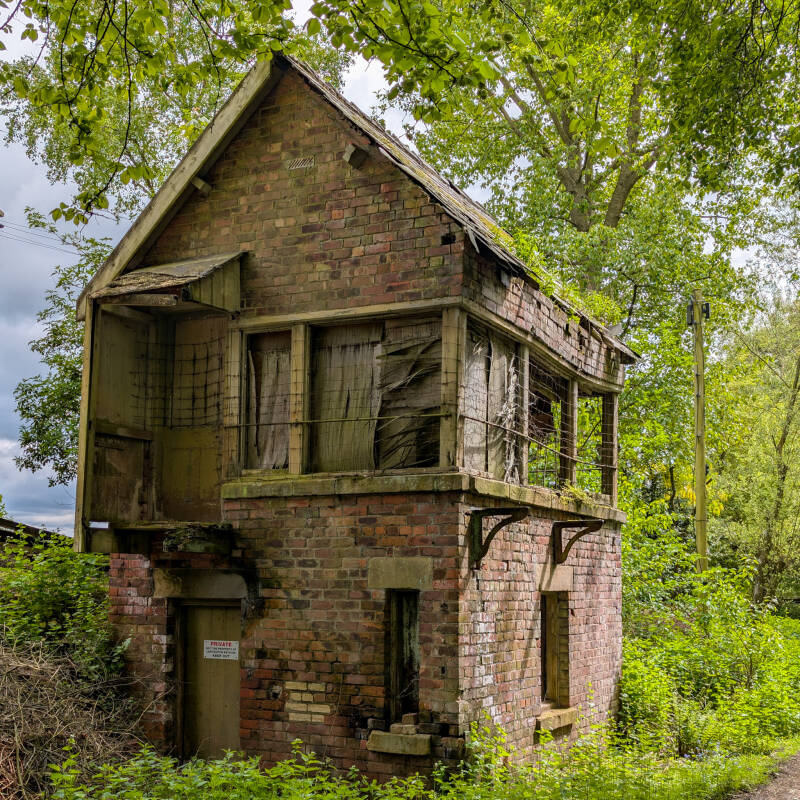
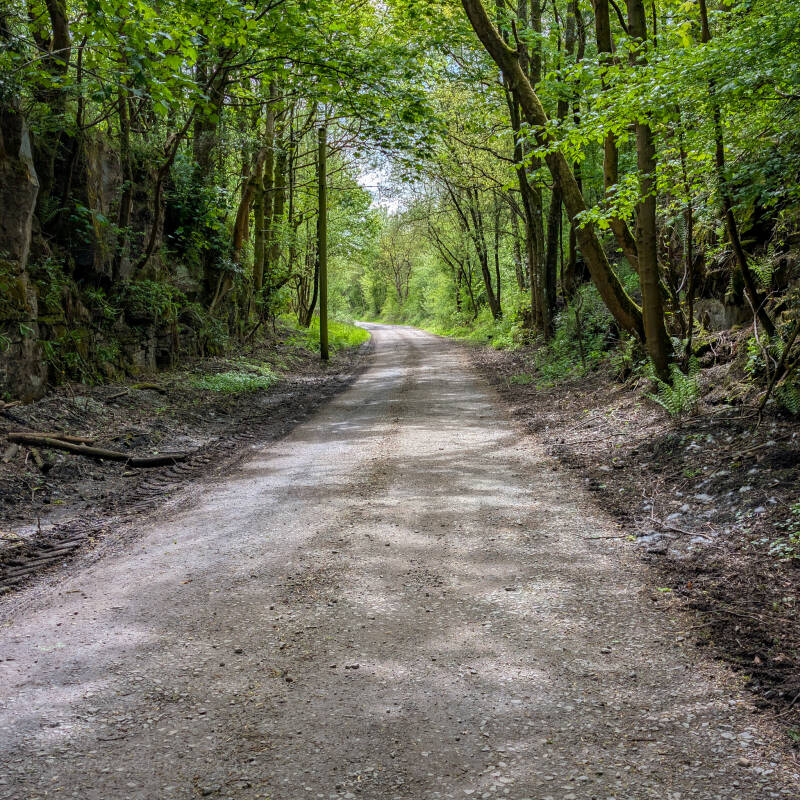
Walk through Deepdale Woods today and the railway is still there if you know where to look. The old trackbed now forms a quiet woodland route leading from Lartington towards the valley, following the same line that once carried trains to the viaduct. The Lartington West signal box still stands beside it, weathered and silent, a reminder of the men who worked the points and watched the trains pass through.
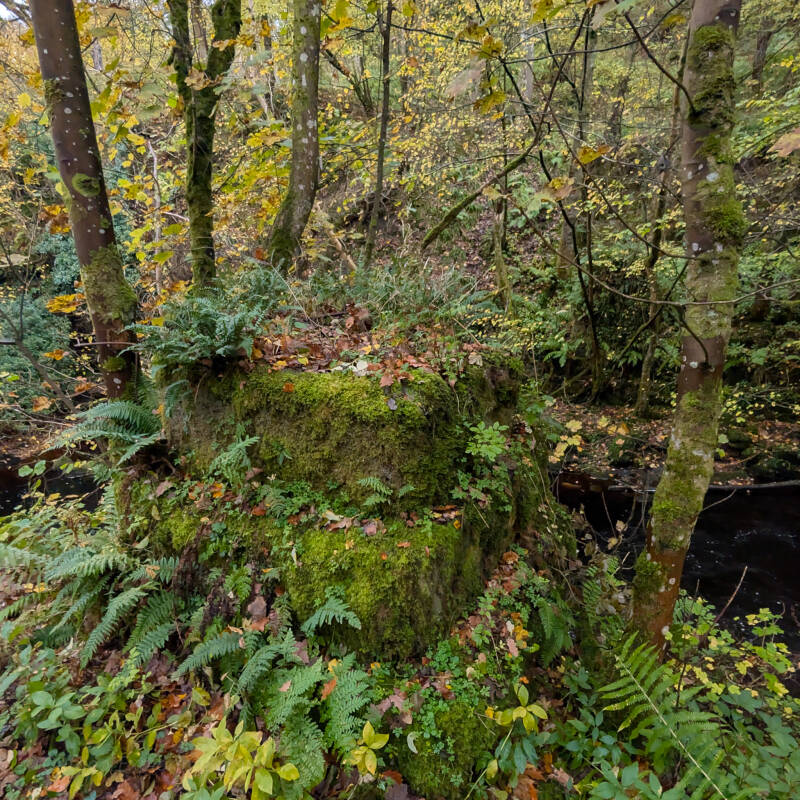
Down in the woods, the stone foundations of the viaduct remain among the trees. Moss and ferns have taken hold, and the blocks that once supported the ironwork are slowly being reclaimed by nature. The gap where the viaduct stood is wide enough that you can still sense its scale.
Stand there for a moment and imagine the sound of an engine climbing the gradient, the ironwork stretching across the valley, and Deepdale Beck running far below.
The viaduct has gone, but its story has not. It lives in the woods, in the surviving stonework, and in the quiet presence of the signal box that still watches over the old line.
Explore More in Deepdale Woods
Deepdale Viaduct is part of our wider Bridges of Teesdale collection, where we explore the historic crossings, railway structures and river landmarks that helped shape the valley.
Deepdale Viaduct is one of the biggest lost features in the valley, but the railway is only one layer of Deepdale’s story.
For parking, access and a wider guide to the woodland, start with our main Deepdale Woods page.
You can also explore The Great Stone, a glacial boulder beside Deepdale Beck, search for The Monk’s Head carved stone face, or read the story of Deepdale Rifle Range, where local soldiers once trained in the woods.
For more nearby bridge history, you may also enjoy Percy Beck Bridge in Flatts Wood, Deepdale Aqueduct across the River Tees, and County Bridge below Barnard Castle.