Sir Thomas Robinson of Rokeby
Few people have left a bigger mark on the landscape around Greta Bridge and lower Teesdale than Sir Thomas Robinson.
Today, thousands of people cross Winston Bridge, visit the Meeting of the Waters, admire Mortham Tower or travel through the countryside around Rokeby without ever knowing his name. Yet much of the landscape we see today was shaped by his vision nearly 300 years ago.
Sir Thomas Robinson was far more than a wealthy landowner. He was an architect, traveller, collector, politician, Governor of Barbados and one of the most fascinating characters of Georgian Britain. He mixed with influential politicians, artists and aristocrats, studied architecture across Europe and transformed the Rokeby estate into one of the most admired landscapes in northern England.
His life was full of ambition, success and creativity, but also financial troubles that eventually forced him to sell the estate he had spent decades shaping.
Nearly three centuries later, his influence can still be seen throughout Teesdale, from Winston Bridge and the Greta Valley to the Meeting of the Waters and the countryside around Rokeby itself.
Quick Facts
Full name: Sir Thomas Robinson, 1st Baronet of Rokeby
Known as: Long Sir Thomas
Born: 1702 or 1703
Died: 3 March 1777
Main residence: Rokeby Park, near Greta Bridge
Occupation: Architect, landowner, collector and politician
Governor of Barbados: 1742 to 1747
Designed: Rokeby Park, Winston Bridge and Auckland Castle Entrance Gateway
Associated with: Castle Howard, Rokeby Church, Mortham Tower and the Meeting of the Waters
Buried: St Mary's Church, Merton, Surrey
Memorial: Westminster Abbey

Growing Up at Rokeby
Thomas Robinson was born into a family that had owned the Rokeby estate since the early seventeenth century.
His father, William Robinson, died in 1720 and Thomas inherited the estate while still a young man. Unlike many landowners of the period, he developed a genuine passion for architecture, history and design. He studied at Exeter College, Oxford, before travelling through Europe, particularly France and Italy, where he immersed himself in the classical architecture that was becoming fashionable among Britain's wealthiest families.
The buildings he saw abroad left a lasting impression on him. Inspired by the work of the Italian architect Andrea Palladio, Robinson returned to Yorkshire determined to create something extraordinary.
His remarkable height earned him the nickname "Long Sir Thomas", a name that would stay with him throughout his life.
Creating Rokeby Park
When Robinson inherited the estate, its historic centre was Mortham Tower, the medieval fortified manor house that had stood beside the River Tees for centuries.
Rather than modernising the old tower, Robinson chose a completely different approach.
During the 1720s he began building the elegant Palladian country house now known as Rokeby Park. It represented everything the medieval tower was not. Light replaced defence. Symmetry replaced fortification. Classical design replaced medieval practicality.
Yet Robinson's vision extended far beyond the house itself.
He understood that the surrounding landscape was every bit as important as the building. The rivers, woodlands, cliffs and open views became part of the overall design. Instead of forcing nature into rigid formal gardens, he worked with the landscape that already existed.
The result was one of the most beautiful country estates in northern England.
Rokeby Church
Robinson’s vision for Rokeby was not limited to the house and parkland.
Rokeby Church also belongs to the wider story of the estate he reshaped. The church was connected with Robinson’s classical design ideas and later completed under the Morritt family, after Rokeby had passed out of Robinson ownership.
That makes it another quiet example of how his influence continued after he left the estate.
Like Winston Bridge, the Meeting of the Waters and the landscape around Rokeby itself, the church helps show that Robinson was not simply building for the moment. He was creating a Georgian estate whose buildings and views would continue to shape this part of Teesdale long after his lifetime.
The Meeting of the Waters
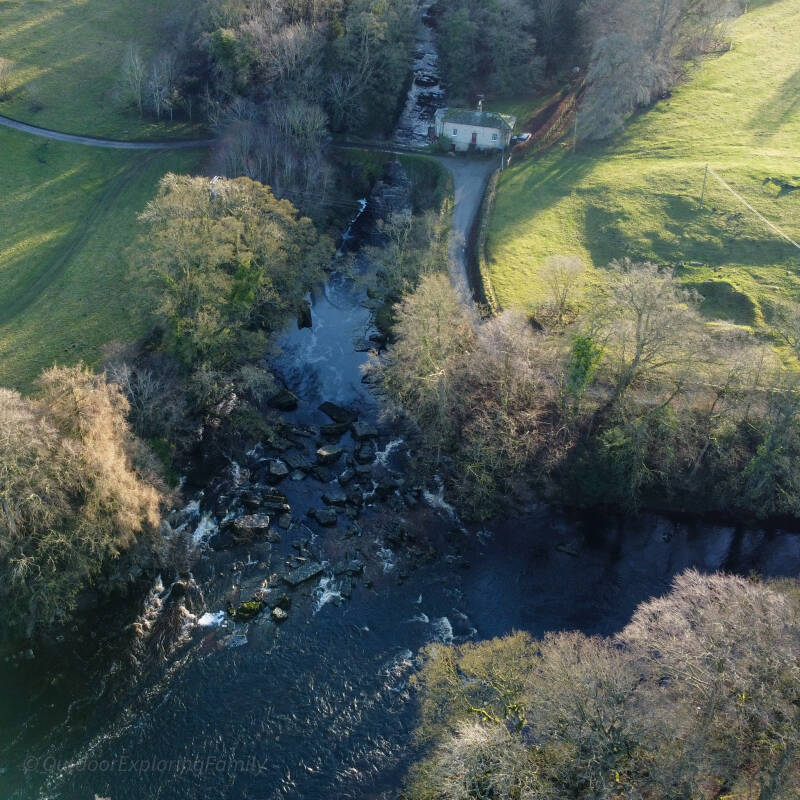
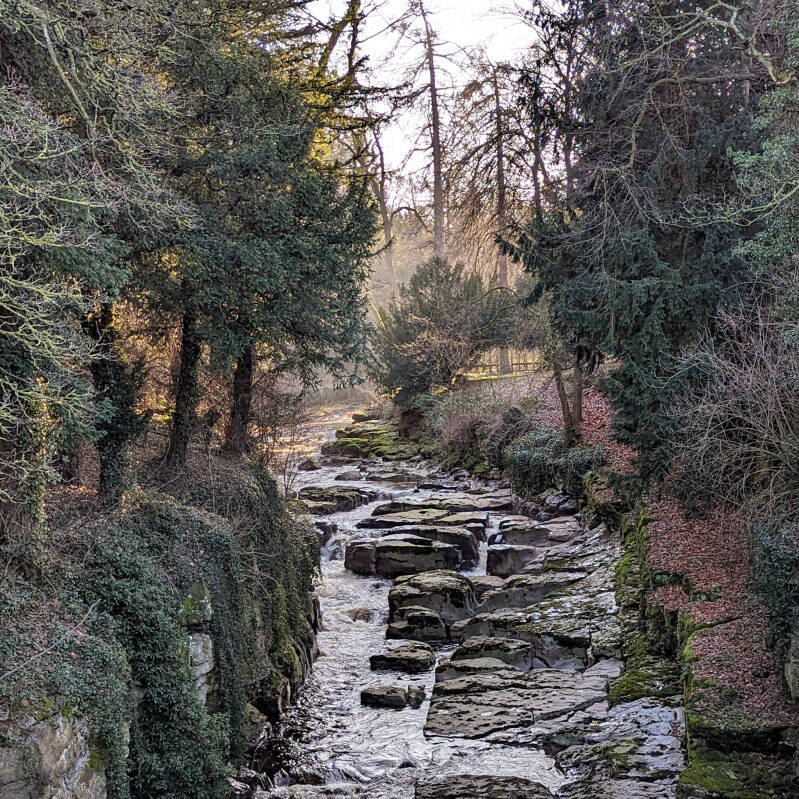
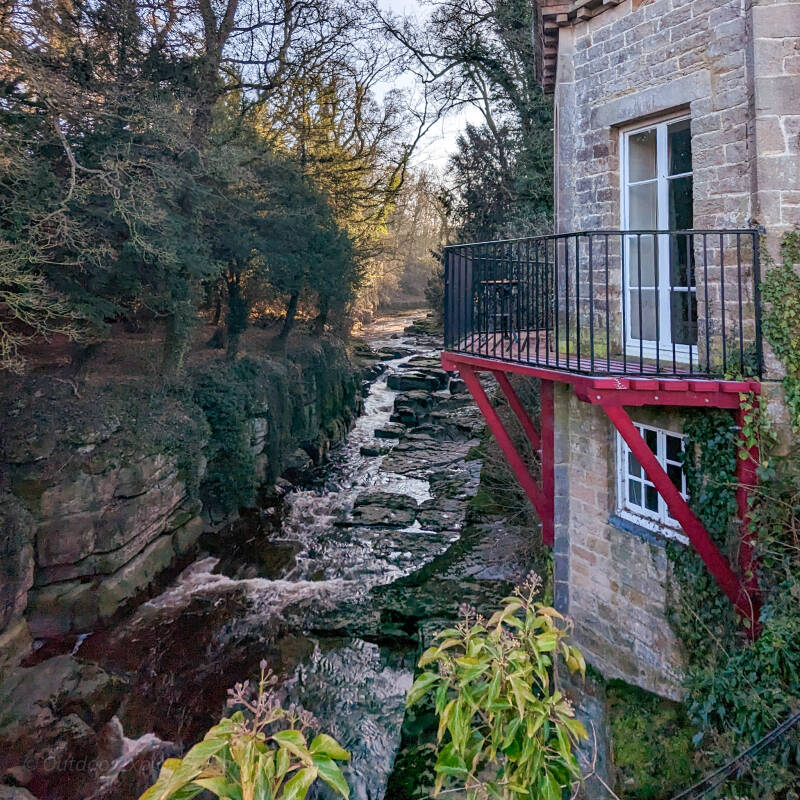
One of the most important parts of Robinson's vision was the area now known as the Meeting of the Waters.
Here the River Greta joins the River Tees beneath steep wooded banks, creating one of the most famous views in Teesdale.
Visitors continue to come here today for the scenery, but Robinson recognised its beauty long before tourism arrived in the area. The surrounding woodland and estate landscape were carefully managed to make the most of the dramatic setting.
The location would later inspire artists including John Sell Cotman and writers such as Sir Walter Scott, whose poem Rokeby helped bring national attention to the area.
Even now, standing beside the rivers, it is easy to understand why Robinson considered this landscape worth preserving.
Mortham Tower and the Medieval Estate
Although Robinson is most closely associated with Rokeby Park, Mortham Tower remained an important part of the estate throughout his life.
The tower had been built centuries earlier by the Rokeby family and stood as a reminder of a much older and often more dangerous period in northern history.
By Robinson's time, fortified manor houses were no longer fashionable homes. Instead of attempting to remodel the medieval building, he left it as part of the wider estate while creating something entirely new nearby.
Today, Mortham Tower and Rokeby Park tell two very different parts of the same story.
One represents medieval Teesdale.
The other represents the Georgian age of architecture, travel and enlightenment.
Few places in northern England preserve that contrast so clearly.
Winston Bridge
One of Sir Thomas Robinson's most important surviving achievements stands just a few miles from Rokeby.
Historic England records Winston Bridge as having been built by Sir Thomas Robinson between 1762 and 1763.
The bridge was an impressive engineering achievement for its time. Its huge single stone arch spans the River Tees in one elegant sweep and helped improve travel and trade throughout the region.
Coal, livestock, goods and travellers all crossed the bridge.
More than 260 years later, people still use it every day.
The bridge also survived the devastating Great Flood of 1771, which destroyed many other crossings across northern England.
Today it remains one of the finest historic bridges in County Durham and one of Robinson's most visible legacies.
Architecture Beyond Teesdale
Although Robinson's greatest project was Rokeby Park, his influence stretched far beyond the Greta Valley.
In 1760 he designed the impressive entrance gateway to Auckland Castle in Bishop Auckland.
Known today as Robinson's Arch, the structure combines Gothic features with classical proportions and includes the distinctive clock tower that still stands above the entrance.
The gateway remains one of the most recognisable landmarks in Bishop Auckland and is listed at Grade I.
Robinson was also closely associated with Castle Howard. After the deaths of the original designers, work continued on the great house and Robinson became involved in the construction of the west wing. His contribution helped shape one of Britain's most famous country houses.
Together, these projects demonstrate that Robinson was far more than a local landowner. He was an architect whose work can still be seen across northern England.
Governor of Barbados
Robinson's ambitions extended far beyond Teesdale.
In 1742 he was appointed Governor of Barbados, one of Britain's most important overseas possessions. The appointment brought prestige, responsibility and a substantial salary, reflecting his standing within Georgian society.
His years in the Caribbean were not always straightforward. Robinson became involved in disputes with the island's political leaders and frequently found himself frustrated by disagreements over spending, administration and military matters. Despite the status attached to the role, he later complained that the costs of serving the Crown had greatly exceeded the rewards.
While living in Barbados he married for a second time following the death of his first wife, Elizabeth Howard. His second wife was Sarah Shawe, a wealthy widow already established on the island.
Although Robinson eventually returned to England in 1747, his years as Governor added an international chapter to a life more often associated with Teesdale, architecture and country estates.
Collector and Scholar
Away from politics, Robinson was a passionate collector, antiquarian and student of architecture.
Throughout his life he gathered books, drawings, sculptures, inscriptions and Roman artefacts from Britain and abroad. His travels across Europe deepened his fascination with classical civilisation and helped shape the architectural ideas he later brought back to Rokeby.
Visitors to the estate could admire collections that reflected a lifetime of learning and curiosity. Robinson was particularly interested in Roman history and is known to have acquired antiquities from northern England as well as objects collected during his travels.
His reputation as a serious scholar led to his election as a Fellow of the Royal Society and a Fellow of the Society of Antiquaries. These were significant honours that placed him among some of the leading intellectual figures of eighteenth century Britain.
For Robinson, Rokeby was never simply a country house.
It was a place where architecture, history, art and landscape came together. The estate became a reflection of the interests that shaped his entire life and helps explain why his influence can still be felt across Teesdale today.
Family Life
In 1728 Robinson married Elizabeth Howard, daughter of the 3rd Earl of Carlisle.
Elizabeth died in 1739 and the couple had no legitimate children.
While serving as Governor of Barbados, Robinson married again in 1743. His second wife was Sarah Shawe, a wealthy widow living on the island. When Robinson returned to England, she remained in Barbados.
Although he left no lawful heir, later records reveal a more personal side to his story.
His will refers affectionately to Anne Pirner as "my dear daughter Anne Pirner", showing that he acknowledged her as his daughter and made financial provision for her.
It is a small detail, but one that offers a rare glimpse into the private life of a man usually remembered for his public achievements.
The Price of Ambition
For all his talent and success, Robinson had one major weakness.
He spent money far faster than he earned it.
Building projects, collecting, entertaining guests, maintaining London properties and creating Rokeby Park required enormous sums of money. His lifestyle reflected the ambitions of a man who wanted to leave a lasting mark on the world.
Over time, the debts became overwhelming.
Mortgages accumulated and financial pressures increased until even Robinson's considerable resources could no longer support his spending.
The estate that had belonged to his family for generations was placed on the market.
Losing Rokeby
In 1769, Robinson was forced to sell Rokeby.
The buyer was John Sawrey Morritt, whose family would later become closely associated with the estate and with Sir Walter Scott.
For Robinson, the sale marked the end of nearly fifty years spent shaping the landscape around Greta Bridge.
It remains one of the great ironies of his story.
The man who transformed Rokeby into one of the finest estates in northern England ultimately lost ownership of the place he had devoted much of his life to creating.
Yet the landscape survived.
The house survived.
The rivers survived.
And so did the vision behind them.
Egglestone Abbey
Robinson's connection with the area extended beyond Rokeby Park itself.
The former Premonstratensian monastery at Egglestone Abbey had passed into private ownership following the Dissolution of the Monasteries and became another part of Robinson's Teesdale property.
After selling Rokeby Park to John Sawrey Morritt in 1769, Robinson sold Egglestone Abbey to Morritt the following year, in 1770. The Morritt family remained associated with the abbey for more than 150 years before placing the ruins into state guardianship in 1925, helping preserve one of Teesdale's finest medieval monuments.
Today, visitors exploring Egglestone Abbey are walking through a place that links two of Teesdale's most influential landowners: Sir Thomas Robinson and the Morritt family.
His Final Years
After selling Rokeby, Robinson spent much of his remaining life in Chelsea, London.
He lived at Prospect Place, a grand property overlooking the Thames and close to the fashionable Ranelagh Gardens.
Even as his eyesight deteriorated and he eventually became blind, he remained interested in architecture, books, collecting and society.
He died on 3 March 1777 at the age of about seventy four.
Burial and Memorial
Although his name is forever linked with Teesdale, Robinson was not buried at Rokeby.
Instead, he was laid to rest in St Mary's Church, Merton, Surrey.
His memory was later honoured in Westminster Abbey, where a memorial featuring busts of both Robinson and his first wife Elizabeth can still be seen today.
Few people connected with Teesdale have been commemorated in such a prestigious setting.
Why Sir Thomas Robinson Matters Today
Sir Thomas Robinson never saw Teesdale as simply a place to live.
He saw it as a landscape worth shaping.
He built bridges, designed buildings, collected history, encouraged learning and transformed the countryside around Greta Bridge into one of the most admired estates in northern England.
Financial troubles eventually forced him to sell everything he had spent decades creating, but his work survived.
Today, whether you are standing beside the Greta at the Meeting of the Waters, crossing Winston Bridge, looking up at Mortham Tower or exploring Rokeby Park, you are still seeing part of Long Sir Thomas's vision.
Most visitors never realise how much of lower Teesdale carries Sir Thomas Robinson's fingerprints. Yet his bridges, buildings and landscapes continue to shape the area nearly three centuries after he first set out to transform Rokeby. Few people have left a larger mark on this corner of Teesdale.
Explore More People of Teesdale
Sir Thomas Robinson helped shape the landscape around Greta Bridge and lower Teesdale, but he was only one of the people who left a lasting mark on the area.
You can also discover the stories of John Bowes, founder of The Bowes Museum, Henry Witham, the geologist and benefactor remembered through The Witham; Hannah Hauxwell; whose life at Low Birk Hatt became known around the world. Thomas Breaks, the merchant behind Barnard Castle's Market Cross; Frank Shield, the famous Hermit of Barnard Castle; Robert Taylor Richardson, whose charitable legacy still benefits the town today; and Reverend Monsignor Thomas Witham, the Catholic priest and landowner whose influence reached across nineteenth century Teesdale.
Together, their stories help tell the wider history of Teesdale, from Georgian estates and Victorian philanthropy to farming, faith, science and community life.